
BuddhistCatholicContemplativeEvangelicalGeneral ChristianHinduJewishLatter-day SaintMuslimNew VisionsProgressive Christian
Beliefs
- Buddhist
- Catholic
- Contemplative
- Evangelical
- General Christian
- Hindu
- Jewish
- Latter-day Saint
- More Voices
- Muslim
- New Visions
- Pagan
- Progressive Christian
Topics
- Religion News
- Food and Religion
- Sports and Religion
- Religious Art
- Religious Music and Entertainment
- Religious Events
- History and Religion
- Style and Religion
- Politics and Religion
- Women in Religion
- Recreation Outdoors and Religion
- Business Finance and Religion
- Careers Workplace and Religion
- Education and Religion
- Family Parenting and Religion
- Health Fitness and Religion
- Home and Religion
- Relationships and Religion
- Technology and Religion
- Travel and Religion
Columnists
- Buddhist Columnists
- Business Finance and Religion Columnists
- Careers Workplace and Religion Columnists
- Catholic Columnists
- Contemplative Columnists
- Education and Religion Columnists
- Evangelists Columnists
- Family Parenting and Religion Columnists
- General Christian Columnists
- Health Fitness and Religion Columnists
- Hindu Columnists
- History and Religion Columnists
- Home and Religion Columnists
- Jewish Columnists
- More Voices Columnists
- Latter Day Columnists
- Muslim Columnists
- New Visions Columnists
- Nonreligious Columnists
- Pagan Columnists
- Politics and Religion Columnists
- Progressive Columnists
- Recreation Outdoors and Religion Columnists
- Relationships and Religion Columnists
- Religion News Columnists
- Religious Art Columnists
- Religious Events Columnists
- Religious Music and Entertainment Columnists
- Sports and Religion Columnists
- Style and Religion Columnists
- Technology and Religion Columnists
- Travel and Religion Columnists
- Women in Religion Columnists
Resource Library
- 2026 Calendar
- Library of World Religions
- The 100 Most Holy Places on Earth
- Patheos Answers
- Podcasts
- Videos
- Faith Leaders Database
- Anglican Episcopalian
- Bahai
- Baptist
- Buddhism
- Christianity
- Confucianism
- Eastern Orthodoxy
- Hinduism
- Holiness and Pentecostal
- ISKCON
- Islam
- Judaism
- Lutheran
- Methodist
- The Church of Jesus Christ of Latter-day Saints
- New Age
- Paganism
- Presbytarian and Reformed
- Protestantism
- Religion Behind the Scenes
- Roman Catholic
- Scientology
- Shia Islam
- Sikhism
- Sufism
- Sunni Islam
- Taoism
- Zen
- See all religions
Research Tools
 Ad-Free & Subscriber Log-In Subscription Support
Ad-Free & Subscriber Log-In Subscription Support
Follow Patheos 

- Trending:
- Forgiveness
- |
- Marriage
- |
- Consciousness
- |
- Death Penalty
- |
- Election
- |
- Halloween
 Philosophical Fragments
- Home
- Evangelical
- Narcissus's Camera
Narcissus's Camera
Last updated on: July 21, 2011 at 10:26 am by Timothy Dalrymple
Narcissus's Camera 2011-07-21T10:26:50-04:00 Timothy Dalrymple
Patheos Explore the world's faith through different perspectives on religion and spirituality! Patheos has the views of the prevalent religions and spiritualities of the world.
I’ve now written “Are Conservative Churches Getting Radical?” and “The Dangers of ‘Radical Faith’ (and What They Teach Us.” I hope tomorrow to publish more positive suggestions on what radical discipleship might look like, especially in community (and in conversation with David Platt’s Radical Together), but presently I want to explain something in greater detail.
My concern, in the second part, was not that we might get carried away and make, you know, actual sacrifices in the course of following Christ. By all means, let’s get carried away! If we are following Christ genuinely, this will issue forth in profound exterior and interior sacrifices. My concern was that foregrounding “radical,” or emphasizing the quest to be “radical,” can lead us in the wrong directions. “Radical” is neither the goal nor the criterion. The person who seeks first the kingdom of God has little or no concern with being “radical,” but she will be perceived as radical by a world that truly cannot comprehend putting the kingdom of God first.
 A part of the problem here is that “radical,” at least in its current usage, is a comparative term. You are radical in comparison to what is normal. You are radical when you are deemed extraordinary and extreme. So the language of radicality can implicitly set up a dynamic in which we are comparing and approving of ourselves in relation to others, where the focus is on being dramatically different instead of being Christlike.
I had an opportunity last week to sit down with Richard Foster and get his thoughts on a wide variety of topics. Since I was planning on writing this series, I mentioned my concern that some people (including myself) might pursue radical Christian living for the benefit of what I’ll call Narcissus’ Camera. What I mean is this: we sometimes find ourselves going about our lives and seeing the world through our own eyes, but simultaneously observing our from the outside as it might be perceived or told by someone else. So here I am feeding the homeless on Skid Row, but even while I’m working with the homeless I’m also observing myself, and approving of myself, working with the homeless. A part of me is conscious of others and their needs, and a part of me is watching myself on video and admiring how I look. I’m watching myself through a camera that hovers somewhere over my shoulder, and ultimately I’m hoping that others will, someday and somehow, see the instant replay.
I’m taking a bit of a risk here and assuming I’m not alone in this. Perhaps I’m a uniquely narcissistic individual. I do not take that possibility lightly. But while I’m convinced that most people are better than I am in this respect (I know that I am highly prideful), I’m also convinced that my troubles are not unique to me (I am not uniquely prideful). Foster seemed to think this is common, even “the Achilles’ Heel” of the striving for radicality. He spoke of a time in his own life when he felt the praise of others, and the amount of fame he had achieved, were puffing him up. Called “to let go of my need to be known or to be important,” he withdrew from writing and public speaking in search of “interior crucifixion” (he actually thought he would never return to writing) until he felt a year-and-a-half later that he had learned his lesson.
(Of course, the possibilities here are endless; Narcissus’ Camera can follow us into solitude, and we can gain satisfaction at the thought of playing the video for friends in later years. Sometimes it’s the most prideful people (like myself) who learn how to conceal their pride best, but I give Foster the benefit of the doubt.)
Foster also spoke of Mother Teresa, who did not set out to be radical but to follow Jesus and serve Jesus in the least of these. She disappeared from history for decades, and God eventually raised her up. She had no desire to be known; in fact, it seems she would have preferred anonymity. But, Foster said, “There are ten thousand Mother Teresas we’ve never heard of, men and women who continue to be obscure and do their work in secret — and that’s okay with them. If you’re truly radical, you’re not concerned that anybody sees you.”
This is just a word of caution. It should not dampen the zeal of a young person who wants to give her all for the kingdom of God. It should direct it. It should tell us something about Christian discipleship, its trajectory and its goal. It’s not a bad thing, in my view, to be conscious of the ultimate Observer and to seek to do what would please Him, as long as this flows from gratitude and not a spiritual performance mentality. And mixed motives are rarely a good reason to refrain from doing something good, but I do think we should be conscious of how our motives grow mixed when we let Narcissus’ Camera follow us along on our good-deed missions.
Narcissus’ Camera is a perilous piece of equipment. It may take a lifetime to destroy it. Or we may never in this life fully destroy it. As we pursue Christ and a life that is faithful to him (since we cannot cease doing the deeds that are right until we can do them only for the right reasons), we should pray and examine ourselves, discipline our thoughts and seek accountability and community, understanding and wisdom, in the hope that we can disassemble the camera piece by piece.
The question I want to address tomorrow is this. I believe that the church in America is absolutely in need of challenging and reform in order to address the idols of materialism, consumerism and comfort. What exactly is the reform that the American church requires? How exactly should that reform be framed? What are the right terms and categories to explain it?
I think our discussion so far of “radical” Christian discipleship contains some clues. If you haven’t already done so, especially since I typically write short series such as this one, please connect with me via Facebook, Twitter or subscribe by email or RSS, in order to follow along. And I’m sincerely interested to hear your thoughts on the above questions.
Next Post

July 22, 2011 What is the Reform the Church Needs?
Browse Our Archives
Select a Category Abortion Abortion adoption Africa Aging AIDS America Worship American history Americolatry An Open Letter to a College Freshman animals Apologetics art Atheism Authors Barack Obama Bible Biblical Scholarship Billy Graham Blogging Bono Book Review Books That Change Lives Breakfast Links Bulletin Board Business Children Christian Approach to Politics Christian Media Christian Right Derangement Syndrome Christianity and Homosexuality Christians in Government Christmas Chuck Colson CLS v Martinez Comic Creation Creativity and the Arts Cross Examinations Cross Investigations Daily Fragment Daily Trinity Death debt Deep Thoughts on Fatherhood depression economy education Election 2012 entertainment Environment Epistemology Erik Campano Euthanasia Evangelicalism Evangelicals and Gays Everyday Transcendence evil evolution Facebook Jesus faith Faith and Politics Faith and Politics Faith and Politics Faith and Politics Faith and Politics Faith and Politics Faith and Politics faith and reason family Feminism foreign affairs Franklin Graham Future of Evangelicalism Galen D. gay marriage George W. Bush Guest Posts Guns Gymnastics Harold Camping Heaven Hell Holidays Hollywood Homosexuality iam2.org Illegal Immigration immigration Immigration Reform Injustice Inspiration Interviews Islam Jeremy Lin Jesus jesus christ John Mark Reynolds Johnnie Moore Judgment Day Just War Theory Killing Osama Link of the Day Lists of the Week Mark Goldblatt Marriage Military Missions Mitt Romney Modern Western Thought Monastic wisdom Mormonism Morning Hash Morning Report Motherhood Movies Obamacare Old Testament Orphan Care Palin Parenting Pastoral Resources Patheos Peace Between Religions PEPFAR Persecution Peter Wehner Peter Wehner Philosophy Political Quotes of the Day politics Politics and Economics Pornography Prejudice Prisoner Rape Question of the Week Race Radical Faith Rapture Ravi Zacharias Rick Santorum Russia Salvation Sarah Palin Scandals Science Science and Faith Separation of Church and State Series sex sex slavery social justice Social Justice Ministry Spiritual Disciplines sports Steven Tyler Suffering Suicide Sunday Funnies T. Dalrymple Tea Party Technology terrorism The Christian Media Files The Daily Trinity The Electorate The Ethics of Rhetoric The Future of Seminary Education The Middle East The Obama Presidency theological Theological Renewal Theology Uncategorized Understanding Evangelicalism Vocation war War and Peace With Distinction Word to the Wise Writers
Select a Month October 2015 June 2015 May 2015 March 2015 December 2014 September 2014 August 2014 July 2014 June 2014 May 2014 April 2014 March 2014 February 2014 January 2014 December 2013 November 2013 October 2013 September 2013 August 2013 July 2013 June 2013 May 2013 April 2013 March 2013 February 2013 January 2013 December 2012 November 2012 October 2012 September 2012 August 2012 July 2012 June 2012 May 2012 April 2012 March 2012 February 2012 January 2012 December 2011 November 2011 October 2011 September 2011 August 2011 July 2011 June 2011 May 2011 April 2011 March 2011 February 2011 January 2011 December 2010 November 2010 October 2010 September 2010 August 2010 July 2010 June 2010 May 2010 April 2010 March 2010 October 2009 September 2009 August 2009 July 2009 June 2009
Follow Us!
TAKE THE
Religious Wisdom Quiz
Who wrote Lamentations, mourning Jerusalem's destruction?
Select your answer to see how you score.
Jeremiah Isaiah Ezra Obadiah
Related posts from Philosophical Fragments

Out of Africa: Who Is Advanced and Who...
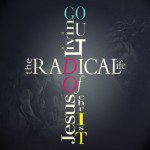
The Merits (and Demerits) of the "Radical" Movement

The Moral Hazard of Slum Tourism

The Accidental Radical: A Conversation with Richard Foster,...
TRENDING AT PATHEOS Evangelical

How the author of the world's best hymn...
I've been working with John Newton for a while now. This makes...

Long before this Lectio Divina, Psalm 130 - the song - started...

What About the Trees? Another Living Parable
After I finished writing the last article about falling leaves as a...

Why Classical Education Is a Conversation, Not a...
Come and Read: Joy in Classical Education When I was a little...

Falling Leaves: A Living Parable on Letting Go
I’ve spent the vast majority of my life in the southeast corner...

Cornell University has received a great deal of negative publicity and intense...
view all Evangelical blogs
Ad-Free & Subscriber Log-In Subscription Support
- About Us
- 2026 Calendar
- Videos
- Podcasts
- Library of World Religions
- Faith In Media Tracker
- Advertise With Us
- Write for Us
- Privacy Policy
- Terms of Service
- Do Not Sell My Data
- Contact Us
- Radiant Digital
- Manage Newsletter Subscriptions
- Unsubscribe From Notifications
- Sitemap
Copyright 2008-2026, Patheos. All rights reserved.
Subscription Support Ad-Free & Subscriber Log-In
Follow Patheos