
BuddhistCatholicContemplativeEvangelicalGeneral ChristianHinduJewishLatter-day SaintMuslimNew VisionsProgressive Christian
Beliefs
- Buddhist
- Catholic
- Contemplative
- Evangelical
- General Christian
- Hindu
- Jewish
- Latter-day Saint
- More Voices
- Muslim
- New Visions
- Pagan
- Progressive Christian
Topics
- Religion News
- Food and Religion
- Sports and Religion
- Religious Art
- Religious Music and Entertainment
- Religious Events
- History and Religion
- Style and Religion
- Politics and Religion
- Women in Religion
- Recreation Outdoors and Religion
- Business Finance and Religion
- Careers Workplace and Religion
- Education and Religion
- Family Parenting and Religion
- Health Fitness and Religion
- Home and Religion
- Relationships and Religion
- Technology and Religion
- Travel and Religion
Columnists
- Buddhist Columnists
- Business Finance and Religion Columnists
- Careers Workplace and Religion Columnists
- Catholic Columnists
- Contemplative Columnists
- Education and Religion Columnists
- Evangelists Columnists
- Family Parenting and Religion Columnists
- General Christian Columnists
- Health Fitness and Religion Columnists
- Hindu Columnists
- History and Religion Columnists
- Home and Religion Columnists
- Jewish Columnists
- More Voices Columnists
- Latter Day Columnists
- Muslim Columnists
- New Visions Columnists
- Nonreligious Columnists
- Pagan Columnists
- Politics and Religion Columnists
- Progressive Columnists
- Recreation Outdoors and Religion Columnists
- Relationships and Religion Columnists
- Religion News Columnists
- Religious Art Columnists
- Religious Events Columnists
- Religious Music and Entertainment Columnists
- Sports and Religion Columnists
- Style and Religion Columnists
- Technology and Religion Columnists
- Travel and Religion Columnists
- Women in Religion Columnists
Resource Library
- 2026 Calendar
- Library of World Religions
- The 100 Most Holy Places on Earth
- Patheos Answers
- Podcasts
- Videos
- Faith Leaders Database
- Anglican Episcopalian
- Bahai
- Baptist
- Buddhism
- Christianity
- Confucianism
- Eastern Orthodoxy
- Hinduism
- Holiness and Pentecostal
- ISKCON
- Islam
- Judaism
- Lutheran
- Methodist
- The Church of Jesus Christ of Latter-day Saints
- New Age
- Paganism
- Presbytarian and Reformed
- Protestantism
- Religion Behind the Scenes
- Roman Catholic
- Scientology
- Shia Islam
- Sikhism
- Sufism
- Sunni Islam
- Taoism
- Zen
- See all religions
Research Tools
 Ad-Free & Subscriber Log-In Subscription Support
Ad-Free & Subscriber Log-In Subscription Support
Follow Patheos 

- Trending:
- Forgiveness
- |
- Marriage
- |
- Consciousness
- |
- Death Penalty
- |
- Election
- |
- Halloween
 On the Way
- Home
- Progressive Christian
- Slow of speech and tongue — reflections on being an introvert and the book Quiet
Slow of speech and tongue — reflections on being an introvert and the book Quiet
Last updated on: May 2, 2013 at 10:13 pm by Phil Fox Rose
Slow of speech and tongue — reflections on being an introvert and the book Quiet 2013-05-02T22:13:56-04:00 Phil Fox Rose
Patheos Explore the world's faith through different perspectives on religion and spirituality! Patheos has the views of the prevalent religions and spiritualities of the world.
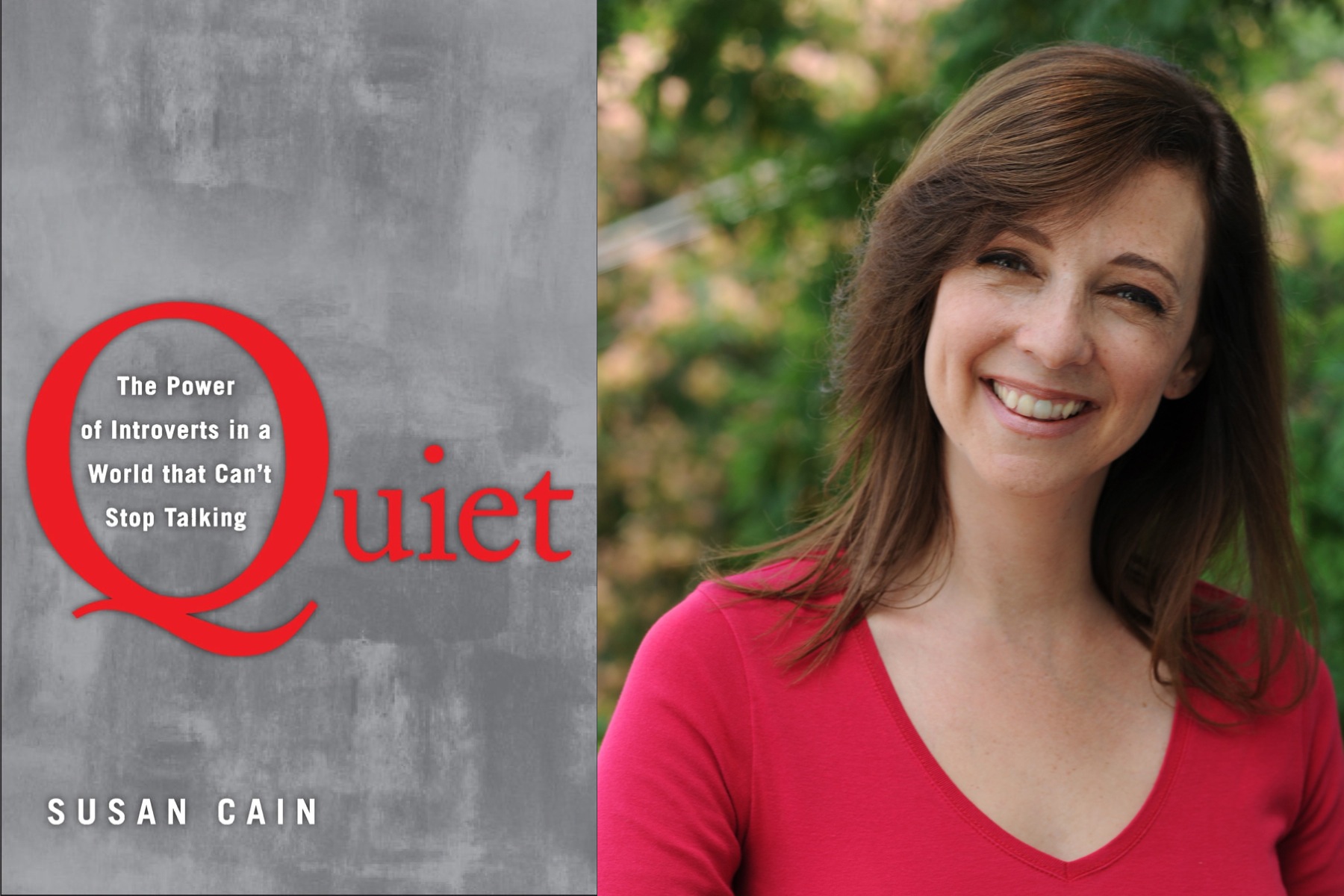 I’m an INFP. I took a Myers-Briggs assessment and got that result over a decade ago. Just recently, over drinks with a bunch of ministers and seminarians, I learned this is well known to be the unofficial “ministry type.” Introverted-iNtuitive-Feeling-Perceptive types make up only 4% of the population but were something like 80% of our table. Carl Jung, himself an introvert, introduced the concept a hundred years ago this September, but introverts seem to be even more misunderstood today than in his time. Susan Cain’s book Quiet: The Power of Introverts in a World That Can’t Stop Talking
The term “introvert” can be misunderstood to mean antisocial. But while some introverts are very shy and actively avoid people, that’s not necessarily the case at all. What the term describes is not your actions in the world but your posture towards it. The Myers-Briggs definition for my type nails the distinction: “INFPs focus much of their energy on an inner world dominated by intense feeling and deeply held ethics. They seek an external life that is in keeping with these values… When INFPs are in a sociable mood, their humor and charm shine through.”
As an introvert, I am restored and recharged by time alone, and depleted, often in an acceptable way, by time with others. While earlier in my life, I struggled with shyness, that’s not the case today. I love interacting with people, including strangers, and even enjoy public speaking, and I often find my experiences of the divine through others. But after a day of interacting, I’m depleted. Extroverts actually gain energy through interaction.
A big part of my own personal and spiritual journey to greater wholeness and self-acceptance has revolved around the issue of introvertedness. Like many of the examples in Cain’s book, earlier on I accepted modern society’s idealization of extroversive tendencies. Raised by two extreme introverts, I felt ill-equipped for life in the “real” world, where aggressive assertiveness and overconfidence are rewarded at every turn, from the schoolyard to the boardroom. I saw career paths fizzle out because I was terrified of public speaking (which made being a professional pundit unlikely) and repulsed by the backslapping, fist-pumping world of business networking. No, repulsed is the wrong word. I was terrified of that too. The expectation of energetic interaction paralyzed me with anxiety.
I blamed my parents for not teaching me to live in the real world. I pointed to the fact that my father passed up a big-deal job in Washington to remain a tenured professor with a quiet life as an example of failure. I’m sure there were many factors, not all good, including his alcoholism and plenty of fear. But perhaps, also, this very shy quiet man’s decision was in part a perfectly reasonable assessment that he would find being involved in the Washington cocktail bar schmoozing world horrific.
Reading through Quiet, as Cain describes different aspects of introversive behavior, it floored me how often the attributes fit. Of course I knew that my shyness in crowds and lack of aggressive outgoingness — what I usually call “type A-ness” — fit the bill. But here’s just one other example that really hit home: in a group discussion introverts like me will hold back and say nothing if they have nothing useful to add, observing, listening, whereas at Harvard Business School they teach students to grab their time in the conversation even if they have nothing new to contribute, so they’re seen as in charge and competent by anyone observing. Another example is my visceral dislike for bargaining in the market and for aggressive non-profit street teams. I know what they’re doing isn’t so terrible, but my disapproval is palpable. I can feel their aggressive energy intruding on my interior space.
A question I’ve asked myself over the years is a refrain in this book: Whether society is right or wrong, since it does reward extroversion, then to be successful don’t I have to practice it? Harvard Business School is not teaching students to be better people; it’s teaching them to succeed in the business world. If the one who gets the promotion is the most gregarious, not the most talented, then maybe they should be teaching people to force themselves to look gregarious even when they’re not. But they also teach students to act quickly, before they have all the facts, rather than let someone else act first. You can easily see how that might be the best tactic for the individual, but not the best result for whatever’s being decided.
For many years, like some of Cain’s examples, I tried to work against my type, to force myself to be more assertive and extroversive. For six long months, for example, I worked as a stockbroker in a boiler room, where at 7 a.m. we screamed to get pumped up, and where as a trainee I was hazed and berated and forced to act assertively or fail again and again. During this period, I attended a Tony Robbins weekend-long workshop, an experience Cain also had and devotes an entire chapter to. A Robbins event is perhaps the ultimate example of society’s extrovert model at work. You are taught two things: 1) How to act more confident than you really are; and 2) How to manipulate others by overwhelming their interior state with your external state.
Strength in the deep quiet interior
When, several decades ago, I discovered contemplative practices and started digging more deeply into spiritual teachings, I found an alternative. Through Quakerism, Buddhism and Centering Prayer, I discovered strength in the deep quiet interior. As my spiritual growth continued, I slowly came to find my own balance. While remaining an introvert, I grew more authentically confident and grounded. My fear of public speaking fell away. At a podium in front of hundreds, I tap into a genuine and surprising calm. If I walk into a room of strangers, it’s still not my impulse to dive in and start introducing myself, but I’m happy now to ease my way in and start making connections with people. I’m still an introvert; what’s changed is I’m not being driven by fear anymore.
It’s hard not to see being introversive as superior. Read the Sermon on the Mount or Plain: blessed are those who mourn; turn the other cheek; the last shall be first; blessed are the meek and peacemakers. Wow! Maybe the ideal isn’t dominance and steely strength after all! Sounds good to me. When faced with a society that celebrates extroverts and looks with suspicion at the humble, my recourse in recent years has been to denounce the values of that society. Just the other week, in my sermon on the beatitudes I posted here, I pretty much said that the kingdom of God works by introversive rules while the kingdom of Man runs on extroversive principles.
While affirming the value of, possibly even the preference for, introverts, Cain helps me see the roles for both. In an example from the business world, she offers insight from research that shows a team of confident thinkers is best led by an introversive leader who will give them space and also listen to their ideas. But that research also shows that a team of obedient workers in roles where their input isn’t useful are more productive if led by an extroversive charismatic type.
What Susan Cain’s book offers more than anything else is a smart starting point for a conversation about how the values of our society are messed up. (And I will be revisiting some of her ideas in the months to come.) It’s not that there aren’t valid roles for both introverts and extroverts. It’s that we choose the wrong leaders. Voters, corporate boards and social groups choose extroverts with bad ideas over introverts with better qualifications again and again. They listen to the person who acts most sure of themselves, not the one who knows the most. They forgive the one who’s best at bluffing, not the one who honestly takes responsibility.
It hasn’t always been this bad. It’s safe to say an awkward depressive like Lincoln would never be elected president these days. Nor would an introvert with a speech impediment like Moses be accepted as a religious leader.
The industrial age favored cog-like workers led by charismatic extroverts who inspired them to work harder; today’s global networked age is benefited more by introvert leaders who inspire workers to be their best expressions of themselves. City life favored jockeying for position against strangers, while the digital age is restoring some of the rules of the earlier community-driven model. Our social systems just need to catch up.
And in an even more recent development, introverts, who find interacting face-to-face with others draining, can thrive in the once-removed world of social media, where they can be more honest and more forceful at less cost to their energy.
Quiet, in describing how the business world works today, could be depressing for someone like me. On the surface, it’s saying I don’t have a chance. But it’s also encouraging because it explains why I’ve found myself on the wrong side of these dynamics my whole life — why I have lost the game of office politics despite being in the right numerous times. While it doesn’t suggest the road for an introvert will be as easy, it speaks powerfully to why that harder road is just as good; better even. And why fighting against who we are in order to succeed in an extroversive world is neither fun nor fruitful.
I came to many of the ideas Susan Cain offers in Quiet through several decades of spiritual work, and reading it is validating. I hope the book will help give some introverts permission much earlier in life to be their best selves, so they don’t waste their talents trying to fit in. And I trust Quiet will spark conversation that leads to change in corporate America towards a more balanced understanding of the qualities of leadership. Has the MBA era come to an end, and a return to the classically-trained leader begun? Will schools start moving away from models that reward extroversion for its own sake? This book is an important step.
Previous Post

February 13, 2013
Valentine's Day is not for me -- Is it for anyone?
Next Post
February 21, 2013 Just give -- my Lenten practice of giving to every beggar
Browse Our Archives
Select a Category Addiction & Recovery Culture Faith & Spirituality Health Music Politics Uncategorized
Select a Month May 2019 October 2015 September 2015 April 2015 March 2015 December 2014 November 2014 October 2014 September 2014 August 2014 June 2014 May 2014 April 2014 March 2014 December 2013 November 2013 October 2013 September 2013 August 2013 July 2013 May 2013 April 2013 March 2013 February 2013 January 2013 December 2012 November 2012 October 2012 September 2012 August 2012 November 2009 August 2009
Follow Us!
TAKE THE
Religious Wisdom Quiz
True or False: In Mark, Jesus healed a man with a withered hand on the Sabbath, which angered the Pharisees.
Select your answer to see how you score.
TRUE FALSE
Related posts from On the Way

Sybil MacBeth: "I could tell you about Phyllis...

The Sea Change of Mercy and Forgiveness

Unlikely Instruments: A Reflection on John 20:15-16

TRENDING AT PATHEOS Progressive Christian

Why Christians Have a Sacred Duty to Vote:...
The Bible offers strong support for the sacred duty to vote. Here...

What Being a Modern-Day Apostle Means to Me
In my last column, I discussed the ins and outs of modern-day...

Did Ancient China Once Worship the God of...
Across human history, a common thread weaves through the origins of the...

Love Your Neighbor – Including Earth-Kin: Lev. 19,...
God’s command to love your neighbor means acting in an ethical and...

Lead a Church Study of “Jesus and Lao...
Guest writer Jack Thomas (The Irreverent Reverend) reflects on leading his church...

Principles for Understanding the Apostolic Ministry Today
Whenever people discover that my formal ministry title is "apostle," as in...
view all Progressive Christian blogs
Ad-Free & Subscriber Log-In Subscription Support
- About Us
- 2026 Calendar
- Videos
- Podcasts
- Library of World Religions
- Faith In Media Tracker
- Advertise With Us
- Write for Us
- Privacy Policy
- Terms of Service
- Do Not Sell My Data
- Contact Us
- Radiant Digital
- Manage Newsletter Subscriptions
- Unsubscribe From Notifications
- Sitemap
Copyright 2008-2026, Patheos. All rights reserved.
Subscription Support Ad-Free & Subscriber Log-In
Follow Patheos