
BuddhistCatholicContemplativeEvangelicalGeneral ChristianHinduJewishLatter-day SaintMuslimNew VisionsProgressive Christian
Beliefs
- Buddhist
- Catholic
- Contemplative
- Evangelical
- General Christian
- Hindu
- Jewish
- Latter-day Saint
- More Voices
- Muslim
- New Visions
- Pagan
- Progressive Christian
Topics
- Religion News
- Food and Religion
- Sports and Religion
- Religious Art
- Religious Music and Entertainment
- Religious Events
- History and Religion
- Style and Religion
- Politics and Religion
- Women in Religion
- Recreation Outdoors and Religion
- Business Finance and Religion
- Careers Workplace and Religion
- Education and Religion
- Family Parenting and Religion
- Health Fitness and Religion
- Home and Religion
- Relationships and Religion
- Technology and Religion
- Travel and Religion
Columnists
- Buddhist Columnists
- Business Finance and Religion Columnists
- Careers Workplace and Religion Columnists
- Catholic Columnists
- Contemplative Columnists
- Education and Religion Columnists
- Evangelists Columnists
- Family Parenting and Religion Columnists
- General Christian Columnists
- Health Fitness and Religion Columnists
- Hindu Columnists
- History and Religion Columnists
- Home and Religion Columnists
- Jewish Columnists
- More Voices Columnists
- Latter Day Columnists
- Muslim Columnists
- New Visions Columnists
- Nonreligious Columnists
- Pagan Columnists
- Politics and Religion Columnists
- Progressive Columnists
- Recreation Outdoors and Religion Columnists
- Relationships and Religion Columnists
- Religion News Columnists
- Religious Art Columnists
- Religious Events Columnists
- Religious Music and Entertainment Columnists
- Sports and Religion Columnists
- Style and Religion Columnists
- Technology and Religion Columnists
- Travel and Religion Columnists
- Women in Religion Columnists
Resource Library
- 2026 Calendar
- Library of World Religions
- The 100 Most Holy Places on Earth
- Patheos Answers
- Podcasts
- Videos
- Faith Leaders Database
- Anglican Episcopalian
- Bahai
- Baptist
- Buddhism
- Christianity
- Confucianism
- Eastern Orthodoxy
- Hinduism
- Holiness and Pentecostal
- ISKCON
- Islam
- Judaism
- Lutheran
- Methodist
- The Church of Jesus Christ of Latter-day Saints
- New Age
- Paganism
- Presbytarian and Reformed
- Protestantism
- Religion Behind the Scenes
- Roman Catholic
- Scientology
- Shia Islam
- Sikhism
- Sufism
- Sunni Islam
- Taoism
- Zen
- See all religions
Research Tools
 Ad-Free & Subscriber Log-In Subscription Support
Ad-Free & Subscriber Log-In Subscription Support
Follow Patheos 

- Trending:
- Forgiveness
- |
- Marriage
- |
- Consciousness
- |
- Death Penalty
- |
- Election
- |
- Halloween
 Peter Enns
-
Inspiration and Incarnation
-
Responding to Critics
- A Response to Paul Helm
- Responses to Some General Criticism of I&I
- Criticism 1: I&I Is Inconsistent with the Reformed Faith
- Criticism 2: I&I Ignores Other Possible Solutions
- Criticism 3: I&I Denies Inerrancy
- Criticism 4: I&I Lacks Precision and Clarity
- Criticism 5: I&I Has Been Criticized by Some Important Scholars
- Responses to Other Critical Reviews
-
Interactions with Bruce Waltke
-
A Response to Richard Pratt
-
I&I and Westminster Theological Seminary
- Home
- Evangelical
Endorsements
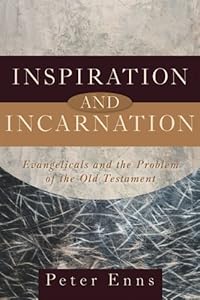 “This is a very needed and refreshing book. Enns poses some of the difficult questions conservative-thinking Christians ask today about the distinctiveness, diversity, and integrity of Scripture. He states the issues in a clear and penetrating way and then proceeds to answer them with honesty, clarity, and appropriate caution, providing helpful illustrations along the way. Scholars, pastors, students, and all informed believers will find this book to be readable, informative, and stimulating in their pursuit of God through Holy Scripture.”–Richard E. Averbeck, professor of Old Testament and Semitic languages, Trinity Evangelical Divinity School
“At last, here is a constructive exploration–by an evangelical scholar with a high view of Scripture–of how to handle seriously the evidence from inside and outside the Bible that sits uncomfortably with classic formulations. Enns’s combination of faith and intellectual honesty will bring much encouragement to all serious Bible students who have struggled to face up to these unavoidable issues.”–H. G. M. Williamson, Regius Professor of Hebrew, University of Oxford
“Enns has done the evangelical church a great service by emphasizing the human dimension of Scripture. He likens the incarnation of Scripture to the incarnation of Christ: both are truly divine and truly human. He argues, however, that with regard to Scripture, evangelicals tend to commit the same error as the Docetists in that they deny the real humanity of the Scripture. More specifically, he argues that the early chapters of Genesis reflect the mythic world in which they were composed, that the biblical authors represent different viewpoints according to their historical contextualization, and that the apostles reflect the hermeneutics and traditions of the Second Temple period. By basing his book on data that is backed by excellent, annotated bibliographies; by reflecting cogently on the material; and by writing in a clear style with unflinching honesty, Enns has given impetus to evangelicals to discuss the doctrines of inspiration and hermeneutics, and he offers an excellent base on which to develop their understanding of these most important doctrines in the twenty-first century.”–Bruce K. Waltke, professor emeritus of biblical studies, Regent College; professor of Old Testament, Reformed Theological Seminary
“The author has offered an honest and refreshing look at the implications of contemporary biblical scholarship for a Christian doctrine of Scripture. His ‘incarnational paradigm’ will likely provide an alternative way of reading the Old Testament for many Christians who no longer find traditional evangelical answers satisfying. Written for a popular audience, this book nevertheless makes a contribution to what may be considered the maturation of evangelical scholarship and at the same time is an ardent appeal to allow that maturation to continue.”–Bill T. Arnold, professor of Old Testament and Semitic languages, Asbury Theological Seminary
“In this book, Enns explores three aspects of the Bible, and he sometimes raises and reflects upon uncomfortable questions. How is the Bible, especially the Old Testament, divine revelation if it shares the material and, to some extent, even the worldview of its ancient Near Eastern neighbors? What are we to make of the contradictory perspectives and views that the Bible presents? How do we respond to New Testament writers who interpret the Old Testament in ways that we would disallow in a contemporary classroom setting? In sum, how is the Bible the Bible, and how does one read it on its own terms?”–David W. Baker, professor of Old Testament and Hebrew, Ashland Theological Seminary
Ad-Free & Subscriber Log-In Subscription Support
- About Us
- 2026 Calendar
- Videos
- Podcasts
- Library of World Religions
- Faith In Media Tracker
- Advertise With Us
- Write for Us
- Privacy Policy
- Terms of Service
- Do Not Sell My Data
- Contact Us
- Radiant Digital
- Manage Newsletter Subscriptions
- Unsubscribe From Notifications
- Sitemap
Copyright 2008-2026, Patheos. All rights reserved.
Subscription Support Ad-Free & Subscriber Log-In
Follow Patheos