
BuddhistCatholicContemplativeEvangelicalGeneral ChristianHinduJewishLatter-day SaintMuslimNew VisionsProgressive Christian
Beliefs
- Buddhist
- Catholic
- Contemplative
- Evangelical
- General Christian
- Hindu
- Jewish
- Latter-day Saint
- More Voices
- Muslim
- New Visions
- Pagan
- Progressive Christian
Topics
- Religion News
- Food and Religion
- Sports and Religion
- Religious Art
- Religious Music and Entertainment
- Religious Events
- History and Religion
- Style and Religion
- Politics and Religion
- Women in Religion
- Recreation Outdoors and Religion
- Business Finance and Religion
- Careers Workplace and Religion
- Education and Religion
- Family Parenting and Religion
- Health Fitness and Religion
- Home and Religion
- Relationships and Religion
- Technology and Religion
- Travel and Religion
Columnists
- Buddhist Columnists
- Business Finance and Religion Columnists
- Careers Workplace and Religion Columnists
- Catholic Columnists
- Contemplative Columnists
- Education and Religion Columnists
- Evangelists Columnists
- Family Parenting and Religion Columnists
- General Christian Columnists
- Health Fitness and Religion Columnists
- Hindu Columnists
- History and Religion Columnists
- Home and Religion Columnists
- Jewish Columnists
- More Voices Columnists
- Latter Day Columnists
- Muslim Columnists
- New Visions Columnists
- Nonreligious Columnists
- Pagan Columnists
- Politics and Religion Columnists
- Progressive Columnists
- Recreation Outdoors and Religion Columnists
- Relationships and Religion Columnists
- Religion News Columnists
- Religious Art Columnists
- Religious Events Columnists
- Religious Music and Entertainment Columnists
- Sports and Religion Columnists
- Style and Religion Columnists
- Technology and Religion Columnists
- Travel and Religion Columnists
- Women in Religion Columnists
Resource Library
- 2026 Calendar
- Library of World Religions
- The 100 Most Holy Places on Earth
- Patheos Answers
- Podcasts
- Videos
- Faith Leaders Database
- Anglican Episcopalian
- Bahai
- Baptist
- Buddhism
- Christianity
- Confucianism
- Eastern Orthodoxy
- Hinduism
- Holiness and Pentecostal
- ISKCON
- Islam
- Judaism
- Lutheran
- Methodist
- The Church of Jesus Christ of Latter-day Saints
- New Age
- Paganism
- Presbytarian and Reformed
- Protestantism
- Religion Behind the Scenes
- Roman Catholic
- Scientology
- Shia Islam
- Sikhism
- Sufism
- Sunni Islam
- Taoism
- Zen
- See all religions
Research Tools
 Ad-Free & Subscriber Log-In Subscription Support
Follow Patheos 

- Trending:
- Advent
- |
- Forgiveness
- |
- Thanksgiving
- |
- Election
- |
- Seasonal Holidays
- |
- Marriage
 Peter Enns
-
Inspiration and Incarnation
-
Responding to Critics
- A Response to Paul Helm
- Responses to Some General Criticism of I&I
- Criticism 1: I&I Is Inconsistent with the Reformed Faith
- Criticism 2: I&I Ignores Other Possible Solutions
- Criticism 3: I&I Denies Inerrancy
- Criticism 4: I&I Lacks Precision and Clarity
- Criticism 5: I&I Has Been Criticized by Some Important Scholars
- Responses to Other Critical Reviews
-
Interactions with Bruce Waltke
-
A Response to Richard Pratt
-
I&I and Westminster Theological Seminary
- Home
- Evangelical
- another article on inerrantist biblical scholars and “protective strategies”
another article on inerrantist biblical scholars and “protective strategies”
Last updated on: March 26, 2015 at 10:48 am by Peter Enns
another article on inerrantist biblical scholars and “protective strategies” 2015-03-26T10:48:08-04:00 Peter Enns
Patheos Explore the world's faith through different perspectives on religion and spirituality! Patheos has the views of the prevalent religions and spiritualities of the world.
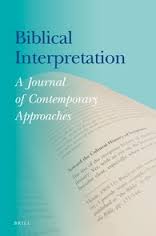 I recently posted, with some commentary, an article published by Stephen L. Young on inerrantist biblical scholars employing “protective strategies” and “privileging insider claims” in their publications.
In that article, Young, “examines how Evangelical Christian inerrantist scholars theorize their biblical scholarship and its relation to the broader academy, highlighting (1) their self-representation as true academics, and (2) the ways they modulate historical methods to prefer interpretive options that keep the Bible inerrant.”
Young just published a second article illustrating this thesis by focusing on the complex issue of Israelite literacy: “Maximizing Literacy as a Protective Strategy: Redescribing Inerrantist Scholarship on Israelite Literacy.”
The article appears in Biblical Interpretation 23 (2015): 145-73 and the full article can be accessed here.
I won’t discuss the article here, though I reproduce below a few portions from the first few pages of the article that should give interested readers a sense of Young’s point.
The abstract (my emphasis):
Evangelical Christian inerrantist scholars consistently maximize the extent of literary reading and writing abilities in ancient Israel, especially beyond scribes, priests, and other elites or professionals. How they frame the issues, handle the data, represent their work as academic historical research, and engage in certain recurring patterns of argumentation invites analysis. This article analyzes the publications of inerrantist scholars on Israelite literacy, in particular Alan Millard and Richard Hess, as examples of inerrantist discourse and argues that their scholarship on Israelite literacy is characterized by protective strategies that privilege biblical claims. The article thus aims to explore part of the historiography of scholarship on Israelite literacy, to provide an accurate account of what precisely inerrantist scholars are doing in their publications on the topic, and to reframe inerrantist scholarship on Israelite literacy as data for the study of religion.
Young includes in his scope 6 articles and essays penned by Millard

Young notes the tendency among inerrantist biblical scholars to collapse the distinction between description and analysis of a text’s claims.
Certain religious studies scholars have developed the classification of “protective strategies” or “protectionism” to designate the practice of collapsing the distinction between describing a religious actor’s (or text’s) claims and analyzing or explaining those claims in ways that do not privilege them by reinscribing them in the analysis. Protective collapsing of the distinction between describing the meaning and claims of a text and analyzing or explaining such claims is a hallmark of apologetic approaches that block analysis of a text in terms of models or options that may not uphold that text’s own claims about itself. By privileging their understandings of the Bible’s claims about its divine nature, inerrancy, and essential unity, inerrantists theorize the necessity of approaching the Bible in ways that do not permit analysis that could cut across the Bible’s own claims. They invalidate such non-privileging approaches with, among other things, the rhetoric of failing to “respect” the Bible or refusing to approach the Bible “on its own terms.” Inerrantists thus collapse the difference between describing a biblical writing’s meaning or claims and analyzing that writing’s claims. (pp. 146-47, my emphasis)
Young focuses on Millard and Hess, however, precisely because they do not frame their own work in this way.
As my previous article illustrates, many inerrantists explicitly orient their scholarship at the outset by stating their commitment to inerrancy. They, accordingly, often contrast their supernatural presuppositions with the illegitimate anti-supernatural presuppositions of non-inerrantist scholars and clarify that their historical methodologies presume the inerrancy of the Bible. But the two inerrantist scholars on whom I focus in the following pages, Alan Millard and Richard Hess, do not frame their work on Israelite literacy in this way. Their publications thus afford an opportunity to extend my redescription of inerrantist scholarship by examining a kind of inerrantist discourse not cov- ered in my previous article. As evidenced by Millard and Hess, some inerrantist scholars do not present their work as distinctively inerrantist scholarship that presumes the inerrancy of the Bible and modifies historical methods to prefer analyses of the Bible that uphold inerrancy. They simply represent their arguments as standing on the strength of their mastery of relevant ancient data.
To focus specifically on Millard and Hess and their scholarship on Israelite lit-eracy, their work consistently maximizes the extent of literary reading and writing abilities in ancient Israel. Furthermore, they pursue their research on Israelite literacy ostensibly as historians and situate their projects within the arena of critical historical inquiry. I will demonstrate, however, that analysis of their work invites hypothesizing about the operation of factors and considerations beyond those of academic historical study.
I argue that these factors and considerations relate to the methodological constraints on biblical scholarship that are characteristic of the inerrantist fields that Hess and Millard inhabit. To the extent that my suggestion is accurate, the variance of their positions and arguments from those of other critical-historical scholars does not simply reflect expected kinds of disagreement among academics addressing complex issues through standard investigative methods. Instead, Millard and Hess protectively privilege the claims of biblical texts and consistently orient their scholarship around arguing for historical conditions that permit privileging biblical claims. I will argue in particular that their representations of widespread Israelite literacy serve to uphold what they take to be biblical depictions of literary literacy as a “normal,” or normative, Israelite ability. Sometimes they make this point relatively explicitly. Other times this privileging commitment remains unstated but is still a plausible explanation for the specific shape of their high assessments of Israelite literacy. Accordingly, in my analysis I will focus in particular upon details of Hess’ and Millard’s publications that signal various kinds of protective commitments to the Bible. (pp. 147-48, my emphasis)
Young adds a helpful clarification on p. 149, that his analysis of the work of Millard and Hess is in no way an accusation of “insincerity in their scholarship” but rather follows “Practice Theory [which] directs attention to, among other things, the material and symbolic interests bound up with practices, the associated social dynamics of recognition and attraction to them, and their associated fields and participants, but precisely without speculation about deep motives or suspicions about insincerity.”
The article is, like the previous one, heavily documented, and should certainly lead to some stimulating conversations.
Evangelical biblical scholarship
Previous Post

March 24, 2015
Is Tony Campolo a Bad Parent According to Proverbs?
Next Post
March 30, 2015 stories work for "skeptical believers"
Browse Our Archives
Select a Category "aha" moments "The Bible" on the History Channel 1 Corinthians 10:4 1 Corinthians 6:1-11 1 John 1 Peter 3:15 1 Timothy 5:19 1st Advent 2001 World Series 9/11 A Beka Books A Long Faithfulness A More Christlike God A Year of Biblical Womanhood A. J. Jacobs Abraham abuse of power academic freedom Acts 10 Adam Adam and biblical genealogies Addison Hodges Hart adjunct teaching adolescent sexual purity aesthetics age of the earth Al Groves Al Mohler Alan Millard Albert Einstein Alberta Alex Rodriguez Allah American Sniper Ana Greene Andrew Louth Andrew T. Lincoln Andrew Wilson Andy Gill anger animal suffering announcement Anthony le Donne Antony Flew apologetics Apostles of Reason Are You Waiting for "The One"? Aren Maeir atheism Augustine author interview Babylonian exile Back to Red Balaam son of Beor Barack Obama Barnes and Noble Bart Campolo Bart Ehrman baseball Becoming Divine Becoming Who You Are belief in God belligerence Benedictine spirituality Benefit of the Doubt Berry Friesen best of 2014 Bethlehem Between Heaven and Mirth BIble Bible and Ancient Near East Bible and diversity Bible and History Bible and imagination BIble and myth Bible and politics Bible and science Bible and social sciences Bible and women Bible as Story Bible Curriculum Bible difficulties Bible wars Biblica biblical archaeology biblical authority biblical canon biblical contradictions biblical criticism biblical genealogies biblical Greek biblical historiography biblical inspiration biblical interpretation biblical lifespans biblical literalism biblical prophecy biblical theology biblicism bibliogian Big History Project Bill Gates Bill Nye binding of Isaac BioLogos birth of Jesus blog commenting blog comments blogging Bob Jones University Press Bohannon fundraiser book proposals book publishing book reviews Born of a Virgin? Brad Jersak Branch Davidians Brandon Ambrosino Brandon Withrow Brene Brown Brevard Childs Brian McLaren Broken Word Bruce Glass Bryan College bunny theology BuzzFeed Byzantium C. H. Dodd C. John Collins C. S. Lewis Caesar Is Not Calvin and Hobbes Calvin College Calvinism camel domestication Canaan Canaanite genocide Canaanite religion Carl Sagan Carlos Bovell Carolyn Custis James Cedarville University certainty chain saws Changing Faith Charles Halton Charleston shooting Chasing Francis Chasing the Wind Chicago Cubs Chicago Statement on Biblical Inerrancy Choon-Leong Seow Chris Christie Chris Keith Chris Tilling Christian America Christian apologetics Christian blogging Christian colleges Christian family Christian humanitarian efforts Christian leadership Christian liberty Christian Life Christian nation Christian persecution Christian Smith Christian Taliban Christian-Muslim dialogue Christianity and art Christianity and evolution Christianity and Islam Christianity and politics Christianity Today ChristianMingle.com Christians and academia Christians and sex Christmas Christopher B. Ansberry Christopher M. Hays Christopher Rollston Christopher Southgate Christopher W. Skinner Christotelic interpretation Chuck DeGroat Church Fathers and scripture circumcision co-dependence Coffeehouse Theology cognitive dissonance Community Bible Experience compost pile conquest of Canaan Consider No Evil contemplative Christianity control cosmos counter testimony Craig Blomberg creation creationism Creative Trust Literary Group creeds and confessions crisis in Syria crisis of faith crocs with socks crucifixion CT shootings culture wars cycle of life D. Brent Sandy Dan Harrington Dan Haseltine Daniel E. Fleming Daniel Kirk Daniel Taylor dark night Darwin David G. Benner David Koresh David Opderbeck David Williams Death Before The Fall defending the Bible defending the faith Denis Alexander Denis Lamoureux denominationalism depth psychology Derek Flood Derek Jeter desert fathers Dick Vitale Did God Really Command Genocide? Dietrich Bonhoeffer Disarming Scripture Discerning the Mystery Disturbing Divine Behavior diverse portraits of God divided monarchy Divine Vintage Do Historical Matters Matter to Faith? doctrinal inconsistency doctrine Documentary Hypothesis doubt dualistic thinking dying to self Early Church Easter Eastern Orthodoxy and the Bible Eastern University Eat With Joy Ecclesiastes Ed Cysewski election 2012 election 2016 empire criticism enlightenment Epic Fail Episcopal Church Eric Metaxas Eric Seibert Eucharist Evangelical biblical scholarship Evangelical Faith and the Challenge of Historical Criticism evangelical scholarship Evangelical Theological Society Evangelicalism evangelicals and academia evangelicals and politics everything breathes evolution evolutionary creation Evolving in Monkey Town Excalibur exchanging the peace Exodus exodus and conquest Exodus: Gods and Kings experiencing God Ezekiel 37 Ezra 9-10 faculty firings Fail faith and certainty faith and intellect Faith and Reason faith and theology faith seeking understanding false self FAQs FarmVille fear figurative readings first Christian Bible first half of life Five Views on Biblical Inerrancy food and religion ForeWord Reviews forgiveness Found Four Views on the Historical Adam Fox News Francis of Assisi Francis Schaeffer Frank A. James III Frank Viola Frederica Mathewes-Green From Evolution to Eden From Fear to Faith fundamentalism fundamentalism and art future of evangelicalism Fuz Rana G. I. Williamson Galatians game theory garden of eden Gary A. Anderson Gary Burnett Geerhardus Vos gene pool genealogies of Jesus Genesis Genesis 1-11 Genesis 1-2 Genesis 1-3 Genesis 15:6 Genesis flood Genesis for Normal People Genesis: History Fiction or Neither genetic studies genetics Gentiles George Washington Gerd Thiessen German language Gilbert Gottfried Göbekli Tepe Temple God God and country God and sports God in the Dock God in Translation God's absence God's gender God's sovereignty God's Word in Human Words good news/euangelion Gospel of John Gospel of Luke Gospel of Mark GospelFutures GospelMemes Gospels granite Greg Cary Gregory A. Boyd Gregory of Nazianzus Gregory of Nyssa growth Haggai Half the Church Hans-Georg Gadamer Harold Heie Harvie Conn Hebrew Bible/Old Testament Hebrew Patriarchs helicopter parenting helpful hints Henri Nouwen Hermann Gunkel hermeneutics high school reunion Hippasus of Metapontum historical accuracy historical criticism historical Jesus Holy War in the Bible homeschooling homosexuality honesty How to Read the Bible and Still Be a Christian Hugh Ross humility humor and spirituality I Love Jesus and I Accept Evolution Ian Morgan Cron immortality incarnation inerrancy Inspiration and Incarnation intellectual models Intelligent Design inter-religious dialogue interracial marriage intolerance introverts in church Irenaeus irrational numbers Isaiah Isaiah 17 Israel Israeli-Palestinian conflict Israelite history J. R. Briggs J. R. Daniel Kirk Jacob L. Wright James A. Sanders James Barr James D. G. Dunn James Flynn James Hoffmeier James K. A. Smith James Martin Jana Riess Jared Byas Jars of Clay Jeannine Brown Jeremy Begbie Jesus Jesus and the Old Testament Jesus as divine and human Jesus as messiah Jesus Is Lord Jesus scholarship Jesus' wife Jewish biblical interpretation Jimmy Greene Job Job 1-21 jobs in academia Joe Modica Joel Baden Joel Butler John 10:35 John 20:19-29 john byron John Calvin John Dickson John Dominic Crossan John Franke John Goldingay John K. Stoner John of the Cross John Oswalt John Piper John Schneider John Walton John Wesley Jon Stewart Jon. D. Levenson Jonathan Dudley Jonathan Edwards Jonathan Fitzgerald Joseph and his brothers Joshua Delusion journey Judah judgement free zone justice and righteousness justification by faith Justin Martyr Karl Giberson Kashi Ken Ham Kent Sparks Kevin Vanhoozer Kim Jong Un Kindergarten King David King David and His Reign Revisited kingdom of God/heaven Konrad Schmid Kurt Eichenwald lament land of Israel Larry Hurtado Law of Moses leadership leaving church Leaving Egypt: Finding God in the Wilderness Places Legends of Genesis Leon Wieseltier Leonard Sweet Les Miserables Lesslie Newbigin letters from God literaliam literalism literary agents living in the questions Losing my Religion love love of God Love Wins Loveology Lucian Luke Norsworthy Luke Timothy Johnson Madonna and Child manners Marc Brettler Marcionism Margaret Kim Peterson Mariano Rivera Mark 2:23-27 Mark 3 Mark Noll Mark Roncace Mark S. Smith Mark Strauss Mark T. Edwards Martin Hengel Martin Luther Martin Luther King Marvin the Martian Mary Magdalene Matthew 18 Matthew Flannagan Megan DeFranza Menachem Wecker Mere Christianity Mesha Inscription messiah Messiah College Micha Boyett Michael Bird Michael Graves Michael Gungor Michael Halcomb Michael Hardin Michael Hidalgo Michael Moore Michael Pahl Michael Ruffin Michele Bachmann microbes midrash Miley Cyrus missiology Mitt Romney modernism Moises Silva Molly Worthen Monte Harrell Hampton Mora Downey morals and the arts Mother Teresa Mt. Hood my home office My Utmost for His Highest Myron Penner mythic membership consciousness N. T. Wright Nachmanides need for attention Neil degrasse Tyson Neil Williams neo-Calvinism new paradigms New Testament New Testament use of the Old Testament New Year New York Yankees Newsweek Newsworthy with Norsworthy Newtown Nicholas Wolterstorff no one likes Canada Noah (the movie) Noah and the flood Noah's ark NOMA Not Your Mother's Morals Obedience Old Testament Old Testament ethics Old Testament history Old Testament prophets Old Testament Theology Old Testament Turning Points Olive Branch Books online course Oprah Oral Tradition orality and the Bible oreos Origen original sin origins myths origins of the Old Testament Orthodox Presbyterian Church Oswald Chambers Owen Strachan pale blue dot Parker Palmer pastoral burnout Patterns of Evidence Paul Paul and the Faithfulness of God Paul Copan Peace Hill Press Pentateuch Pentecost Pete Enns Peter Drucker Peter Liethart Peter Rollins Peter Traben Haas Ph.D. job market Philippians 3:10 pilgrimage Planet Fitness politics postmodernism prayer Presbyterianism Priene Calendar Inscription problem of evil prodigal son professional Christian progressive evangelical theology Protestantism Proverbs Proverbs 26:4-5 Proverbs 26:7 Proverbs 26:9 Proverbs 31:10-31 Psalm 110 Psalm 82:6 Psalms psychotherapy public criticism Qumran Qur'an Rachel Held Evans Rachel Marie Stone Randal Rauser Randall Heskett Randy Hardman Raw Revelation Raymond B. Dillard Raymond E. Brown Reading Genesis 1-2 Reading John reading the Bible Really!?! rebuilding the temple reception history Red Letter Christians Reformation Reformed theology Rehabilitating Inerrancy in a Culture of Fear religion religion and popular culture religious hostility respectful conversation respectful conversations resurrection resurrection accounts resurrection in the Old Testament retributive violence Reuel/Jethro Reza Aslan Richard Hess Richard Rohr Rick Perry Ridley Scott Rite I rival eschatology Rob Bell Rob Dalrymple Robert Yarbrough Robin A. Parry Roman empire and the New Testament Romans Romans 1:18 Romans 9:25-26 Ronald E. Osborn Ryan Miller sabbath breaking Sacred Word Sacred Word Broken Word Samaritans Samuel L. Jackson Samuel Miller Sandy Hook Sarah Moslener Sarah Palin satan Saving the Original Sinner scepticism science and faith science curricula science education Scot McKnight Searching for Sunday self-absorbed self-centered seminary senate blocks gun legislation Septuagint Sermon on the Mount Seven Glorious Days shame shameless self-promotion Simon Schama sin singing size of universe slippery slope Society of Biblical Literature annual meeting Solomon Soren Kierkegaard source criticism Southern Baptist Theological Seminary southern Presbyterians Spinoza spiritual formation spiritual memoir spirituality Spirituality and the Awakening Self St. Benedict St. Nicholas Stephen Jay Gould Stephen L. Young Stephen Lawhead Stephen Taylor Steve Moyise Steven Collins Steven Pressfield Storm of Words story storytelling Strangers and Pilgrims Once More suffering Sumerian King List Super Bowl supernova Surrender to Love Sylvia Keesmaat T. Michael Law talking about God teaching Bible to young Christians Ted Bobosh Telling God's Story Teresa of Avila textual criticism Thanksgiving The Baker Illustrated Bible Dictionary The Beauty of God The BIble and the Believer The Bible Made Impossible The Bible Tells Me So The Biblical Cosmos The Book of Common Prayer The Books of the Bible The Byrds The Civil War The Courage to Teach The Discarded Image The Drew Marshall Show The Early History of God The End of Apologetics The Episcopal Church and science The Evangelicals You Don't Know The Evolution of Adam The Future of Evangelicalism The Godfather the gospel The Gospel According to the Blues The Gospel Coalition The Gospel in a Pluralistic Society The Groaning of Creation The Historical David The Historical Jesus The Inspiration and Interpretation of Scripture The Jesuit Guide to (Almost) Anything The Jesus Driven Life The Jewish Study Bible The Last Battle The Liturgists Podcast The Lost World of Scripture The Old Testament: A Literary History The Oral Gospel Tradition the problem of Scripture The Prophetic Imagination The Rebel Jesus The Skeptical Believer The Story of the Jews The Twible The View The Violence of Scripture The War of Art The Wife of Jesus The Wonder of the Universe The Year of Living Biblically theistic evolution theological conflict theological diversity in the Bible theological interpretation theology Thomas Keating Thomas Merton Three-Legged Stool Thucydides Tim Keller Tim McCarver Todd Starnes Tom Krattenmaker Tony Campolo Toughest People to Love Toward the Other tradition transformation Tree of Life tree of the knowledge of good and evil Tremper Longman III tribalism trust in God Tullian Tchividjian Turn tweed in San Diego Unbelievable? Uncategorized uncertainty unfaithfulness of God Valentine's Day Victor Matthews violence of God Virgin Nation Walter Brueggemann Was the Birth of Jesus According to Scripture? water We Make the Road by Walking Wesleyan Quadrilateral western Christianity Westminster Theological Seminary What We Talk About When We Talk About God What? When God Spoke Greek William Dembski winemaking wisdom women and children as slaves women and the Bible women in ministry World Series worship wrath of God writer's block writing writing tips Yahweh young evangelicals young scholars and the internet Zealot: The Life and Times of Jesus of Nazareth zero-sum game Zondervan Counterpoints Series Zondervan Illustrated Bible Background Commentary
Select a Month August 2015 July 2015 June 2015 May 2015 April 2015 March 2015 February 2015 January 2015 December 2014 November 2014 October 2014 September 2014 August 2014 July 2014 June 2014 May 2014 April 2014 March 2014 February 2014 January 2014 December 2013 November 2013 October 2013 September 2013 August 2013 July 2013 June 2013 May 2013 April 2013 March 2013 February 2013 January 2013 December 2012 November 2012 October 2012 September 2012 August 2012 July 2012 June 2012 May 2012 April 2012 March 2012 February 2012 January 2012 December 2011 November 2011 October 2011 September 2011
Follow Us!
TAKE THE
Religious Wisdom Quiz
Which disciple walked on water toward Jesus?
Select your answer to see how you score.
James Peter Matthew Andrew
Related posts from Peter Enns

7 problems with a recent evangelical defense of...

open letter to the apostle Paul from a...

do inerrantist biblical scholars employ "protective strategies" and...

inerrancy, historical criticism, and the slippery slope
TRENDING AT PATHEOS Evangelical

Making Stones Into Bread: Choosing the “Right” Work
I was on my online arts ministry Zoom meeting with the International...

Ukraine’s exhausted Christians face fifth winter of war
By Julian Lukins The full-scale war in Ukraine is taking “a serious...

Russell Brand's Conviction is not anti-Christian Persecution
How do we shed the reputation that the Church is OK with...

Have you ever caught yourself saying, “I’ll do it tomorrow,” or “Now...

Write Your Story: A Great Way to Find...
A few month’s back, my son was scrolling around Facebook and saw...

Throughout history, people have pursued pleasure, possessions, relationships, and success in an...
view all Evangelical blogs
Ad-Free & Subscriber Log-In Subscription Support
- About Us
- 2026 Calendar
- Videos
- Podcasts
- Library of World Religions
- Faith In Media Tracker
- Advertise With Us
- Write for Us
- Privacy Policy
- Terms of Service
- Do Not Sell My Data
- Contact Us
- Radiant Digital
- Manage Newsletter Subscriptions
- Unsubscribe From Notifications
- Sitemap
Copyright 2008-2026, Patheos. All rights reserved.
Subscription Support Ad-Free & Subscriber Log-In
Follow Patheos