
BuddhistCatholicContemplativeEvangelicalGeneral ChristianHinduJewishLatter-day SaintMuslimNew VisionsProgressive Christian
Beliefs
- Buddhist
- Catholic
- Contemplative
- Evangelical
- General Christian
- Hindu
- Jewish
- Latter-day Saint
- More Voices
- Muslim
- New Visions
- Pagan
- Progressive Christian
Topics
- Religion News
- Food and Religion
- Sports and Religion
- Religious Art
- Religious Music and Entertainment
- Religious Events
- History and Religion
- Style and Religion
- Politics and Religion
- Women in Religion
- Recreation Outdoors and Religion
- Business Finance and Religion
- Careers Workplace and Religion
- Education and Religion
- Family Parenting and Religion
- Health Fitness and Religion
- Home and Religion
- Relationships and Religion
- Technology and Religion
- Travel and Religion
Columnists
- Buddhist Columnists
- Business Finance and Religion Columnists
- Careers Workplace and Religion Columnists
- Catholic Columnists
- Contemplative Columnists
- Education and Religion Columnists
- Evangelists Columnists
- Family Parenting and Religion Columnists
- General Christian Columnists
- Health Fitness and Religion Columnists
- Hindu Columnists
- History and Religion Columnists
- Home and Religion Columnists
- Jewish Columnists
- More Voices Columnists
- Latter Day Columnists
- Muslim Columnists
- New Visions Columnists
- Nonreligious Columnists
- Pagan Columnists
- Politics and Religion Columnists
- Progressive Columnists
- Recreation Outdoors and Religion Columnists
- Relationships and Religion Columnists
- Religion News Columnists
- Religious Art Columnists
- Religious Events Columnists
- Religious Music and Entertainment Columnists
- Sports and Religion Columnists
- Style and Religion Columnists
- Technology and Religion Columnists
- Travel and Religion Columnists
- Women in Religion Columnists
Resource Library
- 2026 Calendar
- Library of World Religions
- The 100 Most Holy Places on Earth
- Patheos Answers
- Podcasts
- Videos
- Faith Leaders Database
- Anglican Episcopalian
- Bahai
- Baptist
- Buddhism
- Christianity
- Confucianism
- Eastern Orthodoxy
- Hinduism
- Holiness and Pentecostal
- ISKCON
- Islam
- Judaism
- Lutheran
- Methodist
- The Church of Jesus Christ of Latter-day Saints
- New Age
- Paganism
- Presbytarian and Reformed
- Protestantism
- Religion Behind the Scenes
- Roman Catholic
- Scientology
- Shia Islam
- Sikhism
- Sufism
- Sunni Islam
- Taoism
- Zen
- See all religions
Research Tools
 Ad-Free & Subscriber Log-In Subscription Support
Ad-Free & Subscriber Log-In Subscription Support
Follow Patheos 

- Trending:
- Forgiveness
- |
- Marriage
- |
- Consciousness
- |
- Death Penalty
- |
- Election
- |
- Halloween
 Muslim in the Middle
- Home
- Muslim
- Allah Or Islamic Rituals – The Chicken Or Egg Question
Allah Or Islamic Rituals – The Chicken Or Egg Question
Last updated on: October 13, 2016 at 12:29 pm by Farouk A. Peru
Allah Or Islamic Rituals – The Chicken Or Egg Question 2016-10-13T12:29:24+00:00 Farouk A. Peru
Patheos Explore the world's faith through different perspectives on religion and spirituality! Patheos has the views of the prevalent religions and spiritualities of the world.
I was not entirely surprised last week when I faced blowback from the Muslim community on social media regarding my suggestion to have congregational prayers on Saturdays (it is almost universally held on Fridays). Although my suggestion was mainly for Muslims in the West who do not have much time on Fridays, the blowback came from my country of origin, Malaysia where I am known as a ‘liberal thinker’, the honorific ‘thinker’ being considerably diminished by the pejorative ‘liberal’. Some claimed that I wanted to abolish Friday prayers, others even claimed I am organizer working with the Malaysian people’s heroes, the Bersih movement who call for free and fair elections. Perhaps the greatest irony of this situation is that among many Sunni translations themselves, ‘yawm al-jumu’ah’ is translated as ‘day of congregation’ instead of Friday!
Below are the memes circulating about me. They are either taking liberties with the truth or outright lies!



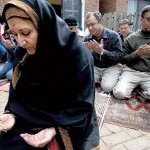
This episode has made me think about Islamic rituals – the prayers, fasting, hajj and others. Muslims are very attached to the rituals. Indeed, from an early age, religious Muslims are taught by their parents that these rituals are what makes us Muslim. They are sent to religious schools where at least the bulk, if not the entirety, of religious education is centred around teaching these rituals and the correct way to perform them.
I totally understand and empathize with this attachment. I am a product of it myself.
I feel our current stagnation should prompt us to ask the question: are these rituals the point or the means to a particular end? Did Allah command us to perform rituals for the sake of it? Or in His infinite wisdom, did He command human beings to perform religious rituals as a preparation towards a higher goal – perhaps Allah Himself?
As always, the Quran does not leave us hanging. Its author, knower of the unseen and witnessed (‘alim al-ghaybi wa ash-shahaadah – Quran 6/73), knows full well that human beings would ask about the purpose of ‘salah’, for example. We are told, for example, the purpose of salah is to remember or vivify Allah (Chapter 20, Verse 14). We are also told that salah, along with the rehearsal of verses from the book would eliminate lewdness and unrecognised acts (29/45). Furthermore, we are told that people are generally very fickle and unfocussed except those who are in salah (70/19-22).
This shows that salah is not an end in itself. Whilst in Traditional Islam, we are told that we win spiritual points for keeping up our prayers – the fajr or dawn prayers being the most lucrative especially if performed in congregation – such a thing is not mentioned at all. Rather, we can see the effect of the salah which is to bring us closer to Allah. This is how we should view rituals, as a variety of means to an end – divine closeness.
And what of other rituals? Lets take ‘sawm’ or the fast or example. The obligatory fast is instructed during the Traditional month of Ramadhan. However, the dawn to dusk fasting period is lengthened due to longer days. In the UK this year, we fasted twenty hours instead of the fourteen hours in equatorial countries. And what if there is no dusk at all for months? Shall we then starve for days until death? Fortunately, Muslims have rethought their fasting obligation and have come up with different solutions. Happily in this case, Muslims have put God before the ritual. This is in keeping with the spirit of the Quran which states fasting is for God consciousness and His magnification, leading ultimately to His closeness (2/183-186).
The same cannot be said about the stoning act during hajj. This ritual, in which the Hajj pilgrims walk up to three pillars which symbolize the devil and proceed to stone them, has the problem of overcrowding each year. In fact, tragic deaths have occurred due to overcrowding. People have been trampled to death. Yet we have not heard of a global fatwa agreement that this act can be spread out across a number of days. People’s lives are not worth the risk of one’s credibility as a fatwa maker, it seems. In this case, the ritual has become more important than the goal. This is incongruous with my understanding of the Quranic hajj which is gathering for all people to witness the benefits of the islamic system (22/25-28).
If we place my Saturday Jummah in the above context, does it really seem all that controversial? Is it really so offensive to ask to congregate on a day in which we have actually have time to get closer to Allah? We could really make a whole day of it. Fast or eat light, do some social work, discuss the Quran and wider social issues, even attend a course as well as pray and listen to a sermon, ending the day with a sumptious iftaar of thankfulness. It could truly be a rewarding experience – if only we had more time.
Why is the day itself more important than the actual activities we can perform given a longer period? These are things we need to think about. After all, we are here to worship Allah, not the religion itself.
Previous Post
October 6, 2016
Why We Need Saturday Reform Jummas
Next Post

October 13, 2016 Commentary on ITV’s Documentary ‘Islam’s Non-Believers’
Browse Our Archives
Select a Category Islamic Reform Islamofascism Islamophobia Jihadism Quranology Uncategorized
Select a Month April 2018 March 2018 February 2018 December 2017 September 2017 June 2017 May 2017 April 2017 March 2017 January 2017 October 2016 August 2016 July 2016 June 2016 May 2016 April 2016 March 2016 February 2016
Follow Us!
TAKE THE
Religious Wisdom Quiz
Who saw a vision of wheels within wheels by the Kebar River?
Select your answer to see how you score.
Ezekiel Daniel Jonah Micah
Related posts from Muslim in the Middle


A Foretaste of Infinite Being: Heaven and Hell...

Why I Reject The Narrative Of A Chosen...
Commentary on ITV’s Documentary ‘Islam’s Non-Believers’
TRENDING AT PATHEOS Muslim

25 Years Later: How Much Has Changed for...
As we approach the 25th anniversary of September 11th, I’ve found myself...

Podcast: Third Spaces & The Rise of Yemeni...
In the latest episode of The Artistic Foodies Podcast, hosts Abbas...

HalalFest Picks: Best 60 Halal Spots for Super...
Back in 2016, I came up with a list of 29...

Unity Is America’s Strength — Division Is Its...
by Hidayatullah Ahsan When Valentina Gomez, a Republican candidate for Congress in...

Zohran Mamdani and New York’s Fight Against Islamophobia
This past June, against all odds, Zohran Mamdani won the Democratic primary...

What the Fourth of July Means to a...
As we mark another Fourth of July, millions of Americans will celebrate...
view all Muslim blogs
Ad-Free & Subscriber Log-In Subscription Support
- About Us
- 2026 Calendar
- Videos
- Podcasts
- Library of World Religions
- Faith In Media Tracker
- Advertise With Us
- Write for Us
- Privacy Policy
- Terms of Service
- Do Not Sell My Data
- Contact Us
- Radiant Digital
- Manage Newsletter Subscriptions
- Unsubscribe From Notifications
- Sitemap
Copyright 2008-2026, Patheos. All rights reserved.
Subscription Support Ad-Free & Subscriber Log-In
Follow Patheos