
BuddhistCatholicContemplativeEvangelicalGeneral ChristianHinduJewishLatter-day SaintMuslimNew VisionsProgressive Christian
Beliefs
- Buddhist
- Catholic
- Contemplative
- Evangelical
- General Christian
- Hindu
- Jewish
- Latter-day Saint
- More Voices
- Muslim
- New Visions
- Pagan
- Progressive Christian
Topics
- Religion News
- Food and Religion
- Sports and Religion
- Religious Art
- Religious Music and Entertainment
- Religious Events
- History and Religion
- Style and Religion
- Politics and Religion
- Women in Religion
- Recreation Outdoors and Religion
- Business Finance and Religion
- Careers Workplace and Religion
- Education and Religion
- Family Parenting and Religion
- Health Fitness and Religion
- Home and Religion
- Relationships and Religion
- Technology and Religion
- Travel and Religion
Columnists
- Buddhist Columnists
- Business Finance and Religion Columnists
- Careers Workplace and Religion Columnists
- Catholic Columnists
- Contemplative Columnists
- Education and Religion Columnists
- Evangelists Columnists
- Family Parenting and Religion Columnists
- General Christian Columnists
- Health Fitness and Religion Columnists
- Hindu Columnists
- History and Religion Columnists
- Home and Religion Columnists
- Jewish Columnists
- More Voices Columnists
- Latter Day Columnists
- Muslim Columnists
- New Visions Columnists
- Nonreligious Columnists
- Pagan Columnists
- Politics and Religion Columnists
- Progressive Columnists
- Recreation Outdoors and Religion Columnists
- Relationships and Religion Columnists
- Religion News Columnists
- Religious Art Columnists
- Religious Events Columnists
- Religious Music and Entertainment Columnists
- Sports and Religion Columnists
- Style and Religion Columnists
- Technology and Religion Columnists
- Travel and Religion Columnists
- Women in Religion Columnists
Resource Library
- 2026 Calendar
- Library of World Religions
- The 100 Most Holy Places on Earth
- Patheos Answers
- Podcasts
- Videos
- Faith Leaders Database
- Anglican Episcopalian
- Bahai
- Baptist
- Buddhism
- Christianity
- Confucianism
- Eastern Orthodoxy
- Hinduism
- Holiness and Pentecostal
- ISKCON
- Islam
- Judaism
- Lutheran
- Methodist
- The Church of Jesus Christ of Latter-day Saints
- New Age
- Paganism
- Presbytarian and Reformed
- Protestantism
- Religion Behind the Scenes
- Roman Catholic
- Scientology
- Shia Islam
- Sikhism
- Sufism
- Sunni Islam
- Taoism
- Zen
- See all religions
Research Tools
 Ad-Free & Subscriber Log-In Subscription Support
Ad-Free & Subscriber Log-In Subscription Support
Follow Patheos 

- Trending:
- Forgiveness
- |
- Marriage
- |
- Consciousness
- |
- Death Penalty
- |
- Election
- |
- Halloween
 Permission to Live
- Home
- About the Author
- My Favorite posts
- Your Favorite Posts
- Our Love Story
- Books along the Journey
- Why I Blog
- Parenting Websites
- Permission to Live
- FAQ
- Home
- Nonreligious
- Re-Post: Lies we tell ourselves about abuse
Re-Post: Lies we tell ourselves about abuse
Last updated on: October 21, 2014 at 4:08 pm by Melissa
Re-Post: Lies we tell ourselves about abuse 2014-10-21T16:08:28-06:00 Melissa
Patheos Explore the world's faith through different perspectives on religion and spirituality! Patheos has the views of the prevalent religions and spiritualities of the world.
This post was originally published June 2011. One of the things that prompted my finally admitting my own denial, was realizing I did not want to parent the way I was parented. I wanted to believe that how I grew up had not been harmful, I wanted so badly for my parents to be right, that I refused to think about it, refused to deal with it, and even repeated it. In the end, my desire to not hurt my kids was stronger than my desire for my parents to be right. That is what snapped me out of the fog, and forced me to get help.
(I have one more re-post after this one. To read about what prompted this, check out this post.)
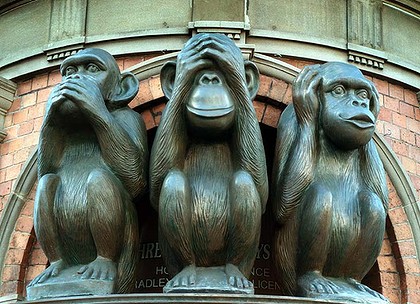
We want to think the best of people. We want to tell ourselves that we were loved and cared for. We want to be “normal” and “OK”. So we find ways to excuse what was done to us. We find ways to explain what happened. If we can avoid dealing with it, maybe we won’t hurt anymore. Here are some of the lies I was telling myself about my past.
1. Abuse only happens when parents don’t love their kids.
“My parents love me. So there is no way they could have been abusive. Right?”
This is not true. People often do very harmful things with great intentions. Even if something was not meant to deliberately hurt you, that doesn’t mean it wasn’t damaging. Here is one simple example from my childhood of unintentional harm done by well meaning parents.
I don’t think that my parents sat down one day and came up with a plan for how to give their daughters insecurities about body image. But the action they took in forcing extreme modesty, my Mom comparing our bodies to hers and being paranoid about how much food we ate and how much we weighed, and even withholding food if we were being “gluttonous”, my Dad’s criticism of our bodies as well as his refusal to ever say anything positive about how we looked because he didn’t want to “puff us up”, all took their toll. Even if something was not planned to deliberately harm, it can still hurt. (And physical, emotional, and spiritual abuse can be enacted through similar scenarios.)
Tradition and Ignorance
Abuse can be disguised when everyone else is doing it. Virtually everyone will recognize that female circumcision is abusive, that is why it is illegal in the western world. But in the areas of the world where it happens, this is a traditional practice, approved by parents who love their children. Centuries of foot binding in China was gradually phased out as the culture realized how damaging it was. Just because something is done in ignorance does not mean that it is not abusive. What is heartbreaking is when people live in a society where the information about a practice being harmful is widely available and distributed, but still continue to do it anyway.
2. I’ve dealt with it.
Oh how many times I’ve wanted to tell myself that I’m done dealing with it. That I am fixed now. I’ve figured it all out. That I’ve arrived. And every time I am proven wrong when another buried memory emerges, or I slip back into old patterns and have to fight my way out of depression. Again.
“Dealing with it” is a journey, not a destination.
It’s so tempting to stop working things out when it gets rough. Especially when lies about God get dragged into the process. “As a Christian you’re supposed to “forgive and forget.” But forgiveness (much like “dealing with it”) is a journey, not a one-time event. And forget isn’t even part of the equation. Do the memories fade? In a way they do. Not in that you don’t remember anymore, but that they slowly lose their control over you. But can I “forget” everything and pretend as though my parents raised me in a way they didn’t? No I can’t. My parents were who they were, they are who they are, they did what they did. Nothing is going to make that go away, nothing is going to reshape those memories. My relationship with my parents can never start over with a blank slate, but it can continue to grow and change as time goes on.
In a way, living with abuse in your background is kind of like living with an addiction in your past. An alcoholic can stop abusing alcohol, but they will probably never be able to drink recreationally. A cutter can put away the knife, but the scars don’t disappear. Nothing you do can make the abuse in your past disappear as though it never happened. But you can change how it affects your life!
3. I was never hurt (or) It wasn’t that bad.
Denial was a coping mechanism I had honed to an art. I buried memories. I explained abuse away when I could, and took the blame for it when I couldn’t explain it away. (If I had been smarter, better behaved, godlier etc. etc. Then they wouldn’t have done that to me.) If I could pretend it hadn’t happened, I could still believe that I was not broken, that I had nothing to work through, nothing to grieve. Opening the door to the truth was scary, because it risked crumbling the entire delusion I had built for myself.
Denial takes on many forms. It can look kind of like being a murderer in court, trying to convince the judge to let you off because you only killed one person, “At least I wasn’t a serial killer!” you protest. “I killed the guy with a gun, it’s not like I went after him with an axe!” The fact is, you are still a murderer, and you still have to deal with the repercussions of that.
Another example of this is sort of like the Pharisees’ prayer in the Bible where he prays, thanking God that he doesn’t have all the sins of other people all while completely ignoring his own sins. In this denial, you might say “I thank God that I wasn’t like those homeless children, at least I HAD parents. At least I am alive! I could have been one of those children who got killed by their parents, so I have it pretty good. I should be grateful.” You keep busy telling yourself what didn’t happen to you, so that you never have to face what actually did happen to you.
I kept telling myself that my parents had done the best they could, and that it was really my fault that I hadn’t been a better child. My parents tried, but did they really do their best? In refusing to deal with their own issues, they perpetuated them onto their children. Instead of recognizing and working through their own pain and anger over where they had come from, they justified their faults and their abusive behaviour. My parents were not concerned with what was best for me, or my siblings. They were concerned with what was best for them. What they felt was best for “God”, and what was best for the image of godliness they were trying to project. My parents did their best to make themselves look good, they did their best to make me into the daughter they wanted me to be. They did not accept me for who I was, or love me regardless of how I performed. They did not do what was best for me.
Sometimes when you mention past abuse, the abuser or other people in their life will say things like “That was a long time ago” or “Things are different now” or “Things have changed.” This can even be a lie that people tell themselves to avoid dealing with the effects of past abuse in their life.
While people do have the power to change and that is wonderful, the fact that things are different now does not mean that there were not issues in the past that need to be addressed. Just because something happened along time ago doesn’t mean it didn’t happen. Saying “Things have changed” serves to distract from doing real work in the present to correct past wrongs by claiming that everything has already been resolved. No apologies are needed, reform has already happened according to this logic. Often times, “things have changed” serves to recast the victim of abuse as the bitter party who cannot “move on.” In these scenarios usually only extremely tiny or superficial changes were made, or even none at all. When this is the case, tossing the “things are better now” card means this discussion is over. The abuser is really claiming (quite preposterously), “I have already without ever taking the time to understand what went wrong, resolved every problem related that abuse. This is true because I say so not because I have made any real effort to substantiate change.”
If you are telling yourself that “things are better now” means that the situation is resolved; you are buying just one more form of denial that distracts you from really finding healing from past abuse. Actual change would be something both parties can see and experience. It would be something lived out through tangible effort and work such as therapy, issuing genuine apologies, joining recovery support groups, and real public change in behavior.
What are some of the lies you’ve heard about abuse?
Previous Post

October 14, 2014
Re-post: A Mama's Journey
Next Post
October 24, 2014 Re-post: I am Not My Parents
Browse Our Archives
Select a Category Abuse Atheist/Agnostic Conservative Christianity Depression Discipline Education Encouragement Feminism God Healing LGBTQ Life Marriage My Childhood Parenting Politics Reflections Series Shame Uncategorized Updates Who Am I
Select a Month September 2015 May 2015 January 2015 December 2014 November 2014 October 2014 July 2014 June 2014 May 2014 February 2014 January 2014 December 2013 November 2013 September 2013 August 2013 June 2013 May 2013 March 2013 February 2013 January 2013 December 2012 November 2012 October 2012 September 2012 August 2012 July 2012 June 2012 May 2012 April 2012 March 2012 February 2012 January 2012 December 2011 November 2011 October 2011 September 2011 August 2011 July 2011 June 2011 May 2011 April 2011 March 2011 February 2011 January 2011 December 2010 November 2010 October 2010 September 2010 August 2010 July 2010 June 2010 May 2010 April 2010 March 2010 February 2010 January 2010 December 2009 November 2009
Follow Us!
TAKE THE
Religious Wisdom Quiz
What does "Jericho" mean in Hebrew?
Select your answer to see how you score.
Dry ground Place of salt Mount of olives Place of fragrance
Related posts from Permission to Live

Finally Heard? The Duggar Aftermath

Brave New Life: Part 7: The Journey Continues
TRENDING AT PATHEOS Nonreligious

Dethroning Jesus and Enthroning Yourself
Jesus Never Asked to Be Worshipped. He Asked to Be Understood. Christianity...

Why Most Christians are Really Paulians and Jobians
I Don't Care, But It Matters Let's get this out of the...

Essential Tips to Successfully Navigate the Selling Process
Selling a house can feel overwhelming, but it doesn’t have to be....

To Make Remote Work Effective, Think About Others
The COVID-19 pandemic forced many companies to rapidly transition to remote work....

Flexibility Is Key to Solving Problems of Tomorrow
The world of work is undergoing a dramatic transformation. The COVID-19 pandemic...
view all Nonreligious blogs
Ad-Free & Subscriber Log-In Subscription Support
- About Us
- 2026 Calendar
- Videos
- Podcasts
- Library of World Religions
- Faith In Media Tracker
- Advertise With Us
- Write for Us
- Privacy Policy
- Terms of Service
- Do Not Sell My Data
- Contact Us
- Radiant Digital
- Manage Newsletter Subscriptions
- Unsubscribe From Notifications
- Sitemap
Copyright 2008-2026, Patheos. All rights reserved.
Subscription Support Ad-Free & Subscriber Log-In
Follow Patheos