
BuddhistCatholicContemplativeEvangelicalGeneral ChristianHinduJewishLatter-day SaintMuslimNew VisionsProgressive Christian
Beliefs
- Buddhist
- Catholic
- Contemplative
- Evangelical
- General Christian
- Hindu
- Jewish
- Latter-day Saint
- More Voices
- Muslim
- New Visions
- Pagan
- Progressive Christian
Topics
- Religion News
- Food and Religion
- Sports and Religion
- Religious Art
- Religious Music and Entertainment
- Religious Events
- History and Religion
- Style and Religion
- Politics and Religion
- Women in Religion
- Recreation Outdoors and Religion
- Business Finance and Religion
- Careers Workplace and Religion
- Education and Religion
- Family Parenting and Religion
- Health Fitness and Religion
- Home and Religion
- Relationships and Religion
- Technology and Religion
- Travel and Religion
Columnists
- Buddhist Columnists
- Business Finance and Religion Columnists
- Careers Workplace and Religion Columnists
- Catholic Columnists
- Contemplative Columnists
- Education and Religion Columnists
- Evangelists Columnists
- Family Parenting and Religion Columnists
- General Christian Columnists
- Health Fitness and Religion Columnists
- Hindu Columnists
- History and Religion Columnists
- Home and Religion Columnists
- Jewish Columnists
- More Voices Columnists
- Latter Day Columnists
- Muslim Columnists
- New Visions Columnists
- Nonreligious Columnists
- Pagan Columnists
- Politics and Religion Columnists
- Progressive Columnists
- Recreation Outdoors and Religion Columnists
- Relationships and Religion Columnists
- Religion News Columnists
- Religious Art Columnists
- Religious Events Columnists
- Religious Music and Entertainment Columnists
- Sports and Religion Columnists
- Style and Religion Columnists
- Technology and Religion Columnists
- Travel and Religion Columnists
- Women in Religion Columnists
Resource Library
- 2026 Calendar
- Library of World Religions
- The 100 Most Holy Places on Earth
- Patheos Answers
- Podcasts
- Videos
- Faith Leaders Database
- Anglican Episcopalian
- Bahai
- Baptist
- Buddhism
- Christianity
- Confucianism
- Eastern Orthodoxy
- Hinduism
- Holiness and Pentecostal
- ISKCON
- Islam
- Judaism
- Lutheran
- Methodist
- The Church of Jesus Christ of Latter-day Saints
- New Age
- Paganism
- Presbytarian and Reformed
- Protestantism
- Religion Behind the Scenes
- Roman Catholic
- Scientology
- Shia Islam
- Sikhism
- Sufism
- Sunni Islam
- Taoism
- Zen
- See all religions
Research Tools
 Ad-Free & Subscriber Log-In Subscription Support
Ad-Free & Subscriber Log-In Subscription Support
Follow Patheos 

- Trending:
- Forgiveness
- |
- Marriage
- |
- Consciousness
- |
- Death Penalty
- |
- Election
- |
- Halloween
 Permission to Live
- Home
- About the Author
- My Favorite posts
- Your Favorite Posts
- Our Love Story
- Books along the Journey
- Why I Blog
- Parenting Websites
- Permission to Live
- FAQ
- Home
- Nonreligious
- Sexuality and the Church Part 2
Sexuality and the Church Part 2
Last updated on: July 10, 2013 at 4:35 pm by Melissa
Sexuality and the Church Part 2 2013-07-10T16:35:19-06:00 Melissa
Patheos Explore the world's faith through different perspectives on religion and spirituality! Patheos has the views of the prevalent religions and spiritualities of the world.

*Warning: The following may contain mature subject matter. If you are uncomfortable with, or offended by reading about sexuality, proceed with caution.*
In the first part of this series, I talked about how the Church’s restrictions on sexuality really bothered me. I felt like it was no one’s business what I did in my bedroom, and I couldn’t see any reason for boundaries. I had always been taught that Homosexuality was a choice, and I was still operating under that assumption. But that started to change as I had more exposure to the world outside of my upbringing. Why would anyone make a choice to be part of a persecuted minority? It seems like these atractions are just a part of them that they can’t really explain. And gay and lesbian and transgendered persons seem to be about the same as other people, they need to eat sleep and have jobs and relationships just like everyone else, they certainly don’t seem demon possessed. The more I read, the more stuff like this disgusts me.
I’ve started to see just how tight a box Christians squeeze themselves into. To be a “real” christian, or a “real” man or woman, there are certain expectations that have to be fulfilled if you want to be socially accepted. It bothers me that a guy who is interested in fashion isn’t considered as much of a man as the guy interested in engineering. A mother who wants to work out of the home is labeled as “feminist” and certainly isn’t following God’s plan for all women.
I’ve become so frustrated by all the judgment and stereotyping. I’ve started to cringe when Christians say things like “I’m a sinner too”. Well isn’t it nice for you that your sin is more socially acceptable or more private than the person with a homosexual struggle. There is nothing wrong with being a more flamboyant male, or a more “butch” female. Gays are people too. There is nothing sinful about being attracted to people of the same sex. If we are Catholic, then we believe that acting on those temptations is a sin. And here is where my revelation from the catechism came in.
Like I said in Part one, I didn’t understand why the catechism had the list of boundaries it did for sexuality, I was kind of under the impression that as long as you are married, then anything you wanted to do as husband and wife was fine. Now suddenly I saw the hypocrisy of it all. The Catholic Church judges and defines sexuality as a whole, not by individual groups. They teach the same sexual boundaries to every person. Sex is always tied to procreation and confined to marriage. Sexual sin is all the same, it is all disordered. Every person has to deal with the repercussions of their own sexual sin. In the Protestant world, we teach the biblical texts against homosexuality, but do not hold heterosexual couples to the same standard. Evangelical Protestants see sexuality as a gay or straight thing. If you are lucky enough to be straight, then sex is good. If you are gay, then you are evil. As I read the Catholic Catechism on Sexuality again, I was stunned to see the difference in approach.
The Catholic Church defines sexuality by the actions, not the orientation. Natural sexual acts are defined as open to life (ie. The completion of the sex act occurs with the ejaculation of the penis inside the vagina) Unnatural (disordered) sexual acts are any sexual act that is not open to life. Disordered sex acts (including contraceptives or any sexual act that involves ejaculation outside of the vagina) are sin and are to be avoided. This was a stark contrast from the “anything goes as long as you are married” viewpoint.
Every Catholic is called to live chastely, whether single or married, heterosexual or homosexual. This is a hard teaching and a high calling. A married person is called to preserve a relationship with one person for a lifetime, and they must remain open to life, which can result in birthing and supporting many more children than the societal norm. A single person is called to live without that type of relationship, it can be a very lonely road. Both involve sacrifices.
The homosexual person is the next notch again, while a single person always has the option of marriage if they eventually meet the “right” person, a gay person will be unable to marry someone of the same sex in the eyes of the Catholic Church. For those dealing with same-sex attraction, this is not an easy reality.
I feel as though God asks alot of the person with same-sex attraction. In the face of this tough dilemma, I think that the Catholic Catechism hits the mark:
2357 Homosexuality refers to relations between men or between women who experience an exclusive or predominant sexual attraction toward persons of the same sex. It has taken a great variety of forms through the centuries and in different cultures. Its psychological genesis remains largely unexplained. Basing itself on Sacred Scripture, which presents homosexual acts as acts of grave depravity, tradition has always declared that “homosexual acts are intrinsically disordered.”They are contrary to the natural law. They close the sexual act to the gift of life. They do not proceed from a genuine affective and sexual complementarity. Under no circumstances can they be approved.
2358 The number of men and women who have deep-seated homosexual tendencies is not negligible. This inclination, which is objectively disordered, constitutes for most of them a trial. They must be accepted with respect, compassion, and sensitivity. Every sign of unjust discrimination in their regard should be avoided. These persons are called to fulfill God’s will in their lives and, if they are Christians, to unite to the sacrifice of the Lord’s Cross the difficulties they may encounter from their condition.
2359 Homosexual persons are called to chastity. By the virtues of self-mastery that teach them inner freedom, at times by the support of disinterested friendship, by prayer and sacramental grace, they can and should gradually and resolutely approach Christian perfection.
The Church teaches compassion towards homosexuals. They acknowledge that this is not as simple as choosing or not choosing to be gay. Discrimination is to be avoided. They are to be treated with respect and sensitivity and love. In the eyes of the Catholic church, gay sexual conduct is just as disordered as use of contraceptives or sexual actions that are not open to life by heterosexuals, married or not. When I suggested this way of thinking to evangelical family members, I was surprised by the reactions of rage. How dare I compare gay sex to any heterosexual activity!? To suggest that completed oral sex, or masturbation or the use of condoms constitute unnatural sex acts and therefore are the same as homosexual sex acts did not even compute.
In the Evangelical world I have found that same-sex attraction itself is considered a sin. After all, if this is 100% your choice, than having homosexual temptation or longing is sinful. There is no such thing as a gay christian in this mindset. If you really were Christian, you would be set free and choose to be heterosexual, and then marry. (And consequently be able to perform any sex act you want!)
To struggle with same-sex attraction is not acceptable, a point that John Kippley in his book “Sex and the Marriage Covenant” hits on so well:
“Unfortunately, these words (abusive names for homosexually active people) are sometimes (and quite hypocritically) used by heterosexually immoral persons, who may be engaged in identical perversities, to ridicule chaste homosexual persons or even certain persons with no same -sex attraction whatsoever.”
It has gotten so bad that if you dress or act differently from “the norm” you are vulnerable to attack from homophobic people. In their mentality, there is no such thing as a chaste gay person. And if there was such a thing, if that chaste gay person ever slipped up and gave into their temptation, that would invalidate that persons faith-walk. After all, they couldn’t possibly be a “real” christian if they sinned homosexually.
By contrast, in the Catholic Church, sexual sin is sexual sin (for example, completed oral sex with someone of the same or opposite sex). And the sinful actions can be forgiven even if they continue to be a struggle for the rest of that person’s life.
The Catholic Church is the only church with a leg to stand on when it comes to doctrinal teaching on sexuality.
But I still wonder if this teaching of compassion and forgiveness and love translates from paper to the life of the Church?
Edited to add: I continue to wrestle with the teachings of christianity on homosexuality. Over the last year and a half my perception on these issues has continued to develope and change. I’ve written more about GLBTQ questions and issues here. And I always love it when people email me to continue the discussion.
Previous Post

June 5, 2010
Saturday Evening Post #4
Next Post
June 9, 2010 The Snack
Browse Our Archives
Select a Category Abuse Atheist/Agnostic Conservative Christianity Depression Discipline Education Encouragement Feminism God Healing LGBTQ Life Marriage My Childhood Parenting Politics Reflections Series Shame Uncategorized Updates Who Am I
Select a Month September 2015 May 2015 January 2015 December 2014 November 2014 October 2014 July 2014 June 2014 May 2014 February 2014 January 2014 December 2013 November 2013 September 2013 August 2013 June 2013 May 2013 March 2013 February 2013 January 2013 December 2012 November 2012 October 2012 September 2012 August 2012 July 2012 June 2012 May 2012 April 2012 March 2012 February 2012 January 2012 December 2011 November 2011 October 2011 September 2011 August 2011 July 2011 June 2011 May 2011 April 2011 March 2011 February 2011 January 2011 December 2010 November 2010 October 2010 September 2010 August 2010 July 2010 June 2010 May 2010 April 2010 March 2010 February 2010 January 2010 December 2009 November 2009
Follow Us!
TAKE THE
Religious Wisdom Quiz
What king was known for writing many proverbs?
Select your answer to see how you score.
David Saul Hezekiah Solomon
Related posts from Permission to Live

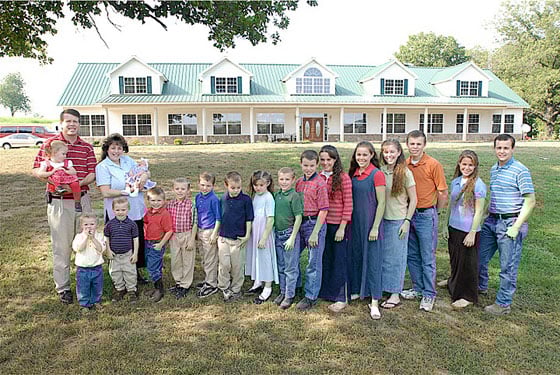
Finally Heard? The Duggar Aftermath

Fundamentalist Approved Feminist Literature
TRENDING AT PATHEOS Nonreligious

Dethroning Jesus and Enthroning Yourself
Jesus Never Asked to Be Worshipped. He Asked to Be Understood. Christianity...

Why Most Christians are Really Paulians and Jobians
I Don't Care, But It Matters Let's get this out of the...

Essential Tips to Successfully Navigate the Selling Process
Selling a house can feel overwhelming, but it doesn’t have to be....

To Make Remote Work Effective, Think About Others
The COVID-19 pandemic forced many companies to rapidly transition to remote work....

Flexibility Is Key to Solving Problems of Tomorrow
The world of work is undergoing a dramatic transformation. The COVID-19 pandemic...
view all Nonreligious blogs
Ad-Free & Subscriber Log-In Subscription Support
- About Us
- 2026 Calendar
- Videos
- Podcasts
- Library of World Religions
- Faith In Media Tracker
- Advertise With Us
- Write for Us
- Privacy Policy
- Terms of Service
- Do Not Sell My Data
- Contact Us
- Radiant Digital
- Manage Newsletter Subscriptions
- Unsubscribe From Notifications
- Sitemap
Copyright 2008-2026, Patheos. All rights reserved.
Subscription Support Ad-Free & Subscriber Log-In
Follow Patheos