
BuddhistCatholicContemplativeEvangelicalGeneral ChristianHinduJewishLatter-day SaintMuslimNew VisionsProgressive Christian
Beliefs
- Buddhist
- Catholic
- Contemplative
- Evangelical
- General Christian
- Hindu
- Jewish
- Latter-day Saint
- More Voices
- Muslim
- New Visions
- Pagan
- Progressive Christian
Topics
- Religion News
- Food and Religion
- Sports and Religion
- Religious Art
- Religious Music and Entertainment
- Religious Events
- History and Religion
- Style and Religion
- Politics and Religion
- Women in Religion
- Recreation Outdoors and Religion
- Business Finance and Religion
- Careers Workplace and Religion
- Education and Religion
- Family Parenting and Religion
- Health Fitness and Religion
- Home and Religion
- Relationships and Religion
- Technology and Religion
- Travel and Religion
Columnists
- Buddhist Columnists
- Business Finance and Religion Columnists
- Careers Workplace and Religion Columnists
- Catholic Columnists
- Contemplative Columnists
- Education and Religion Columnists
- Evangelists Columnists
- Family Parenting and Religion Columnists
- General Christian Columnists
- Health Fitness and Religion Columnists
- Hindu Columnists
- History and Religion Columnists
- Home and Religion Columnists
- Jewish Columnists
- More Voices Columnists
- Latter Day Columnists
- Muslim Columnists
- New Visions Columnists
- Nonreligious Columnists
- Pagan Columnists
- Politics and Religion Columnists
- Progressive Columnists
- Recreation Outdoors and Religion Columnists
- Relationships and Religion Columnists
- Religion News Columnists
- Religious Art Columnists
- Religious Events Columnists
- Religious Music and Entertainment Columnists
- Sports and Religion Columnists
- Style and Religion Columnists
- Technology and Religion Columnists
- Travel and Religion Columnists
- Women in Religion Columnists
Resource Library
- 2026 Calendar
- Library of World Religions
- The 100 Most Holy Places on Earth
- Patheos Answers
- Podcasts
- Videos
- Faith Leaders Database
- Anglican Episcopalian
- Bahai
- Baptist
- Buddhism
- Christianity
- Confucianism
- Eastern Orthodoxy
- Hinduism
- Holiness and Pentecostal
- ISKCON
- Islam
- Judaism
- Lutheran
- Methodist
- The Church of Jesus Christ of Latter-day Saints
- New Age
- Paganism
- Presbytarian and Reformed
- Protestantism
- Religion Behind the Scenes
- Roman Catholic
- Scientology
- Shia Islam
- Sikhism
- Sufism
- Sunni Islam
- Taoism
- Zen
- See all religions
Research Tools
 Ad-Free & Subscriber Log-In Subscription Support
Ad-Free & Subscriber Log-In Subscription Support
Follow Patheos 

- Trending:
- Forgiveness
- |
- Marriage
- |
- Consciousness
- |
- Death Penalty
- |
- Election
- |
- Halloween
 Peculiar People
- Home
- Latter-day Saint
- A Chastened Chaffetz Should Learn from Mo Udall
A Chastened Chaffetz Should Learn from Mo Udall
Last updated on: February 12, 2017 at 4:48 am by Gary A.
A Chastened Chaffetz Should Learn from Mo Udall 2017-02-12T04:48:18+00:00 Gary A.
Patheos Explore the world's faith through different perspectives on religion and spirituality! Patheos has the views of the prevalent religions and spiritualities of the world.
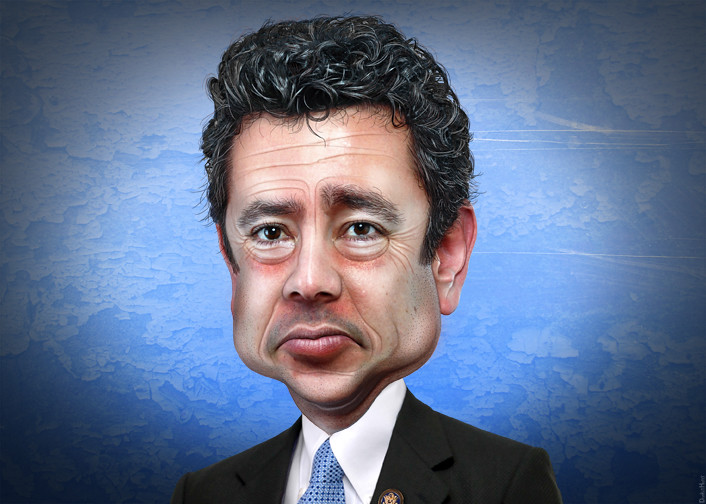
Image obtained from DonkeyHotey through Creative Commons.
Jason Chaffetz was recently tasked by angry constituents to “do [his] job.” He should look to fellow Mormon and former congressman Mo Udall for some ideas.
At a speech before the Brookings Institution on January 11, 2017, the director of the U.S. Office of Government Ethics, Walter Shaub, Jr., stated that Donald Trump’s plan to avoid conflicts of interest was “meaningless.” This assessment is borne out by the facts – Trump’s business assets have not been placed in a blind trust, his sons will oversee the operations of the Trump Organization, and he has not divested himself of his holdings. This will make it painfully simple for the President to make decisions that will benefit his own bottom line at the expense of the national interest. The day following Director Shaub’s publication of these “inconvenient truths,” Representative Jason Chaffetz (R-UT), the chairman of the House Oversight Committee , sent him a threatening letter criticizing him for “blurring the line between public relations and official ethics guidance,” hinting that the Oversight Committee might not reauthorize the Ethics Office, and demanding that Shaub make himself available for an “interview” with Oversight Committee staff.
By engaging in heavy-handed intimidation of a government ethics watchdog, Chaffetz, a Mormon, is defying the guidance of Mormon leaders who have emphasized “the need for honesty and integrity . . . in the conduct of government officials.” He is also shirking the legacy of generations of Mormon politicians who have adhered to the highest standards of ethical conduct. Perhaps Chaffetz could use a refresher on what it means to be an ethical Mormon in public office. If so, he can look to the example set by Arizona Congressman Mo Udall.
Mo Udall was a giant of a man, in both stature and integrity. Measuring a towering 6 feet 5 inches, Udall was born and raised in the frontier town of St. Johns, AZ, a location in Arizona’s White Mountains which witnesses cold, unforgiving winters and harsh, scorching summers. His father, Levi Udall, was a forward-looking lawyer and judge who wrote the Arizona Supreme Court opinion that granted Native Americans living on reservations the right to vote. Levi was also a long-serving member of the Mormon Church’s lay clergy, and it is likely that the ecclesiastical values he espoused, in addition to his relatively progressive views on race, played a seminal role in shaping Mo’s outlook on life.
During WW II, Udall was commissioned as an officer in the U.S. Army and at one point was put in charge of a squadron of African-American soldiers at Lake Charles, LA. He was known for treating his men with dignity and respect, basic courtesies often not afforded them by other white officers. Even though he wasn’t yet a trained lawyer, he also served as defense counsel for African-American GIs who were being court-martialed and obtained an acquittal for one of them who had been unjustly accused by a racist white sheriff of attempted murder. Later, when he was stationed in the Pacific, he advocated for desegregating the military in letters sent to a veterans’ group and FDR.
After his military service, Udall returned to the University of Arizona (which he had attended before the war) where he studied law, was elected student body president, and forcibly integrated the Wildcats’ dining hall, which black students had been forbidden from using. After a few detours (he briefly played professional basketball for a Denver-based team) he earned his law degree and began practicing law in Tucson, AZ, where he was eventually elected as the county attorney (chief prosecutor) of Pima County. Later, when JFK nominated his brother, Stewart, to be his Secretary of the Interior, Mo was appointed to fill his vacated seat in the U.S. House of Representatives, a seat that he held until he resigned for health reasons in 1991.
As a congressman, Mo was unabashed in his drive for ethics reform. He introduced legislation requiring representatives to publicly disclose their personal finances (something that he had been doing voluntarily since 1964) and campaign expenditures and contributions. He was also one of the drafters of the Federal Elections Campaign Act of 1971, a law that helped minimize money’s impact on politics by limiting political advertising expenditures. This drive to lessen the corrupting influence of money was later expressed in the Clean Elections Act of 1974, through which he tried, but failed, to mandate government financing of congressional races.
In addition to his ethics workload, Udall was unafraid of taking on unpopular causes. After receiving letters from Vietnam vet Ron Ridenhour, Udall and other Arizona politicians encouraged military authorities to investigate allegations of the My Lai massacre, an investigation which led to the conviction of one of the atrocity’s perpetrators, William Calley, and which spurred the Pulitzer Prize-winning reporting of Seymour Hersh on the incident. Although he haled from a district that, at the time, was only 3% African-American, he shepherded northern and western representatives into voting for the Civil Rights Act of 1964 and the Voting Rights Act of 1965. Finally, he took on entrenched interests in his own party by advocating for postal service reform in 1971 and for de-escalation in Vietnam in 1967.
In contrast to Mo Udall’s honesty and courage, Jason Chaffetz has shown himself to be a political chameleon, who, to borrow a favorite Mormon scripture, “wavereth . . . like a wave of the sea.” Besides his sycophantic attempts to curry favor with Trump by harassing Director Shaub, he flip-flopped in his support for the Donald, saying after the appalling “Access Hollywood” tape that he could “no longer in good conscience endorse [Trump] for president” only to walk back this statement by later saying “I am voting for him.” Further, he has stonewalled attempts to investigate Trump’s numerous potential conflicts of interest, despite 65% of Utah voters supporting an investigation.
Mo Udall’s life is a model of commitment to justice, fairness, and ethics in government. Jason Chaffetz has shown that he is willing to ignore ethical breaches if it advances his political career. He could learn a lot from Mo’s example.
The Church of Jesus Christ of Latter-day Saints
Previous Post

January 29, 2017
Your Optimism Isn't a Virtue
Next Post
March 5, 2017 If Thomas Friedman were Mormon . . .
Browse Our Archives
Select a Category American society Art baptism Blogging Book of Mormon Book review Brigham Young Brigham Young University Bundy Catholicism Christianity Communalism Community of Christ conferences conversion correlation Culture denominations Digital History Discipline Councils diversity Doctrine Donald Trump education Emma Smith ethics family feminism fiction Film review food French Polynesia Fundamentalism Gay rights Gender global Gun politics Halloween health History Honor Code hymns Joseph Smith Kirtland Temple law of consecration massacre site military Ministering missionary moderate Mormon feminism Modern Mormonism Mormon origins Mormon War Mormonism Mormonism, politics, Romney Obama Peace politics Polygamy Pope Francis Poverty Prayer Priesthood Protestantism Race Religious freedom Revelation Reviews sacred sites Scientology Scripture Secularization See Stones sexual assault Star Wars television temples Tithing Utah violence war women's ordination
Select a Month October 2018 September 2018 August 2018 May 2018 April 2018 March 2018 February 2018 January 2018 December 2017 October 2017 September 2017 July 2017 June 2017 May 2017 April 2017 March 2017 February 2017 January 2017 November 2016 October 2016 August 2016 July 2016 June 2016 May 2016 April 2016 March 2016 February 2016 January 2016 December 2015 November 2015 October 2015 September 2015 August 2015 July 2015 June 2015 April 2015 March 2015 February 2015 January 2015 December 2014 November 2014 October 2014 September 2014 August 2014 July 2014 June 2014 May 2014 April 2014 March 2014 February 2014 January 2014 December 2013 November 2013 October 2013 September 2013 August 2013 July 2013 June 2013 May 2013 April 2013 March 2013 February 2013 January 2013 December 2012 November 2012 October 2012 September 2012 August 2012 July 2012 June 2012 May 2012 April 2012 March 2012
Follow Us!
TAKE THE
Religious Wisdom Quiz
What does the name "Samuel" mean?
Select your answer to see how you score.
Heard by God Chosen One God is King Gift from God
Related posts from Peculiar People

A Letter for My Someday-Teenage Children

Confederate Symbols and the Black Flag of ISIS:...

First-Order Myopia: What Donald Trump Can Learn from...
TRENDING AT PATHEOS Latter-day Saint

Did Prayer Cure His Cancer? Or Was It...
At 4 AM one morning, Joshua W. Brown’s wife awoke to a...

8 Ways a Near-Death Experience Rewires the Soul
Does Consciousness Survive Physical Death? After 50 Years of Research, Dr. Raymond...

Holy Longing: What Our Restlessness Is Telling Us
“One can find so many pains when the rain is falling.” -John...

What this is NOT about. This blog is definitely not about...

Who said the Israelites were God’s chosen? That’s right, they did. Who...

The Spirit World Is the Real World: God...
A Monk’s Wisdom on Body and Spirit I sit with Brother Martin...
view all Latter-day Saint blogs
Ad-Free & Subscriber Log-In Subscription Support
- About Us
- 2026 Calendar
- Videos
- Podcasts
- Library of World Religions
- Faith In Media Tracker
- Advertise With Us
- Write for Us
- Privacy Policy
- Terms of Service
- Do Not Sell My Data
- Contact Us
- Radiant Digital
- Manage Newsletter Subscriptions
- Unsubscribe From Notifications
- Sitemap
Copyright 2008-2026, Patheos. All rights reserved.
Subscription Support Ad-Free & Subscriber Log-In
Follow Patheos