
BuddhistCatholicContemplativeEvangelicalGeneral ChristianHinduJewishLatter-day SaintMuslimNew VisionsProgressive Christian
Beliefs
- Buddhist
- Catholic
- Contemplative
- Evangelical
- General Christian
- Hindu
- Jewish
- Latter-day Saint
- More Voices
- Muslim
- New Visions
- Pagan
- Progressive Christian
Topics
- Religion News
- Food and Religion
- Sports and Religion
- Religious Art
- Religious Music and Entertainment
- Religious Events
- History and Religion
- Style and Religion
- Politics and Religion
- Women in Religion
- Recreation Outdoors and Religion
- Business Finance and Religion
- Careers Workplace and Religion
- Education and Religion
- Family Parenting and Religion
- Health Fitness and Religion
- Home and Religion
- Relationships and Religion
- Technology and Religion
- Travel and Religion
Columnists
- Buddhist Columnists
- Business Finance and Religion Columnists
- Careers Workplace and Religion Columnists
- Catholic Columnists
- Contemplative Columnists
- Education and Religion Columnists
- Evangelists Columnists
- Family Parenting and Religion Columnists
- General Christian Columnists
- Health Fitness and Religion Columnists
- Hindu Columnists
- History and Religion Columnists
- Home and Religion Columnists
- Jewish Columnists
- More Voices Columnists
- Latter Day Columnists
- Muslim Columnists
- New Visions Columnists
- Nonreligious Columnists
- Pagan Columnists
- Politics and Religion Columnists
- Progressive Columnists
- Recreation Outdoors and Religion Columnists
- Relationships and Religion Columnists
- Religion News Columnists
- Religious Art Columnists
- Religious Events Columnists
- Religious Music and Entertainment Columnists
- Sports and Religion Columnists
- Style and Religion Columnists
- Technology and Religion Columnists
- Travel and Religion Columnists
- Women in Religion Columnists
Resource Library
- 2026 Calendar
- Library of World Religions
- The 100 Most Holy Places on Earth
- Patheos Answers
- Podcasts
- Videos
- Faith Leaders Database
- Anglican Episcopalian
- Bahai
- Baptist
- Buddhism
- Christianity
- Confucianism
- Eastern Orthodoxy
- Hinduism
- Holiness and Pentecostal
- ISKCON
- Islam
- Judaism
- Lutheran
- Methodist
- The Church of Jesus Christ of Latter-day Saints
- New Age
- Paganism
- Presbytarian and Reformed
- Protestantism
- Religion Behind the Scenes
- Roman Catholic
- Scientology
- Shia Islam
- Sikhism
- Sufism
- Sunni Islam
- Taoism
- Zen
- See all religions
Research Tools
 Ad-Free & Subscriber Log-In Subscription Support
Ad-Free & Subscriber Log-In Subscription Support
Follow Patheos 

- Trending:
- Forgiveness
- |
- Marriage
- |
- Consciousness
- |
- Death Penalty
- |
- Election
- |
- Halloween
 Peculiar People
- Home
- Latter-day Saint
- What BYU’s Honor Code Office Doesn’t Understand About Trauma is Endangering Victims
What BYU’s Honor Code Office Doesn’t Understand About Trauma is Endangering Victims
Last updated on: May 15, 2016 at 6:59 am by Emily Belanger
What BYU’s Honor Code Office Doesn’t Understand About Trauma is Endangering Victims 2016-05-15T06:59:46+00:00 Emily Belanger
Patheos Explore the world's faith through different perspectives on religion and spirituality! Patheos has the views of the prevalent religions and spiritualities of the world.
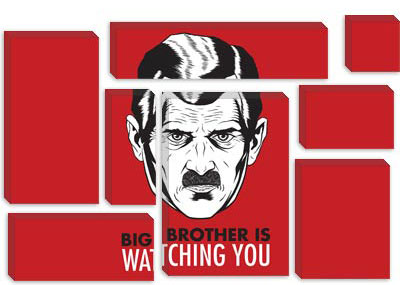
Image accessed through Creative Commons.
By now, I’m guessing you’ve heard about BYU’s track record of using Title IX investigations about alleged instances of sexual assault as an opportunity to investigate the alleged victim for any potential honor code violation, a track record that may not only discourage victims from coming forward but may even, in one extreme case, interfere with a criminal case. For their part, BYU and the Honor Code Office are firmly denying that they would ever punish someone for being assaulted.
the current policies reflect a deep misunderstanding of sexual assault and enable poorly-trained individuals to punish victims whom they don’t believe.
As a former student and former faculty member, I have never experienced any problems with the Honor Code Office (though it helps that I was even more straight-laced than your average BYU student). And when they say they’d never punish someone for being a victim of assault, I’m positive they mean it – but I’m equally positive that the current policies reflect a deep misunderstanding of sexual assault and enable poorly-trained individuals to punish victims whom they don’t believe.
Without the proper training, trauma is very easy to misinterpret. Here are just a few ways a lack of expertise could backfire:
1. A victim could be required to put his or her mental health at risk by unnecessarily rehashing events with the honor code office. If you’re thinking, “Oh, stop being a baby – talking about what happened to you is good for you,” I’m gonna go out on a limb and guess that you’re also the kind of person who tells survivors not to dwell on the past. But people who understand trauma know that there can be a fine line between discussing events for therapeutic purposes and severely worsening symptoms of PTSD. Victims may already be straining their health by working with the police or the Title IX Office. Why make things worse by requiring them to explain why they were breaking curfew before their assault? Keep in mind – PTSD is an actual disorder. It’s not something victims just make up for sympathy.
2. The Honor Code Office may misinterpret the events of the assault and punish a victim for something they didn’t even do. For instance, an HCO employee who doesn’t understand the way consent works (namely, that it’s sexual assault if consent is absent, not just if a refusal takes place*)* may interpret prior consent, or the lack of an audible “no” during an encounter to mean the alleged victim consented and is now lying. But remember that whole “dissociation” thing I mentioned, where a person can go numb and shut off their emotions? That can happen during an assault too. Heck, it can even happen during an encounter that the other person genuinely thought was consensual. That’s why so many feminists are trying to replace the saying “no means no” with “yes means yes.” The lack of a “no” does not equal consent.
If abuse can interfere with the protective instincts of a parent, then how much easier is it for a perpetrator to convince a friend or romantic partner that their determination to follow the Honor Code is selfish?
3. The Honor Code Office may punish a victim for actions a perpetrator coerced or manipulated them into taking. Most people are not assaulted by a complete stranger but rather by someone who knows them, so a perpetrator has time to groom the victim, perhaps by isolating them from friends and belittling the victim’s personal standards until the victim no longer feels he or she has the right to say “no” to things they normally would. In scenarios of domestic abuse, the psychological ramifications of abuse are so extreme that parents often fail to protect their children from a spouse. If abuse can interfere with the protective instincts of a parent, then how much easier is it for a perpetrator to convince a friend or romantic partner that their determination to follow the Honor Code is selfish?
4. Fear of being punished for real or imagined Honor Code violations may endanger victims and other students by leaving victims of assault terrified to report what they’ve been through. This point is already explored at length in the many articles that have been published over the past couple weeks.
5. The Honor Code Office, without even meaning to, may target a female victim because of her biological sex. Think about it: intercourse often leads to pregnancy, but only female students get pregnant. If an assault survivor is single, then showing signs of pregnancy is like placing a target on her stomach for the HCO. If her bishop accepts her account of events then maybe she’ll be safe. However, through a mutual friend we are both very close to, I know of at least one survivor of assault whose bishop did not accept her account when she got pregnant – as a result, she was kicked out of a CES university (I won’t say which, in order to protect the victim’s identity). So if the bishop doesn’t believe her or if someone else reports her to the HCO, then her sex may automatically be placing her at increased risk of harassment, since being female generally carries the risk of pregnancy following an assault.
A woman who gets pregnant following an assault is backed into a terrible corner… even silence about her assault may not protect her from an HCO investigation.
It’s also worth noting that, despite the Church’s stance allowing abortion in cases such as sexual assault, the Church’s stance does not leave that decision between the woman and her doctor. Instead, the Church states that abortion “may” be justified in that case but that it also may not be justified and that women considering abortion for any reason need to counsel with their bishop. While this policy concerns me in general, my point in this case is about the HCO. A woman who gets pregnant following an assault is backed into a terrible corner: if she seeks an abortion without her bishop’s counsel, she is going against her faith’s policies and risks getting an abortion that future leaders will deem “unjustified.” But if she seeks his counsel, he may misunderstand the situation and report her to the HCO. In other words, even silence about her assault may not protect her from an HCO investigation.
Given all these risks, why does BYU investigate alleged victims for potential HCO violations? Why not offer immunity to alleged victims for any HC infractions that come to light because they reported a sexual assault?
I’ll have to speculate here to some extent, but I suspect there are two main reasons:
A. The HCO is genuinely concerned about fairness and justice. If you see the Honor Code as an integral part of campus life and believe anyone who breaks it should work with the HCO to mend their ways, then it may also drive you batty to know that many students on campus get away with breaking it. So you may reason that it’s not fair to the students who confess a violation to their bishop (drinking coffee, drinking alcohol, engaging in consensual premarital or extramarital sex, etc) to face some very difficult consequences, while a student who reveals engaging in the same exact behavior is shielded from punitive action simply because they revealed the violations while reporting an assault. And sure, that’s not fair, insofar as it happens. But is the risk that someone will get away with breaking the Honor Code truly worse than all these other risks I’ve outlined?
Is the risk that someone will get away with breaking the Honor Code truly worse than all these other risks I’ve outlined?
B. The HCO may believe that granting immunity in cases of alleged sexual assault will give students incentive to lie about assault any time they expect to be caught in a violation. But there are a few problems with that reasoning. First, survivors of assault already face the stigma of not matching up with cultural ideas of sexual purity, so I doubt BYU students are going to flood the HCO in order to report cases of assault that never happened. Second, this is the same flawed logic that formerly led the HCO to require members of other religions to shave their beards – they feared students would take advantage of a religious exemption on shaving. Since they lifted that ban, the campus’s small non-LDS population has not, in fact, swarmed the HCO in order to lie their way into beard cards.
And at the end of the day, which is worse: the risk that some students will lie about assault in order to get immunity for genuine honor code violations?
Or the risk that the HCO is harassing and punishing victims of assault and allowing perpetrators to roam the campus, by making victims too terrified to come forward?
If the first scenario is what scares you, you need to work on your priorities.
Like Peculiar People on Facebook:
Previous Post

April 11, 2016
Ritual and Renewal in Zootopia
Next Post
May 10, 2016 Mormonism Doesn't Have a Monopoly on Rape Culture: It's Just an Easy Target
Browse Our Archives
Select a Category American society Art baptism Blogging Book of Mormon Book review Brigham Young Brigham Young University Bundy Catholicism Christianity Communalism Community of Christ conferences conversion correlation Culture denominations Digital History Discipline Councils diversity Doctrine Donald Trump education Emma Smith ethics family feminism fiction Film review food French Polynesia Fundamentalism Gay rights Gender global Gun politics Halloween health History Honor Code hymns Joseph Smith Kirtland Temple law of consecration massacre site military Ministering missionary moderate Mormon feminism Modern Mormonism Mormon origins Mormon War Mormonism Mormonism, politics, Romney Obama Peace politics Polygamy Pope Francis Poverty Prayer Priesthood Protestantism Race Religious freedom Revelation Reviews sacred sites Scientology Scripture Secularization See Stones sexual assault Star Wars television temples Tithing Utah violence war women's ordination
Select a Month October 2018 September 2018 August 2018 May 2018 April 2018 March 2018 February 2018 January 2018 December 2017 October 2017 September 2017 July 2017 June 2017 May 2017 April 2017 March 2017 February 2017 January 2017 November 2016 October 2016 August 2016 July 2016 June 2016 May 2016 April 2016 March 2016 February 2016 January 2016 December 2015 November 2015 October 2015 September 2015 August 2015 July 2015 June 2015 April 2015 March 2015 February 2015 January 2015 December 2014 November 2014 October 2014 September 2014 August 2014 July 2014 June 2014 May 2014 April 2014 March 2014 February 2014 January 2014 December 2013 November 2013 October 2013 September 2013 August 2013 July 2013 June 2013 May 2013 April 2013 March 2013 February 2013 January 2013 December 2012 November 2012 October 2012 September 2012 August 2012 July 2012 June 2012 May 2012 April 2012 March 2012
Follow Us!
TAKE THE
Religious Wisdom Quiz
Who pleaded with Joseph for Benjamin's release?
Select your answer to see how you score.
Judah Reuben Naphtali Levi
Related posts from Peculiar People


A Letter for My Someday-Teenage Children

Confederate Symbols and the Black Flag of ISIS:...

TRENDING AT PATHEOS Latter-day Saint

Did Prayer Cure His Cancer? Or Was It...
At 4 AM one morning, Joshua W. Brown’s wife awoke to a...

8 Ways a Near-Death Experience Rewires the Soul
Does Consciousness Survive Physical Death? After 50 Years of Research, Dr. Raymond...

Holy Longing: What Our Restlessness Is Telling Us
“One can find so many pains when the rain is falling.” -John...

What this is NOT about. This blog is definitely not about...

Who said the Israelites were God’s chosen? That’s right, they did. Who...

The Spirit World Is the Real World: God...
A Monk’s Wisdom on Body and Spirit I sit with Brother Martin...
view all Latter-day Saint blogs
Ad-Free & Subscriber Log-In Subscription Support
- About Us
- 2026 Calendar
- Videos
- Podcasts
- Library of World Religions
- Faith In Media Tracker
- Advertise With Us
- Write for Us
- Privacy Policy
- Terms of Service
- Do Not Sell My Data
- Contact Us
- Radiant Digital
- Manage Newsletter Subscriptions
- Unsubscribe From Notifications
- Sitemap
Copyright 2008-2026, Patheos. All rights reserved.
Subscription Support Ad-Free & Subscriber Log-In
Follow Patheos