
BuddhistCatholicContemplativeEvangelicalGeneral ChristianHinduJewishLatter-day SaintMuslimNew VisionsProgressive Christian
Beliefs
- Buddhist
- Catholic
- Contemplative
- Evangelical
- General Christian
- Hindu
- Jewish
- Latter-day Saint
- More Voices
- Muslim
- New Visions
- Pagan
- Progressive Christian
Topics
- Religion News
- Food and Religion
- Sports and Religion
- Religious Art
- Religious Music and Entertainment
- Religious Events
- History and Religion
- Style and Religion
- Politics and Religion
- Women in Religion
- Recreation Outdoors and Religion
- Business Finance and Religion
- Careers Workplace and Religion
- Education and Religion
- Family Parenting and Religion
- Health Fitness and Religion
- Home and Religion
- Relationships and Religion
- Technology and Religion
- Travel and Religion
Columnists
- Buddhist Columnists
- Business Finance and Religion Columnists
- Careers Workplace and Religion Columnists
- Catholic Columnists
- Contemplative Columnists
- Education and Religion Columnists
- Evangelists Columnists
- Family Parenting and Religion Columnists
- General Christian Columnists
- Health Fitness and Religion Columnists
- Hindu Columnists
- History and Religion Columnists
- Home and Religion Columnists
- Jewish Columnists
- More Voices Columnists
- Latter Day Columnists
- Muslim Columnists
- New Visions Columnists
- Nonreligious Columnists
- Pagan Columnists
- Politics and Religion Columnists
- Progressive Columnists
- Recreation Outdoors and Religion Columnists
- Relationships and Religion Columnists
- Religion News Columnists
- Religious Art Columnists
- Religious Events Columnists
- Religious Music and Entertainment Columnists
- Sports and Religion Columnists
- Style and Religion Columnists
- Technology and Religion Columnists
- Travel and Religion Columnists
- Women in Religion Columnists
Resource Library
- 2026 Calendar
- Library of World Religions
- The 100 Most Holy Places on Earth
- Patheos Answers
- Podcasts
- Videos
- Faith Leaders Database
- Anglican Episcopalian
- Bahai
- Baptist
- Buddhism
- Christianity
- Confucianism
- Eastern Orthodoxy
- Hinduism
- Holiness and Pentecostal
- ISKCON
- Islam
- Judaism
- Lutheran
- Methodist
- The Church of Jesus Christ of Latter-day Saints
- New Age
- Paganism
- Presbytarian and Reformed
- Protestantism
- Religion Behind the Scenes
- Roman Catholic
- Scientology
- Shia Islam
- Sikhism
- Sufism
- Sunni Islam
- Taoism
- Zen
- See all religions
Research Tools
 Ad-Free & Subscriber Log-In Subscription Support
Ad-Free & Subscriber Log-In Subscription Support
Follow Patheos 

- Trending:
- Forgiveness
- |
- Marriage
- |
- Consciousness
- |
- Death Penalty
- |
- Election
- |
- Halloween
 Peculiar People
- Home
- Latter-day Saint
- On Not Being an Ex-Mormon
On Not Being an Ex-Mormon
Last updated on: June 16, 2017 at 7:23 pm by J. Paul Valley
On Not Being an Ex-Mormon 2017-06-16T19:23:06+00:00 J. Paul Valley
Patheos Explore the world's faith through different perspectives on religion and spirituality! Patheos has the views of the prevalent religions and spiritualities of the world.
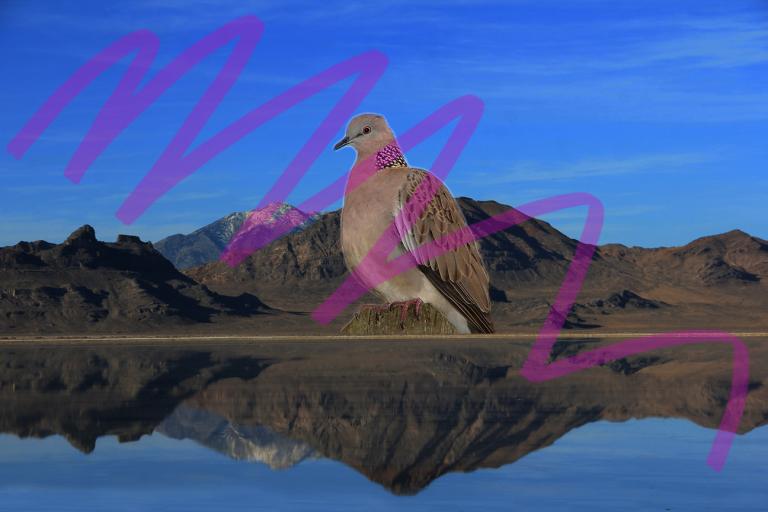
The Fence Sitter.
Ricraider,Wikimedia Commons. Alterations by JJ Feinauer
I recently had the opportunity to see Jeremy Runnells talk at a café off Main and Broadway in downtown SLC. He was there to talk about his pending church disciplinary court (if you don’t know what I’m talking about, go here), and though I’m glad I went, I have to admit it was a pretty awkward experience for me. From what I could tell, the crowd was overwhelmingly ex-Mormon — which is pretty understandable, given the circumstances — and I am still an active believing member. I don’t think I had ever fully appreciated the vibrancy of the existing ex-Mormon subculture until that event. The speakers (which included John Dehlin of Mormon Stories fame) seemed tapped into a world full of its own ideological consistency. There was a rhythm to the communication. A vocabulary so insular, I may finally know how my non-member friends felt attending all those YA dances I dragged them to. It was a world that I’m simply not a part of.
That isn’t to say, however, that I don’t feel for Mr. Runnells. I don’t know a lot about his situation, but what I do know makes me sad. He’s someone who at one time was a believing member of the LDS church, but has since encountered information that has caused him to doubt. This is not an uncommon story. Not anymore, anyway. I’ve got plenty of friends who are either experiencing this now or have experienced it in the past. I’ve experienced it in some ways myself. To me, whether or not Runnells is a good messenger of Mormon doubt is beside the point. I might not agree with all his assumptions or assessments, but that doesn’t change the fact that how he feels is how a lot of Mormons feel right now. Much like John Dehlin, he represents a growing faction of the Mormon experience. Ignoring that seems silly to me.
But what stuck out to me most about the event wasn’t how foreign I felt, but how familiar that foreignness was. For about as long as I can remember, I’ve struggled to find a place within Mormonism. I don’t want to go into the full history here, but suffice it to say that though I’ve experienced major shifts in my faith over the past few years, feeling out of place in Sunday school is no new thing for me. I’ve grown accustomed to being surrounded by Mormons who don’t share my interests or my perspective. I felt a strikingly familiar sensation as I stood at the back of Cafe at 50 West, listening to Runnells and Dehlin talk. Jokes I didn’t find particularly clever, but felt forced to laugh at. Deeply flawed analogies. Flippant rejections of opposing viewpoints. Distrust of those who don’t relate to their experience within Mormonism. Multiple references to The Opposition (Brian Hales’ name came up more than Joseph Smith’s). Flip the ideological perspective 180 degrees and I might as well have been at sacrament meeting, suffering through a talk on the dangers of intellectualism.
I’ve read some of the CES letter, but not all of it. I don’t remember how it came to my attention, but I remember feeling like it was a pretty frustrating document. If I remember correctly, it’s basically just a big list (80+ pages) of issues in church history that Runnells believes don’t have satisfactory answers. When I tried to read it, I saw it as basically a tool for Internet arguments. When someone’s conservative uncle starts arguing about whether or not the prophet should be followed without question, now people have a handy document they can copy and paste from. I’m not saying that’s what Runnell’s intent was — as far as I understand it, it was simply a letter to someone at CES that accidentally went viral — but that’s certainly what it felt like when I was reading it. I also think there is a case to be made that it has actually muddled constructive discussion about church history more than it’s helped (for a good discussion of this, see this post from our partners in Patheos crime, Faith Promoting Rumor). But despite my relative indifference to the letter, it’s clearly affected the discussion in significant ways. And when someone has questions, problems or difficulties, I don’t think it’s necessary to require some sort of academic perfection out of them.
But just because I don’t find it necessary to judge someone doesn’t mean I identify with him or her. I’ve completely lost interest in dogmatism in either direction. I don’t know if the Book of Mormon is a historical document, and quite frankly I don’t really care. I’ve read quite a lot about the life of Joseph Smith. Some of it troubles me deeply. Most of it inspires me, pushes me beyond my spiritual comfort zone, and helps me remember how important it is to question and wonder. What I’ve come to realize is that what I just described isn’t good enough for most people. Not good enough for most Mormons, anyhow. A fervent devotion to perfect figures is something that unites the skeptics and believers.
What I also realized during Dehlin and Runnells’ conversation is that to many of the people in the room, I’m probably a major disappointment. I’m aware of just as much of the Church’s dirty laundry as anyone else that was there, in some cases probably even more. I’m disturbed by the church’s attitude toward homosexuality, frustrated by its inability to address matters of race and gender in any substantive way, and I oftentimes find myself feeling spiritually unfed by the correlated church structure and curriculum. But the fact that I identify not only as a Mormon, but a believing one, pushes against the very foundation of what Runnells described as the power of the CES Letter. Anyone who reads this, he explained what seemed to be a dozen times, can’t help but lose their faith.
Well, here I am. Wherever that is.
Like Peculiar People on Facebook:
Previous Post

February 15, 2016
Netflix's Daredevil and The Ghost of Frank Miller
Next Post

February 17, 2016 What Is Morality in Mormonism?
Browse Our Archives
Select a Category American society Art baptism Blogging Book of Mormon Book review Brigham Young Brigham Young University Bundy Catholicism Christianity Communalism Community of Christ conferences conversion correlation Culture denominations Digital History Discipline Councils diversity Doctrine Donald Trump education Emma Smith ethics family feminism fiction Film review food French Polynesia Fundamentalism Gay rights Gender global Gun politics Halloween health History Honor Code hymns Joseph Smith Kirtland Temple law of consecration massacre site military Ministering missionary moderate Mormon feminism Modern Mormonism Mormon origins Mormon War Mormonism Mormonism, politics, Romney Obama Peace politics Polygamy Pope Francis Poverty Prayer Priesthood Protestantism Race Religious freedom Revelation Reviews sacred sites Scientology Scripture Secularization See Stones sexual assault Star Wars television temples Tithing Utah violence war women's ordination
Select a Month October 2018 September 2018 August 2018 May 2018 April 2018 March 2018 February 2018 January 2018 December 2017 October 2017 September 2017 July 2017 June 2017 May 2017 April 2017 March 2017 February 2017 January 2017 November 2016 October 2016 August 2016 July 2016 June 2016 May 2016 April 2016 March 2016 February 2016 January 2016 December 2015 November 2015 October 2015 September 2015 August 2015 July 2015 June 2015 April 2015 March 2015 February 2015 January 2015 December 2014 November 2014 October 2014 September 2014 August 2014 July 2014 June 2014 May 2014 April 2014 March 2014 February 2014 January 2014 December 2013 November 2013 October 2013 September 2013 August 2013 July 2013 June 2013 May 2013 April 2013 March 2013 February 2013 January 2013 December 2012 November 2012 October 2012 September 2012 August 2012 July 2012 June 2012 May 2012 April 2012 March 2012
Follow Us!
TAKE THE
Religious Wisdom Quiz
Who said, "Am I my brother's keeper?"
Select your answer to see how you score.
Jacob Esau Joseph Cain
Related posts from Peculiar People

To the People Defending the Church's Decision to...

The Women Who Enable Abusive Men

Joseph, Potiphar's Wife, and the Truth about False...

Robert Kirby and Edgy Mormon Men
TRENDING AT PATHEOS Latter-day Saint

Did Prayer Cure His Cancer? Or Was It...
At 4 AM one morning, Joshua W. Brown’s wife awoke to a...

8 Ways a Near-Death Experience Rewires the Soul
Does Consciousness Survive Physical Death? After 50 Years of Research, Dr. Raymond...

Holy Longing: What Our Restlessness Is Telling Us
“One can find so many pains when the rain is falling.” -John...

What this is NOT about. This blog is definitely not about...

Who said the Israelites were God’s chosen? That’s right, they did. Who...

The Spirit World Is the Real World: God...
A Monk’s Wisdom on Body and Spirit I sit with Brother Martin...
view all Latter-day Saint blogs
Ad-Free & Subscriber Log-In Subscription Support
- About Us
- 2026 Calendar
- Videos
- Podcasts
- Library of World Religions
- Faith In Media Tracker
- Advertise With Us
- Write for Us
- Privacy Policy
- Terms of Service
- Do Not Sell My Data
- Contact Us
- Radiant Digital
- Manage Newsletter Subscriptions
- Unsubscribe From Notifications
- Sitemap
Copyright 2008-2026, Patheos. All rights reserved.
Subscription Support Ad-Free & Subscriber Log-In
Follow Patheos