
BuddhistCatholicContemplativeEvangelicalGeneral ChristianHinduJewishLatter-day SaintMuslimNew VisionsProgressive Christian
Beliefs
- Buddhist
- Catholic
- Contemplative
- Evangelical
- General Christian
- Hindu
- Jewish
- Latter-day Saint
- More Voices
- Muslim
- New Visions
- Pagan
- Progressive Christian
Topics
- Religion News
- Food and Religion
- Sports and Religion
- Religious Art
- Religious Music and Entertainment
- Religious Events
- History and Religion
- Style and Religion
- Politics and Religion
- Women in Religion
- Recreation Outdoors and Religion
- Business Finance and Religion
- Careers Workplace and Religion
- Education and Religion
- Family Parenting and Religion
- Health Fitness and Religion
- Home and Religion
- Relationships and Religion
- Technology and Religion
- Travel and Religion
Columnists
- Buddhist Columnists
- Business Finance and Religion Columnists
- Careers Workplace and Religion Columnists
- Catholic Columnists
- Contemplative Columnists
- Education and Religion Columnists
- Evangelists Columnists
- Family Parenting and Religion Columnists
- General Christian Columnists
- Health Fitness and Religion Columnists
- Hindu Columnists
- History and Religion Columnists
- Home and Religion Columnists
- Jewish Columnists
- More Voices Columnists
- Latter Day Columnists
- Muslim Columnists
- New Visions Columnists
- Nonreligious Columnists
- Pagan Columnists
- Politics and Religion Columnists
- Progressive Columnists
- Recreation Outdoors and Religion Columnists
- Relationships and Religion Columnists
- Religion News Columnists
- Religious Art Columnists
- Religious Events Columnists
- Religious Music and Entertainment Columnists
- Sports and Religion Columnists
- Style and Religion Columnists
- Technology and Religion Columnists
- Travel and Religion Columnists
- Women in Religion Columnists
Resource Library
- 2026 Calendar
- Library of World Religions
- The 100 Most Holy Places on Earth
- Patheos Answers
- Podcasts
- Videos
- Faith Leaders Database
- Anglican Episcopalian
- Bahai
- Baptist
- Buddhism
- Christianity
- Confucianism
- Eastern Orthodoxy
- Hinduism
- Holiness and Pentecostal
- ISKCON
- Islam
- Judaism
- Lutheran
- Methodist
- The Church of Jesus Christ of Latter-day Saints
- New Age
- Paganism
- Presbytarian and Reformed
- Protestantism
- Religion Behind the Scenes
- Roman Catholic
- Scientology
- Shia Islam
- Sikhism
- Sufism
- Sunni Islam
- Taoism
- Zen
- See all religions
Research Tools
 Ad-Free & Subscriber Log-In Subscription Support
Ad-Free & Subscriber Log-In Subscription Support
Follow Patheos 

- Trending:
- Forgiveness
- |
- Marriage
- |
- Consciousness
- |
- Death Penalty
- |
- Election
- |
- Halloween
 Peculiar People
- Home
- Latter-day Saint
- Jesus in Doubt
Jesus in Doubt
Last updated on: January 7, 2016 at 12:54 am by James Egan
Jesus in Doubt 2016-01-07T00:54:05+00:00 James Egan
Patheos Explore the world's faith through different perspectives on religion and spirituality! Patheos has the views of the prevalent religions and spiritualities of the world.

The Dead Body of Christ in the Tomb, Hans Holbein the Younger
Over the last few years, public discussions of the place of doubt in Mormon life have increased substantially. The sources of doubt are not new. Theological puzzles, historical messiness, fallible leadership, cultural weakness, personal suffering—all these subjects (and more) have been addressed and/or wrestled with since Mormonism’s founding. The nature and depth of these conversations have varied, of course. But the LDS Church has never collectively had them as consistently and openly as it has in recent years.
The distinctive feature of this growth is institutional commitment. In just the last few years, talks by top church leadership have created space for discussion of challenges to Mormon faith in General Conference and other widely broadcast meetings.[1] The Church’s Joseph Smith Papers Project continues to increase the openness and accessibility of the Church’s archives. For the last two years, the Church has been gradually releasing online essays aimed at helping members understand difficult topics. The revamped Church History Museum recently began inviting visitors to ponder uncomfortable features of early Mormon history. The treatment of history in church curriculum is improving. And then there’s the slew of new books written for Mormons grappling with new questions that are being published by institutions affiliated with the Church. (See, for example, the Maxwell Institute’s Living Faith series and Deseret Book’s publication of Terryl and Fiona Givens’ The God Who Weeps and The Crucible of Doubt.)
I am, of course, not the only one to have benefited from and eagerly welcomed many of these developments, and I am most definitely not the only one to comment on them.[2] But I recently read two books, Patrick Mason’s Planted (part of the Maxwell Institute’s Living Faith series) and Thomas Wirthlin McConkie’s Navigating Mormon Faith Crisis (first reviewed here at Peculiar People by Rachael), that gave me occasion to consider afresh what the task ahead of us is as we wrestle with and respond to doubt as Mormons, and I think both books make important contributions to the literature on the topic.
A common refrain in the commentary on doubt and contemporary Mormonism is that the discomforts that are both cause and consequence of the developments outlined at the outset of this post are the necessary growing pains of a young, maturing religion. (See, for example, John Stewart’s interview with Mormon writer Joanna Brooks on The Daily Show.) Church leadership often describes the increasing candor and openness as a necessary response to the realities of a technological age. (See, for example, the official church historian’s description of the Gospel Topics essays project.) Others see disaffection as the inevitable consequence of honest inquiry. When people choose to grow up, they face the facts. Such is the ethic of perhaps the most dominant discourse in our secular age.
So it isn’t surprising that maturation is a shared theme of both books. Mason hopes his book will be “part of a grown-up conversation among grown-ups in what I hope is a grown-up religion.” And the watchword in McConkie’s book is development, a process he defines as recognizing and learning to live with increasing awareness of untold complexity. For both authors, keeping faith while growing up is less about fending off doubt and more about awaking to the possibilities of a transformed faith.
Another shared theme is the responsibility of community in the cultivation of individual faith. Mason describes dealing with doubt as one of the most pressing trials of our collective discipleship, and McConkie consistently challenges his readers to learn from charitable engagement with those who live in different stages of development. I was reminded of both books when I re-listened to a recent address by George Handley in which he argued that “doubt is best resolved, not with knowledge per se, but in loving relationships and with experiences of God’s pure love.” McConkie believes that “an increased awareness of developmental diversity” might help us “all learn to bear one another’s burden’s more generously” (p. 16), and Mason repeatedly reminds his readers that “willful ignorance impedes our ability to minister to one another” (p. 73). Both books invite everyone to participate in the work of consecrating Mormon doubt, regardless of who is currently doing the doubting.
The books’ differences are also illuminating, and they derive as much from the differing voices of each author as they do from differing content. Mason has spent his life practicing and studying Mormonism, while McConkie offers the important perspective of the native returned from estrangement. As his (resplendently Mormon) name suggests, McConkie was born into a family with ties to Bruce R. McConkie, Joseph B. Wirthlin, and Thomas S. Monson. He stopped practicing Mormonism in his early teens and took refuge from Mormonism in China, where he turned to meditation. He has just recently returned to activity. It’s not a surprise, then, that Mason is more comfortable in Mormon vernacular. Where Mason would speak of God and the Lord, McConkie relies on terms like “the Ultimate” and “Absolute.” And where Mason would bear sincere testimony, McConkie offers a no-less-sincere admixture of Buddhism and Mormonism. I don’t comfortably identify with either voice,[3] but I know people for whom one voice or the other will be very welcome. And since there is no one voice for “the doubter,” I welcome the diversity of voices.
The differences in content are quite welcome as well. Planted brings Mason’s scholarly expertise and pastoral experience to bear on particular historical, theological, and practical problems, while Navigating Mormon Faith Crisis makes use of McConkie’s grasp of contemporary adult development research to illuminate how “a faith crisis may simply be a developmental shift unrecognized, unsupported” (p. 148). McConkie’s title is, in light of this central point, somewhat misleading. His conceptual map, a brief overview of five general stages of adult development, shows how the term “faith crisis” misunderstands and unproductively shapes the experience of disillusionment and doubt.[4]
Planted’s greatest strength in my view is the consistent coincidence of Mason’s clear trust in the divine origins and purpose of the church and his persistent recognition of its profound weaknesses. I think this combination makes his book accessible to a wide Mormon readership. His treatment of our collective failure of humility and ministry concerning the racism in our history and the consequences of it that persist today is the best treatment of the topic for a general Mormon audience that I’ve read (p. 100-101). He uses a discussion of the Mountain Meadows Massacre to demonstrate how a lack of humility about the church’s weakness can lead us to lose track of Christ and his gospel of repentance and reconciliation (p. 120-121). Far from being an act of betrayal, the work of perceiving and acknowledging the sins of the church is, for Mason, an essential element in the development of Christian faith and discipleship.[5] Another essential element, of course, is facing up to one’s own sins, and Mason reminds his readers of this throughout the book. But his timely remarks on the risks of pride and error in criticism of church doctrine and policy are never condescending, and I suspect that certain readers will be much more likely to consider them because they appear alongside honest discussion of the risks of pride and error in reflexive defense of the church.
Navigating Mormon Faith Crisis’ greatest strength, and what was perhaps the most useful part of either book for me, was McConkie’s treatment of the developmental concept of “growing down” (p. 35). A vital part of development, McConkie explains, is the integration of the gifts and attributes of earlier stages with those of later stages: “The more we develop, the more insight we gain into our previous stages of development and the further refinement they still require. It is as important to ‘grow down’ as it is to grow up” (p. 35). Growing up isn’t leaving stages behind; it is learning to cultivate the distinct virtues of each stage. McConkie observes how some people have a tendency to describe obedience to authority and conformity with tradition as “hallmarks of immaturity” and describes this criticism as “a textbook example” of ignoring the strengths of earlier stages of development. “Qualities that arise at [the earliest] stage[s],” he writes, “are foundational and essential for flourishing in adult life” (p. 45). Being in a higher stage of development does not imply moral superiority or greater happiness. One can be “just as unintegrated, flawed, and unhappy at [the] higher stages as anywhere else” (p. 136).
Though I’m still not sure what to make of the developmental theory of McConkie’s book, I appreciate this “growing down” concept for various reasons. I know I stunt my own growth in resisting it, for one, but I think it is especially important in light of the intoxicating power of the narrative of overcoming that often dominates critical discourse in our age. We want our story to be one of overcoming benighted traditions and courageous acceptance of the truth, but this desire can lead us astray just like any other. McConkie encourages the kind of development that sees enlightenment as one among many moral imperatives and maturation as a more difficult task than simply stepping into the light of Science and Reason.[6]
I think the best place to go for expression of these insights about integration and “growing down” within the Mormon tradition is Joseph Smith’s recasting of the story of Adam and Eve. In Adam’s deep desire to be good, we see the virtues of commitment and obedience, and in Eve’s willingness to take risk, we glimpse the virtues of courage and love. At the heart of the temple, where we commit to not leaving family behind, we learn that this work involves more than rituals and genealogies. Eve can’t be left behind, and neither can Adam. We all must become both an Adam and an Eve.
As for the points the books share, I think the place to go is the New Testament’s story of Doubting Thomas. Paintings of Jesus’ descent from the cross and entombment offer profound insight into Thomas’ story. They invite us to consider what it might have been like for Christ’s followers to confront Jesus’ corpse, perhaps even hold it in their arms. For these early disciples, Jesus’ lifeless body was not a painting. To hold in your own arms the death of all that you have trusted in and radically changed your life for—how’s that for a moment of reflection? Losing faith would have been almost a simple reflex.
So when I think of Thomas, I imagine the deep, confused grief he must have felt and how a natural response to it would have been the forging of a stoic resolve to forget and move on. His friends come to tell him the impossible has happened, distracting him from this struggle to leave behind the memories that debilitate him. “Don’t soften my resolve with fantastical stories,” I imagine him saying. “Jesus is dead. Not coming back. I have to accept that.” But then Jesus does come back, and Thomas finds him in communion with his friends.

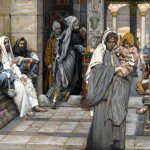
The Doubtful Thomas, Carl Heinrich Bloch
A painting of this scene that is well known to many Mormons (it is currently on display at BYU’s art museum) captures, I think, the kind of thing both books might do for many Mormons. The painting is Carl Bloch’s “The Doubtful Thomas,” and the relevant feature is his depiction of the “believing” apostles. We find them staring in wonder, but not at the astonished Thomas. Rather, their eyes are fixed and their brows are furrowed in wonder at the miracle of Jesus’ presence. These are believers, men supposedly not blinded by unbelief, and yet they find Jesus anew in Thomas’s doubt.
In a short middle section of Planted, Mason describes this scene, underscoring how Thomas, in his understandably grave doubt, encountered Christ because of his relationship with that first Christian community (p. 132). I have been surprised by the renewal of my faith in weak and flawed church meetings, so I very much appreciate the point. I’d just add that the faith of the church can also be renewed and deepened because of the presence of doubters in our midst. Both Planted and Navigating Mormon Faith Crisis encourage and empower Mormons to seek out this shared transformation.
Or maybe faith will find you, as it found McConkie, alone in a Chinese monastery where Mormon missionaries aren’t allowed. After all, our strange God pulled a sacred book out of a hat to start this wild venture. Perhaps he can deal with the deepest of our doubts, too.
[1] For example, Elder Holland, Elder Uchtdorf, and Sister Wixom have all spoken about doubt and its sources in recent General Conferences. Elder Ballard and Elder Christofferson have addressed similar topics in large regional meetings.
[2] If I’ve listened carefully, I think the Open Stories Foundation may have done a podcast or two on the subject.
[3] My convictions are not as settled as Patrick’s are, and I have significant concerns with some of the Buddhist character of some of McConkie’s most effusive language. (Consider, for example, how the problem of evil complicates his meditations on page 137.)
[4] Mason makes this point as well and points readers to Rosalynde Welch’s perceptive critique of the term (note 3, p. 188).
[5]Mason reminds readers multiple times that the scriptures focus much more on the sins of Zion than those of Babylon and that the Church is inseparable from the actions and lives of its members. Whatever it means to be a “true church,” it involves much more than merely possessing priesthood and preaching correct doctrine.
[6]McConkie rightly challenges other contestable features of modernity such as exclusive materialism (p. 67), but these discussions, as well as his treatment of “the clash” of traditional and modern worldviews could be improved, I think, if he turned to the work of Charles Taylor instead of Huston Smith.
Previous Post
January 5, 2016
The Next Church Handbook Change: Tithing and Affinity Fraud
Next Post

January 8, 2016 O Say What is Truth
Browse Our Archives
Select a Category American society Art baptism Blogging Book of Mormon Book review Brigham Young Brigham Young University Bundy Catholicism Christianity Communalism Community of Christ conferences conversion correlation Culture denominations Digital History Discipline Councils diversity Doctrine Donald Trump education Emma Smith ethics family feminism fiction Film review food French Polynesia Fundamentalism Gay rights Gender global Gun politics Halloween health History Honor Code hymns Joseph Smith Kirtland Temple law of consecration massacre site military Ministering missionary moderate Mormon feminism Modern Mormonism Mormon origins Mormon War Mormonism Mormonism, politics, Romney Obama Peace politics Polygamy Pope Francis Poverty Prayer Priesthood Protestantism Race Religious freedom Revelation Reviews sacred sites Scientology Scripture Secularization See Stones sexual assault Star Wars television temples Tithing Utah violence war women's ordination
Select a Month October 2018 September 2018 August 2018 May 2018 April 2018 March 2018 February 2018 January 2018 December 2017 October 2017 September 2017 July 2017 June 2017 May 2017 April 2017 March 2017 February 2017 January 2017 November 2016 October 2016 August 2016 July 2016 June 2016 May 2016 April 2016 March 2016 February 2016 January 2016 December 2015 November 2015 October 2015 September 2015 August 2015 July 2015 June 2015 April 2015 March 2015 February 2015 January 2015 December 2014 November 2014 October 2014 September 2014 August 2014 July 2014 June 2014 May 2014 April 2014 March 2014 February 2014 January 2014 December 2013 November 2013 October 2013 September 2013 August 2013 July 2013 June 2013 May 2013 April 2013 March 2013 February 2013 January 2013 December 2012 November 2012 October 2012 September 2012 August 2012 July 2012 June 2012 May 2012 April 2012 March 2012
Follow Us!
TAKE THE
Religious Wisdom Quiz
What does Paul say godliness with what is great gain?
Select your answer to see how you score.
Contentment Love Prayer Faith
Related posts from Peculiar People

To the People Defending the Church's Decision to...

The Women Who Enable Abusive Men

Joseph, Potiphar's Wife, and the Truth about False...

Robert Kirby and Edgy Mormon Men
TRENDING AT PATHEOS Latter-day Saint

Did Prayer Cure His Cancer? Or Was It...
At 4 AM one morning, Joshua W. Brown’s wife awoke to a...

8 Ways a Near-Death Experience Rewires the Soul
Does Consciousness Survive Physical Death? After 50 Years of Research, Dr. Raymond...

Holy Longing: What Our Restlessness Is Telling Us
“One can find so many pains when the rain is falling.” -John...

What this is NOT about. This blog is definitely not about...

Who said the Israelites were God’s chosen? That’s right, they did. Who...

The Spirit World Is the Real World: God...
A Monk’s Wisdom on Body and Spirit I sit with Brother Martin...
view all Latter-day Saint blogs
Ad-Free & Subscriber Log-In Subscription Support
- About Us
- 2026 Calendar
- Videos
- Podcasts
- Library of World Religions
- Faith In Media Tracker
- Advertise With Us
- Write for Us
- Privacy Policy
- Terms of Service
- Do Not Sell My Data
- Contact Us
- Radiant Digital
- Manage Newsletter Subscriptions
- Unsubscribe From Notifications
- Sitemap
Copyright 2008-2026, Patheos. All rights reserved.
Subscription Support Ad-Free & Subscriber Log-In
Follow Patheos