
BuddhistCatholicContemplativeEvangelicalGeneral ChristianHinduJewishLatter-day SaintMuslimNew VisionsProgressive Christian
Beliefs
- Buddhist
- Catholic
- Contemplative
- Evangelical
- General Christian
- Hindu
- Jewish
- Latter-day Saint
- More Voices
- Muslim
- New Visions
- Pagan
- Progressive Christian
Topics
- Religion News
- Food and Religion
- Sports and Religion
- Religious Art
- Religious Music and Entertainment
- Religious Events
- History and Religion
- Style and Religion
- Politics and Religion
- Women in Religion
- Recreation Outdoors and Religion
- Business Finance and Religion
- Careers Workplace and Religion
- Education and Religion
- Family Parenting and Religion
- Health Fitness and Religion
- Home and Religion
- Relationships and Religion
- Technology and Religion
- Travel and Religion
Columnists
- Buddhist Columnists
- Business Finance and Religion Columnists
- Careers Workplace and Religion Columnists
- Catholic Columnists
- Contemplative Columnists
- Education and Religion Columnists
- Evangelists Columnists
- Family Parenting and Religion Columnists
- General Christian Columnists
- Health Fitness and Religion Columnists
- Hindu Columnists
- History and Religion Columnists
- Home and Religion Columnists
- Jewish Columnists
- More Voices Columnists
- Latter Day Columnists
- Muslim Columnists
- New Visions Columnists
- Nonreligious Columnists
- Pagan Columnists
- Politics and Religion Columnists
- Progressive Columnists
- Recreation Outdoors and Religion Columnists
- Relationships and Religion Columnists
- Religion News Columnists
- Religious Art Columnists
- Religious Events Columnists
- Religious Music and Entertainment Columnists
- Sports and Religion Columnists
- Style and Religion Columnists
- Technology and Religion Columnists
- Travel and Religion Columnists
- Women in Religion Columnists
Resource Library
- 2026 Calendar
- Library of World Religions
- The 100 Most Holy Places on Earth
- Patheos Answers
- Podcasts
- Videos
- Faith Leaders Database
- Anglican Episcopalian
- Bahai
- Baptist
- Buddhism
- Christianity
- Confucianism
- Eastern Orthodoxy
- Hinduism
- Holiness and Pentecostal
- ISKCON
- Islam
- Judaism
- Lutheran
- Methodist
- The Church of Jesus Christ of Latter-day Saints
- New Age
- Paganism
- Presbytarian and Reformed
- Protestantism
- Religion Behind the Scenes
- Roman Catholic
- Scientology
- Shia Islam
- Sikhism
- Sufism
- Sunni Islam
- Taoism
- Zen
- See all religions
Research Tools
 Ad-Free & Subscriber Log-In Subscription Support
Ad-Free & Subscriber Log-In Subscription Support
Follow Patheos 

- Trending:
- Forgiveness
- |
- Marriage
- |
- Consciousness
- |
- Death Penalty
- |
- Election
- |
- Halloween
 Peculiar People
- Home
- Latter-day Saint
- Sister Wives’ Madison Brown’s Mormon Baptism Rejection, Explained
Sister Wives’ Madison Brown’s Mormon Baptism Rejection, Explained
Last updated on: October 22, 2015 at 9:14 pm by Cody Ray Shafer
Sister Wives’ Madison Brown’s Mormon Baptism Rejection, Explained 2015-10-22T21:14:20+00:00 Cody Ray Shafer
Patheos Explore the world's faith through different perspectives on religion and spirituality! Patheos has the views of the prevalent religions and spiritualities of the world.
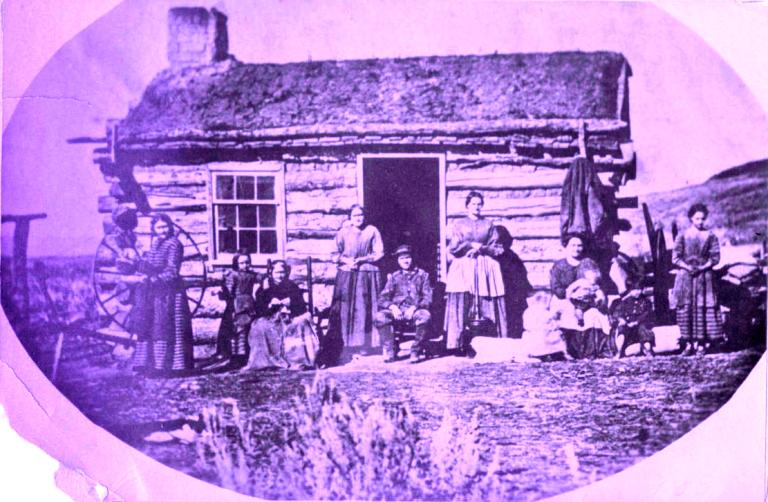
Pre-reality TV Sister Wives. (Wikimedia Commons)
Confession: I actually really love the show Sister Wives. It is a pretty remarkable snapshot of American life that is uncommon, but it is also kind of an anti-reality show, designed not to hype up mundane existence into needless drama, but instead to normalize the lifestyle of the polygamist Brown family, proving that not all polygamists are cultish creeps like Warren Jeffs.
The problem, it appears, is that the mainstream Mormon church isn’t buying this show’s premise. The Browns are members of the Apostolic United Brethren, a breakoff of the Brighamite branch of Mormonism that severed ties with The Church of Jesus Christ of Latter-day Saints with the end of polygamy. Jeffs’ branch, the Fundamentalist Latter-day Saints—or FLDS—broke off around the same time, but the AUB, arguably the largest polygamist sect of Mormonism, established early on a practice of transparency and legal cooperation.
So one of the older children of the Brown clan, Madison, who from the show’s very first season has insisted that she has no interest in polygamy, sought membership in the mainstream LDS church. As a prerequisite she was asked not only to never practice polygamy, but to formally, or publically, renounce her polygamous family. Brown rightfully refused.
The LDS church rejecting me for my parents choices was one of the most devastating things I have been through.
— Madison (@MaddieR_Brown) October 12, 2015
This might seem like a totally arbitrary and petty policy, which it is. As By Common Consent pointed out, Madison’s commitment to monogamy has been a central theme since the show’s beginning. But this decision is rooted in the historical evolution of Mormonism from an obscure fundamentalist community to a mainstream part of America’s religious landscape. Rewind back to the 19th century, when Mormonism was viewed as an outsider, almost barbaric religion, isolated in the far west, where they freely practiced plural marriage in a semi-theocratic state.
But as American society moved westward, and Utah sought statehood, the practice was consistently challenged. In 1862, Congress passed the Morrill Anti-bigamy Act, outlawing all plural marriages within U.S. territory. But since Mormon polygamy was a largely spiritual matter, Mormons could easily ignore it. The following Edmunds Act in 1882 was far stricter, and targeted men guilty of cohabitation and financially supporting multiple households.
The continued pressure from the feds fractured Mormon leadership, who continued to practice polygamy up through the 1890 Manifesto. Polygamous families were still welcomed in the community, and new plural marriages continued in secret. Yet, the federal government would not let up on the Mormons, putting then prophet Joseph F. Smith in a difficult position. He could either abandon the defining practice of the religion founded by his father and uncle, preserving it for the new century, or hold fast to the doctrine, putting Mormonism in danger of legal obliteration under a strictly anti-polygamy government.
Whether by revelation or personal and political wisdom, Smith went with the former, and in 1904 the LDS Church promised full compliance with the Second Manifesto, a prophetic declaration that ended polygamy for good. As a means of enforcing this manifesto, the Church began excommunicating members who continued the practice, leading to the break off of groups like the AUB and FLDS. The doctrine of “the new and ever-lasting covenant,” which D&C 132 defines as plural marriage, was shifted to refer more broadly to eternal marriage. Around the same time, apostle Reed Smoot was sent to the United States Senate to represent Utah, resulting in a series of hearings that challenged the Church’s claims that they truly ended polygamy. Smoot, and Mormonism by proxy, won the Senate battle, and the LDS church’s long assimilation into American culture had begun. Within a few decades, Mormons would no longer be seen as radical outsiders, but prominent members of society with a strict adherence to traditional values.
Eventually, the Church’s relationship with polygamy came full circle, as Utah continually passed some of the harshest anti-bigamy laws in the country. In 1953, the Church actively cooperated with law enforcement behind a federal raid in Short Creek, Arizona that resulted in more than 200 children detained and taken from their families, some of whom never regained custody.
Part of the Church’s crackdown on polygamy included language in the temple recommend and baptism questions that focused on a members’ association with polygamist groups. That language remains, though it is a little vague. I suspect this is where the issue of Madison Brown’s relationship with her family becomes a problem regarding her LDS baptism. But there is also the fact that the LDS Church has been trying to distance itself from polygamy for over a century, and sometimes that quest can trump its devotion to family values. There’s no doubt that some FLDS communities are havens of abuse, but there is also no reason to suspect that polygamy itself is the cause or even a prominent indicator of such behavior, as the show Sister Wives has made its’ mission to prove.
While the show aired, Brown clarified on Twitter that the decision did NOT come from her mission president, but from The First Presidency itself, meaning, this is not just another case of leadership roulette. In an attempt to control the public image of the Church as separate from polygamy, regardless of its history, the Church instead put forth an image of unfair exclusivity. It is especially unfortunate given that this policy is at odds with some crucial Mormon doctrines, like the Second Article Faith which infers that the sins of our parents have no bearing on their children’s own salvation, and of course the belief that families are the fundamental and eternal unit of God’s kingdom. After all, there are in fact plenty of polygamist families on record in the LDS church. I don’t think the early polygamists’ descendants were required to denounce their fathers in order to maintain membership in the Church.
Like I said before, Brown is right to not accept baptism at the cost of her family. It’s just a shame that such an outdated and capricious policy has kept her from participating in the blessings The Church of Jesus Christ of Latter-day Saints promises; among them, an eternal binding the very family they have shamefully asked her to reject.
Previous Post

October 19, 2015
Scandal on the Mormon Ranch
Next Post
October 20, 2015 A Mormon Perspective on the New Star Wars: The Force Awakens Trailer
Browse Our Archives
Select a Category American society Art baptism Blogging Book of Mormon Book review Brigham Young Brigham Young University Bundy Catholicism Christianity Communalism Community of Christ conferences conversion correlation Culture denominations Digital History Discipline Councils diversity Doctrine Donald Trump education Emma Smith ethics family feminism fiction Film review food French Polynesia Fundamentalism Gay rights Gender global Gun politics Halloween health History Honor Code hymns Joseph Smith Kirtland Temple law of consecration massacre site military Ministering missionary moderate Mormon feminism Modern Mormonism Mormon origins Mormon War Mormonism Mormonism, politics, Romney Obama Peace politics Polygamy Pope Francis Poverty Prayer Priesthood Protestantism Race Religious freedom Revelation Reviews sacred sites Scientology Scripture Secularization See Stones sexual assault Star Wars television temples Tithing Utah violence war women's ordination
Select a Month October 2018 September 2018 August 2018 May 2018 April 2018 March 2018 February 2018 January 2018 December 2017 October 2017 September 2017 July 2017 June 2017 May 2017 April 2017 March 2017 February 2017 January 2017 November 2016 October 2016 August 2016 July 2016 June 2016 May 2016 April 2016 March 2016 February 2016 January 2016 December 2015 November 2015 October 2015 September 2015 August 2015 July 2015 June 2015 April 2015 March 2015 February 2015 January 2015 December 2014 November 2014 October 2014 September 2014 August 2014 July 2014 June 2014 May 2014 April 2014 March 2014 February 2014 January 2014 December 2013 November 2013 October 2013 September 2013 August 2013 July 2013 June 2013 May 2013 April 2013 March 2013 February 2013 January 2013 December 2012 November 2012 October 2012 September 2012 August 2012 July 2012 June 2012 May 2012 April 2012 March 2012
Follow Us!
TAKE THE
Religious Wisdom Quiz
The sun will be turned to darkness and the moon to blood before the coming of what great and dreadful event?
Select your answer to see how you score.
The day of the Lord Christ's return The final judgment The end of the world
Related posts from Peculiar People

Sorry to Bother You: The (Human) Body as...


A Letter for My Someday-Teenage Children
TRENDING AT PATHEOS Latter-day Saint

Did Prayer Cure His Cancer? Or Was It...
At 4 AM one morning, Joshua W. Brown’s wife awoke to a...

8 Ways a Near-Death Experience Rewires the Soul
Does Consciousness Survive Physical Death? After 50 Years of Research, Dr. Raymond...

Holy Longing: What Our Restlessness Is Telling Us
“One can find so many pains when the rain is falling.” -John...

What this is NOT about. This blog is definitely not about...

Who said the Israelites were God’s chosen? That’s right, they did. Who...

The Spirit World Is the Real World: God...
A Monk’s Wisdom on Body and Spirit I sit with Brother Martin...
view all Latter-day Saint blogs
Ad-Free & Subscriber Log-In Subscription Support
- About Us
- 2026 Calendar
- Videos
- Podcasts
- Library of World Religions
- Faith In Media Tracker
- Advertise With Us
- Write for Us
- Privacy Policy
- Terms of Service
- Do Not Sell My Data
- Contact Us
- Radiant Digital
- Manage Newsletter Subscriptions
- Unsubscribe From Notifications
- Sitemap
Copyright 2008-2026, Patheos. All rights reserved.
Subscription Support Ad-Free & Subscriber Log-In
Follow Patheos