
BuddhistCatholicContemplativeEvangelicalGeneral ChristianHinduJewishLatter-day SaintMuslimNew VisionsProgressive Christian
Beliefs
- Buddhist
- Catholic
- Contemplative
- Evangelical
- General Christian
- Hindu
- Jewish
- Latter-day Saint
- More Voices
- Muslim
- New Visions
- Pagan
- Progressive Christian
Topics
- Religion News
- Food and Religion
- Sports and Religion
- Religious Art
- Religious Music and Entertainment
- Religious Events
- History and Religion
- Style and Religion
- Politics and Religion
- Women in Religion
- Recreation Outdoors and Religion
- Business Finance and Religion
- Careers Workplace and Religion
- Education and Religion
- Family Parenting and Religion
- Health Fitness and Religion
- Home and Religion
- Relationships and Religion
- Technology and Religion
- Travel and Religion
Columnists
- Buddhist Columnists
- Business Finance and Religion Columnists
- Careers Workplace and Religion Columnists
- Catholic Columnists
- Contemplative Columnists
- Education and Religion Columnists
- Evangelists Columnists
- Family Parenting and Religion Columnists
- General Christian Columnists
- Health Fitness and Religion Columnists
- Hindu Columnists
- History and Religion Columnists
- Home and Religion Columnists
- Jewish Columnists
- More Voices Columnists
- Latter Day Columnists
- Muslim Columnists
- New Visions Columnists
- Nonreligious Columnists
- Pagan Columnists
- Politics and Religion Columnists
- Progressive Columnists
- Recreation Outdoors and Religion Columnists
- Relationships and Religion Columnists
- Religion News Columnists
- Religious Art Columnists
- Religious Events Columnists
- Religious Music and Entertainment Columnists
- Sports and Religion Columnists
- Style and Religion Columnists
- Technology and Religion Columnists
- Travel and Religion Columnists
- Women in Religion Columnists
Resource Library
- 2026 Calendar
- Library of World Religions
- The 100 Most Holy Places on Earth
- Patheos Answers
- Podcasts
- Videos
- Faith Leaders Database
- Anglican Episcopalian
- Bahai
- Baptist
- Buddhism
- Christianity
- Confucianism
- Eastern Orthodoxy
- Hinduism
- Holiness and Pentecostal
- ISKCON
- Islam
- Judaism
- Lutheran
- Methodist
- The Church of Jesus Christ of Latter-day Saints
- New Age
- Paganism
- Presbytarian and Reformed
- Protestantism
- Religion Behind the Scenes
- Roman Catholic
- Scientology
- Shia Islam
- Sikhism
- Sufism
- Sunni Islam
- Taoism
- Zen
- See all religions
Research Tools
 Ad-Free & Subscriber Log-In Subscription Support
Ad-Free & Subscriber Log-In Subscription Support
Follow Patheos 

- Trending:
- Forgiveness
- |
- Marriage
- |
- Consciousness
- |
- Death Penalty
- |
- Election
- |
- Halloween
 Peculiar People
- Home
- Latter-day Saint
- From the Archives: Ghost Stories
From the Archives: Ghost Stories
Last updated on: October 27, 2015 at 2:22 am by Matthew Bowman
From the Archives: Ghost Stories 2015-10-27T02:22:25+00:00 Matthew Bowman
Patheos Explore the world's faith through different perspectives on religion and spirituality! Patheos has the views of the prevalent religions and spiritualities of the world.
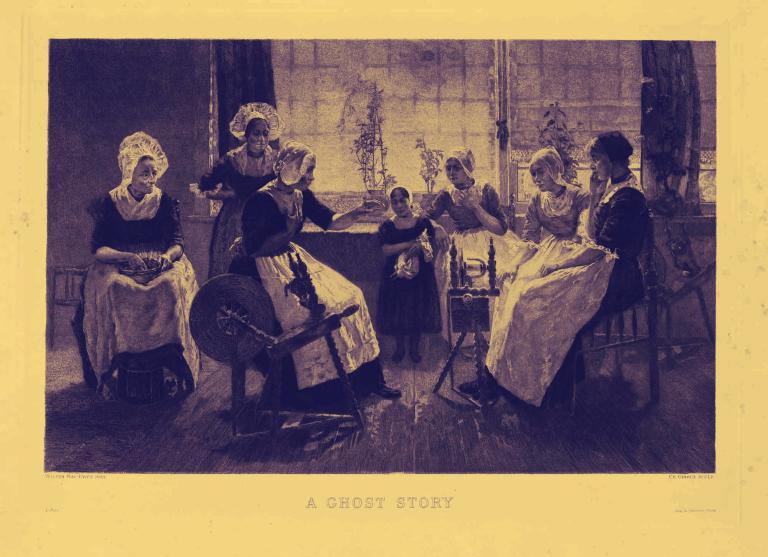
(Wikimedia commons)
Editors Note: Welcome to Halloween Week at Peculiar People! The following is a post from historian and Peculiar People founder Matt Bowman from August 2013. Since it is a good recap of ghost stories from Mormon folklore, we thought we’d repost it to kick off our week of Halloween-related blogs. If you like stuff like this, follow us on Facebook and Twitter.
I’m revisiting Judith Richardson’s Possessions: the history and uses of haunting in the Hudson Valley as I start thinking about nineteenth century spiritualism for a new book project, and this time I’ve been struck by her emphasis on place. The tangled and broken landscape of the Hudson Valley, full of cliffs and culverts and sharp bends in the river, makes for an ideal habitat for the unquiet dead. But just as powerful is the cultural landscape, marked since the seventeenth century with the sudden rise and fall of cultures and peoples, so rapid that the monuments and homes of previous generations still stand: the Dutch landscape silently accusing the British and Native Americans still lingering in the spaces between American-built roads and factories.
Jared Farmer’s wonderful On Zion’s Mount: Mormons, Indians, and the American landscape is a ghost story, in a sense, exploring the long afterlife of the Native American tribes the Mormon settlers clashed with in the minds of contemporary Utah Mormons – but equally true, it’s a ghostbusting story, recounting how those Mormons domesticated, rehabilitated, and laid to rest their memories of that clash. The Mormons even invented a ghost, in a sense, the fake Indian princess Timpanogos, whose entirely typical (for a ghost) behaviors – wailing in the night, mourning her lost love – are decidedly harmless.
Richardson posits that hauntings occur along a society’s troubled fault lines. It is not the powerful and complacent whose ghosts return to force us to take stock; it is the marginalized, the distressed, the troubled in life and death whose return forces us to grapple, in some uneasy way, with the ragged edges of our histories that refuse, quite literally, to stay dead.
I’ve made before (and repurpose here) the argument that many of the more famous ghosts of Utah are distressingly generic. The possessed tombstone of Jacob Moritz (who for some reason has been renamed “Emo” in the legends) in the Salt Lake City cemetery is reminiscent of the Madonna of Bachelor’s Grove Cemetery in Chicago and any number of other graveyard haunts. The wacky poltergeist George who knocks on doors and turns off lights in Salt Lake City’s Capitol Theatre is an entirely typical poltergeist. The torn down (alas) Lehi Hospital featured a haunting of eminently predictable proportions: jilted lovers, crazed doctors, murders, etc.
Utah’s two hauntings that seem most rooted in place and history, like Timpanogos, are equally interesting.
Jean Baptiste was a gravedigger in Salt Lake City who appears to have looted clothing from hundreds of graves in the 1850s and 1860s, and found himself exiled to a small island in the Great Salt Lake, bound in chains. He attempted escape several times and his ghost reportedly still wanders the shores. Baptiste’s exile is a notable, and deeply symbolic punishment: variously described as a “Frenchman,” of Irish birth, or a native of Vienna, it is unclear whether Baptiste was a Mormon. What is certain – and what attracted the rage of Wilford Woodruff, who declared that Baptiste performed“damniable, diabolical, satanical, hellish sacrileges” is that Baptiste had looted the temple clothing the Mormons in his cemetery were buried in. Fitting, then, that he was cast to the margins of Mormon society both rhetorically and geographically. Captured in the early 1860s, as the fires of the Mormon Reformation were slowly burning out, Baptiste seems a scapegoat for Mormon anxieties about the presence of Gentiles in their midst, and no average spook.
At the mouth of the canyon Brigham Young and the pioneers traversed while entering Utah stands a fake Mormon town; “Old Deseret Village,” a tourist attraction constructed from various homes from the early settlement of Utah. It is haunted by two ghosts, who seem at first blush diametrically different. Ann Eliza Webb, Brigham Young’s self-christened Wife Number 19, who divorced the Mormon leader and made a heap of money delivering expose lectures across the American East, and Mary Fielding Smith, Hyrum Smith’s faithful wife who is a stalwart of various faith-promoting pioneer stories. Why these two women, one a declared enemy of Mormon polygamy and the other a devoted practitioner of it? Despite their seeming differences, we can see a similar anxiety in the two. Webb’s ghost remains an enemy of polygamy, echoing the discontent that characterized her rocky marriage to Young in life – and her continuing presence in a town built to celebrate the faithfulness of pioneers for a largely Mormon audience denies tourists the luxury of forgetting the undead presence of polygamy in the Mormon past. Mary Fielding Smith’s ghost, for her part, appears to complain that her house was moved at all. Like Ann Eliza, she protests the creation of a tourist-friendly Mormon past, demanding that those who tell of her remember that Old Deseret Village exists for its own reasons that overlap imperfectly with the lived experience of people like her.
The ghosts of Brigham Young and Eliza R. Snow and other great Mormon luminaries seem to lie at peace in Utah, but Richardson would remind us that this is appropriate. It is the memory of people like Jean Baptiste and Ann Eliza Webb that captures Mormon anxieties, and remind us that the Mormon past, like all pasts, remains unquiet.
Previous Post

October 26, 2015
Should We Really Worry About Ben Carson's Religion?
Next Post
October 28, 2015 The Politics of Monsters
Browse Our Archives
Select a Category American society Art baptism Blogging Book of Mormon Book review Brigham Young Brigham Young University Bundy Catholicism Christianity Communalism Community of Christ conferences conversion correlation Culture denominations Digital History Discipline Councils diversity Doctrine Donald Trump education Emma Smith ethics family feminism fiction Film review food French Polynesia Fundamentalism Gay rights Gender global Gun politics Halloween health History Honor Code hymns Joseph Smith Kirtland Temple law of consecration massacre site military Ministering missionary moderate Mormon feminism Modern Mormonism Mormon origins Mormon War Mormonism Mormonism, politics, Romney Obama Peace politics Polygamy Pope Francis Poverty Prayer Priesthood Protestantism Race Religious freedom Revelation Reviews sacred sites Scientology Scripture Secularization See Stones sexual assault Star Wars television temples Tithing Utah violence war women's ordination
Select a Month October 2018 September 2018 August 2018 May 2018 April 2018 March 2018 February 2018 January 2018 December 2017 October 2017 September 2017 July 2017 June 2017 May 2017 April 2017 March 2017 February 2017 January 2017 November 2016 October 2016 August 2016 July 2016 June 2016 May 2016 April 2016 March 2016 February 2016 January 2016 December 2015 November 2015 October 2015 September 2015 August 2015 July 2015 June 2015 April 2015 March 2015 February 2015 January 2015 December 2014 November 2014 October 2014 September 2014 August 2014 July 2014 June 2014 May 2014 April 2014 March 2014 February 2014 January 2014 December 2013 November 2013 October 2013 September 2013 August 2013 July 2013 June 2013 May 2013 April 2013 March 2013 February 2013 January 2013 December 2012 November 2012 October 2012 September 2012 August 2012 July 2012 June 2012 May 2012 April 2012 March 2012
Follow Us!
TAKE THE
Religious Wisdom Quiz
Who was Deborah's military commander?
Select your answer to see how you score.
Samson Barak Jephthah Gideon
Related posts from Peculiar People

Sorry to Bother You: The (Human) Body as...


A Letter for My Someday-Teenage Children

Confederate Symbols and the Black Flag of ISIS:...
TRENDING AT PATHEOS Latter-day Saint

Did Prayer Cure His Cancer? Or Was It...
At 4 AM one morning, Joshua W. Brown’s wife awoke to a...

8 Ways a Near-Death Experience Rewires the Soul
Does Consciousness Survive Physical Death? After 50 Years of Research, Dr. Raymond...

Holy Longing: What Our Restlessness Is Telling Us
“One can find so many pains when the rain is falling.” -John...

What this is NOT about. This blog is definitely not about...

Who said the Israelites were God’s chosen? That’s right, they did. Who...

The Spirit World Is the Real World: God...
A Monk’s Wisdom on Body and Spirit I sit with Brother Martin...
view all Latter-day Saint blogs
Ad-Free & Subscriber Log-In Subscription Support
- About Us
- 2026 Calendar
- Videos
- Podcasts
- Library of World Religions
- Faith In Media Tracker
- Advertise With Us
- Write for Us
- Privacy Policy
- Terms of Service
- Do Not Sell My Data
- Contact Us
- Radiant Digital
- Manage Newsletter Subscriptions
- Unsubscribe From Notifications
- Sitemap
Copyright 2008-2026, Patheos. All rights reserved.
Subscription Support Ad-Free & Subscriber Log-In
Follow Patheos