
BuddhistCatholicContemplativeEvangelicalGeneral ChristianHinduJewishLatter-day SaintMuslimNew VisionsProgressive Christian
Beliefs
- Buddhist
- Catholic
- Contemplative
- Evangelical
- General Christian
- Hindu
- Jewish
- Latter-day Saint
- More Voices
- Muslim
- New Visions
- Pagan
- Progressive Christian
Topics
- Religion News
- Food and Religion
- Sports and Religion
- Religious Art
- Religious Music and Entertainment
- Religious Events
- History and Religion
- Style and Religion
- Politics and Religion
- Women in Religion
- Recreation Outdoors and Religion
- Business Finance and Religion
- Careers Workplace and Religion
- Education and Religion
- Family Parenting and Religion
- Health Fitness and Religion
- Home and Religion
- Relationships and Religion
- Technology and Religion
- Travel and Religion
Columnists
- Buddhist Columnists
- Business Finance and Religion Columnists
- Careers Workplace and Religion Columnists
- Catholic Columnists
- Contemplative Columnists
- Education and Religion Columnists
- Evangelists Columnists
- Family Parenting and Religion Columnists
- General Christian Columnists
- Health Fitness and Religion Columnists
- Hindu Columnists
- History and Religion Columnists
- Home and Religion Columnists
- Jewish Columnists
- More Voices Columnists
- Latter Day Columnists
- Muslim Columnists
- New Visions Columnists
- Nonreligious Columnists
- Pagan Columnists
- Politics and Religion Columnists
- Progressive Columnists
- Recreation Outdoors and Religion Columnists
- Relationships and Religion Columnists
- Religion News Columnists
- Religious Art Columnists
- Religious Events Columnists
- Religious Music and Entertainment Columnists
- Sports and Religion Columnists
- Style and Religion Columnists
- Technology and Religion Columnists
- Travel and Religion Columnists
- Women in Religion Columnists
Resource Library
- 2026 Calendar
- Library of World Religions
- The 100 Most Holy Places on Earth
- Patheos Answers
- Podcasts
- Videos
- Faith Leaders Database
- Anglican Episcopalian
- Bahai
- Baptist
- Buddhism
- Christianity
- Confucianism
- Eastern Orthodoxy
- Hinduism
- Holiness and Pentecostal
- ISKCON
- Islam
- Judaism
- Lutheran
- Methodist
- The Church of Jesus Christ of Latter-day Saints
- New Age
- Paganism
- Presbytarian and Reformed
- Protestantism
- Religion Behind the Scenes
- Roman Catholic
- Scientology
- Shia Islam
- Sikhism
- Sufism
- Sunni Islam
- Taoism
- Zen
- See all religions
Research Tools
 Ad-Free & Subscriber Log-In Subscription Support
Ad-Free & Subscriber Log-In Subscription Support
Follow Patheos 

- Trending:
- Forgiveness
- |
- Marriage
- |
- Consciousness
- |
- Death Penalty
- |
- Election
- |
- Halloween
 Peculiar People
- Home
- Latter-day Saint
- And After The Fire, A Still Small Voice
And After The Fire, A Still Small Voice
Last updated on: January 7, 2015 at 7:56 pm by agrigg
And After The Fire, A Still Small Voice 2015-01-07T19:56:51+00:00 agrigg
Patheos Explore the world's faith through different perspectives on religion and spirituality! Patheos has the views of the prevalent religions and spiritualities of the world.
Elijah the Tishbite stood on Mount Horeb, where Moses had stood centuries earlier to receive the tablets of the law from the Lord. Looking out on the dry valley, he reflected on the fate of that law, and of the Lord’s people whose ancestors He had brought out of Egypt to worship at that mountain. They hadn’t gotten any closer to the “kingdom of priests, and an holy nation” that the Lord had wished for their fathers. Elijah spoke to the Lord about his despair, “for the children of Israel have forsaken thy covenant, thrown down thine altars, and slain thy prophets with the sword; and I, even I only, am left; and they seek my life, to take it away” (1 Kings 19:10).
Elijah’s ministry was difficult. Faced with growing idolatry among the people of Israel, brought about by the wicked king Ahab and his Phonecian princess Jezebel, the prophet had sealed the heavens for three years. In an already dry land, he had created a drought, and thus pronounced a national death sentence in hopes of turning the hearts of the people back to their God in humility.
His plan had backfired. Ahab and Jezebel, instead of repenting, had sought his life throughout the land. Forced to flee for his safety, he hid by the brook Cherith, and was fed by ravens sent by God. Eventually, the brook dried up, and the Lord sent Elijah to Zarephath, to the home of a widow woman who had reached the end of her rope, and was about to eat the last of her meager provisions, “an handful of meal in a barrel, and a little oil in a cruse: and, behold,” she said, ”I amgathering two sticks, that I may go in and dress it for me and my son, that we may eat it, and die” (1 Kings 17:12). The woman’s faith in feeding the prophet with what little she had was rewarded, and “the barrel of meal wasted not, neither did the cruse of oil fail, according to the word of the Lord, which he spake by Elijah” (v.16).
At the end of three years of drought, Elijah had summoned Ahab, and all his priests, together with Jezebel’s priests and all the children of Israel, to Mount Carmel for a contest. He was tired of the people’s ambivalence, tired of seeing them turn from Jehovah to dumb idols, tired of a double-minded people who turned to the Lord only in times of trouble, but enjoyed the rites of Ba’al and Ashtaroth on the side. Elijah proposed a contest–and you know the rest. The sacrifice offered to Ba’al failed to ignite, despite the priests’ long hours of pleading and erratic dancing. Elijah’s sharp, sarcastic words found their mark as the priests failed to effect the required miracle. Then fire from heaven descended upon the water-drenched sacrifice offered to Jehovah, “and consumed the burnt sacrifice, and the wood, and the stones, and the dust, and licked up the water that was in the trench” (1 Kings 18:38). The assembled Israelites recognized the Lord’s power, and declared that He, truly, was God. Elijah, seizing the moment, commanded that all the idolatrous priests should be slain.
The Lord decided to end the drought, without, it seems, consulting Elijah. Rain fell, and the land revived. Jezebel, incensed by the death of her priests, vowed to kill Elijah, and once more he fled, this time to Beersheba. From there, the Lord had sent him to this mountain. There He spoke to Elijah, who had served Him well, but still had much to learn.
First the Lord asked His servant a question. “What doest thou here, Elijah?” Elijah’s recounted his ministry among stubborn and rebellious people, “And he said, I have been very jealous for the Lord God of hosts: for the children of Israel have forsaken thy covenant, thrown down thine altars, and slain thy prophets with the sword; and I, even I only, am left; and they seek my life, to take it away.”
So the Lord taught an object lesson, with a powerful message for Elijah, and for each of us.
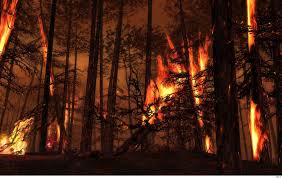
“And he said, Go forth, and stand upon the mount before the Lord. And, behold, the Lord passed by, and a great and strong wind rent the mountains, and brake in pieces the rocks before the Lord; but the Lord was not in the wind: and after the wind an earthquake; but the Lord was not in the earthquake: And after the earthquake a fire; but the Lord was not in the fire: and after the fire a still small voice” (1 Kings 19:9-12).
Did Elijah understand the Lord’s message? It seems that he overlooked the Lord’s meaning, for his answer to the Lord’s question remained unchanged: “when Elijah heard it, that he wrapped his face in his mantle, and went out, and stood in the entering in of the cave. And, behold, there came a voice unto him, and said, What doest thou here, Elijah? And he said, I have been very jealous for the Lord God of hosts: because the children of Israel have forsaken thy covenant, thrown down thine altars, and slain thy prophets with the sword; and I,even I only, am left; and they seek my life, to take it away” (v. 13-14).
Elijah was discouraged. It seems that he didn’t understand the meaning of the still small voice that followed the great natural disasters. But looking back over Elijah’s life and ministry, perhaps we can hear the echoes of that voice. Elijah had shown his fondness, throughout his life, for great and spectacular signs–earthquakes and whirlwinds, droughts, famines, and fire from heaven. But even with these miracles, Elijah had failed to change the heart of the king to whom he was sent. The Lord had passed by Israel, and a great drought dried up the land and killed the crops, the animals, and the poor. But the Lord was not in the drought. And after the drought a famine, but the Lord was not in the famine. And after the famine a contest and fire from heaven. But the Lord was not in the fire. And after the fire a cleansing of the idolatrous priests. But the Lord was not in the killing. And after the killing a still, small voice. And there, the Lord was to be found.
The Lord was in the ravens who fed the prophet by a dried-up brook in a barren land as he hid from the searches of the king. The Lord was in the faith of a widow woman who gave charity to the prophet as he wandered in a foreign land. The Lord was in the rain that fell on Mount Carmel to water the land of a still-idolatrous king. The Lord was in the willingness of Elisha the son of Shaphat, who followed Elijah’s call when he found him at the plow (v. 19-21). The Lord was in the still, small voices that stayed faithful even in a wicked society, of which there were “seven thousand in Israel, all the knees which have not bowed unto Baal” (v. 18).
What are seven thousand against so many? What is one prophet against such great idolatry? What is one still, small voice in the midst of the whirlwinds and earthquakes that surround us? If we hear it, that still, small voice can be more powerful than the winds that seek to drive us from our moorings. It can be stronger than the earthquakes that seek to throw us off balance. It can be more cleansing than the fires that sweep through the land. For all these great and showy spectacles end in an instant and persuade only for a moment, but the still small voice speaks throughout them, and continues to speak even after their voices have faded. It speaks while they rage about us, and its words continue long after the winds have died down and the fires have been extinguished. It beckons to us as it beckoned to Elijah on that mountain. It pleads with us to hear the voice and recognize the hand of the Lord in the small gestures, in the things we overlook, in the voices of birds and widows and rain, in the Lord’s mercy rather than His condemnation.
We, like Elijah, will experience winds and earthquakes and fires. But the Lord is with us. For after the fire, there will always come His merciful still, small voice.
**
Postscript:
I wrote this essay some time ago, and the story of Elijah has returned to me again this month, as we’ve studied it in Gospel Doctrine. Mormonism has undergone its own sort of fire and earthquake these past two months, leaving many people burned out, disillusioned, or with faith shaken, their hearts “[broken] in pieces before the Lord.”
These past two months have been wrenching for me, personally, and for many of those I love. I have felt the Lord’s question deeply, “What doest thou here?” At times I have struggled to feel that my witness has purpose, or like there is any room for me among people who see God differently than I do.
There are places I have felt the presence of God this month, and they have not been in the fire or the earthquake, in the vitriol coming from all corners. The Lord was in the cookies that a friend made for me at 10pm because she knew I needed cheering up. The Lord was in the wise words of a bishop as darkness settled over his backyard. The Lord was in the tears of a sweet sister whose apology taught me what it means to be a disciple of Christ.
This month, the Lord has been, as He always is, in the still, small voices of men and women who have learned how to love.
Previous Post

July 28, 2014
Book Review: Confessing History
Next Post
August 7, 2014 In Good Conscience...
Browse Our Archives
Select a Category American society Art baptism Blogging Book of Mormon Book review Brigham Young Brigham Young University Bundy Catholicism Christianity Communalism Community of Christ conferences conversion correlation Culture denominations Digital History Discipline Councils diversity Doctrine Donald Trump education Emma Smith ethics family feminism fiction Film review food French Polynesia Fundamentalism Gay rights Gender global Gun politics Halloween health History Honor Code hymns Joseph Smith Kirtland Temple law of consecration massacre site military Ministering missionary moderate Mormon feminism Modern Mormonism Mormon origins Mormon War Mormonism Mormonism, politics, Romney Obama Peace politics Polygamy Pope Francis Poverty Prayer Priesthood Protestantism Race Religious freedom Revelation Reviews sacred sites Scientology Scripture Secularization See Stones sexual assault Star Wars television temples Tithing Utah violence war women's ordination
Select a Month October 2018 September 2018 August 2018 May 2018 April 2018 March 2018 February 2018 January 2018 December 2017 October 2017 September 2017 July 2017 June 2017 May 2017 April 2017 March 2017 February 2017 January 2017 November 2016 October 2016 August 2016 July 2016 June 2016 May 2016 April 2016 March 2016 February 2016 January 2016 December 2015 November 2015 October 2015 September 2015 August 2015 July 2015 June 2015 April 2015 March 2015 February 2015 January 2015 December 2014 November 2014 October 2014 September 2014 August 2014 July 2014 June 2014 May 2014 April 2014 March 2014 February 2014 January 2014 December 2013 November 2013 October 2013 September 2013 August 2013 July 2013 June 2013 May 2013 April 2013 March 2013 February 2013 January 2013 December 2012 November 2012 October 2012 September 2012 August 2012 July 2012 June 2012 May 2012 April 2012 March 2012
Follow Us!
TAKE THE
Religious Wisdom Quiz
In the Parable of the Pearl of Great Price, what does the merchant do?
Select your answer to see how you score.
Sells all to buy the pearl Builds a bigger barn Buys many pearls Finds a lost coin
Related posts from Peculiar People

To the People Defending the Church's Decision to...

The Women Who Enable Abusive Men

Joseph, Potiphar's Wife, and the Truth about False...

Robert Kirby and Edgy Mormon Men
TRENDING AT PATHEOS Latter-day Saint

Did Prayer Cure His Cancer? Or Was It...
At 4 AM one morning, Joshua W. Brown’s wife awoke to a...

8 Ways a Near-Death Experience Rewires the Soul
Does Consciousness Survive Physical Death? After 50 Years of Research, Dr. Raymond...

Holy Longing: What Our Restlessness Is Telling Us
“One can find so many pains when the rain is falling.” -John...

What this is NOT about. This blog is definitely not about...

Who said the Israelites were God’s chosen? That’s right, they did. Who...

The Spirit World Is the Real World: God...
A Monk’s Wisdom on Body and Spirit I sit with Brother Martin...
view all Latter-day Saint blogs
Ad-Free & Subscriber Log-In Subscription Support
- About Us
- 2026 Calendar
- Videos
- Podcasts
- Library of World Religions
- Faith In Media Tracker
- Advertise With Us
- Write for Us
- Privacy Policy
- Terms of Service
- Do Not Sell My Data
- Contact Us
- Radiant Digital
- Manage Newsletter Subscriptions
- Unsubscribe From Notifications
- Sitemap
Copyright 2008-2026, Patheos. All rights reserved.
Subscription Support Ad-Free & Subscriber Log-In
Follow Patheos