
BuddhistCatholicContemplativeEvangelicalGeneral ChristianHinduJewishLatter-day SaintMuslimNew VisionsProgressive Christian
Beliefs
- Buddhist
- Catholic
- Contemplative
- Evangelical
- General Christian
- Hindu
- Jewish
- Latter-day Saint
- More Voices
- Muslim
- New Visions
- Pagan
- Progressive Christian
Topics
- Religion News
- Food and Religion
- Sports and Religion
- Religious Art
- Religious Music and Entertainment
- Religious Events
- History and Religion
- Style and Religion
- Politics and Religion
- Women in Religion
- Recreation Outdoors and Religion
- Business Finance and Religion
- Careers Workplace and Religion
- Education and Religion
- Family Parenting and Religion
- Health Fitness and Religion
- Home and Religion
- Relationships and Religion
- Technology and Religion
- Travel and Religion
Columnists
- Buddhist Columnists
- Business Finance and Religion Columnists
- Careers Workplace and Religion Columnists
- Catholic Columnists
- Contemplative Columnists
- Education and Religion Columnists
- Evangelists Columnists
- Family Parenting and Religion Columnists
- General Christian Columnists
- Health Fitness and Religion Columnists
- Hindu Columnists
- History and Religion Columnists
- Home and Religion Columnists
- Jewish Columnists
- More Voices Columnists
- Latter Day Columnists
- Muslim Columnists
- New Visions Columnists
- Nonreligious Columnists
- Pagan Columnists
- Politics and Religion Columnists
- Progressive Columnists
- Recreation Outdoors and Religion Columnists
- Relationships and Religion Columnists
- Religion News Columnists
- Religious Art Columnists
- Religious Events Columnists
- Religious Music and Entertainment Columnists
- Sports and Religion Columnists
- Style and Religion Columnists
- Technology and Religion Columnists
- Travel and Religion Columnists
- Women in Religion Columnists
Resource Library
- 2026 Calendar
- Library of World Religions
- The 100 Most Holy Places on Earth
- Patheos Answers
- Podcasts
- Videos
- Faith Leaders Database
- Anglican Episcopalian
- Bahai
- Baptist
- Buddhism
- Christianity
- Confucianism
- Eastern Orthodoxy
- Hinduism
- Holiness and Pentecostal
- ISKCON
- Islam
- Judaism
- Lutheran
- Methodist
- The Church of Jesus Christ of Latter-day Saints
- New Age
- Paganism
- Presbytarian and Reformed
- Protestantism
- Religion Behind the Scenes
- Roman Catholic
- Scientology
- Shia Islam
- Sikhism
- Sufism
- Sunni Islam
- Taoism
- Zen
- See all religions
Research Tools
 Ad-Free & Subscriber Log-In Subscription Support
Ad-Free & Subscriber Log-In Subscription Support
Follow Patheos 

- Trending:
- Forgiveness
- |
- Marriage
- |
- Consciousness
- |
- Death Penalty
- |
- Election
- |
- Halloween
 Peculiar People
- Home
- Latter-day Saint
- Feed My Lambs
Feed My Lambs
Last updated on: December 28, 2014 at 9:15 am by Melissa Inouye
Feed My Lambs 2014-12-28T09:15:36+00:00 Melissa Inouye
Patheos Explore the world's faith through different perspectives on religion and spirituality! Patheos has the views of the prevalent religions and spiritualities of the world.
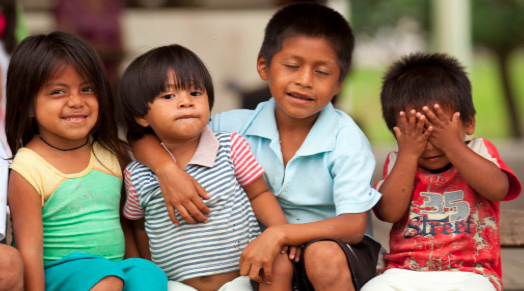
[Image courtesy of the Liahona Children’s Foundation]
“The Church may or may not be true,” quipped my father-in-law, who was at the time serving as a stake president of the Church of Jesus Christ of Latter-day Saints. “But it is organized.”
Born of the theological basis of hierarchical priesthood authority and of the practical exigencies of running a worldwide church with mostly volunteer labor, Mormon organization is indeed a force to be reckoned with. When the Church organizational machinery rumbles into motion, it mobilizes labor and resources with incredible efficiency, such as in responses to Hurricane Katrina and the 2010 Haiti earthquake.
With great organization comes great power.
As the Church has expanded rapidly throughout the developing world in the past decade, its organizational structures have been tested by challenges of astounding magnitude.
According to the Liahona Children’s Foundation, an estimated 120,000 Mormon children around the world currently suffer from malnutrition.[1] These are children who actively attend church and sing songs in the Primary meeting each Sunday. Close to 1,000 of these Primary kids die every year. Even children who are not in mortal danger will have stunted physical and intellectual development that will affect their capacity to thrive and contribute to society as future members and leaders within the Church.
When I first heard this, I was shocked. My gut reaction was: I thought children were starving in Africa, not Zion?
Mormons see themselves as a “peculiar people,” a modern Israel called by God to be a light to the world. Mormonism’s strong internal mechanisms for community-building sometimes lead people to accuse Mormons of being elitist and clannish. There is some truth in this. And yet, as my friends in interfaith circles have often remarked admiringly, Mormon communities are uncommonly strong, bound together by both the charisma of common covenants and the gravity of prodigious organizational exertion.
When a family in a Mormon ward or branch has a baby, within a few hours people are competing for slots in the sign-up sheet to bring a meal. When a child is hospitalized, the Relief Society arranges meals, childcare for the siblings, cards, toys, and so on. When parents go through a rough spell in their relationship with their teenager, local youth leaders often step up their game, making time for one-on-one chats or taking extra care to make that teenager feel loved and accepted. This is one of the best and most inspired things about the Church, in my opinion: the extent and intimacy of its organization. Many hands make light work, and working closely together in a variety of settings generates a wonderful esprit de corps.
This is why I was so shocked to hear that thousands of Mormon kids around the world were slowly dying of malnutrition. If a child in my Primary class were threatened by malnutrition, I feel, I would take notice and I would also do something about it. The home teachers, visiting teachers, and bishopric would take notice and do something about it. Within any of the LDS wards and branches in which I have served, to allow a Primary child to continue on in a state of life-threatening malnutrition would be absolutely unthinkable. Casseroles would be delivered. Childcare would be provided. Medical advice, legal advice, employment advice, and domestic labor would be donated.
Beyond individual efforts, the organization of the Church has measures in place for hungry people. There is the Church Welfare System. There are humanitarian programs. There is a lot of money from tithes and offerings. How can Primary kids be malnourished when, according to the estimates of one Liahona Children’s Foundation volunteer, it would take only about 7 million USD per year to provide nutritional supplements for everyone? How can this be happening?
I put these questions to Dr. Robert Rees, vice-president and co-founder of the Liahona Children’s Foundation, during his visit to Hong Kong last week. Dr. Rees was en route to New Zealand after finishing many rounds of malnutrition screenings in the Philippines, where he and other volunteers had found 60-70% malnutrition rates among LDS children in certain areas.
According to Dr. Rees, one of the major problems is this: You can’t necessarily tell that children are malnourished just by looking at them. A child who looks like a healthy three year-old may actually be five. A child who looks well-fed may be eating a mostly corn-based diet with little protein. Furthermore, in a country like Cambodia where a high percentage of children are malnourished, a malnourished child simply looks “normal.” Another problem is that parents and church leaders sometimes lack knowledge about proper nutrition and also lack awareness of resources that might be available to them.
The Liahona Children’s Foundation is responding to the immediate need by providing screenings and nutritional supplements for malnourished children in countries such as Peru and the Philippines.* One of the Foundation’s major long-term goals is to develop a partnership with the Church so that malnourished children all around the world can receive more systematic aid through the Church’s organized welfare programs. For every LDS child the Foundation screens, it also screens one non-LDS child and provides supplements to all. Donations of time, talent, and money are urgently needed.
To return to my first reaction (I thought children were starving in Africa, not Zion?), I think that this and similar reactions capture a new challenge for Mormonism and Mormons as a people in the twenty-first century. I used to view the world’s large-scale, intractable problems like poverty, disease, corruption, and war from a considerable distance. The overwhelming need was numbing. What difference could I make? I used to think. How sad that children are starving in Africa.
And yet once again, Mormonism’s penchant for organization proves to be both a blessing and a challenge. Because of the institutional organization and religious culture of global Mormonism, I now know exactly who is starving in Africa: CTR 8s, Sunbeams, eighteen month-olds being jiggled to keep quiet as the sacrament is passed. Because I know who these children are and how they would fit into my church community were I in Peru or were they in Hong Kong, I can no longer ignore what they’re experiencing.
With great organization comes great responsibility.
Twenty-first century Mormons live not just in America and Canada but also in Ecuador and Paraguay. Church members in North America, myself included, must begin to fully absorb what this global membership means. Certainly images of Latter-day Saints in other countries can inspire feelings of unity and validation, like the “I Am a Child of God” video that was broadcast during the General Women’s Meeting in April. As I sat at my kitchen table in Hong Kong and watched the seamless musical montage of Mormon children, young women, and grown women, I wept as I felt the Spirit testify of the powerful bond of sisterhood that reaches across languages, cultures, and ideological views. And yet being a global Church means more than just having cheerleading outposts in other countries. It means that all Mormons, no matter where they live, now own a share of the world’s most difficult, most intractable problems.
The good news is that this problem of Primary children’s malnutrition can be entirely eliminated if members of the Church worldwide pitch in (consider this the global equivalent of setting up and putting away folding chairs).
Some might question why I am writing about malnourished Mormon children when there are malnourished children of all religious sensibilities everywhere. Why only focus on “one’s own” people? My response to this is that I can’t wrap my mind around how to eliminate child malnutrition across the world, but I can think of specific ideas on how to address the problem within the structure of Mormon communities, institutional structures, and global networks. Familiar turf is a good place to find the first foothold in a wide-ranging journey.
In Doctrine & Covenants 58:27, God admonishes people not to wait to be told what to do, but to be “anxiously engaged in a good cause” and to “do many things of their own free will.” So what can we do? The most fundamental step is awareness. If every member of the Church knew about this problem, it would quickly cease to be a problem.
I am not a social media or mass marketing genius, but here’s a video, “I Am a Child of God,” from the Liahona Children’s Foundation website. If this clip were shared with 120,000 Latter-day Saints on social media, and each of those people donated just one dollar, it would raise $120,000—enough to provide a year’s worth of nutritional supplements to Primary children in 20,000 stakes.
Beyond the matter of donations, if you are looking for a purpose to focus your fast this Fast Sunday, June 1st, please remember thousands of Primary children in our global wards and branches who experience hunger not monthly, but daily.
In The Pearl of Great Price, the book of Moses (chapter 7, verse 18) defines the Lord’s people: “And the Lord called his people ZION, because they were of one heart and one mind, and dwelt in righteousness; and there was no poor among them.”
I am not so naïve as to expect that a few million Mormons can singlehandedly eliminate the world’s great problems, like hunger or malaria, simply by flexing their organizational muscles. I’m not calling for a massive social engineering project to globally redistribute wealth. However, I know who we are and who were are trying to be. If we truly desire to establish Zion, then we must first seek out the poor among us. In today’s global church, being “one” is both more daunting and more possible than ever before.
[1] This estimate of 120,000 malnourished LDS children is a current figure given by Dr. Robert Rees of the Liahona Children’s Foundation, who spoke about the Foundation’s work in Hong Kong on May 21, 2014.
* In an earlier version of this post, I erroneously mentioned Nigeria as a place where the Liahona Children’s Foundation was working. It does not currently have any operations in Nigeria, however.
Previous Post

May 21, 2014
Sneakers and Salvation
Next Post
May 29, 2014 On Translation Theories and the Interpretation of the Book of Mormon
Browse Our Archives
Select a Category American society Art baptism Blogging Book of Mormon Book review Brigham Young Brigham Young University Bundy Catholicism Christianity Communalism Community of Christ conferences conversion correlation Culture denominations Digital History Discipline Councils diversity Doctrine Donald Trump education Emma Smith ethics family feminism fiction Film review food French Polynesia Fundamentalism Gay rights Gender global Gun politics Halloween health History Honor Code hymns Joseph Smith Kirtland Temple law of consecration massacre site military Ministering missionary moderate Mormon feminism Modern Mormonism Mormon origins Mormon War Mormonism Mormonism, politics, Romney Obama Peace politics Polygamy Pope Francis Poverty Prayer Priesthood Protestantism Race Religious freedom Revelation Reviews sacred sites Scientology Scripture Secularization See Stones sexual assault Star Wars television temples Tithing Utah violence war women's ordination
Select a Month October 2018 September 2018 August 2018 May 2018 April 2018 March 2018 February 2018 January 2018 December 2017 October 2017 September 2017 July 2017 June 2017 May 2017 April 2017 March 2017 February 2017 January 2017 November 2016 October 2016 August 2016 July 2016 June 2016 May 2016 April 2016 March 2016 February 2016 January 2016 December 2015 November 2015 October 2015 September 2015 August 2015 July 2015 June 2015 April 2015 March 2015 February 2015 January 2015 December 2014 November 2014 October 2014 September 2014 August 2014 July 2014 June 2014 May 2014 April 2014 March 2014 February 2014 January 2014 December 2013 November 2013 October 2013 September 2013 August 2013 July 2013 June 2013 May 2013 April 2013 March 2013 February 2013 January 2013 December 2012 November 2012 October 2012 September 2012 August 2012 July 2012 June 2012 May 2012 April 2012 March 2012
Follow Us!
TAKE THE
Religious Wisdom Quiz
How many disciples did Jesus have?
Select your answer to see how you score.
Twenty Twelve Ten Seven
Related posts from Peculiar People

To the People Defending the Church's Decision to...

The Women Who Enable Abusive Men

Joseph, Potiphar's Wife, and the Truth about False...

Robert Kirby and Edgy Mormon Men
TRENDING AT PATHEOS Latter-day Saint

Did Prayer Cure His Cancer? Or Was It...
At 4 AM one morning, Joshua W. Brown’s wife awoke to a...

8 Ways a Near-Death Experience Rewires the Soul
Does Consciousness Survive Physical Death? After 50 Years of Research, Dr. Raymond...

Holy Longing: What Our Restlessness Is Telling Us
“One can find so many pains when the rain is falling.” -John...

What this is NOT about. This blog is definitely not about...

Who said the Israelites were God’s chosen? That’s right, they did. Who...

The Spirit World Is the Real World: God...
A Monk’s Wisdom on Body and Spirit I sit with Brother Martin...
view all Latter-day Saint blogs
Ad-Free & Subscriber Log-In Subscription Support
- About Us
- 2026 Calendar
- Videos
- Podcasts
- Library of World Religions
- Faith In Media Tracker
- Advertise With Us
- Write for Us
- Privacy Policy
- Terms of Service
- Do Not Sell My Data
- Contact Us
- Radiant Digital
- Manage Newsletter Subscriptions
- Unsubscribe From Notifications
- Sitemap
Copyright 2008-2026, Patheos. All rights reserved.
Subscription Support Ad-Free & Subscriber Log-In
Follow Patheos