
BuddhistCatholicContemplativeEvangelicalGeneral ChristianHinduJewishLatter-day SaintMuslimNew VisionsProgressive Christian
Beliefs
- Buddhist
- Catholic
- Contemplative
- Evangelical
- General Christian
- Hindu
- Jewish
- Latter-day Saint
- More Voices
- Muslim
- New Visions
- Pagan
- Progressive Christian
Topics
- Religion News
- Food and Religion
- Sports and Religion
- Religious Art
- Religious Music and Entertainment
- Religious Events
- History and Religion
- Style and Religion
- Politics and Religion
- Women in Religion
- Recreation Outdoors and Religion
- Business Finance and Religion
- Careers Workplace and Religion
- Education and Religion
- Family Parenting and Religion
- Health Fitness and Religion
- Home and Religion
- Relationships and Religion
- Technology and Religion
- Travel and Religion
Columnists
- Buddhist Columnists
- Business Finance and Religion Columnists
- Careers Workplace and Religion Columnists
- Catholic Columnists
- Contemplative Columnists
- Education and Religion Columnists
- Evangelists Columnists
- Family Parenting and Religion Columnists
- General Christian Columnists
- Health Fitness and Religion Columnists
- Hindu Columnists
- History and Religion Columnists
- Home and Religion Columnists
- Jewish Columnists
- More Voices Columnists
- Latter Day Columnists
- Muslim Columnists
- New Visions Columnists
- Nonreligious Columnists
- Pagan Columnists
- Politics and Religion Columnists
- Progressive Columnists
- Recreation Outdoors and Religion Columnists
- Relationships and Religion Columnists
- Religion News Columnists
- Religious Art Columnists
- Religious Events Columnists
- Religious Music and Entertainment Columnists
- Sports and Religion Columnists
- Style and Religion Columnists
- Technology and Religion Columnists
- Travel and Religion Columnists
- Women in Religion Columnists
Resource Library
- 2026 Calendar
- Library of World Religions
- The 100 Most Holy Places on Earth
- Patheos Answers
- Podcasts
- Videos
- Faith Leaders Database
- Anglican Episcopalian
- Bahai
- Baptist
- Buddhism
- Christianity
- Confucianism
- Eastern Orthodoxy
- Hinduism
- Holiness and Pentecostal
- ISKCON
- Islam
- Judaism
- Lutheran
- Methodist
- The Church of Jesus Christ of Latter-day Saints
- New Age
- Paganism
- Presbytarian and Reformed
- Protestantism
- Religion Behind the Scenes
- Roman Catholic
- Scientology
- Shia Islam
- Sikhism
- Sufism
- Sunni Islam
- Taoism
- Zen
- See all religions
Research Tools
 Ad-Free & Subscriber Log-In Subscription Support
Ad-Free & Subscriber Log-In Subscription Support
Follow Patheos 

- Trending:
- Forgiveness
- |
- Marriage
- |
- Consciousness
- |
- Death Penalty
- |
- Election
- |
- Halloween
 Peculiar People
- Home
- Latter-day Saint
- Why Do Americans Love Pope Francis?
Why Do Americans Love Pope Francis?
Last updated on: November 19, 2013 at 11:51 pm by Susanna Morrill
Why Do Americans Love Pope Francis? 2013-11-19T23:51:24+00:00 Susanna Morrill
Patheos Explore the world's faith through different perspectives on religion and spirituality! Patheos has the views of the prevalent religions and spiritualities of the world.
The other day, I was talking to my students about how the press has been giving Pope Francis very positive coverage. We hear often about phone calls he makes to a grieving, troubled people, or about his latest rejection of the costly privileges of the papacy. Facebook lights up with photos of the pope embracing disabled people, or indulging the antics of children. We’re still in the honeymoon phase with this pope and the press and average Americans, no doubt, will grow more critical of the current pontiff. Still, it’s interesting that we’re so willing, even eager to embrace this pope. Of course, a lot of this has to do with Pope Francis’ personality. He seems to be a personable, affable, and genuine man. And he appears intent on cleaning up corruption in the Vatican bureaucracy and dealing with the systemic stagnation that created the sexual abuse crisis in the church.
Still, I wonder if it also demonstrates a more general and ambivalent fascination that non-Catholic Americans have with Catholicism. I write and teach often about anti-Catholic strains that sit deep in U.S. culture. It has, for instance, incited violence against Irish immigrants in the nineteenth century and is, perhaps, even the structural ancestor of anti-Mormon, anti-communist, and anti-Islamic rhetoric (to name just a few “antis”). But Americans are also fascinated with Catholicism and Catholic culture and have embraced selected aspects of this culture. In explaining the outsized influence of Cardinal Mundelein, Edward Kantowitz argues that Americans love a good show. Despite a long Protestant heritage critical of extravagance and showy rituals, American culture also embraces exuberant displays of wealth, architecture, and entertainment and Catholicism has a long tradition of exuberant, aesthetically rich religious expression in its architecture, ritual, and art. Leigh Eric Schmidt writes eloquently about how, for instance, the Easter Parade tradition developed from a potent combination of burgeoning consumerism, fascination with high church (i.e., Catholic and Episcopalian) rituals, and celebratory social parading.
I wonder where this fascination comes from. Is it simply that humans are universally captured by visual, sensuous experiences? Is it, as Schmidt suggests, a harkening back to festive aspects of medieval culture that couldn’t be suppressed forever by Protestant strictures against worldiness? Is it partly the product of the consumerism and mass popular culture that developed at the end of the nineteenth century as America’s capitalist, industrialized economy matured? Have the capitalist economic structures of the U.S., a capitalism that Max Weber suggests was fueled by the Calvinist Reformation, now, ironically, created a culture where Americans embrace the very exuberance and extravagance that Calvinists railed against?
I’m not alone in also noticing that Americans have a complicated relationship with hierarchical authority figures. The British royalty generates huge interest and revenue in the U.S. For non-Catholics, the pope seems to elicit similar, if less intense interest. Of course, in both cases of British royalty and the pope, these are authority figures who are located outside of the country and have little to no direct power over Americans. They can be safely idolized and idealized because they are, ultimately, non-threatening. But I wonder if the fascination with the pope also partly resides in a profound cultural longing for a single, unifying religious leader who can give clear answers and serve as an idealized example of how to live a good, moral life. American history is rife with examples of religious leaders to whom Americans looked for solace and advice: Anne Hutchinson, George Whitefield, Ann Lee, Joseph Smith, Swami Vivekananda, Billy Sunday, Martin Luther King, Jr. The list goes on and on and crosses traditions and times. I wonder if the papacy (in its modern incarnation at least) has a special resonance in American culture because the office and person is so carefully and deliberately separated from the pitfalls of everyday life that have been stumbling blocks for other American religious leaders: sex, rivals, divesting followers of money. A pope leaves behind his old self, takes a new name, becomes the office. And I wonder if the current pope holds particular fascination for Americans because he seems to combine in one person all of these ambivalent and contradictory strains in American culture: rejection of extravagance, fascination with ritual and show, and longing for an ideal religious leader.
Previous Post

November 17, 2013
Being a Mormon Intellectual
Next Post
November 25, 2013 Justice and Fairness
Browse Our Archives
Select a Category American society Art baptism Blogging Book of Mormon Book review Brigham Young Brigham Young University Bundy Catholicism Christianity Communalism Community of Christ conferences conversion correlation Culture denominations Digital History Discipline Councils diversity Doctrine Donald Trump education Emma Smith ethics family feminism fiction Film review food French Polynesia Fundamentalism Gay rights Gender global Gun politics Halloween health History Honor Code hymns Joseph Smith Kirtland Temple law of consecration massacre site military Ministering missionary moderate Mormon feminism Modern Mormonism Mormon origins Mormon War Mormonism Mormonism, politics, Romney Obama Peace politics Polygamy Pope Francis Poverty Prayer Priesthood Protestantism Race Religious freedom Revelation Reviews sacred sites Scientology Scripture Secularization See Stones sexual assault Star Wars television temples Tithing Utah violence war women's ordination
Select a Month October 2018 September 2018 August 2018 May 2018 April 2018 March 2018 February 2018 January 2018 December 2017 October 2017 September 2017 July 2017 June 2017 May 2017 April 2017 March 2017 February 2017 January 2017 November 2016 October 2016 August 2016 July 2016 June 2016 May 2016 April 2016 March 2016 February 2016 January 2016 December 2015 November 2015 October 2015 September 2015 August 2015 July 2015 June 2015 April 2015 March 2015 February 2015 January 2015 December 2014 November 2014 October 2014 September 2014 August 2014 July 2014 June 2014 May 2014 April 2014 March 2014 February 2014 January 2014 December 2013 November 2013 October 2013 September 2013 August 2013 July 2013 June 2013 May 2013 April 2013 March 2013 February 2013 January 2013 December 2012 November 2012 October 2012 September 2012 August 2012 July 2012 June 2012 May 2012 April 2012 March 2012
Follow Us!
TAKE THE
Religious Wisdom Quiz
What relative of Jesus prepared the way for Him?
Select your answer to see how you score.
John the Baptist Moses Paul Peter
Related posts from Peculiar People

Sorry to Bother You: The (Human) Body as...


A Letter for My Someday-Teenage Children
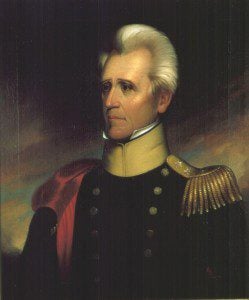
Trump Should Learn from Andrew Jackson: Keep Church...
TRENDING AT PATHEOS Latter-day Saint

Did Prayer Cure His Cancer? Or Was It...
At 4 AM one morning, Joshua W. Brown’s wife awoke to a...

8 Ways a Near-Death Experience Rewires the Soul
Does Consciousness Survive Physical Death? After 50 Years of Research, Dr. Raymond...

Holy Longing: What Our Restlessness Is Telling Us
“One can find so many pains when the rain is falling.” -John...

What this is NOT about. This blog is definitely not about...

Who said the Israelites were God’s chosen? That’s right, they did. Who...

The Spirit World Is the Real World: God...
A Monk’s Wisdom on Body and Spirit I sit with Brother Martin...
view all Latter-day Saint blogs
Ad-Free & Subscriber Log-In Subscription Support
- About Us
- 2026 Calendar
- Videos
- Podcasts
- Library of World Religions
- Faith In Media Tracker
- Advertise With Us
- Write for Us
- Privacy Policy
- Terms of Service
- Do Not Sell My Data
- Contact Us
- Radiant Digital
- Manage Newsletter Subscriptions
- Unsubscribe From Notifications
- Sitemap
Copyright 2008-2026, Patheos. All rights reserved.
Subscription Support Ad-Free & Subscriber Log-In
Follow Patheos