
BuddhistCatholicContemplativeEvangelicalGeneral ChristianHinduJewishLatter-day SaintMuslimNew VisionsProgressive Christian
Beliefs
- Buddhist
- Catholic
- Contemplative
- Evangelical
- General Christian
- Hindu
- Jewish
- Latter-day Saint
- More Voices
- Muslim
- New Visions
- Pagan
- Progressive Christian
Topics
- Religion News
- Food and Religion
- Sports and Religion
- Religious Art
- Religious Music and Entertainment
- Religious Events
- History and Religion
- Style and Religion
- Politics and Religion
- Women in Religion
- Recreation Outdoors and Religion
- Business Finance and Religion
- Careers Workplace and Religion
- Education and Religion
- Family Parenting and Religion
- Health Fitness and Religion
- Home and Religion
- Relationships and Religion
- Technology and Religion
- Travel and Religion
Columnists
- Buddhist Columnists
- Business Finance and Religion Columnists
- Careers Workplace and Religion Columnists
- Catholic Columnists
- Contemplative Columnists
- Education and Religion Columnists
- Evangelists Columnists
- Family Parenting and Religion Columnists
- General Christian Columnists
- Health Fitness and Religion Columnists
- Hindu Columnists
- History and Religion Columnists
- Home and Religion Columnists
- Jewish Columnists
- More Voices Columnists
- Latter Day Columnists
- Muslim Columnists
- New Visions Columnists
- Nonreligious Columnists
- Pagan Columnists
- Politics and Religion Columnists
- Progressive Columnists
- Recreation Outdoors and Religion Columnists
- Relationships and Religion Columnists
- Religion News Columnists
- Religious Art Columnists
- Religious Events Columnists
- Religious Music and Entertainment Columnists
- Sports and Religion Columnists
- Style and Religion Columnists
- Technology and Religion Columnists
- Travel and Religion Columnists
- Women in Religion Columnists
Resource Library
- 2026 Calendar
- Library of World Religions
- The 100 Most Holy Places on Earth
- Patheos Answers
- Podcasts
- Videos
- Faith Leaders Database
- Anglican Episcopalian
- Bahai
- Baptist
- Buddhism
- Christianity
- Confucianism
- Eastern Orthodoxy
- Hinduism
- Holiness and Pentecostal
- ISKCON
- Islam
- Judaism
- Lutheran
- Methodist
- The Church of Jesus Christ of Latter-day Saints
- New Age
- Paganism
- Presbytarian and Reformed
- Protestantism
- Religion Behind the Scenes
- Roman Catholic
- Scientology
- Shia Islam
- Sikhism
- Sufism
- Sunni Islam
- Taoism
- Zen
- See all religions
Research Tools
 Ad-Free & Subscriber Log-In Subscription Support
Ad-Free & Subscriber Log-In Subscription Support
Follow Patheos 

- Trending:
- Forgiveness
- |
- Marriage
- |
- Consciousness
- |
- Death Penalty
- |
- Election
- |
- Halloween
 Peculiar People
- Home
- Latter-day Saint
- Narrating the LDS Past: Past and Present
Narrating the LDS Past: Past and Present
Last updated on: September 26, 2012 at 5:41 pm by Benjamin Park
Narrating the LDS Past: Past and Present 2012-09-26T17:41:10+00:00 Benjamin Park
Patheos Explore the world's faith through different perspectives on religion and spirituality! Patheos has the views of the prevalent religions and spiritualities of the world.
[Yesterday, I had the privilege of virtually attending the blogging event held in honor of the Joseph Smith Papers most recent contribution: Histories, Volume 2.]
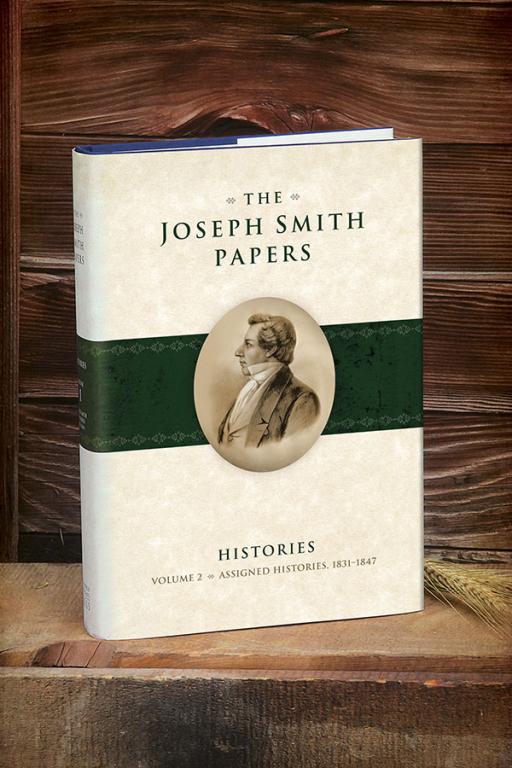 On the day the Church of Jesus Christ of Latter-day Saints was organized in 1830, Joseph Smith claimed a revelation that “there shall be a record kept among you.” The Joseph Smith Papers Project, which has been going strong for over a decade and has now published its sixth of a projected twenty to twenty-five volumes, is perhaps the most ambitious and significant result of that charge. Endorsed by the National Historical Publications and Records Commission, the project has taken Mormon documentary editing standards to a new level and established a pattern nearly impossible to duplicate. The most recent volume, the second in the “Histories” series, reproduces early attempts to narrate the Church’s history prior to (and immediately after) Joseph Smith’s death. Unlike the first volume in the series, though, these texts were not directly overseen, dictated, or even supervised by Smith himself; rather, they were commissioned by him and composed by others who claimed their own first-hand experience.
That is an important step in the process of Mormon historical writing and deserves reflection. Even if those assigned were, at least at first, faithful and committed to the cause, their texts’ distance from Joseph Smith introduced new possibilities for interpretation: the narration was now no longer held in control of one person. Such a dynamic necessitates the introduction of nuance and diversity, because everyone experiences and interprets things differently, even if drawn from similar events. The individual and independent nature of these documents may seem alien in a day when everything must go through a rigorous correlation process overseen by many men, they were part and parcel of early Mormonism, in which personal experience drastically differed depending on background and personality. Reading through the accounts included in Histories, Volume 2, it becomes quickly evident that what is presented is not a single, unified account of what happened to the Church during Joseph Smith’s days, but how various individuals experienced and interpreted those events. For an average Latter-day Saint, such a systematic study would be enormously important because it provides not only details of early Mormon history, but a methodological lesson in how histories are constructed.
Perhaps more important than the types of authorships are the actual authors. The volume includes a multivocal account from various perspectives: from fully-committed members publishing in the Church’s newspaper to excommunicated dissidents who never published their controversial accounts. It should bee seen as significant that among the authors are John Whitmer and John Corrill, two individuals who left the Church during the 1830s and whose disillusionment colored certain aspects of their histories. Their accounts, then, present a much more anxiety-ridden and complicated look at Mormonism’s origins and detail the problems faced by those who attempted to follow Joseph Smith’s often-difficult commands.
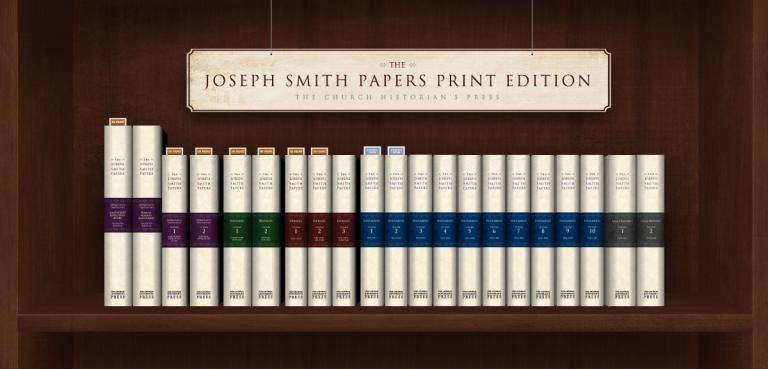
An important and sometimes overlooked aspect of the Project is their seamless integration of digital resources. While the books (deservedly) receive much attention, it is significant to note how much work is put into their online presence. Besides providing high-resolution scans for the specific Joseph Smith documents reproduced in the volumes, the Project’s website goes far beyond by providing documents not included in print. This is especially the case with the Histories Series, as there are numerous historical accounts that just fell short of the “Joseph Smith Document” criteria (mostly due to the fact that they weren’t individually commissioned by the Prophet) but are still worthy of mention. Another notable example is the History of Joseph Smith series begun in 1838 and continued long after Smith’s death. But even though these documents won’t be found in the printed volumes, they can all be found online, along with an amazing cache of other documents that are continuously uploaded. Other web features include comprehensive indexes, glossary terms, geographical descriptions, and biographical aides.
These are all significant and welcome features, especially in a world where even religious experience seems to be migrating to the digital realm. The fact that the Church has had difficulty maintaining young adults is not a secret, and the role of the internet in the many de-conversions is becoming increasingly apparent. When the Church doesn’t provide responsible and open accounts of its history, today’s generations will look somewhere else–and, barring a few exceptions, most websites that claim “objective” and “unbiased” histories of Mormonism are anything but. Though admittedly late to the game–though one would hope not too late–these types of digital elements are necessary to reach a generation that is more comfortably trusting the internet than correlated manuals.
Complexity. Plurality. Immediacy. Digital conveniency. These are key issues when dealing with the 19th century origins of a 21st century church.
______________________________
See also the short videos they prepared on the volume, found here.
Previous Post

September 24, 2012
Mormonism and the "Dark Night of the Soul"
Next Post
October 3, 2012 An American Religion
Browse Our Archives
Select a Category American society Art baptism Blogging Book of Mormon Book review Brigham Young Brigham Young University Bundy Catholicism Christianity Communalism Community of Christ conferences conversion correlation Culture denominations Digital History Discipline Councils diversity Doctrine Donald Trump education Emma Smith ethics family feminism fiction Film review food French Polynesia Fundamentalism Gay rights Gender global Gun politics Halloween health History Honor Code hymns Joseph Smith Kirtland Temple law of consecration massacre site military Ministering missionary moderate Mormon feminism Modern Mormonism Mormon origins Mormon War Mormonism Mormonism, politics, Romney Obama Peace politics Polygamy Pope Francis Poverty Prayer Priesthood Protestantism Race Religious freedom Revelation Reviews sacred sites Scientology Scripture Secularization See Stones sexual assault Star Wars television temples Tithing Utah violence war women's ordination
Select a Month October 2018 September 2018 August 2018 May 2018 April 2018 March 2018 February 2018 January 2018 December 2017 October 2017 September 2017 July 2017 June 2017 May 2017 April 2017 March 2017 February 2017 January 2017 November 2016 October 2016 August 2016 July 2016 June 2016 May 2016 April 2016 March 2016 February 2016 January 2016 December 2015 November 2015 October 2015 September 2015 August 2015 July 2015 June 2015 April 2015 March 2015 February 2015 January 2015 December 2014 November 2014 October 2014 September 2014 August 2014 July 2014 June 2014 May 2014 April 2014 March 2014 February 2014 January 2014 December 2013 November 2013 October 2013 September 2013 August 2013 July 2013 June 2013 May 2013 April 2013 March 2013 February 2013 January 2013 December 2012 November 2012 October 2012 September 2012 August 2012 July 2012 June 2012 May 2012 April 2012 March 2012
Follow Us!
TAKE THE
Religious Wisdom Quiz
How many books are in the New Testament?
Select your answer to see how you score.
39 21 24 27
Related posts from Peculiar People

To the People Defending the Church's Decision to...

The Women Who Enable Abusive Men

Joseph, Potiphar's Wife, and the Truth about False...

Robert Kirby and Edgy Mormon Men
TRENDING AT PATHEOS Latter-day Saint

Did Prayer Cure His Cancer? Or Was It...
At 4 AM one morning, Joshua W. Brown’s wife awoke to a...

8 Ways a Near-Death Experience Rewires the Soul
Does Consciousness Survive Physical Death? After 50 Years of Research, Dr. Raymond...

Holy Longing: What Our Restlessness Is Telling Us
“One can find so many pains when the rain is falling.” -John...

What this is NOT about. This blog is definitely not about...

Who said the Israelites were God’s chosen? That’s right, they did. Who...

The Spirit World Is the Real World: God...
A Monk’s Wisdom on Body and Spirit I sit with Brother Martin...
view all Latter-day Saint blogs
Ad-Free & Subscriber Log-In Subscription Support
- About Us
- 2026 Calendar
- Videos
- Podcasts
- Library of World Religions
- Faith In Media Tracker
- Advertise With Us
- Write for Us
- Privacy Policy
- Terms of Service
- Do Not Sell My Data
- Contact Us
- Radiant Digital
- Manage Newsletter Subscriptions
- Unsubscribe From Notifications
- Sitemap
Copyright 2008-2026, Patheos. All rights reserved.
Subscription Support Ad-Free & Subscriber Log-In
Follow Patheos