
BuddhistCatholicContemplativeEvangelicalGeneral ChristianHinduJewishLatter-day SaintMuslimNew VisionsProgressive Christian
Beliefs
- Buddhist
- Catholic
- Contemplative
- Evangelical
- General Christian
- Hindu
- Jewish
- Latter-day Saint
- More Voices
- Muslim
- New Visions
- Pagan
- Progressive Christian
Topics
- Religion News
- Food and Religion
- Sports and Religion
- Religious Art
- Religious Music and Entertainment
- Religious Events
- History and Religion
- Style and Religion
- Politics and Religion
- Women in Religion
- Recreation Outdoors and Religion
- Business Finance and Religion
- Careers Workplace and Religion
- Education and Religion
- Family Parenting and Religion
- Health Fitness and Religion
- Home and Religion
- Relationships and Religion
- Technology and Religion
- Travel and Religion
Columnists
- Buddhist Columnists
- Business Finance and Religion Columnists
- Careers Workplace and Religion Columnists
- Catholic Columnists
- Contemplative Columnists
- Education and Religion Columnists
- Evangelists Columnists
- Family Parenting and Religion Columnists
- General Christian Columnists
- Health Fitness and Religion Columnists
- Hindu Columnists
- History and Religion Columnists
- Home and Religion Columnists
- Jewish Columnists
- More Voices Columnists
- Latter Day Columnists
- Muslim Columnists
- New Visions Columnists
- Nonreligious Columnists
- Pagan Columnists
- Politics and Religion Columnists
- Progressive Columnists
- Recreation Outdoors and Religion Columnists
- Relationships and Religion Columnists
- Religion News Columnists
- Religious Art Columnists
- Religious Events Columnists
- Religious Music and Entertainment Columnists
- Sports and Religion Columnists
- Style and Religion Columnists
- Technology and Religion Columnists
- Travel and Religion Columnists
- Women in Religion Columnists
Resource Library
- 2026 Calendar
- Library of World Religions
- The 100 Most Holy Places on Earth
- Patheos Answers
- Podcasts
- Videos
- Faith Leaders Database
- Anglican Episcopalian
- Bahai
- Baptist
- Buddhism
- Christianity
- Confucianism
- Eastern Orthodoxy
- Hinduism
- Holiness and Pentecostal
- ISKCON
- Islam
- Judaism
- Lutheran
- Methodist
- The Church of Jesus Christ of Latter-day Saints
- New Age
- Paganism
- Presbytarian and Reformed
- Protestantism
- Religion Behind the Scenes
- Roman Catholic
- Scientology
- Shia Islam
- Sikhism
- Sufism
- Sunni Islam
- Taoism
- Zen
- See all religions
Research Tools
 Ad-Free & Subscriber Log-In Subscription Support
Ad-Free & Subscriber Log-In Subscription Support
Follow Patheos 

- Trending:
- Forgiveness
- |
- Marriage
- |
- Consciousness
- |
- Death Penalty
- |
- Election
- |
- Halloween
 Peace and Pekoe
- Home
- Catholic
- The consistent ethic of abolitionist William Wilberforce
The consistent ethic of abolitionist William Wilberforce
Last updated on: September 15, 2017 at 9:15 pm by Kate Cousino
The consistent ethic of abolitionist William Wilberforce 2017-09-15T21:15:18-04:00 Kate Cousino
Patheos Explore the world's faith through different perspectives on religion and spirituality! Patheos has the views of the prevalent religions and spiritualities of the world.
This is the second part of a three part series on single-issue activism and social justice. The first part is here. The third part, Salt and Light, is posted on The Personalist Project.
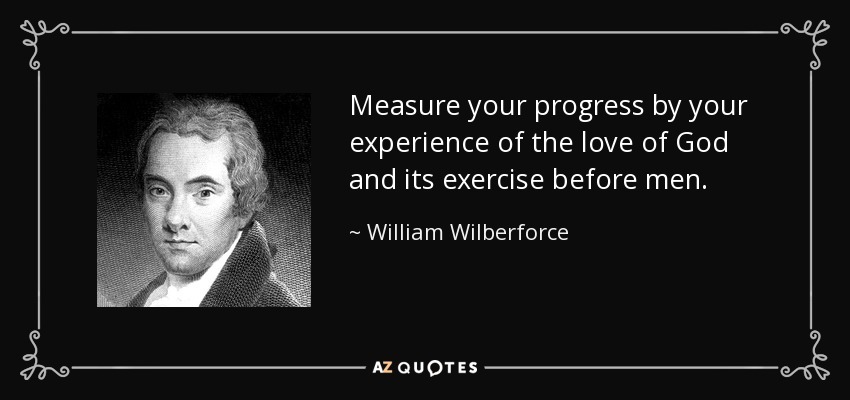
William Wilberforce was an 18th century politician and activist. He was the abolitionist who eventually succeeded in getting the Slave Trade Act of 1807 passed. He continued to campaign against slavery the rest of his life, finally seeing the Slavery Abolition Act passed in 1833.
Nobody could call Wilberforce’s commitment to abolition “dissolved” or ineffective.
But Wilberforce was by no means a single-issue activist. He saw his opposition to slavery as contiguous to a commitment to public morality–and “public morality,” for Wilberforce, spanned a wide array of causes (a swimming pool’s worth?) and crossed both political and ideological lines.

With his Clapham friends, Wilberforce was an advocate for the creation of a free colony in Sierra Leone, which he and others envisioned as a place of complete racial equality. The Clapham Sect, sometimes called “the saints” by contemporaries, were a religiously motivated, politically diverse group of social reformers who were involved in the founding of multiple societies and movements–including the Proclamation Society (promotion of public morality), the Abolition Society, the Anti-Slavery Society, the Bettering Society (improving the lives of the working class through factory and mining reform, among other things), and the Small Debt Society (freeing men and women from debtor’s prison).
Wilberforce himself was reputed to have belonged to almost 70 different societies and organizations, many of them committed to one or another social reform. Among these, he was one of the original members of the Society for the Prevention of Cruelty to Animals.
(I am fascinated, incidentally, by the way animal-cruelty-prevention societies paved the way for the creation of children’s welfare societies. What would happen if, instead of mocking animal right’s activists for treating animals as persons but not the unborn, we endorsed their empathy and encouraged them to expand the principles they already endorse? The precedent is there.)
Wilberforce helped found the “Society for the Suppression of Vice,” which sought to counter public drunkenness, gambling, fraudulent trading practices, pimping, pornography, and cruelty to animals.
Wilberforce was engaged in prison reform. He also advocated for lighter sentences for women prosecuted for the murder of abusive husbands, among other offensives. He frequently wrote in support of reprieves for individuals on death row.
He supported the establishment of schools for the poor. He was a member of several missionary societies and raised funds for overseas missions, particularly in India. He fought for parliamentary reform, and he opposed duelling as a criminal waste of God-given life.

Through all of this, Wilberforce remained an essentially conservative figure. He saw all of these causes as matters of morality, and was cautious about many of the labour rights advocated by radical reformers. Although he was socially connected to many influential and intelligent women, his attitudes towards women were essentially paternalistic, and he was not a promoter of women’s suffrage.
However, he did not allow his caution or differences of opinion prevent him from crossing the political aisle to work alongside anyone willing to be an ally in the fight against slavery or any of Wilberforce’s other causes. Other Claphamites shared this ability to transcend political divisions, and it’s been suggested that this disinterest in party politics is the factor that, in the end, made the Clapham reformers, and Wilberforce, some of the most effective agents of social reform of their time.
Wilberforce’s effectiveness is a contradiction to all of the “political realpolitik” single-issue pro-life activists in the US have learned to take for granted. His was an idealism that seemed bumbling and naive to some of his own political counterparts. Wilberforce’s political timing was frequently poor. He appealed to ministers and potential political allies with arguments drawn from conviction rather than expediency. He distrusted his own enjoyment of comfort and power, and even his abolitionist convictions could not persuade him to curry favour with those in power in hope of a ministry appointment. He remained a political independent instead, relying on friendship and common feeling to build support for his initiatives across party lines.
It is hard to imagine a modern-day Wilberforce sucking up to a man like Trump or Bannon. It is impossible to imagine him justifying or excusing unChristian behaviour or attitudes in anyone, ally or opponent.
For Wilberforce, the “single-issue” of his career–and the guiding principle of his life–was not abolition, but the Christian call to love as Christ loves. Throughout his life, he embraced every action and cause that he understood as tending towards that aim, and sought to reject worldly considerations that might distract him from it.
Can we say the same?
Previous Post

September 15, 2017
LifeSiteNews gets it wrong about abolition--and everything else
Next Post

September 20, 2017 "The leaves are different from the trees"
Browse Our Archives
Select a Category ADHD Blog Business Body and Soul Books Faith Faith in Action Family Feminism Fertility Awareness Friendship Geekiness Guest Post History Hope Just For Fun Love Marriage Memory Mental Exercise Movies Parenting Personalism Poetry Prayer Quotes Scripture Seven Quick Takes Striving for Holiness Television The Stories We Tell The World Uncategorized
Select a Month September 2018 August 2018 July 2018 June 2018 May 2018 April 2018 February 2018 January 2018 December 2017 November 2017 October 2017 September 2017 August 2017 July 2017 June 2017 May 2017 April 2017 March 2017 February 2017 January 2017 December 2016 November 2016 October 2016 August 2016 June 2016 March 2016 January 2016 November 2015 October 2015 August 2015 July 2015 May 2015 April 2015 February 2015 December 2014 November 2014 September 2014 August 2014 July 2014 June 2014 May 2014 April 2014 March 2014 February 2014 December 2013 November 2013 October 2013 September 2013 August 2013 July 2013 June 2013 May 2013 March 2013 February 2013 January 2013 December 2012 November 2012 June 2012 May 2012 April 2012 March 2012 February 2012 January 2012 August 2011 December 2010 November 2010 October 2010 September 2010 August 2010 June 2010 May 2010 April 2010 November 2009 October 2009 August 2009 July 2009 June 2009 May 2009 April 2009
Follow Us!
TAKE THE
Religious Wisdom Quiz
Who said, "Let my tongue cling to the roof of my mouth if I do not remember you"?
Select your answer to see how you score.
Solomon Isaiah Psalmist Elijah
Support this
Column


Related posts from Peace and Pekoe

A Way Wherein There Is No Ecstasy


Feeling Betrayed by the Church? Look to the...
TRENDING AT PATHEOS Catholic

Rejecting Doom: Christian Hope And Human Action
Christianity is a religion of hope. We are to have hope and...

It’s What Comes From Within Which Matters
One of the most difficult things for us to understand is why...

Why I Choose the Eucharist Over the Sermon
Choose the Eucharist, Not the Sermon What are we supposed to get...

5 Design Elements Found in Spiritually Rooted Homes
Putting Spirituality Into Home Decor Our homes are more than our living...

Credo: A Story of God Told with the...
About 10 years ago, I began to imagine a personal "Credo" that...

The Anatomy of Divine Revelation in Catholic Thought
The claim that God has made Himself known to human beings is...
view all Catholic blogs
Ad-Free & Subscriber Log-In Subscription Support
- About Us
- 2026 Calendar
- Videos
- Podcasts
- Library of World Religions
- Faith In Media Tracker
- Advertise With Us
- Write for Us
- Privacy Policy
- Terms of Service
- Do Not Sell My Data
- Contact Us
- Radiant Digital
- Manage Newsletter Subscriptions
- Unsubscribe From Notifications
- Sitemap
Copyright 2008-2026, Patheos. All rights reserved.
Subscription Support Ad-Free & Subscriber Log-In
Follow Patheos