
BuddhistCatholicContemplativeEvangelicalGeneral ChristianHinduJewishLatter-day SaintMuslimNew VisionsProgressive Christian
Beliefs
- Buddhist
- Catholic
- Contemplative
- Evangelical
- General Christian
- Hindu
- Jewish
- Latter-day Saint
- More Voices
- Muslim
- New Visions
- Pagan
- Progressive Christian
Topics
- Religion News
- Food and Religion
- Sports and Religion
- Religious Art
- Religious Music and Entertainment
- Religious Events
- History and Religion
- Style and Religion
- Politics and Religion
- Women in Religion
- Recreation Outdoors and Religion
- Business Finance and Religion
- Careers Workplace and Religion
- Education and Religion
- Family Parenting and Religion
- Health Fitness and Religion
- Home and Religion
- Relationships and Religion
- Technology and Religion
- Travel and Religion
Columnists
- Buddhist Columnists
- Business Finance and Religion Columnists
- Careers Workplace and Religion Columnists
- Catholic Columnists
- Contemplative Columnists
- Education and Religion Columnists
- Evangelists Columnists
- Family Parenting and Religion Columnists
- General Christian Columnists
- Health Fitness and Religion Columnists
- Hindu Columnists
- History and Religion Columnists
- Home and Religion Columnists
- Jewish Columnists
- More Voices Columnists
- Latter Day Columnists
- Muslim Columnists
- New Visions Columnists
- Nonreligious Columnists
- Pagan Columnists
- Politics and Religion Columnists
- Progressive Columnists
- Recreation Outdoors and Religion Columnists
- Relationships and Religion Columnists
- Religion News Columnists
- Religious Art Columnists
- Religious Events Columnists
- Religious Music and Entertainment Columnists
- Sports and Religion Columnists
- Style and Religion Columnists
- Technology and Religion Columnists
- Travel and Religion Columnists
- Women in Religion Columnists
Resource Library
- 2026 Calendar
- Library of World Religions
- The 100 Most Holy Places on Earth
- Patheos Answers
- Podcasts
- Videos
- Faith Leaders Database
- Anglican Episcopalian
- Bahai
- Baptist
- Buddhism
- Christianity
- Confucianism
- Eastern Orthodoxy
- Hinduism
- Holiness and Pentecostal
- ISKCON
- Islam
- Judaism
- Lutheran
- Methodist
- The Church of Jesus Christ of Latter-day Saints
- New Age
- Paganism
- Presbytarian and Reformed
- Protestantism
- Religion Behind the Scenes
- Roman Catholic
- Scientology
- Shia Islam
- Sikhism
- Sufism
- Sunni Islam
- Taoism
- Zen
- See all religions
Research Tools
 Ad-Free & Subscriber Log-In Subscription Support
Ad-Free & Subscriber Log-In Subscription Support
Follow Patheos 

- Trending:
- Forgiveness
- |
- Marriage
- |
- Consciousness
- |
- Death Penalty
- |
- Election
- |
- Halloween
 Peace and Pekoe
- Home
- Catholic
- Should your teenage daughter learn NFP?
Should your teenage daughter learn NFP?
Last updated on: April 4, 2017 at 11:46 am by Kate Cousino
Should your teenage daughter learn NFP? 2017-04-04T11:46:14-04:00 Kate Cousino
Patheos Explore the world's faith through different perspectives on religion and spirituality! Patheos has the views of the prevalent religions and spiritualities of the world.
Fertility Awareness should be for every woman—not just sexually active ones
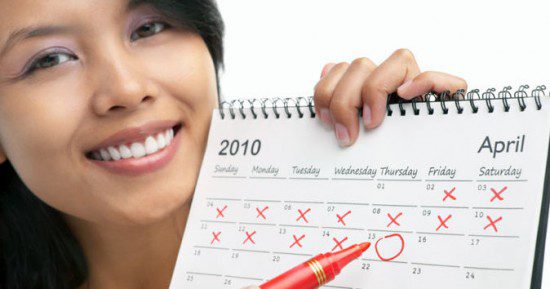
Image via https://www.flickr.com/photos/tipstimesadmin/11438107774
I had a somewhat unusual sex education.
Not unusual in most respects–I went to Ontario Catholic schools, which means that I had the same flush of embarrassment and curiosity over the diagrams in Chapter Four of our Fully Alive “family life” books as did my contemporaries. I remember sneaking glimpses at anatomical line drawings and shifting uncomfortably when it came time to separate boys and girls and talk about more personal details of oncoming puberty.
But I was unusual in the resources available to me outside the classroom; foremost, my parents. I remember bringing a friend home with me because she was too embarrassed to ask her mother or the teacher her questions about sex. I told her she could ask my mother–and my mother, calmly and without any fuss, pulled out her copy of Lennart Nilsson’s A Child is Born to show us the diagrams and explanations of sexual anatomy in the introduction, then walked us through conception and pregnancy, all the way to the photos of a vaginal birth at the end. My friend walked out a little dazed and very thoughtful.
A Child is Born wasn’t the extent of my mother’s library. My parents were natural family planning teachers with the Canadian NFP organisation SERENA. At various times they served on the provincial or national board for the organisation, and the discussions this led to went a long way to normalize fertility and the terms associated with it for me, and I think for my siblings as well. And then there were the books.
As willing as my mother was to answer questions, I was as awkward as any other child about going to her with my own. Instead, I went to our bookshelves. I browsed books about the female cycle, and articles noting the effects of ovulation on mood and energy. I browsed journal articles comparing various methods of NFP and contraception. I read chapters about the relationship between health and cycle regularity, and in-depth discussions of the qualities of fertile mucus.
Consequently, although I’d never been formally taught, as a teenager I was already in the habit of noting cycle observations on my calendar, making my best guess as to when ovulation was occurring based on what I had picked up, and marking down the most likely days for my next period to start. I remember a conversation with an older sister, home visiting from University, who advised me to get the jump on papers and assignments during the middle part of my cycle when I would have the most creative energy, so I wouldn’t have to grind through them during the energy-draining, moody days before menstruation. My other older sister told me about PMS, and made the connection for me between this end-of-cycle low and the bouts of irritability and temper that led me to clash with my mom and brothers.
In one form or another, I’ve practised fertility awareness for 20 years. Only half of that time did I have a sex partner or the possibility of conception to consider. As useful as it is to be able to use this information to plan for or postpone pregnancy, at its heart, this practice is about self-knowledge, the kind that illuminates what is unconscious, and subsequently empowers.
Which is probably why this story about the positive effects of teaching cycle charting to teenage girls resonated with me.
“These young women hadn’t been equipped with an understanding of the hormonal shifts in their cycles and how these changes were driving their moods and behaviors. After three month of charting in this rudimentary fashion, the girls starting noticing clear patterns emerging from their charts, and they became aware of that monthly “rabbit hole.”
These girls became empowered and in control, Ms. Botha reported. Mindful self-awareness and the understanding that such phases are normal and only phases made all the difference in their ability to handle them.”
Cycle mindfulness: What happens when you teach fertility awareness to teen girls
The time wasn’t that long ago that information about cycle charting would have been difficult for a teen girl to find. The leading NFP organisations were Catholic, and policies against teaching single women were not uncommon. Teaching a teenage girl to chart her fertility, some would still argue, might appear to endorse teenage sexual activity. People of faith were worried about enabling extramarital sex by accepting unmarried, non-engaged people into their classes. The secular world still largely confused NFP with the rhythm method.
Needless to say, times have changed. There are hundreds of cycle-tracking apps available on Google Play and the Apple Store. The “big three” NFP organisations–CCL, Billings, and Creighton–have been joined by dozens of smaller organisations with varying missions and approaches. Many methods make instruction available online, and it is easier than ever to connect with other NFP and fertility awareness users.
Should your teenage daughter learn to chart her cycle? I’m not sure that is even the question anymore. The information is out there, and it is relevant to every cycling woman.
The real question is whether you can keep your daughter in ignorance about the function of her own body. And whether you would really want to, knowing everything that knowledge could mean for her.
Previous Post

March 24, 2017
Drink Your Poison Yourself
Next Post
April 6, 2017 At The Personalist Project: Can Men and Women Be Friends?
Browse Our Archives
Select a Category ADHD Blog Business Body and Soul Books Faith Faith in Action Family Feminism Fertility Awareness Friendship Geekiness Guest Post History Hope Just For Fun Love Marriage Memory Mental Exercise Movies Parenting Personalism Poetry Prayer Quotes Scripture Seven Quick Takes Striving for Holiness Television The Stories We Tell The World Uncategorized
Select a Month September 2018 August 2018 July 2018 June 2018 May 2018 April 2018 February 2018 January 2018 December 2017 November 2017 October 2017 September 2017 August 2017 July 2017 June 2017 May 2017 April 2017 March 2017 February 2017 January 2017 December 2016 November 2016 October 2016 August 2016 June 2016 March 2016 January 2016 November 2015 October 2015 August 2015 July 2015 May 2015 April 2015 February 2015 December 2014 November 2014 September 2014 August 2014 July 2014 June 2014 May 2014 April 2014 March 2014 February 2014 December 2013 November 2013 October 2013 September 2013 August 2013 July 2013 June 2013 May 2013 March 2013 February 2013 January 2013 December 2012 November 2012 June 2012 May 2012 April 2012 March 2012 February 2012 January 2012 August 2011 December 2010 November 2010 October 2010 September 2010 August 2010 June 2010 May 2010 April 2010 November 2009 October 2009 August 2009 July 2009 June 2009 May 2009 April 2009
Follow Us!
TAKE THE
Religious Wisdom Quiz
Which sea did Moses cross in the Exodus story?
Select your answer to see how you score.
Dead Sea Sea of Galilee Caspian Sea Red Sea
Support this
Column


Related posts from Peace and Pekoe

Actions Speak Loudest: Arnie Clarke (Four Weeks of...
Choices: Glimpses of Good (Four Weeks of Fine...

TRENDING AT PATHEOS Catholic

The Parable Of The Sower And The Word...
One of Christ’s most famous parables is that of the sower who...

Rejecting Doom: Christian Hope And Human Action
Christianity is a religion of hope. We are to have hope and...

Why I Choose the Eucharist Over the Sermon
Choose the Eucharist, Not the Sermon What are we supposed to get...

5 Design Elements Found in Spiritually Rooted Homes
Putting Spirituality Into Home Decor Our homes are more than our living...

Credo: A Story of God Told with the...
About 10 years ago, I began to imagine a personal "Credo" that...

The Anatomy of Divine Revelation in Catholic Thought
The claim that God has made Himself known to human beings is...
view all Catholic blogs
Ad-Free & Subscriber Log-In Subscription Support
- About Us
- 2026 Calendar
- Videos
- Podcasts
- Library of World Religions
- Faith In Media Tracker
- Advertise With Us
- Write for Us
- Privacy Policy
- Terms of Service
- Do Not Sell My Data
- Contact Us
- Radiant Digital
- Manage Newsletter Subscriptions
- Unsubscribe From Notifications
- Sitemap
Copyright 2008-2026, Patheos. All rights reserved.
Subscription Support Ad-Free & Subscriber Log-In
Follow Patheos