
BuddhistCatholicContemplativeEvangelicalGeneral ChristianHinduJewishLatter-day SaintMuslimNew VisionsProgressive Christian
Beliefs
- Buddhist
- Catholic
- Contemplative
- Evangelical
- General Christian
- Hindu
- Jewish
- Latter-day Saint
- More Voices
- Muslim
- New Visions
- Pagan
- Progressive Christian
Topics
- Religion News
- Food and Religion
- Sports and Religion
- Religious Art
- Religious Music and Entertainment
- Religious Events
- History and Religion
- Style and Religion
- Politics and Religion
- Women in Religion
- Recreation Outdoors and Religion
- Business Finance and Religion
- Careers Workplace and Religion
- Education and Religion
- Family Parenting and Religion
- Health Fitness and Religion
- Home and Religion
- Relationships and Religion
- Technology and Religion
- Travel and Religion
Columnists
- Buddhist Columnists
- Business Finance and Religion Columnists
- Careers Workplace and Religion Columnists
- Catholic Columnists
- Contemplative Columnists
- Education and Religion Columnists
- Evangelists Columnists
- Family Parenting and Religion Columnists
- General Christian Columnists
- Health Fitness and Religion Columnists
- Hindu Columnists
- History and Religion Columnists
- Home and Religion Columnists
- Jewish Columnists
- More Voices Columnists
- Latter Day Columnists
- Muslim Columnists
- New Visions Columnists
- Nonreligious Columnists
- Pagan Columnists
- Politics and Religion Columnists
- Progressive Columnists
- Recreation Outdoors and Religion Columnists
- Relationships and Religion Columnists
- Religion News Columnists
- Religious Art Columnists
- Religious Events Columnists
- Religious Music and Entertainment Columnists
- Sports and Religion Columnists
- Style and Religion Columnists
- Technology and Religion Columnists
- Travel and Religion Columnists
- Women in Religion Columnists
Resource Library
- 2026 Calendar
- Library of World Religions
- The 100 Most Holy Places on Earth
- Patheos Answers
- Podcasts
- Videos
- Faith Leaders Database
- Anglican Episcopalian
- Bahai
- Baptist
- Buddhism
- Christianity
- Confucianism
- Eastern Orthodoxy
- Hinduism
- Holiness and Pentecostal
- ISKCON
- Islam
- Judaism
- Lutheran
- Methodist
- The Church of Jesus Christ of Latter-day Saints
- New Age
- Paganism
- Presbytarian and Reformed
- Protestantism
- Religion Behind the Scenes
- Roman Catholic
- Scientology
- Shia Islam
- Sikhism
- Sufism
- Sunni Islam
- Taoism
- Zen
- See all religions
Research Tools
 Ad-Free & Subscriber Log-In Subscription Support
Ad-Free & Subscriber Log-In Subscription Support
Follow Patheos 

- Trending:
- Forgiveness
- |
- Marriage
- |
- Consciousness
- |
- Death Penalty
- |
- Election
- |
- Halloween
 Paths Through The Forests
- Home
- About
- Comment Guidelines
- Look & Find
- Holidays, Rituals & History
- Creating Connections
- Cultural Quandaries
- Crafts
- Quiz & Questionnaire
- Guest Posts
- Publications
- Archive Index
- Home
- Pagan
- A Call for Urban Greening
A Call for Urban Greening
Last updated on: June 28, 2014 at 9:41 am by Lupa Greenwolf
A Call for Urban Greening 2014-06-28T09:41:12-04:00 Lupa Greenwolf
Patheos Explore the world's faith through different perspectives on religion and spirituality! Patheos has the views of the prevalent religions and spiritualities of the world.
A while back, I read this article on a community who came together to green a formerly filthy, crime-ridden alley in an impoverished neighborhood. Funded by a grant, one resident got the ball rolling on transforming the alley into a sustainable garden. This in turn invited other residents to participate, and eight years after the effort was begun the alley is now an urban oasis with loads of food-producing plants and flowers.
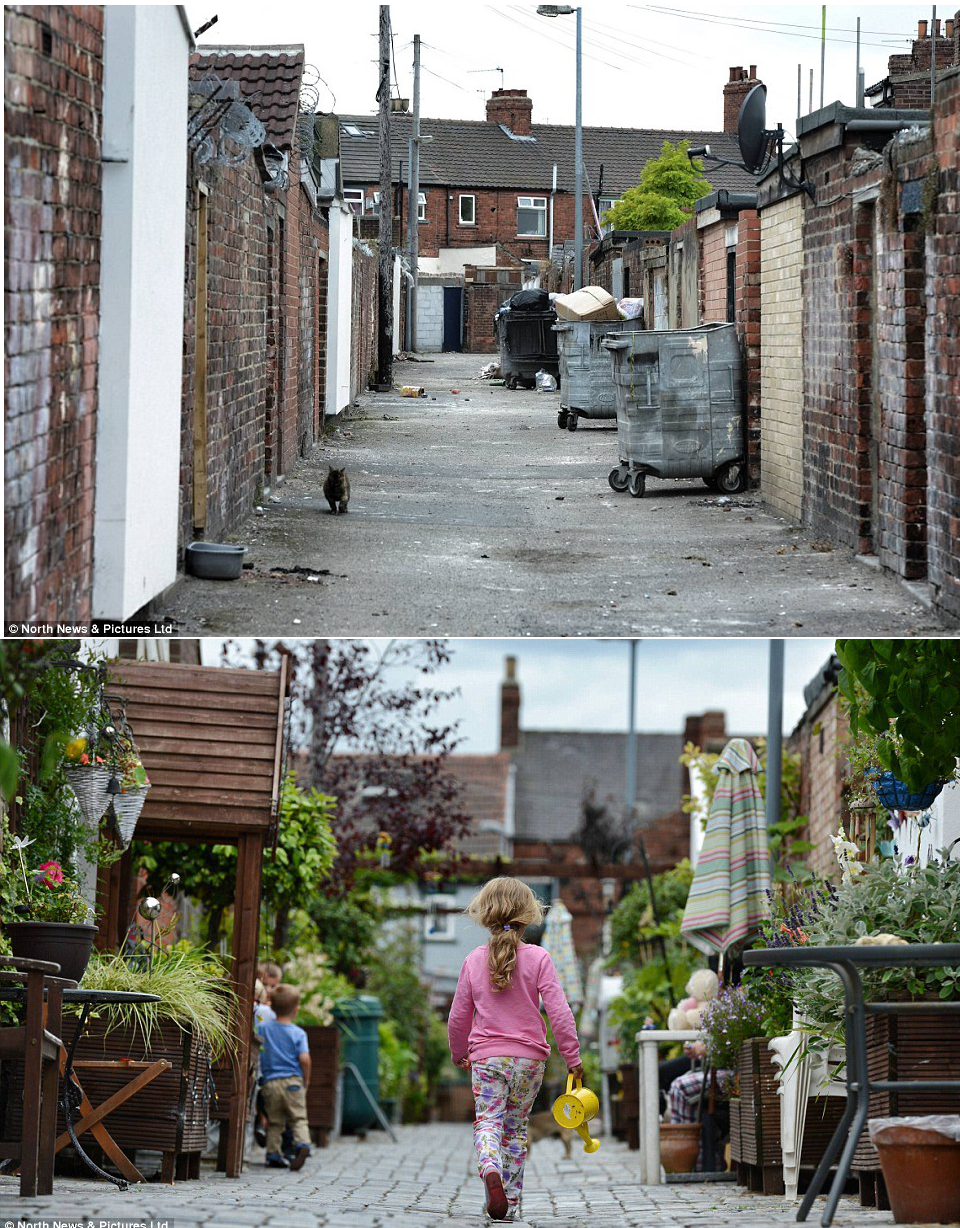
The effects have been pretty dramatic. Apart from the physical overhaul of the alley itself, the people living along it now feel more comfortable spending time outdoors among the green, growing things. Being outdoors has a number of psychological health benefits, and given that impoverished places are often disproportionately more likely to be affected by pollution and other environmental ills, it’s heartening to see this blossoming in a poorer area rather than being limited to a wealthy suburb.
Too often environmentalists look at cities as sources of evil. However, with the human population as high as it is, and unless and until we voluntarily lower it through better access to birth control and more education on overpopulation, we need to find greener ways to house and care for the people who are here. There are more people living in cities than in more rural areas, and this is unlikely to change. This is not a bad thing in and of itself. There are some definite environmental benefits to urban living.
For one thing, they take up less space than if all the people in them were living on several acres per family out in the middle of nowhere. My apartment complex takes up less than an acre of land, and yet there are several dozen people living here in a dozen apartments. There could be even more on this one plot of land if the building was more than two stories high. Building up, not out, is key to land preservation as the population remains as high as it is. And the less land we occupy per person, the more land there is for wildlife to roam unfettered.
Plus when we live closer together, with grocery stores and other resources close by, we use fewer fossil fuels to get from place to place. I grew up in a small town with no public transit, and everyone drove everywhere. Sometimes you’d have to drive to the next town over, or the next, to get what you needed. Here in Portland, I can walk to one of three grocery stores (if I want to walk a mile), along with a movie theater, several restaurants, a low-cost medical clinic, and stops for three major bus lines. If I’m not carrying anything heavy (like five bins of artwork and all my gridwall and other display materials, for example) I don’t even need the car my partner and I share.
But this also brings up another issue of inequity. I live in one of the nicer neighborhoods in Portland–nothing really fancy, but certainly not one of the marginalized slum areas. I don’t live in a food desert, and I live down the street from the community garden I have a plot at. I can live green because I am fortunate enough to live in a neighborhood that has the right resources for it, and I have an income that allows me to take advantage of some of these resources.
If we’re going to green the cities, then we need to not just limit it to the “nice” neighborhoods. I benefit from the fact that urban developers and corporations poured money into this neighborhood, but in the process they caused housing costs to rise and drove out poorer people. In the article I linked to above, it took one resident taking the initiative to get a grant and put in countless hours of cleanup to make any change occur. Even today, eight years later, the alleyway is still cared for by residents. And it’s still a poor neighborhood–at least unless gentrification occurs. The efforts to green impoverished neighborhoods are largely left to the residents themselves, and a few nonprofit endeavors.
Part of what frustrates me about the “back to the land” movement is that it can sometimes promote the abandonment of cities–and the people who stay behind in them. Not everyone is willing or, more importantly, able to live rurally. People with some physical disabilities, or who don’t have the money to move to a new place, or who lack the skills and resources to grow their own food, are all just a few examples of those who may be better off in the city. But these are not bad people who want to ruin the earth; they’re just as deserving of the opportunity to live greener and have healthier lives because of it.
And that’s why I love actions like those in the article above. It didn’t take much to completely change an entire small community. The amount of money it would take one family to buy a plot of land big enough to homestead on, plus all the resources and supplies necessary, could revitalize an entire urban neighborhood. And given that it was the efforts of one woman which sparked this change, imagine what a whole family could do–or, for that matter, all the pagans who daydream about going and buying “pagan land”.
Sometimes the solution isn’t to scrap everything and start anew. Perhaps it is more eco-friendly to make changes to the existing infrastructure–to apply reduce, reuse and recycle to our communities as well as our resources. What can you do in your community to green it for everyone?


Browse Our Archives
Select a Category Crafts Creating Connections Cultural Quandaries Earth Matters Earthly Rites Ecopsychology Fur and Feather Guest Posts Look & Find Natural Reflections Nature in the News Nature-based Holidays Nearby Nature Permaculture Quiz & Questionnaire Rituals & Ceremonies Science & Spirit The Sacred in Suburbia Uncategorized Wordless Wednesday
Select a Month January 2017 December 2016 November 2016 October 2016 September 2016 August 2016 June 2016 April 2016 March 2016 February 2016 January 2016 December 2015 November 2015 October 2015 September 2015 August 2015 July 2015 June 2015 May 2015 April 2015 March 2015 February 2015 January 2015 December 2014 November 2014 October 2014 September 2014 August 2014 July 2014 June 2014 May 2014 April 2014 March 2014 February 2014 January 2014 December 2013 November 2013 October 2013 September 2013 August 2013 July 2013 June 2013 May 2013 April 2013 March 2013 February 2013 January 2013 December 2012 November 2012 October 2012 September 2012 August 2012 July 2012 June 2012 May 2012 April 2012 March 2012 February 2012 January 2012 December 2011 November 2011
Follow Us!
TAKE THE
Religious Wisdom Quiz
What symbol is most commonly associated with Christianity worldwide?
Select your answer to see how you score.
The dove The fish The cross The lamb
Related posts from Paths Through The Forests

The Paradox of Tolerance Led To Fascism In...

Connecting to Nature in Human-Centered Places

A Pagan Community Statement on the Environment -...

How Cultures Form, Cultural Conflicts, And Our Shared...
TRENDING AT PATHEOS Pagan

I was recently chatting with someone on Instagram. She asked me what...

While there are many people who share their results, the end of...

On July 23, I saw Christopher Nolan's The Odyssey which is Homer’s...

As I write this two big events have just finished up. One...

Restoring the Watershed of Divine Love
Perhaps cooperation is not something we manufacture through legislation, ideology, or moral...

Many UUs don’t pray because of bad experiences in a previous religion,...
view all Pagan blogs
Ad-Free & Subscriber Log-In Subscription Support
- About Us
- 2026 Calendar
- Videos
- Podcasts
- Library of World Religions
- Faith In Media Tracker
- Advertise With Us
- Write for Us
- Privacy Policy
- Terms of Service
- Do Not Sell My Data
- Contact Us
- Radiant Digital
- Manage Newsletter Subscriptions
- Unsubscribe From Notifications
- Sitemap
Copyright 2008-2026, Patheos. All rights reserved.
Subscription Support Ad-Free & Subscriber Log-In
Follow Patheos