
BuddhistCatholicContemplativeEvangelicalGeneral ChristianHinduJewishLatter-day SaintMuslimNew VisionsProgressive Christian
Beliefs
- Buddhist
- Catholic
- Contemplative
- Evangelical
- General Christian
- Hindu
- Jewish
- Latter-day Saint
- More Voices
- Muslim
- New Visions
- Pagan
- Progressive Christian
Topics
- Religion News
- Food and Religion
- Sports and Religion
- Religious Art
- Religious Music and Entertainment
- Religious Events
- History and Religion
- Style and Religion
- Politics and Religion
- Women in Religion
- Recreation Outdoors and Religion
- Business Finance and Religion
- Careers Workplace and Religion
- Education and Religion
- Family Parenting and Religion
- Health Fitness and Religion
- Home and Religion
- Relationships and Religion
- Technology and Religion
- Travel and Religion
Columnists
- Buddhist Columnists
- Business Finance and Religion Columnists
- Careers Workplace and Religion Columnists
- Catholic Columnists
- Contemplative Columnists
- Education and Religion Columnists
- Evangelists Columnists
- Family Parenting and Religion Columnists
- General Christian Columnists
- Health Fitness and Religion Columnists
- Hindu Columnists
- History and Religion Columnists
- Home and Religion Columnists
- Jewish Columnists
- More Voices Columnists
- Latter Day Columnists
- Muslim Columnists
- New Visions Columnists
- Nonreligious Columnists
- Pagan Columnists
- Politics and Religion Columnists
- Progressive Columnists
- Recreation Outdoors and Religion Columnists
- Relationships and Religion Columnists
- Religion News Columnists
- Religious Art Columnists
- Religious Events Columnists
- Religious Music and Entertainment Columnists
- Sports and Religion Columnists
- Style and Religion Columnists
- Technology and Religion Columnists
- Travel and Religion Columnists
- Women in Religion Columnists
Resource Library
- 2026 Calendar
- Library of World Religions
- The 100 Most Holy Places on Earth
- Patheos Answers
- Podcasts
- Videos
- Faith Leaders Database
- Anglican Episcopalian
- Bahai
- Baptist
- Buddhism
- Christianity
- Confucianism
- Eastern Orthodoxy
- Hinduism
- Holiness and Pentecostal
- ISKCON
- Islam
- Judaism
- Lutheran
- Methodist
- The Church of Jesus Christ of Latter-day Saints
- New Age
- Paganism
- Presbytarian and Reformed
- Protestantism
- Religion Behind the Scenes
- Roman Catholic
- Scientology
- Shia Islam
- Sikhism
- Sufism
- Sunni Islam
- Taoism
- Zen
- See all religions
Research Tools
 Ad-Free & Subscriber Log-In Subscription Support
Ad-Free & Subscriber Log-In Subscription Support
Follow Patheos 

- Trending:
- Forgiveness
- |
- Marriage
- |
- Consciousness
- |
- Death Penalty
- |
- Election
- |
- Halloween
 Paths Through The Forests
- Home
- About
- Comment Guidelines
- Look & Find
- Holidays, Rituals & History
- Creating Connections
- Cultural Quandaries
- Crafts
- Quiz & Questionnaire
- Guest Posts
- Publications
- Archive Index
- Home
- Pagan
- Being a Part of Something Bigger Than Ourselves
Being a Part of Something Bigger Than Ourselves
Last updated on: August 2, 2013 at 8:43 am by Lupa Greenwolf
Being a Part of Something Bigger Than Ourselves 2013-08-02T08:43:59-04:00 Lupa Greenwolf
Patheos Explore the world's faith through different perspectives on religion and spirituality! Patheos has the views of the prevalent religions and spiritualities of the world.
One of my favorite documentaries is The Queen of Trees. It follows the interconnection between particular species of fig tree, wasp, and nematode that have become so specialized that if one were to go to extinct, the others would almost certainly quickly follow. How many people, gazing casually at the sycamore fig, would recognize the crucial importance of the tiny wasps in its branches, or the even tinier nematodes within its fruit?
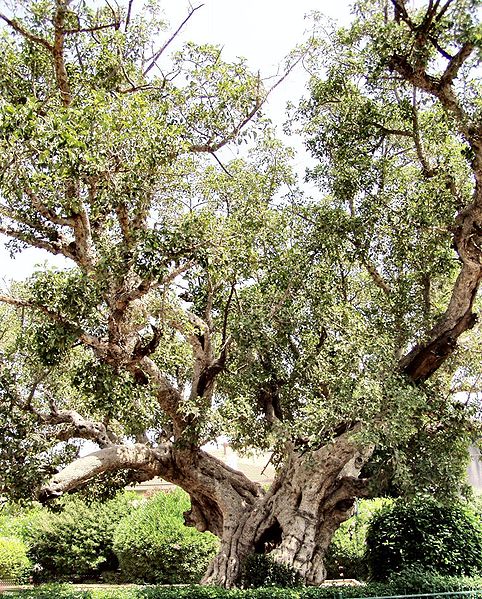 We’re well aware of the interdependence between predators and prey; we recognize that without prey animals predators would starve, and without predators prey animals would overpopulate and die horrible slow deaths by starvation and disease. But we recognize this mainly with the larger animals that we can easily observe. We often overlook the importance of plankton and flies, of worms and mosquitoes and other tiny beings that form a crucial layer of the food chain. And in our animal-based chauvinism, we often assume that one plant is much like another, and herbivores can all move from tree to bush to grass with no trouble (except for odd outliers like pandas and koalas), when in actuality specialization rules these beings as well. We’re only now beginning to understand the irreplaceable role that fungi play in the ecosystem as well, especially in maintaining the health of the soil on which the entire ecosystem relies.
So many of our decisions have been made in ignorance of the effects of our actions. While the internet, antibiotics, and central heating have their definite uses, the most popular technologies used to create them have been developed with only our benefit–and the profit margin–in mind. It is plausible that many of the things we’ve created that have improved our species’ average quality of life could have been made in such a way that they didn’t negatively affect the lives of other beings (and some humans). Instead, we stand at a point in time where we’re watching thousands of species of animal, plant, and fungus die out every year, accelerated by our activities, and we still refuse as a whole to explore the depth of the connections we’ve been severing with each local, regional or complete extinction.
Why don’t we emphasize to our children that the mycelial mat is at least as important as Thomas Edison’s inventions? In part, it’s due to selfishness. We don’t want to think about anything other than our own advancement and comfort. We want that plastic grocery bag to carry three small items in, dammit, and who cares about the oil it was made from, or the fact that it won’t break down for thousands of years? This doesn’t mean we should feel guilty for the things that have made our lives longer and healthier as a whole. We can explore whether a particular item is necessary, and whether its manufacture is as sustainable as it could be, without sacrificing our quality of life. It just means that we need to make more effort on the behalf of beings besides ourselves.
I believe fear is also an important component to our current problem. We face enormous problems that our species has created, and there are few simple, easy, and 100% effective solutions. That’s a pretty daunting reality. And it’s easy to feel alone and overwhelmed when the news is full of stories of unbelievably massive and powerful corporations creating endless waste streams and having few immediate consequences for it. Where do we even start when the problems pile so high, and we feel we have nothing but a few tiny shovels and petitions to work with? It’s easier to shut ourselves away from the fear through ignoring the problem.
This all leads to an intense form of isolation. How many of us who are even aware of the interconnection with other beings feel comfortable talking about it with other people? How many of us fear being shunned as “crazy environmentalists” if we happen to mention, while at the water cooler or hanging out at a bar, our concern about oil imports or the destruction of a local ecosystem for yet another subdivision of cookie cutter houses? Truth is, we don’t really have a comfortable place to talk about these and other issues outside of a setting where we’re mostly already preaching to the choir. Small talk about last night’s American Idol is fine, but we mustn’t get into anything controversial. And perhaps work isn’t the most appropriate setting for such conversations, and some people might find it to be the wrong conversation for a night out with friends. But if not these places, then where can we talk about these issues where we won’t just be shoved into a green ghetto and ignored by everyone else?
Perhaps it isn’t just the overt conversations that need to happen, but instead the actions. Modeling is one of the most effective forms of inciting behavior change in others. We’re social beings, and like so many other apes, “monkey see, monkey do”. We’re more likely to try something when we’re shown it than when we’re told; it’s why preaching and proselytization don’t work so well as being yourself and letting others’ curiosity take the lead.
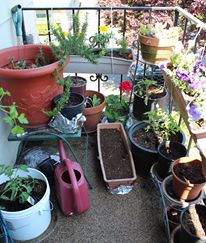 This is why my path has become less about formalized rituals and journeys, and more about daily actions in the “mundane” world. The things that are most sacred to me are under threat, and I feel that my best course of action to protect them involves showing others how to do so–and why. Better yet, if I make it seem like fun, then people are more likely to be interested in joining in. I’ve managed to convince more than one person to start gardening because I wrote about my own micro-agricultural efforts, for example.
More importantly, I need to act like one part in a greater system–which we all are, whether we accept it or not. This includes understanding that there are people who are a part of this system who aren’t on the same page as I am with regards to sustainability and the like. It means knowing that the Koch Brothers and everyone at Monsanto are just as much a part of this system as I am, and denying them a place here doesn’t do any good since they haven’t anywhere else to go anyway.
Spirituality can sometimes be defined as the art of being a part of something bigger than yourself. For me, that “something” is the entire planet, and by extension our galaxy, and the universe beyond, whatever it holds. Rather than simply reveling in that connection, I feel a sense of responsibility toward it. After all, if I make an action, I am not the only one affected by it. That alone is reason enough, I feel, to be mindful of my acts and choices. My typing on the keyboard right now may not affect fig trees in Africa or jaguars in the Amazon in any direct way, but with enough searching and exploring the connections are there.
If our problems were only about 7 billion human apes typing on an infinity of keyboards and wondering how that affected a butterfly in China, that would be one thing. But we are 7 billion and counting and eating and hunting and gathering, straining ecosystems at the seams, taking precious land for agricultural monocrops and mountaintop removal mining. If we are to survive not just as a species, but as a part of this world we know, we have to challenge our lethargy and fear surrounding our choices. We need to more consciously become an active part of the global community we have been born into and can never escape. We need to accept that, regardless of our religions and cultures, we are a part of something bigger than ourselves just by virtue of existing–and be courageous enough to embrace all the responsibilities that come with that reality.

Next Post

August 12, 2013 Forest Fire Dreams and Nightmare Tornadoes
Browse Our Archives
Select a Category Crafts Creating Connections Cultural Quandaries Earth Matters Earthly Rites Ecopsychology Fur and Feather Guest Posts Look & Find Natural Reflections Nature in the News Nature-based Holidays Nearby Nature Permaculture Quiz & Questionnaire Rituals & Ceremonies Science & Spirit The Sacred in Suburbia Uncategorized Wordless Wednesday
Select a Month January 2017 December 2016 November 2016 October 2016 September 2016 August 2016 June 2016 April 2016 March 2016 February 2016 January 2016 December 2015 November 2015 October 2015 September 2015 August 2015 July 2015 June 2015 May 2015 April 2015 March 2015 February 2015 January 2015 December 2014 November 2014 October 2014 September 2014 August 2014 July 2014 June 2014 May 2014 April 2014 March 2014 February 2014 January 2014 December 2013 November 2013 October 2013 September 2013 August 2013 July 2013 June 2013 May 2013 April 2013 March 2013 February 2013 January 2013 December 2012 November 2012 October 2012 September 2012 August 2012 July 2012 June 2012 May 2012 April 2012 March 2012 February 2012 January 2012 December 2011 November 2011
Follow Us!
TAKE THE
Religious Wisdom Quiz
What is the first book of the New Testament?
Select your answer to see how you score.
John Matthew Luke Mark
Related posts from Paths Through The Forests

The Paradox of Tolerance Led To Fascism In...

Coalition Urges Facebook To Be Transparent About Censorship,...


Connecting to Nature in Human-Centered Places
TRENDING AT PATHEOS Pagan

I was recently chatting with someone on Instagram. She asked me what...

While there are many people who share their results, the end of...

On July 23, I saw Christopher Nolan's The Odyssey which is Homer’s...

As I write this two big events have just finished up. One...

Restoring the Watershed of Divine Love
Perhaps cooperation is not something we manufacture through legislation, ideology, or moral...

Many UUs don’t pray because of bad experiences in a previous religion,...
view all Pagan blogs
Ad-Free & Subscriber Log-In Subscription Support
- About Us
- 2026 Calendar
- Videos
- Podcasts
- Library of World Religions
- Faith In Media Tracker
- Advertise With Us
- Write for Us
- Privacy Policy
- Terms of Service
- Do Not Sell My Data
- Contact Us
- Radiant Digital
- Manage Newsletter Subscriptions
- Unsubscribe From Notifications
- Sitemap
Copyright 2008-2026, Patheos. All rights reserved.
Subscription Support Ad-Free & Subscriber Log-In
Follow Patheos