
BuddhistCatholicContemplativeEvangelicalGeneral ChristianHinduJewishLatter-day SaintMuslimNew VisionsProgressive Christian
Beliefs
- Buddhist
- Catholic
- Contemplative
- Evangelical
- General Christian
- Hindu
- Jewish
- Latter-day Saint
- More Voices
- Muslim
- New Visions
- Pagan
- Progressive Christian
Topics
- Religion News
- Food and Religion
- Sports and Religion
- Religious Art
- Religious Music and Entertainment
- Religious Events
- History and Religion
- Style and Religion
- Politics and Religion
- Women in Religion
- Recreation Outdoors and Religion
- Business Finance and Religion
- Careers Workplace and Religion
- Education and Religion
- Family Parenting and Religion
- Health Fitness and Religion
- Home and Religion
- Relationships and Religion
- Technology and Religion
- Travel and Religion
Columnists
- Buddhist Columnists
- Business Finance and Religion Columnists
- Careers Workplace and Religion Columnists
- Catholic Columnists
- Contemplative Columnists
- Education and Religion Columnists
- Evangelists Columnists
- Family Parenting and Religion Columnists
- General Christian Columnists
- Health Fitness and Religion Columnists
- Hindu Columnists
- History and Religion Columnists
- Home and Religion Columnists
- Jewish Columnists
- More Voices Columnists
- Latter Day Columnists
- Muslim Columnists
- New Visions Columnists
- Nonreligious Columnists
- Pagan Columnists
- Politics and Religion Columnists
- Progressive Columnists
- Recreation Outdoors and Religion Columnists
- Relationships and Religion Columnists
- Religion News Columnists
- Religious Art Columnists
- Religious Events Columnists
- Religious Music and Entertainment Columnists
- Sports and Religion Columnists
- Style and Religion Columnists
- Technology and Religion Columnists
- Travel and Religion Columnists
- Women in Religion Columnists
Resource Library
- 2026 Calendar
- Library of World Religions
- The 100 Most Holy Places on Earth
- Patheos Answers
- Podcasts
- Videos
- Faith Leaders Database
- Anglican Episcopalian
- Bahai
- Baptist
- Buddhism
- Christianity
- Confucianism
- Eastern Orthodoxy
- Hinduism
- Holiness and Pentecostal
- ISKCON
- Islam
- Judaism
- Lutheran
- Methodist
- The Church of Jesus Christ of Latter-day Saints
- New Age
- Paganism
- Presbytarian and Reformed
- Protestantism
- Religion Behind the Scenes
- Roman Catholic
- Scientology
- Shia Islam
- Sikhism
- Sufism
- Sunni Islam
- Taoism
- Zen
- See all religions
Research Tools
 Ad-Free & Subscriber Log-In Subscription Support
Ad-Free & Subscriber Log-In Subscription Support
Follow Patheos 

- Trending:
- Forgiveness
- |
- Marriage
- |
- Consciousness
- |
- Death Penalty
- |
- Election
- |
- Halloween
 Paths Through The Forests
- Home
- About
- Comment Guidelines
- Look & Find
- Holidays, Rituals & History
- Creating Connections
- Cultural Quandaries
- Crafts
- Quiz & Questionnaire
- Guest Posts
- Publications
- Archive Index
- Home
- Pagan
- A Call to Hope
A Call to Hope
Last updated on: June 27, 2014 at 8:08 pm by Lupa Greenwolf
A Call to Hope 2014-06-27T20:08:00-04:00 Lupa Greenwolf
Patheos Explore the world's faith through different perspectives on religion and spirituality! Patheos has the views of the prevalent religions and spiritualities of the world.
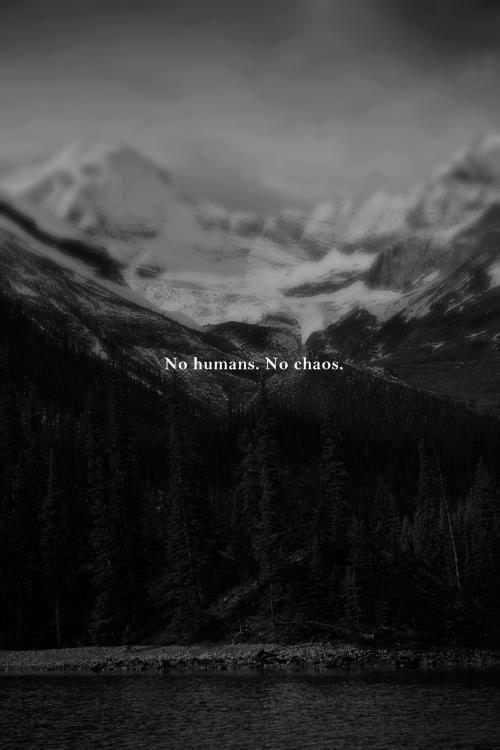 A while back on Tumblr, I reblogged a picture of a mountain forest with the words “No humans. No chaos.” on it. The implication seemed to be that humans are the sole source of chaos and disorder and other bad things. I criticized this in my reblog, pointing out that there’s plenty of chaos in nature. Volcanoes, earthquakes, tectonic uplift, forest fires, floods, plagues of locusts, roaming packs of wolves—these and many more forces of nature can wreak varying degrees of havoc on an ecosystem and its inhabitants. Even evolution, traceable as it is, grows through random mutations, not deliberate changes. In fact, some people define “nature” as the disordered and chaotic parts of the world not entirely brought to heel by human hands.
The problem with that last definition is that it still sets humanity apart from the rest of nature, which promotes some very unhealthy attitudes and behaviors. I feel the point’s been belabored more than enough that humanity has changed the world in some very drastic and sometimes irrevocable ways; we’ve castigated ourselves as a species to the point of counterproductivity. As has been pointed out, if all we focus on is the negative then it breeds hopelessness and, in turn, inaction. A person who is constantly told they’re bad for the environment is more likely to avoid the environment and care less for it, and thereby become a self-fulfilling prophecy. Pictures like the one above just perpetuate the problem. The person who put it together probably wants the world to be a more eco-friendly place, but they’ve sabotaged their own efforts by relying on distancing and guilt rather than encouragement and inclusion. They’re berating their audience.
We need alternatives to that guilt and negative focus. One of the reasons I love Richard Louv’s writings so much is that he brings hope to the table. We focus so much on the dire predictions of a dystopic future that we’ve forgotten to imagine what could be instead. In his book The Nature Principle, he includes an essay, “Imagine a Newer World”, in which he describes the sort of world he’d like to see:
We seek a newer world where we not only conserve nature but create it where we live, work, learn, and play. Where yards and open spaces are alive with native species. Where bird migration routes are healed by human care. Where wildlife corridors in every city serve as the bronchial and arterial passageways of life and meaning. Where not only public land but private property, voluntarily, garden to garden to garden, is transformed, by us, into butterfly zones and then, across the country, into a homegrown national park. Where neighbors use land trust law to create their own button parks—small enough to sew on themselves. Where cities become incubators of biodiversity. (Louv, 2012, p. 321.)
And on and on he goes, weaving even more images of a hopeful future. Neither does he smash it down with “Well, it’s going to be difficult to make it this way, and here’s what’s stopping us”. He has spent part of the book outlining concrete things that people have done to increase sustainability, and this gives these efforts even more direction. What he does, in fact, is give us the opportunity to let our imaginations run unfettered by the “mustn’ts, don’t, and impossibles”, as per Shel Silverstein. We need that hope. We need hope that isn’t immediately followed by “Well, but that can’t happen” or “It’s too late to change things”. We need to have something besides discouragement over actions that are deemed too small and ineffective. We need to celebrate even our tiniest victories, because they give us the strength to do more.
That means breaking ourselves of the tendency to only view ourselves as agents of “bad things” and our seeming desire to keep all humanity out of the rest of nature. It means accepting that we are natural beings and we do have a place in our ecosystems. A sense of belonging breeds a sense of responsibility, and we need to invite everyone in. We all deserve to take part in, and give strength to, hope.
Previous Post

June 24, 2013
The Art of Taking as an Offering
Next Post
July 9, 2013 Return of the Green Shopping List: Stuff You Don’t Need Edition
Browse Our Archives
Select a Category Crafts Creating Connections Cultural Quandaries Earth Matters Earthly Rites Ecopsychology Fur and Feather Guest Posts Look & Find Natural Reflections Nature in the News Nature-based Holidays Nearby Nature Permaculture Quiz & Questionnaire Rituals & Ceremonies Science & Spirit The Sacred in Suburbia Uncategorized Wordless Wednesday
Select a Month January 2017 December 2016 November 2016 October 2016 September 2016 August 2016 June 2016 April 2016 March 2016 February 2016 January 2016 December 2015 November 2015 October 2015 September 2015 August 2015 July 2015 June 2015 May 2015 April 2015 March 2015 February 2015 January 2015 December 2014 November 2014 October 2014 September 2014 August 2014 July 2014 June 2014 May 2014 April 2014 March 2014 February 2014 January 2014 December 2013 November 2013 October 2013 September 2013 August 2013 July 2013 June 2013 May 2013 April 2013 March 2013 February 2013 January 2013 December 2012 November 2012 October 2012 September 2012 August 2012 July 2012 June 2012 May 2012 April 2012 March 2012 February 2012 January 2012 December 2011 November 2011
Follow Us!
TAKE THE
Religious Wisdom Quiz
Who said, "Behold the Lamb of God, who takes away the sin of the world"?
Select your answer to see how you score.
John the Baptist Paul Mary Peter
Related posts from Paths Through The Forests

The Paradox of Tolerance Led To Fascism In...

Coalition Urges Facebook To Be Transparent About Censorship,...


Connecting to Nature in Human-Centered Places
TRENDING AT PATHEOS Pagan

I was recently chatting with someone on Instagram. She asked me what...

While there are many people who share their results, the end of...

On July 23, I saw Christopher Nolan's The Odyssey which is Homer’s...

As I write this two big events have just finished up. One...

Restoring the Watershed of Divine Love
Perhaps cooperation is not something we manufacture through legislation, ideology, or moral...

Many UUs don’t pray because of bad experiences in a previous religion,...
view all Pagan blogs
Ad-Free & Subscriber Log-In Subscription Support
- About Us
- 2026 Calendar
- Videos
- Podcasts
- Library of World Religions
- Faith In Media Tracker
- Advertise With Us
- Write for Us
- Privacy Policy
- Terms of Service
- Do Not Sell My Data
- Contact Us
- Radiant Digital
- Manage Newsletter Subscriptions
- Unsubscribe From Notifications
- Sitemap
Copyright 2008-2026, Patheos. All rights reserved.
Subscription Support Ad-Free & Subscriber Log-In
Follow Patheos