
BuddhistCatholicContemplativeEvangelicalGeneral ChristianHinduJewishLatter-day SaintMuslimNew VisionsProgressive Christian
Beliefs
- Buddhist
- Catholic
- Contemplative
- Evangelical
- General Christian
- Hindu
- Jewish
- Latter-day Saint
- More Voices
- Muslim
- New Visions
- Pagan
- Progressive Christian
Topics
- Religion News
- Food and Religion
- Sports and Religion
- Religious Art
- Religious Music and Entertainment
- Religious Events
- History and Religion
- Style and Religion
- Politics and Religion
- Women in Religion
- Recreation Outdoors and Religion
- Business Finance and Religion
- Careers Workplace and Religion
- Education and Religion
- Family Parenting and Religion
- Health Fitness and Religion
- Home and Religion
- Relationships and Religion
- Technology and Religion
- Travel and Religion
Columnists
- Buddhist Columnists
- Business Finance and Religion Columnists
- Careers Workplace and Religion Columnists
- Catholic Columnists
- Contemplative Columnists
- Education and Religion Columnists
- Evangelists Columnists
- Family Parenting and Religion Columnists
- General Christian Columnists
- Health Fitness and Religion Columnists
- Hindu Columnists
- History and Religion Columnists
- Home and Religion Columnists
- Jewish Columnists
- More Voices Columnists
- Latter Day Columnists
- Muslim Columnists
- New Visions Columnists
- Nonreligious Columnists
- Pagan Columnists
- Politics and Religion Columnists
- Progressive Columnists
- Recreation Outdoors and Religion Columnists
- Relationships and Religion Columnists
- Religion News Columnists
- Religious Art Columnists
- Religious Events Columnists
- Religious Music and Entertainment Columnists
- Sports and Religion Columnists
- Style and Religion Columnists
- Technology and Religion Columnists
- Travel and Religion Columnists
- Women in Religion Columnists
Resource Library
- 2026 Calendar
- Library of World Religions
- The 100 Most Holy Places on Earth
- Patheos Answers
- Podcasts
- Videos
- Faith Leaders Database
- Anglican Episcopalian
- Bahai
- Baptist
- Buddhism
- Christianity
- Confucianism
- Eastern Orthodoxy
- Hinduism
- Holiness and Pentecostal
- ISKCON
- Islam
- Judaism
- Lutheran
- Methodist
- The Church of Jesus Christ of Latter-day Saints
- New Age
- Paganism
- Presbytarian and Reformed
- Protestantism
- Religion Behind the Scenes
- Roman Catholic
- Scientology
- Shia Islam
- Sikhism
- Sufism
- Sunni Islam
- Taoism
- Zen
- See all religions
Research Tools
 Ad-Free & Subscriber Log-In Subscription Support
Ad-Free & Subscriber Log-In Subscription Support
Follow Patheos 

- Trending:
- Forgiveness
- |
- Marriage
- |
- Consciousness
- |
- Death Penalty
- |
- Election
- |
- Halloween
 Paths Through The Forests
- Home
- About
- Comment Guidelines
- Look & Find
- Holidays, Rituals & History
- Creating Connections
- Cultural Quandaries
- Crafts
- Quiz & Questionnaire
- Guest Posts
- Publications
- Archive Index
- Home
- Pagan
- The Dangers of Talking Plants
The Dangers of Talking Plants
Last updated on: August 13, 2012 at 6:47 am by Lupa Greenwolf
The Dangers of Talking Plants 2012-08-13T06:47:53-04:00 Lupa Greenwolf
Patheos Explore the world's faith through different perspectives on religion and spirituality! Patheos has the views of the prevalent religions and spiritualities of the world.
Recently, a study was published in the journal Trends in Plant Science that suggests that plants “talk” to each other. The researchers observed plants making clicking noises, and when the same clicks were artificially reproduced the roots of new seedlings grew towards them. (The article itself may be found here in PDF form, for those interested.)
This is all well and good. However, the researchers then proceeded to jump to conclusions about the significance of the correlation between the clicking and root growth, even using the term “talking” in reference to the clicking, as well as other anthropomorphic language. As anyone with even a basic understanding of research methodology knows, correlation does not equal causation, and one run of an experiment does not equal a sound theory. Note also that the paper did not publish the details of the study, such as the performance of the control group (if there was one), or any statistical analyses of the results. In short, the paper can be summed up as “We played some sounds, and the roots grew this way, so we assume that one caused the other, and what’s a confound anyway?”
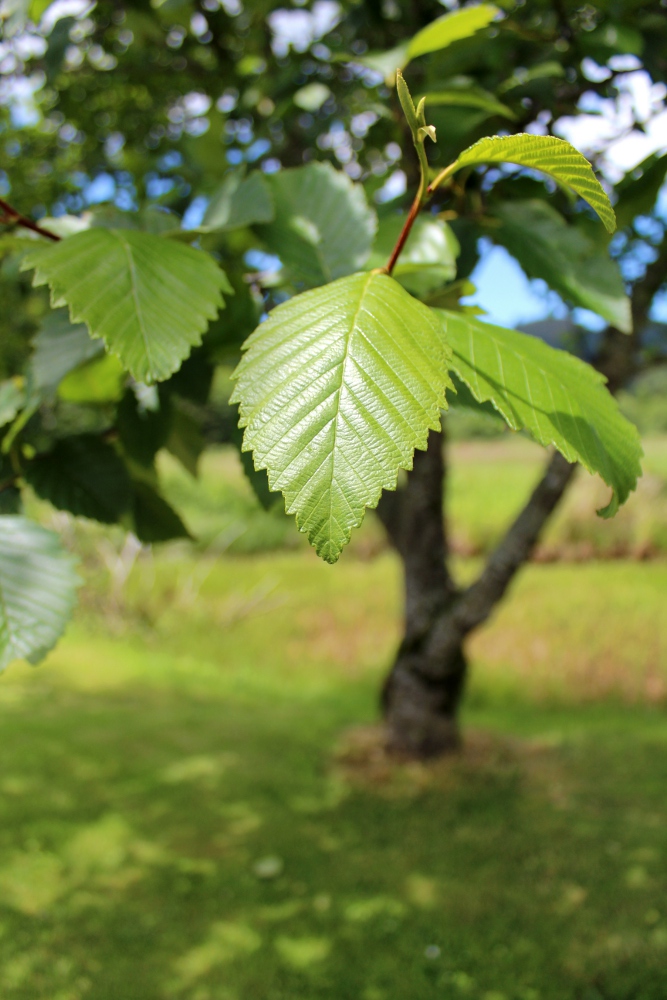
Photo by Lupa, 2012.
Let me say that I am not ruling out the possibility that plants may very well have a physical method of communication that we don’t fully understand. We haven’t proven that they don’t communicate, at least. But we don’t have scientific evidence of plant communication beyond some pseudoscience and a couple of similar studies that show phenomena involving stimuli between plants, with no actual proof that this entails what we would think of as “communication”. Furthermore, I am far from the only person to look askance at the conclusions being reached through wishful thinking in the fringes of plant sciences.
Why is this important to nature-based spirituality? After all, spirituality isn’t supposed to be scientific, right? And yet you would be hard-pressed to find a pagan who believes evolution is a lie, or that we’re sticking to the Earth not because of gravity but because Gaia just wants to give us all a big, life-long hug. I’ve yet to meet a pagan creationist. To one degree or another, pagans generally subscribe to the sciences, and maybe nature-based pagans even more so on average.
Which is fine, so long as we remember that our spiritual beliefs are largely subjective, and not provable in the same objective, measurable way that the effectiveness of antibiotics or explorations of the Large Hadron Collider are. You can’t measure the existence of a god or spirit (collective gnosis doesn’t count as scientific evidence, as it’s group confirmation bias), and there are no peer-reviewed, well-constructed scientific studies that undeniably prove the objective effectiveness of magic. I believe that I can communicate with the spirits of plants, and perhaps on some level I’m communicating with the physical plant itself. But this doesn’t make for incontrovertible proof that I am communicating with plants instead of just a conversation with myself and an imaginary plant being in my head.
So why hang onto spirituality? That (imaginary?) conversation has benefits that I can feel personally, and there are studies that suggest spirituality can be beneficial on a psychological level. It appeals to my love and need of large-scale storytelling as a way of connecting to the world around me in personally meaningful ways. Ritual answers the need to imagine and play, what Joseph Camobell was referring to when he talked about Huizinga’s concept “Homo ludens” in myth and ceremony. Just because the stories and myths aren’t provable in any objective way doesn’t mean they aren’t valuable. My continuing exploration into plant totemism and similar eco-spirituality is just one manifestation thereof. So I keep my plant totemism in its own compartment of “real or not”, and I don’t try to extend it as proof that plants are conscious in the same way that I am.

Photo by Lupa, 2012.
If there is someday scientific evidence that plants are physically aware despite their lack of a nervous system, I don’t want that knowledge to be muddied by conjecture, to include the subjective explorations of spirituality. One of the reasons I love the sciences so much is that they open up a world of wonder based on what we know, objectively, to be true. Carl Sagan’s “Cosmos” wasn’t amazing to me because it talked about gods and spirits; it’s because it showed that, far from being dry and boring, science is full of some really incredible revelations. I feel the feeling of being a part of something bigger when I think of how vast and complex the universe is, from giant galaxies to the intricate structures of molecules. I don’t need an alternate spiritual reality to be able to plug into that everything-ness. To borrow from Douglas Adams, science is looking at the garden without needing fairies to spice it up.
And I think sometimes modern pagans are so focused on trying to find the fairies in the garden, and use questionable science to try to prove that those fairies are really, really real, that they ignore scientific protocol. It would be great if we could find ways to communicate with plants, just as we’re finding ways to communicate with some species of animals on their own terms. But we do ourselves no favors if we grasp at the straws of bad research and confirmation bias instead of being more patient and waiting for more incontrovertible evidence. Articles like the aforementioned are the equivalent of the Cottingley fairy photos–they do nothing but discredit the people and efforts associated with them, and make it more challenging to sort the wheat from the chaff.
So we can continue to have plant spirits and totems, and gods of the harvest and field. There’s nothing wrong with that. But let’s not use half-arsed studies about “talking plants” to try to prove that the spirits of nature paganism are more real than any other. Better to have no proof and only have our spirituality be true in our hearts, than to root our proof on a crumbling cliffside, only to have the tree fall over in the end.
(Note: if you’re interested, I wrote more about scientific methodology and its importance to spirituality on my own blog a while back)
Previous Post

July 11, 2012
On the Impermanence of Mountains
Next Post
September 27, 2012 Getting My Hands Dirty
Browse Our Archives
Select a Category Crafts Creating Connections Cultural Quandaries Earth Matters Earthly Rites Ecopsychology Fur and Feather Guest Posts Look & Find Natural Reflections Nature in the News Nature-based Holidays Nearby Nature Permaculture Quiz & Questionnaire Rituals & Ceremonies Science & Spirit The Sacred in Suburbia Uncategorized Wordless Wednesday
Select a Month January 2017 December 2016 November 2016 October 2016 September 2016 August 2016 June 2016 April 2016 March 2016 February 2016 January 2016 December 2015 November 2015 October 2015 September 2015 August 2015 July 2015 June 2015 May 2015 April 2015 March 2015 February 2015 January 2015 December 2014 November 2014 October 2014 September 2014 August 2014 July 2014 June 2014 May 2014 April 2014 March 2014 February 2014 January 2014 December 2013 November 2013 October 2013 September 2013 August 2013 July 2013 June 2013 May 2013 April 2013 March 2013 February 2013 January 2013 December 2012 November 2012 October 2012 September 2012 August 2012 July 2012 June 2012 May 2012 April 2012 March 2012 February 2012 January 2012 December 2011 November 2011
Follow Us!
TAKE THE
Religious Wisdom Quiz
In the Parable of the Good Samaritan, who is the true neighbor?
Select your answer to see how you score.
The robber The Samaritan The priest The Levite
Related posts from Paths Through The Forests

The Paradox of Tolerance Led To Fascism In...

Coalition Urges Facebook To Be Transparent About Censorship,...


Connecting to Nature in Human-Centered Places
TRENDING AT PATHEOS Pagan

I was recently chatting with someone on Instagram. She asked me what...

While there are many people who share their results, the end of...

On July 23, I saw Christopher Nolan's The Odyssey which is Homer’s...

As I write this two big events have just finished up. One...

Restoring the Watershed of Divine Love
Perhaps cooperation is not something we manufacture through legislation, ideology, or moral...

Many UUs don’t pray because of bad experiences in a previous religion,...
view all Pagan blogs
Ad-Free & Subscriber Log-In Subscription Support
- About Us
- 2026 Calendar
- Videos
- Podcasts
- Library of World Religions
- Faith In Media Tracker
- Advertise With Us
- Write for Us
- Privacy Policy
- Terms of Service
- Do Not Sell My Data
- Contact Us
- Radiant Digital
- Manage Newsletter Subscriptions
- Unsubscribe From Notifications
- Sitemap
Copyright 2008-2026, Patheos. All rights reserved.
Subscription Support Ad-Free & Subscriber Log-In
Follow Patheos