
BuddhistCatholicContemplativeEvangelicalGeneral ChristianHinduJewishLatter-day SaintMuslimNew VisionsProgressive Christian
Beliefs
- Buddhist
- Catholic
- Contemplative
- Evangelical
- General Christian
- Hindu
- Jewish
- Latter-day Saint
- More Voices
- Muslim
- New Visions
- Pagan
- Progressive Christian
Topics
- Religion News
- Food and Religion
- Sports and Religion
- Religious Art
- Religious Music and Entertainment
- Religious Events
- History and Religion
- Style and Religion
- Politics and Religion
- Women in Religion
- Recreation Outdoors and Religion
- Business Finance and Religion
- Careers Workplace and Religion
- Education and Religion
- Family Parenting and Religion
- Health Fitness and Religion
- Home and Religion
- Relationships and Religion
- Technology and Religion
- Travel and Religion
Columnists
- Buddhist Columnists
- Business Finance and Religion Columnists
- Careers Workplace and Religion Columnists
- Catholic Columnists
- Contemplative Columnists
- Education and Religion Columnists
- Evangelists Columnists
- Family Parenting and Religion Columnists
- General Christian Columnists
- Health Fitness and Religion Columnists
- Hindu Columnists
- History and Religion Columnists
- Home and Religion Columnists
- Jewish Columnists
- More Voices Columnists
- Latter Day Columnists
- Muslim Columnists
- New Visions Columnists
- Nonreligious Columnists
- Pagan Columnists
- Politics and Religion Columnists
- Progressive Columnists
- Recreation Outdoors and Religion Columnists
- Relationships and Religion Columnists
- Religion News Columnists
- Religious Art Columnists
- Religious Events Columnists
- Religious Music and Entertainment Columnists
- Sports and Religion Columnists
- Style and Religion Columnists
- Technology and Religion Columnists
- Travel and Religion Columnists
- Women in Religion Columnists
Resource Library
- 2026 Calendar
- Library of World Religions
- The 100 Most Holy Places on Earth
- Patheos Answers
- Podcasts
- Videos
- Faith Leaders Database
- Anglican Episcopalian
- Bahai
- Baptist
- Buddhism
- Christianity
- Confucianism
- Eastern Orthodoxy
- Hinduism
- Holiness and Pentecostal
- ISKCON
- Islam
- Judaism
- Lutheran
- Methodist
- The Church of Jesus Christ of Latter-day Saints
- New Age
- Paganism
- Presbytarian and Reformed
- Protestantism
- Religion Behind the Scenes
- Roman Catholic
- Scientology
- Shia Islam
- Sikhism
- Sufism
- Sunni Islam
- Taoism
- Zen
- See all religions
Research Tools
 Ad-Free & Subscriber Log-In Subscription Support
Ad-Free & Subscriber Log-In Subscription Support
Follow Patheos 

- Trending:
- Forgiveness
- |
- Marriage
- |
- Consciousness
- |
- Death Penalty
- |
- Election
- |
- Halloween
 Paths Through The Forests
- Home
- About
- Comment Guidelines
- Look & Find
- Holidays, Rituals & History
- Creating Connections
- Cultural Quandaries
- Crafts
- Quiz & Questionnaire
- Guest Posts
- Publications
- Archive Index
- Home
- Pagan
- The Power of Positive Greening
The Power of Positive Greening
Last updated on: July 5, 2012 at 10:58 am by Lupa Greenwolf
The Power of Positive Greening 2012-07-05T10:58:25-04:00 Lupa Greenwolf
Patheos Explore the world's faith through different perspectives on religion and spirituality! Patheos has the views of the prevalent religions and spiritualities of the world.
Recently I happened across this excellent interview Minnesota Public Radio did with Richard Louv. Louv is the author of two key books in the modern environmental and ecopsychological fields, Last Child in the Woods and The Nature Principle. During the interview, Louv spent a good deal of time reframing the environmental movement in more constructive, positive ways. He pointed out that the prevailing “story” of environmentalism has largely been one of doom and gloom and “you’re all doing bad things!” This has led to a lot of people, especially younger people who are coming into their own in this world, to be unable to imagine the situation getting any better.
And who can blame them? It seems every day we’re assaulted by news stories of another oil spill, or the rate of deforestation in the Amazon, or the rise of cancer in heavily industrial areas. These are important things, but after a while even the most staunch activists can become desensitized to all the bad news. There are ecopsychologists who spend a great deal of time helping clients come to terms with their grief about the loss of wild places, and helping activists get through burnout in their work. More studies show how detachment from the non-human world negatively affects the human psyche. It should say a great deal that the environmental situation is so incredibly draining that we as individuals and as a community are suffering. But how much of that is our attitudes?
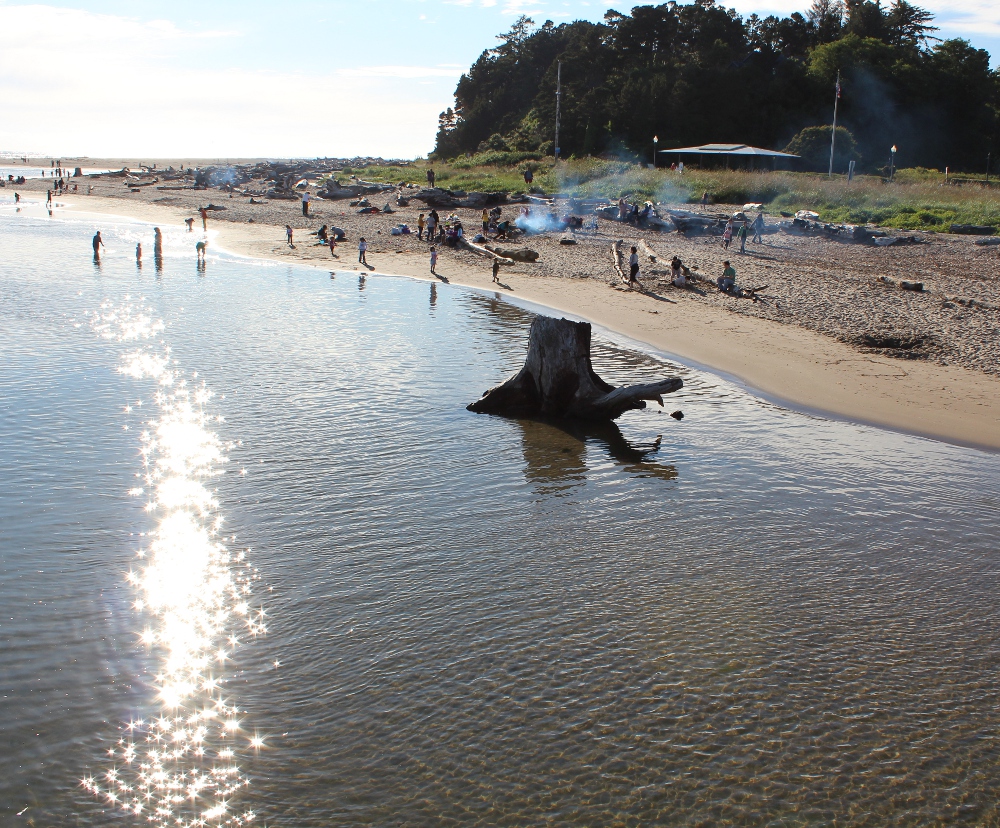
Lincoln City, OR. Photo by Lupa, 2012.
Louv shared about a time when he was speaking to a group of middle to high school students about looking to a new nature-focused future. One young woman pointed out that while he was talking in general terms about having a picture in his head of what that future would look like, he hadn’t actually shown it to her or any of the other students. She challenged him to describe, in detail, what exactly that future looked like, and so he spent several minutes giving very specific ideas of how the world might be different in a more sustainable, nature-focused society. Even this person with a great vision of the future didn’t automatically focus on what that vision entailed, because we aren’t taught how to see a better future. Instead, our vision is blocked by the overwhelming problems of the now.
This calls for a more active use of our imaginations. How many of us temporarily escape the problems of our lives through a bit of daydreaming? This is a good practice, provided it isn’t done to excess. Giving our brains a break allows us to come back to our problems more fully and well-rested. And we can do the same with environmental problems by taking time off to just focus on what a green future could look like.
Some of us are pretty good with our imaginations; if you’d like a bit more framework to work with, here’s a guided meditation to try:
Find a comfortable, quiet place where you can be undisturbed for a while, at least half an hour if possible. Sit or lay down as you see fit, and focus on your breathing for a few minutes, letting it slow gradually as you relax. Let your thoughts clear out of your mind like mist clearing in the sunlight. Let go of everyday cares and let yourself be in the now.
Imagine what it would be like if you opened your eyes, and your society is one in which nature is a central concern, where sustainability is a top priority. What would you open your eyes to?
Imagine walking around your home. What would it look like? What is your home made of, and how is it shaped? Where did your furnishings and other belongings come from?
Go into the kitchen. Where does the light come from? What food is there, and where did it come from?
Head into your bedroom. Where did the clothing and bedding come from? How does the room stay warm or cool?
Now go outside. Where is your home located? Who else is around, and how close are your neighbors? What does the environment around you look like?
Imagine that you can walk as far as you want around here without getting tired, and that you can cover miles in a single step if you so choose. Go exploring. Where does your water come from? What about your power for lighting and heating/cooling? How far did you have to go to get food?
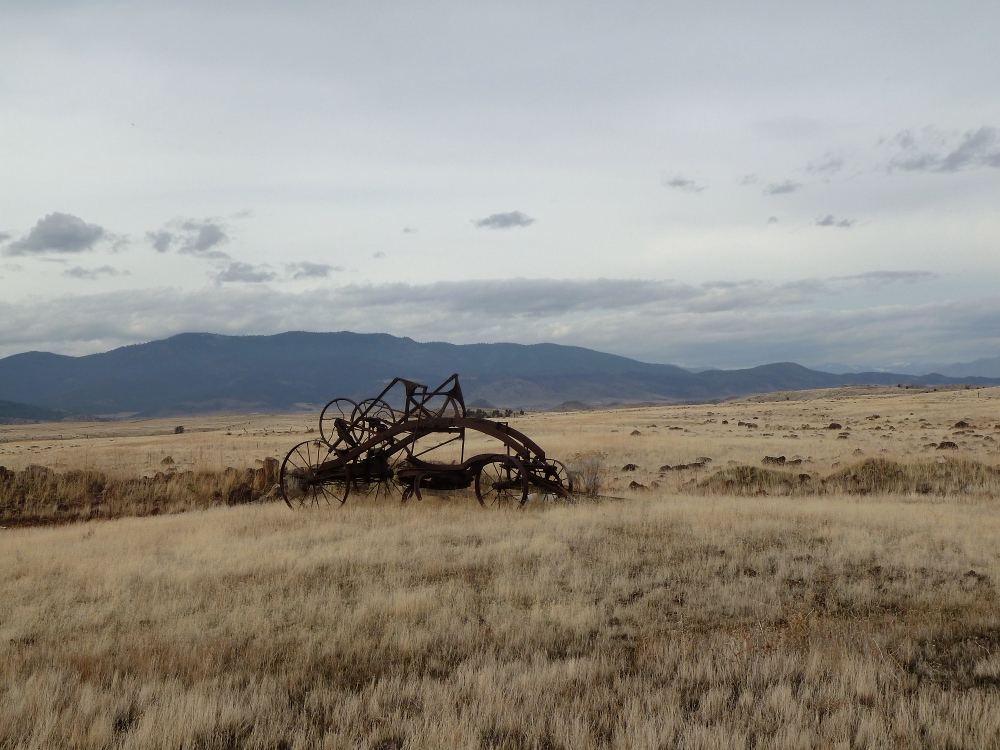
Central California. Photo by Lupa, 2012.
Walk further. Imagine you can walk around the entire world if you like. What do other places look like? What are their ecosystems like? How are the oceans looking? The rain forests? The skies? How did they get to be that way?
When you have explored enough for now, start to focus on your physical body again. Focus on your breathing again, the rise and fall of your chest and the filling of your lungs. With each breath, let your awareness of your body expand outward from there. Wiggle your fingers and toes, stretch your back, but keep your eyes closed until you’re ready to get up again.
Write down everything you remember, or if you like, draw or paint a picture of it. Hang onto it, and let it be an image of what you’re working toward in your green efforts. You may also use this meditation again whenever you feel the need for a bit of a boost. You can even keep records of each time through to see how your vision develops.
Don’t let this exercise be a discouragement, though. It can be easy to feel discontent because the world isn’t like your vision right now. Instead of thinking about what’s wrong, think about what’s going right. Think about what you are able to do as an individual and as a member of your community, and what others have accomplished. Think about the successes that have occurred, and, more importantly, connect them to your vision. And if you’re having trouble with finding examples of successes, here are a few suggestions:
Wolves in Chernobyl Dead Zone – nice documentary on how wolves and other wildlife have bounced back from the Chernobyl nuclear meltdown.
The Fight for Amazonia – another documentary, this one on concrete things people are doing to protect and preserve the Amazon rain forest.
Meeting India’s tree-planting guru – news article, “An Indian civil servant, SM Raju, has come up with a novel way of providing employment to millions of poor in the eastern state of Bihar.”
110 Success Stories for Endangered Species Day 2012 – concrete evidence of how the Endangered Species Act is helping the animals under its protection
Cost of solar decreasing – while the energy crisis is a tangled web, and China as a nation is no stranger to pollution and overpopulation issues, having solar energy be more accessible across the board can help reduce or even eliminate dependency on fossil fuels.
Five pieces of good news from Mother Earth – primarily good stories about animal species
Previous Post

June 2, 2012
Bathing in the Colorado, Swimming in the Pacific
Next Post
July 11, 2012 On the Impermanence of Mountains
Browse Our Archives
Select a Category Crafts Creating Connections Cultural Quandaries Earth Matters Earthly Rites Ecopsychology Fur and Feather Guest Posts Look & Find Natural Reflections Nature in the News Nature-based Holidays Nearby Nature Permaculture Quiz & Questionnaire Rituals & Ceremonies Science & Spirit The Sacred in Suburbia Uncategorized Wordless Wednesday
Select a Month January 2017 December 2016 November 2016 October 2016 September 2016 August 2016 June 2016 April 2016 March 2016 February 2016 January 2016 December 2015 November 2015 October 2015 September 2015 August 2015 July 2015 June 2015 May 2015 April 2015 March 2015 February 2015 January 2015 December 2014 November 2014 October 2014 September 2014 August 2014 July 2014 June 2014 May 2014 April 2014 March 2014 February 2014 January 2014 December 2013 November 2013 October 2013 September 2013 August 2013 July 2013 June 2013 May 2013 April 2013 March 2013 February 2013 January 2013 December 2012 November 2012 October 2012 September 2012 August 2012 July 2012 June 2012 May 2012 April 2012 March 2012 February 2012 January 2012 December 2011 November 2011
Follow Us!
TAKE THE
Religious Wisdom Quiz
Who died at the end of Genesis?
Select your answer to see how you score.
Simeon Jacob Joseph Reuben
Related posts from Paths Through The Forests

The Paradox of Tolerance Led To Fascism In...

Coalition Urges Facebook To Be Transparent About Censorship,...


Connecting to Nature in Human-Centered Places
TRENDING AT PATHEOS Pagan

I was recently chatting with someone on Instagram. She asked me what...

While there are many people who share their results, the end of...

On July 23, I saw Christopher Nolan's The Odyssey which is Homer’s...

As I write this two big events have just finished up. One...

Restoring the Watershed of Divine Love
Perhaps cooperation is not something we manufacture through legislation, ideology, or moral...

Many UUs don’t pray because of bad experiences in a previous religion,...
view all Pagan blogs
Ad-Free & Subscriber Log-In Subscription Support
- About Us
- 2026 Calendar
- Videos
- Podcasts
- Library of World Religions
- Faith In Media Tracker
- Advertise With Us
- Write for Us
- Privacy Policy
- Terms of Service
- Do Not Sell My Data
- Contact Us
- Radiant Digital
- Manage Newsletter Subscriptions
- Unsubscribe From Notifications
- Sitemap
Copyright 2008-2026, Patheos. All rights reserved.
Subscription Support Ad-Free & Subscriber Log-In
Follow Patheos