
BuddhistCatholicContemplativeEvangelicalGeneral ChristianHinduJewishLatter-day SaintMuslimNew VisionsProgressive Christian
Beliefs
- Buddhist
- Catholic
- Contemplative
- Evangelical
- General Christian
- Hindu
- Jewish
- Latter-day Saint
- More Voices
- Muslim
- New Visions
- Pagan
- Progressive Christian
Topics
- Religion News
- Food and Religion
- Sports and Religion
- Religious Art
- Religious Music and Entertainment
- Religious Events
- History and Religion
- Style and Religion
- Politics and Religion
- Women in Religion
- Recreation Outdoors and Religion
- Business Finance and Religion
- Careers Workplace and Religion
- Education and Religion
- Family Parenting and Religion
- Health Fitness and Religion
- Home and Religion
- Relationships and Religion
- Technology and Religion
- Travel and Religion
Columnists
- Buddhist Columnists
- Business Finance and Religion Columnists
- Careers Workplace and Religion Columnists
- Catholic Columnists
- Contemplative Columnists
- Education and Religion Columnists
- Evangelists Columnists
- Family Parenting and Religion Columnists
- General Christian Columnists
- Health Fitness and Religion Columnists
- Hindu Columnists
- History and Religion Columnists
- Home and Religion Columnists
- Jewish Columnists
- More Voices Columnists
- Latter Day Columnists
- Muslim Columnists
- New Visions Columnists
- Nonreligious Columnists
- Pagan Columnists
- Politics and Religion Columnists
- Progressive Columnists
- Recreation Outdoors and Religion Columnists
- Relationships and Religion Columnists
- Religion News Columnists
- Religious Art Columnists
- Religious Events Columnists
- Religious Music and Entertainment Columnists
- Sports and Religion Columnists
- Style and Religion Columnists
- Technology and Religion Columnists
- Travel and Religion Columnists
- Women in Religion Columnists
Resource Library
- 2026 Calendar
- Library of World Religions
- The 100 Most Holy Places on Earth
- Patheos Answers
- Podcasts
- Videos
- Faith Leaders Database
- Anglican Episcopalian
- Bahai
- Baptist
- Buddhism
- Christianity
- Confucianism
- Eastern Orthodoxy
- Hinduism
- Holiness and Pentecostal
- ISKCON
- Islam
- Judaism
- Lutheran
- Methodist
- The Church of Jesus Christ of Latter-day Saints
- New Age
- Paganism
- Presbytarian and Reformed
- Protestantism
- Religion Behind the Scenes
- Roman Catholic
- Scientology
- Shia Islam
- Sikhism
- Sufism
- Sunni Islam
- Taoism
- Zen
- See all religions
Research Tools
 Ad-Free & Subscriber Log-In Subscription Support
Ad-Free & Subscriber Log-In Subscription Support
Follow Patheos 

- Trending:
- Forgiveness
- |
- Marriage
- |
- Consciousness
- |
- Death Penalty
- |
- Election
- |
- Halloween
 Paths Through The Forests
- Home
- About
- Comment Guidelines
- Look & Find
- Holidays, Rituals & History
- Creating Connections
- Cultural Quandaries
- Crafts
- Quiz & Questionnaire
- Guest Posts
- Publications
- Archive Index
- Home
- Pagan
- A Few Thoughts on Plant Totems
A Few Thoughts on Plant Totems
Last updated on: April 16, 2012 at 5:35 am by Lupa Greenwolf
A Few Thoughts on Plant Totems 2012-04-16T05:35:17-04:00 Lupa Greenwolf
Patheos Explore the world's faith through different perspectives on religion and spirituality! Patheos has the views of the prevalent religions and spiritualities of the world.
In my years of practicing totemism, I’ve noticed that it is much easier for we human animals to connect to other animal beings. And we are especially biased toward those animals that more resemble us—mid-sized, erring on the side of larger, mammals, very often carnivores or omnivores. If we deviate much, it’s usually to birds, our living dinosaurs. Reptiles and amphibians are rarer, and if you want to get into the downright exotic work with a fish or an invertebrate. (Rather sad that the greater portion of animal life forms in the world can be boiled down to the one word “invertebrate” in this case.)
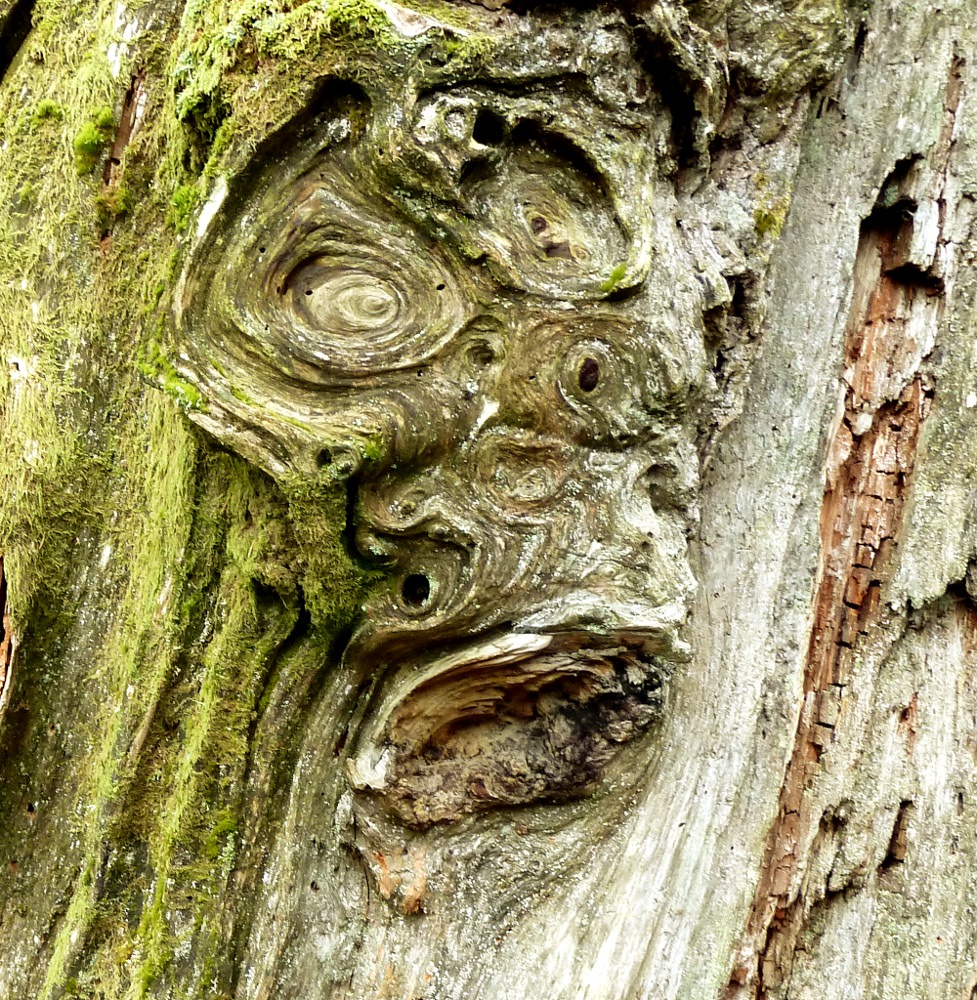 Still, we recognize in animals something of ourselves. I recently watched with great fascination a three-part series called Walking With Monsters. This featured the struggles of animal species prior to the dinosaurs, and focused especially on those animals that would eventually evolve into us. Even those species alive today who deviated far away from us early in the ancestral tree still share common ancestry, and we resonate with that.
But animals are not the only, or even the most numerous, living beings on the planet. Plants outnumber us, and represent an entirely different lineage (other than the very earliest sparks of life from whence we all came). The biology of a plant is very different from our own in every aspect, from how they gain nutrition to their manner of reproduction, and even the molecules they absorb from the air. Perhaps it is this seemingly alien nature that makes it harder for us to relate.
And perhaps it’s because we take them for granted, too, that fewer of us work with plants as totems, as opposed to a few dried herbs in a spell or magical pouch. Plants are all around us. We can see them, plant them, even destroy them with relative ease (kudzu not withstanding). But animals—those are more fleeting, especially those in the wild, and moreso those larger, shyer beings that can only be seen in their territory if we take ourselves far away from our own. Even professional nature documentaries are made of the tiny fraction of the camera crew’s entire time and film—most of it is waiting, and traveling, and too-brief glimpses.
So we focus on the lions in the savannah, and ignore the grasses and trees where they lie in wait for their prey. We hike in the forests in search of wild birds to photograph and count, but the canopies in which they sing and nest are often given little notice. And in the same way we overlook the totems of plant species while working with the animals. Who ever talks to the totemic White Sagebrush while smudging with the pungent dried leaves of one individual plant? And what of Douglas Fir, whose children line the Columbia River Gorge and further? And what of the totems of cooking herbs, and garden plants, all of which we rely on to live?
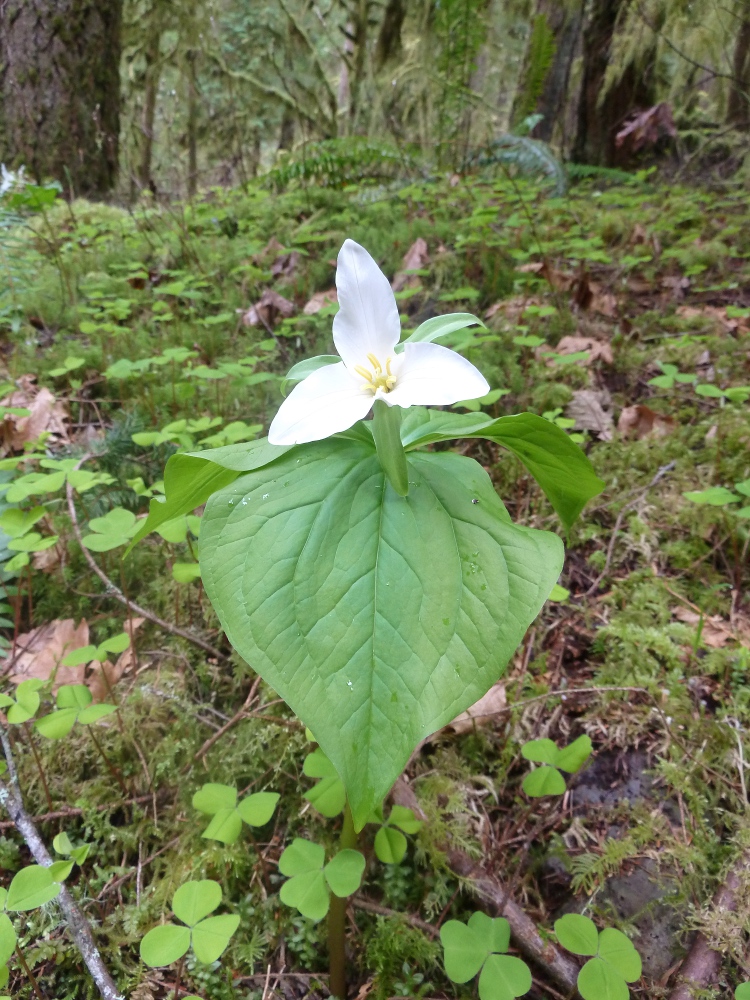
Pacific Trillium. Photo by Lupa, 2012.
I admit I’m guilty of this, too. I’ve only more recently, since starting on a more formal shamanic path in the past few years, been looking less at animal totems as detached, floating spiritual beings to call into a ritual, and more as part of a vibrant spiritual community containing not only individual spirits, but archetypal totemic beings, of animals, plants, landforms, and more. I’ve written about my relationship with Fir, but because so many of my plant totems have been silent totems—perhaps more due to my doing than theirs—I haven’t had as much understanding of how I work with them.
But I am more and more an adherent of bioregional totemism, which takes totems in context, just as animals exist in an environment that is just as much alive as we are. And so while a lot of what work I have done with plant totems is still quiet and personal and not ready to share yet, I have been taking the time to extend my own awareness and cooperation beyond those of flesh, bone, eyes, and the intake of oxygen.
Previous Post

April 2, 2012
An Ecopsychological Alternative to "Maiden, Mother and Crone"
Next Post
May 3, 2012 Grieving For Our Losses
Browse Our Archives
Select a Category Crafts Creating Connections Cultural Quandaries Earth Matters Earthly Rites Ecopsychology Fur and Feather Guest Posts Look & Find Natural Reflections Nature in the News Nature-based Holidays Nearby Nature Permaculture Quiz & Questionnaire Rituals & Ceremonies Science & Spirit The Sacred in Suburbia Uncategorized Wordless Wednesday
Select a Month January 2017 December 2016 November 2016 October 2016 September 2016 August 2016 June 2016 April 2016 March 2016 February 2016 January 2016 December 2015 November 2015 October 2015 September 2015 August 2015 July 2015 June 2015 May 2015 April 2015 March 2015 February 2015 January 2015 December 2014 November 2014 October 2014 September 2014 August 2014 July 2014 June 2014 May 2014 April 2014 March 2014 February 2014 January 2014 December 2013 November 2013 October 2013 September 2013 August 2013 July 2013 June 2013 May 2013 April 2013 March 2013 February 2013 January 2013 December 2012 November 2012 October 2012 September 2012 August 2012 July 2012 June 2012 May 2012 April 2012 March 2012 February 2012 January 2012 December 2011 November 2011
Follow Us!
TAKE THE
Religious Wisdom Quiz
What was the name of the Jewish ruling council in Jesus’ time?
Select your answer to see how you score.
Essenes Sadducees Pharisees Sanhedrin
Related posts from Paths Through The Forests

The Paradox of Tolerance Led To Fascism In...

Coalition Urges Facebook To Be Transparent About Censorship,...


Connecting to Nature in Human-Centered Places
TRENDING AT PATHEOS Pagan

I was recently chatting with someone on Instagram. She asked me what...

While there are many people who share their results, the end of...

On July 23, I saw Christopher Nolan's The Odyssey which is Homer’s...

As I write this two big events have just finished up. One...

Restoring the Watershed of Divine Love
Perhaps cooperation is not something we manufacture through legislation, ideology, or moral...

Many UUs don’t pray because of bad experiences in a previous religion,...
view all Pagan blogs
Ad-Free & Subscriber Log-In Subscription Support
- About Us
- 2026 Calendar
- Videos
- Podcasts
- Library of World Religions
- Faith In Media Tracker
- Advertise With Us
- Write for Us
- Privacy Policy
- Terms of Service
- Do Not Sell My Data
- Contact Us
- Radiant Digital
- Manage Newsletter Subscriptions
- Unsubscribe From Notifications
- Sitemap
Copyright 2008-2026, Patheos. All rights reserved.
Subscription Support Ad-Free & Subscriber Log-In
Follow Patheos