
BuddhistCatholicContemplativeEvangelicalGeneral ChristianHinduJewishLatter-day SaintMuslimNew VisionsProgressive Christian
Beliefs
- Buddhist
- Catholic
- Contemplative
- Evangelical
- General Christian
- Hindu
- Jewish
- Latter-day Saint
- More Voices
- Muslim
- New Visions
- Pagan
- Progressive Christian
Topics
- Religion News
- Food and Religion
- Sports and Religion
- Religious Art
- Religious Music and Entertainment
- Religious Events
- History and Religion
- Style and Religion
- Politics and Religion
- Women in Religion
- Recreation Outdoors and Religion
- Business Finance and Religion
- Careers Workplace and Religion
- Education and Religion
- Family Parenting and Religion
- Health Fitness and Religion
- Home and Religion
- Relationships and Religion
- Technology and Religion
- Travel and Religion
Columnists
- Buddhist Columnists
- Business Finance and Religion Columnists
- Careers Workplace and Religion Columnists
- Catholic Columnists
- Contemplative Columnists
- Education and Religion Columnists
- Evangelists Columnists
- Family Parenting and Religion Columnists
- General Christian Columnists
- Health Fitness and Religion Columnists
- Hindu Columnists
- History and Religion Columnists
- Home and Religion Columnists
- Jewish Columnists
- More Voices Columnists
- Latter Day Columnists
- Muslim Columnists
- New Visions Columnists
- Nonreligious Columnists
- Pagan Columnists
- Politics and Religion Columnists
- Progressive Columnists
- Recreation Outdoors and Religion Columnists
- Relationships and Religion Columnists
- Religion News Columnists
- Religious Art Columnists
- Religious Events Columnists
- Religious Music and Entertainment Columnists
- Sports and Religion Columnists
- Style and Religion Columnists
- Technology and Religion Columnists
- Travel and Religion Columnists
- Women in Religion Columnists
Resource Library
- 2026 Calendar
- Library of World Religions
- The 100 Most Holy Places on Earth
- Patheos Answers
- Podcasts
- Videos
- Faith Leaders Database
- Anglican Episcopalian
- Bahai
- Baptist
- Buddhism
- Christianity
- Confucianism
- Eastern Orthodoxy
- Hinduism
- Holiness and Pentecostal
- ISKCON
- Islam
- Judaism
- Lutheran
- Methodist
- The Church of Jesus Christ of Latter-day Saints
- New Age
- Paganism
- Presbytarian and Reformed
- Protestantism
- Religion Behind the Scenes
- Roman Catholic
- Scientology
- Shia Islam
- Sikhism
- Sufism
- Sunni Islam
- Taoism
- Zen
- See all religions
Research Tools
 Ad-Free & Subscriber Log-In Subscription Support
Ad-Free & Subscriber Log-In Subscription Support
Follow Patheos 

- Trending:
- Forgiveness
- |
- Marriage
- |
- Consciousness
- |
- Death Penalty
- |
- Election
- |
- Halloween
 Paths Through The Forests
- Home
- About
- Comment Guidelines
- Look & Find
- Holidays, Rituals & History
- Creating Connections
- Cultural Quandaries
- Crafts
- Quiz & Questionnaire
- Guest Posts
- Publications
- Archive Index
- Home
- Pagan
- Deep Ancestral Totemism, Part Three
Deep Ancestral Totemism, Part Three
Last updated on: January 17, 2012 at 6:54 am by Lupa Greenwolf
Deep Ancestral Totemism, Part Three 2012-01-17T06:54:20-04:00 Lupa Greenwolf
Patheos Explore the world's faith through different perspectives on religion and spirituality! Patheos has the views of the prevalent religions and spiritualities of the world.
In the previous section of this series, I discussed a guided meditation to help you find animal totems associated with the three basic evolutionary parts of the human brain, the reptilian, old mammalian, and new mammalian parts of the brain. If you have not yet read the first two sections, please go back and read them here and here so that this section will make more sense.
Once you have identified these three totems, here are some ways to work with them and beyond:
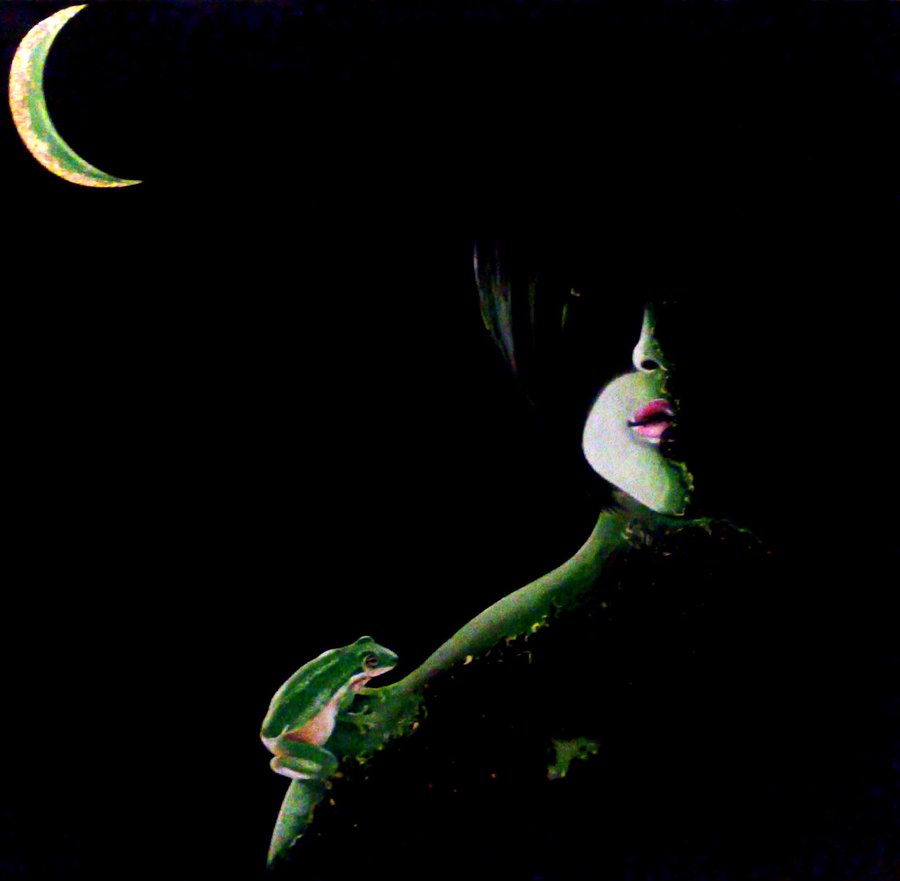 –Spend time each week meditating with each totem, and on the part of your brain and its bailiwicks that each corresponds to. Where do you see each part of your brain coming into play in your everyday life? Are there any situations in which you could be more balanced, perhaps bringing the rational thought of the neocortex (new mammalian brain) into play when you’re perhaps too worried about something and your limbic system (old mammalian brain) could use a little calming?
–If you find yourself in a situation where you need more balancing, ask the totem of the part of the brain you want help from to give you aid in that moment. For example, if you’re feeling unmotivated about something, talk to the totem of the reptilian part of your brain to figure out why that might be, and what you could do to give yourself more incentive to act.
–When interacting with others, how do you see the various parts of their brains potentially coming into play? Does this help you understand them better? How are your two brains communicating? Are you trying to approach them on a primarily new mammalian level, while they may be in a more defensive, reptilian mindset?
–What about interacting with other species of animal? Often they have been belittled as being “lesser” than humans, even though we have gone through the same evolutionary processes they have. Can you relate to them more knowing that you share some similar brain structures? Do you understand the other animals and their motivations better? Do you give them more respect for what they are, rather than what they are not?
–While this particular meditation dealt with just a few points on the long line of our evolution (or, rather, various diverging lines of evolutionary history), you can use it to find other extinct totems, to include those of ancestral species before the rise of reptiles. If you found yourself connecting to still-living species, try asking them for help in traveling further back in evolutionary time, perhaps asking one totem to introduce you to its ancestor, and then that ancestor introducing you to another, and so forth. You may want to check your work against a known timeline of evolving species as you go along.
–If you don’t already do so, think of yourself more as a human animal. Emphasize the animal part, not in the Hollywoodized version of the “wild (wo)man/cave(wo)man”, but a human being who is the latest in one line of evolved animals. See how you fit into your ecosystem as an animal, eating, drinking, sleeping, etc. Do you feel more kinship to the other animals, both living and extinct? How about connection to the land?
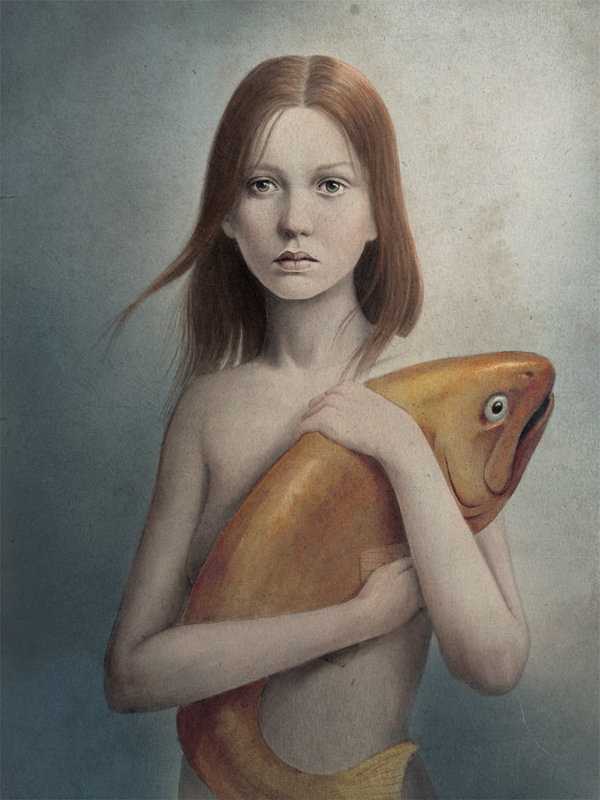
Pet v.2011 by Diego Fernandez, 2011, http://diegoidef.deviantart.com
–Practice being very physically aware of yourself-as-animal. Walk around and otherwise move your body, and notice how your limbs are still very much like those of a quadruped, how your knees and back especially still hearken back to before we began to walk upright (and like to remind us, sometimes painfully, that the evolution isn’t done yet!). Imagine what it might feel like to shift your form backward in your evolutionary history to that of a proto-mammalian ancestor, or an earlier reptile, and even further back to aquatic ancestors. If it helps, read up on some comparative anatomy before you try this exercise.
–You may also wish to ask one or more of your “brain totems” to show you a bit of what their physical counterparts’ forms were like. If you feel comfortable, try to accentuate the part of your brain that is associated with the totem you’re working with; if you’re working with your reptilian brain totem, imagine that you are primarily concerned with the basic needs of survival, defense, territory, and reaction.
These are just a few paths you may choose to explore from here. Feel free to explore beyond them, and to experiment.
Ultimately, the point of all this is to be more familiar with yourself as an animal, with how your motivations, thoughts and feelings are largely inherited from our species’ ancestors. Rather than shoving down our animal selves, we can learn from other creatures how to use these various levels of our brains, the hard-wired seats of our minds. Our comparative neurophysiology shows us our heritage; we have only gained ignorance by trying to push it away. Let us embrace ourselves as human animals. Let us learn to balance what is unique to us with humans, with all that humanity has been built on. Let us become the best human animal beings possible.
Previous Post

January 10, 2012
Deep Ancestral Totemism, Part Two
Next Post
January 27, 2012 We Do Not Return to Nature. We Are Already There.
Browse Our Archives
Select a Category Crafts Creating Connections Cultural Quandaries Earth Matters Earthly Rites Ecopsychology Fur and Feather Guest Posts Look & Find Natural Reflections Nature in the News Nature-based Holidays Nearby Nature Permaculture Quiz & Questionnaire Rituals & Ceremonies Science & Spirit The Sacred in Suburbia Uncategorized Wordless Wednesday
Select a Month January 2017 December 2016 November 2016 October 2016 September 2016 August 2016 June 2016 April 2016 March 2016 February 2016 January 2016 December 2015 November 2015 October 2015 September 2015 August 2015 July 2015 June 2015 May 2015 April 2015 March 2015 February 2015 January 2015 December 2014 November 2014 October 2014 September 2014 August 2014 July 2014 June 2014 May 2014 April 2014 March 2014 February 2014 January 2014 December 2013 November 2013 October 2013 September 2013 August 2013 July 2013 June 2013 May 2013 April 2013 March 2013 February 2013 January 2013 December 2012 November 2012 October 2012 September 2012 August 2012 July 2012 June 2012 May 2012 April 2012 March 2012 February 2012 January 2012 December 2011 November 2011
Follow Us!
TAKE THE
Religious Wisdom Quiz
How many years did Jacob work for Rachel before he married her?
Select your answer to see how you score.
Three Fourteen Seven Twenty
Related posts from Paths Through The Forests

The Paradox of Tolerance Led To Fascism In...

Pros & Cons with Atheist Channel Being Renamed...

Psych Meds, Self-Care and Paganism
TRENDING AT PATHEOS Pagan

I was recently chatting with someone on Instagram. She asked me what...

While there are many people who share their results, the end of...

On July 23, I saw Christopher Nolan's The Odyssey which is Homer’s...

As I write this two big events have just finished up. One...

Restoring the Watershed of Divine Love
Perhaps cooperation is not something we manufacture through legislation, ideology, or moral...

Many UUs don’t pray because of bad experiences in a previous religion,...
view all Pagan blogs
Ad-Free & Subscriber Log-In Subscription Support
- About Us
- 2026 Calendar
- Videos
- Podcasts
- Library of World Religions
- Faith In Media Tracker
- Advertise With Us
- Write for Us
- Privacy Policy
- Terms of Service
- Do Not Sell My Data
- Contact Us
- Radiant Digital
- Manage Newsletter Subscriptions
- Unsubscribe From Notifications
- Sitemap
Copyright 2008-2026, Patheos. All rights reserved.
Subscription Support Ad-Free & Subscriber Log-In
Follow Patheos