
BuddhistCatholicContemplativeEvangelicalGeneral ChristianHinduJewishLatter-day SaintMuslimNew VisionsProgressive Christian
Beliefs
- Buddhist
- Catholic
- Contemplative
- Evangelical
- General Christian
- Hindu
- Jewish
- Latter-day Saint
- More Voices
- Muslim
- New Visions
- Pagan
- Progressive Christian
Topics
- Religion News
- Food and Religion
- Sports and Religion
- Religious Art
- Religious Music and Entertainment
- Religious Events
- History and Religion
- Style and Religion
- Politics and Religion
- Women in Religion
- Recreation Outdoors and Religion
- Business Finance and Religion
- Careers Workplace and Religion
- Education and Religion
- Family Parenting and Religion
- Health Fitness and Religion
- Home and Religion
- Relationships and Religion
- Technology and Religion
- Travel and Religion
Columnists
- Buddhist Columnists
- Business Finance and Religion Columnists
- Careers Workplace and Religion Columnists
- Catholic Columnists
- Contemplative Columnists
- Education and Religion Columnists
- Evangelists Columnists
- Family Parenting and Religion Columnists
- General Christian Columnists
- Health Fitness and Religion Columnists
- Hindu Columnists
- History and Religion Columnists
- Home and Religion Columnists
- Jewish Columnists
- More Voices Columnists
- Latter Day Columnists
- Muslim Columnists
- New Visions Columnists
- Nonreligious Columnists
- Pagan Columnists
- Politics and Religion Columnists
- Progressive Columnists
- Recreation Outdoors and Religion Columnists
- Relationships and Religion Columnists
- Religion News Columnists
- Religious Art Columnists
- Religious Events Columnists
- Religious Music and Entertainment Columnists
- Sports and Religion Columnists
- Style and Religion Columnists
- Technology and Religion Columnists
- Travel and Religion Columnists
- Women in Religion Columnists
Resource Library
- 2026 Calendar
- Library of World Religions
- The 100 Most Holy Places on Earth
- Patheos Answers
- Podcasts
- Videos
- Faith Leaders Database
- Anglican Episcopalian
- Bahai
- Baptist
- Buddhism
- Christianity
- Confucianism
- Eastern Orthodoxy
- Hinduism
- Holiness and Pentecostal
- ISKCON
- Islam
- Judaism
- Lutheran
- Methodist
- The Church of Jesus Christ of Latter-day Saints
- New Age
- Paganism
- Presbytarian and Reformed
- Protestantism
- Religion Behind the Scenes
- Roman Catholic
- Scientology
- Shia Islam
- Sikhism
- Sufism
- Sunni Islam
- Taoism
- Zen
- See all religions
Research Tools
 Ad-Free & Subscriber Log-In Subscription Support
Ad-Free & Subscriber Log-In Subscription Support
Follow Patheos 

- Trending:
- Forgiveness
- |
- Marriage
- |
- Consciousness
- |
- Death Penalty
- |
- Election
- |
- Halloween
 Paths Through The Forests
- Home
- About
- Comment Guidelines
- Look & Find
- Holidays, Rituals & History
- Creating Connections
- Cultural Quandaries
- Crafts
- Quiz & Questionnaire
- Guest Posts
- Publications
- Archive Index
- Home
- Pagan
- Deep Ancestral Totemism, Part Two
Deep Ancestral Totemism, Part Two
Last updated on: January 10, 2012 at 8:23 pm by Lupa Greenwolf
Deep Ancestral Totemism, Part Two 2012-01-10T20:23:41-04:00 Lupa Greenwolf
Patheos Explore the world's faith through different perspectives on religion and spirituality! Patheos has the views of the prevalent religions and spiritualities of the world.
In my last post, I introduced the model of the triune brain (reptilian, old mammalian, new mammalian) as a structure for basic understanding of yourself as a human animal, not just a human being. If you have not yet read the first part of this series, please go and check it out over here before reading on, as it will help you make sense of this second portion, for it is here is where we can put the theory into practice.
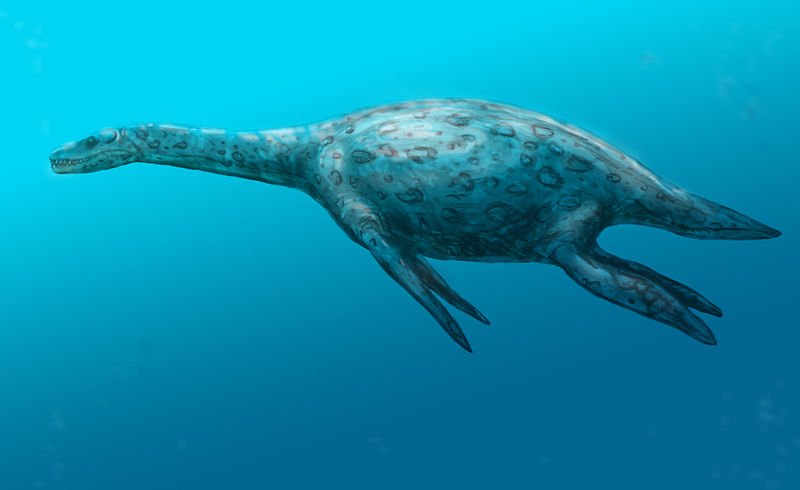
By Michael B.H., care of http://bit.ly/xDvoBJ
What you’re going to do in this meditation is meet with totems that can help you learn more about the origins and the purposes for the reptilian (territoriality, basic instincts), old mammalian (more complex care of young and family, basic emotional capacities), and new mammalian (more complex social and communication skills) parts of your brain. The meditation is only meant to be an introduction to these totems; you certainly can’t learn everything there is to know in one exercise! Think of it as a starting point; I’ll give you some ideas for where to go next later on.
Before you begin, there is one thing to consider—do you want to specifically work with the totems of species that are considered most likely to be our direct ancestors, or of species that simply share the same general brain structures we have? For example, let’s say you want to learn more about the old mammalian brain by working with the totem of an animal whose most advanced neurological development is at that level. Would you prefer to specifically seek out Thrinaxodon, a cynodont closely related to the as-of-yet-undiscovered exact predecessor species of all mammals, humans included? Or would you rather work with the totem of an extant species of primitive mammal which is not a direct ancestor of ours, such as American Opossum?
Either way, prepare to do some preliminary research. There’s plenty of information on animals still alive today, but not quite as much on extinct ones, especially older or less charismatic species. Here is a good starting point for researching our likely direct ancestors; as with anything on Wikipedia take it with a bit of salt, but also make use of the cited resources for further research.
It may seem a little like “cheating” to go into a guided meditation with certain species more at the forefront than others, but considering how difficult traversing your own psyche can be, working with animals you know more about can help give you more of an anchor as you dig in deeper. Let the meditation choose the specific animals for you, though. Go in with a good amount of information in your conscious mind, and allow your subconscious to make use of the material.
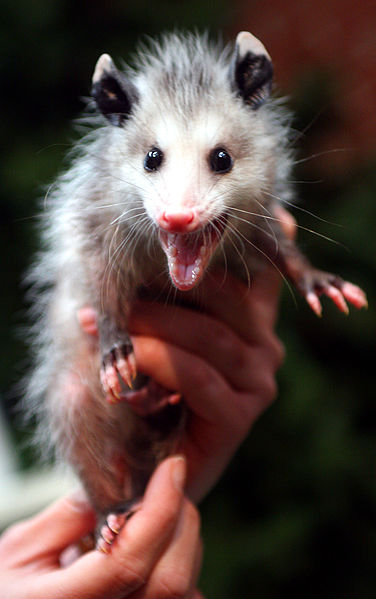
By Tree & J. Hensdill, care of http://bit.ly/zf9zWa
Keep in mind, too, that these are animal totems; as archetypal, spiritual beings, they are comprised not only of the natural history and traits of the species they spring from, but also the animals’ relationships to other species, including humans, as well as our myths and folklore about them. So while talking to a physical animal, especially in light of the differences of our brains, may not be feasible, animal totems are entirely different sorts of beings themselves.
The Meditation
Get comfortable in a quiet place where you can be undisturbed for at least an hour. Sit or lay down as you see fit. You can even dance if it will help you travel into the right mindset. Let go of your everyday cares and concerns, and relax.
Focus on your head. Feel your attention going inward, into your head, through your skull, and into your brain. The first place you enter into is the new mammalian brain.
Remember your social skills, the basic interactions between humans. Think of how we socially interact, the structure and processes of how we choose who to communicate with, who is close to us and who isn’t, how we collaborate and come together. Then think of how other higher-order mammals do the same. What makes us unique? How are we like other mammals in that respect?
Envision an animal coming toward you that represents the new mammalian brain and its origins. Let it approach you. Greet it, and see if you can engage it in conversation. Find out why it has arrived in this part of your brain. Once you’re done with this conversation, thank the totem for introducing itself, and bid it farewell.
Next, move deeper into your brain. Feel yourself move through the new mammalian brain, and into the old mammalian brain. Remember all the times you’ve felt deep, seemingly uncontrollable emotions, good or bad. Feel the bonds between you and those closest to you; don’t think about them, just feel them. Then think about mammals caring for their young, cleaning them and keeping them safe. Think about how other animals show care for each other—sadness when a fellow creature dies, joy at reunion with one who has been away.
Envision an animal coming toward you that represents the old mammalian brain and its origins. Let it approach you. Greet it, and see if you can engage it in conversation. Find out why it has arrived in this part of your brain. Once you’re done with this conversation, thank the totem for introducing itself, and bid it farewell.
Now, move to the deepest part of your brain, down at the base of the skull. This is the oldest part of all. Think of any situations, perhaps an emergency if you’re comfortable, where you simply acted without thinking. Remember the basic impulses of survival—sating hunger, finding rest, acquiring resources. Think of all the animals do to survive; think of fish, and amphibians, and reptiles, and others, all working to live each day.
Envision an animal coming toward you that represents the reptilian brain and its origins. Let it approach you. Greet it, and see if you can engage it in conversation. Find out why it has arrived in this part of your brain. Once you’re done with this conversation, thank the totem for introducing itself, and bid it farewell.
Then envision yourself traveling down your spine, and let your awareness expand throughout your entire body. Feel yourself back in your entire self, and when you are ready, open your eyes and come back to full waking awareness. Ground yourself as needed.
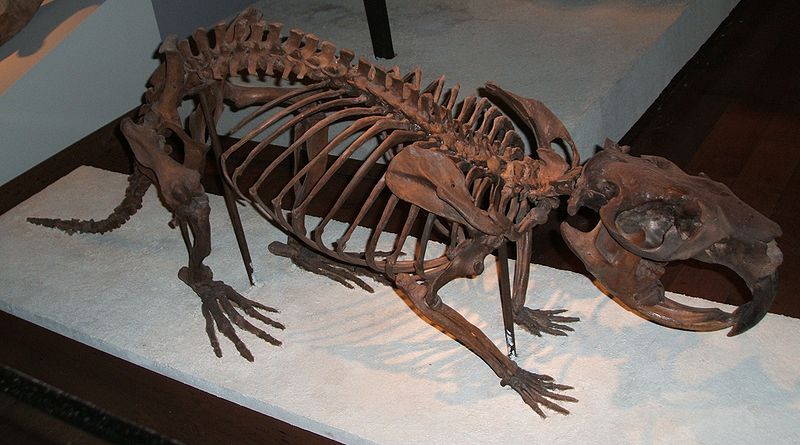
By Stevenj, care of http://bit.ly/xAQNV8
Write down or otherwise record as much as you can remember of who the totems were and what they may have said, with as much detail as possible. You may find that you don’t actually recognize an animal, especially if it’s some obscure extinct prehistoric critter. Do your best to sketch it out and otherwise record its physical traits, and then compare it to pictures of known extinct animals. Totems, especially those who no longer have a living physical connection to this world, can sometimes appear a bit “warped” in appearance, as part of their existence hinges on our awareness of them; as our species’ memory of them fades, so can the image we still have of them shift as well. Do your best with what you have, and if you end up with a “nameless” totem, it doesn’t mean you can’t still work together.
As mentioned before, this meditation is just the start. In the third and final section, I’ll give you some ideas on where to go from here, now that you’ve been introduced to these totems.
Previous Post

January 3, 2012
Deep Ancestral Totemism, Part One
Next Post
January 17, 2012 Deep Ancestral Totemism, Part Three
Browse Our Archives
Select a Category Crafts Creating Connections Cultural Quandaries Earth Matters Earthly Rites Ecopsychology Fur and Feather Guest Posts Look & Find Natural Reflections Nature in the News Nature-based Holidays Nearby Nature Permaculture Quiz & Questionnaire Rituals & Ceremonies Science & Spirit The Sacred in Suburbia Uncategorized Wordless Wednesday
Select a Month January 2017 December 2016 November 2016 October 2016 September 2016 August 2016 June 2016 April 2016 March 2016 February 2016 January 2016 December 2015 November 2015 October 2015 September 2015 August 2015 July 2015 June 2015 May 2015 April 2015 March 2015 February 2015 January 2015 December 2014 November 2014 October 2014 September 2014 August 2014 July 2014 June 2014 May 2014 April 2014 March 2014 February 2014 January 2014 December 2013 November 2013 October 2013 September 2013 August 2013 July 2013 June 2013 May 2013 April 2013 March 2013 February 2013 January 2013 December 2012 November 2012 October 2012 September 2012 August 2012 July 2012 June 2012 May 2012 April 2012 March 2012 February 2012 January 2012 December 2011 November 2011
Follow Us!
TAKE THE
Religious Wisdom Quiz
Who was the only female judge of Israel?
Select your answer to see how you score.
Hannah Esther Deborah Ruth
Related posts from Paths Through The Forests

The Paradox of Tolerance Led To Fascism In...

Pros & Cons with Atheist Channel Being Renamed...

Psych Meds, Self-Care and Paganism
TRENDING AT PATHEOS Pagan

I was recently chatting with someone on Instagram. She asked me what...

While there are many people who share their results, the end of...

On July 23, I saw Christopher Nolan's The Odyssey which is Homer’s...

As I write this two big events have just finished up. One...

Restoring the Watershed of Divine Love
Perhaps cooperation is not something we manufacture through legislation, ideology, or moral...

Many UUs don’t pray because of bad experiences in a previous religion,...
view all Pagan blogs
Ad-Free & Subscriber Log-In Subscription Support
- About Us
- 2026 Calendar
- Videos
- Podcasts
- Library of World Religions
- Faith In Media Tracker
- Advertise With Us
- Write for Us
- Privacy Policy
- Terms of Service
- Do Not Sell My Data
- Contact Us
- Radiant Digital
- Manage Newsletter Subscriptions
- Unsubscribe From Notifications
- Sitemap
Copyright 2008-2026, Patheos. All rights reserved.
Subscription Support Ad-Free & Subscriber Log-In
Follow Patheos