
BuddhistCatholicContemplativeEvangelicalGeneral ChristianHinduJewishLatter-day SaintMuslimNew VisionsProgressive Christian
Beliefs
- Buddhist
- Catholic
- Contemplative
- Evangelical
- General Christian
- Hindu
- Jewish
- Latter-day Saint
- More Voices
- Muslim
- New Visions
- Pagan
- Progressive Christian
Topics
- Religion News
- Food and Religion
- Sports and Religion
- Religious Art
- Religious Music and Entertainment
- Religious Events
- History and Religion
- Style and Religion
- Politics and Religion
- Women in Religion
- Recreation Outdoors and Religion
- Business Finance and Religion
- Careers Workplace and Religion
- Education and Religion
- Family Parenting and Religion
- Health Fitness and Religion
- Home and Religion
- Relationships and Religion
- Technology and Religion
- Travel and Religion
Columnists
- Buddhist Columnists
- Business Finance and Religion Columnists
- Careers Workplace and Religion Columnists
- Catholic Columnists
- Contemplative Columnists
- Education and Religion Columnists
- Evangelists Columnists
- Family Parenting and Religion Columnists
- General Christian Columnists
- Health Fitness and Religion Columnists
- Hindu Columnists
- History and Religion Columnists
- Home and Religion Columnists
- Jewish Columnists
- More Voices Columnists
- Latter Day Columnists
- Muslim Columnists
- New Visions Columnists
- Nonreligious Columnists
- Pagan Columnists
- Politics and Religion Columnists
- Progressive Columnists
- Recreation Outdoors and Religion Columnists
- Relationships and Religion Columnists
- Religion News Columnists
- Religious Art Columnists
- Religious Events Columnists
- Religious Music and Entertainment Columnists
- Sports and Religion Columnists
- Style and Religion Columnists
- Technology and Religion Columnists
- Travel and Religion Columnists
- Women in Religion Columnists
Resource Library
- 2026 Calendar
- Library of World Religions
- The 100 Most Holy Places on Earth
- Patheos Answers
- Podcasts
- Videos
- Faith Leaders Database
- Anglican Episcopalian
- Bahai
- Baptist
- Buddhism
- Christianity
- Confucianism
- Eastern Orthodoxy
- Hinduism
- Holiness and Pentecostal
- ISKCON
- Islam
- Judaism
- Lutheran
- Methodist
- The Church of Jesus Christ of Latter-day Saints
- New Age
- Paganism
- Presbytarian and Reformed
- Protestantism
- Religion Behind the Scenes
- Roman Catholic
- Scientology
- Shia Islam
- Sikhism
- Sufism
- Sunni Islam
- Taoism
- Zen
- See all religions
Research Tools
 Ad-Free & Subscriber Log-In Subscription Support
Ad-Free & Subscriber Log-In Subscription Support
Follow Patheos 

- Trending:
- Forgiveness
- |
- Marriage
- |
- Consciousness
- |
- Death Penalty
- |
- Election
- |
- Halloween
 Paths Through The Forests
- Home
- About
- Comment Guidelines
- Look & Find
- Holidays, Rituals & History
- Creating Connections
- Cultural Quandaries
- Crafts
- Quiz & Questionnaire
- Guest Posts
- Publications
- Archive Index
- Home
- Pagan
- Deep Ancestral Totemism, Part One
Deep Ancestral Totemism, Part One
Last updated on: January 3, 2012 at 7:55 am by Lupa Greenwolf
Deep Ancestral Totemism, Part One 2012-01-03T07:55:27-04:00 Lupa Greenwolf
Patheos Explore the world's faith through different perspectives on religion and spirituality! Patheos has the views of the prevalent religions and spiritualities of the world.
The human brain is a fascinating thing. I had already learned a good deal about it just in personal reading, but when I went through my graduate program to get my counseling psych degree, I got a lot more up-to-date information. For example, I learned about the triune brain—the idea that we have the reptilian brain (the basal ganglia, the most primitive part of the brain), the paleomammalian brain (the limbic system) and the neomammalian brain (the neocortex). What I also learned is that this model is overly simplistic, that it doesn’t correspond as neatly to actual reptile and various mammal brains as is popularly assumed. Also, some non-mammalian species exhibit levels of intelligence and behavior that rival neocortical capacities, without an actual neocortex in the brain. And all mammals have some neocortical development, just not to the degree of humans. So, in short, the triune brain model has fallen out of favor due to its flaws.
Still, as very brief shorthand, the “reptile”, “old mammal” and “new mammal” models of the different sections of the human brain work if you keep its limitations in mind. It’s a good set of mnenomics to remember that the oldest portion of the brain (“reptile”) is that which is associated with primitive territorial and aggressive/defensive actions, the next part (“old mammal”) has diversified into more complex behaviors surrounding the care and feeding of young and other family as well as the first development of emotions, and the newest portion (“new mammal”) has even more complex social and communication skills, as well as planning and foresight.
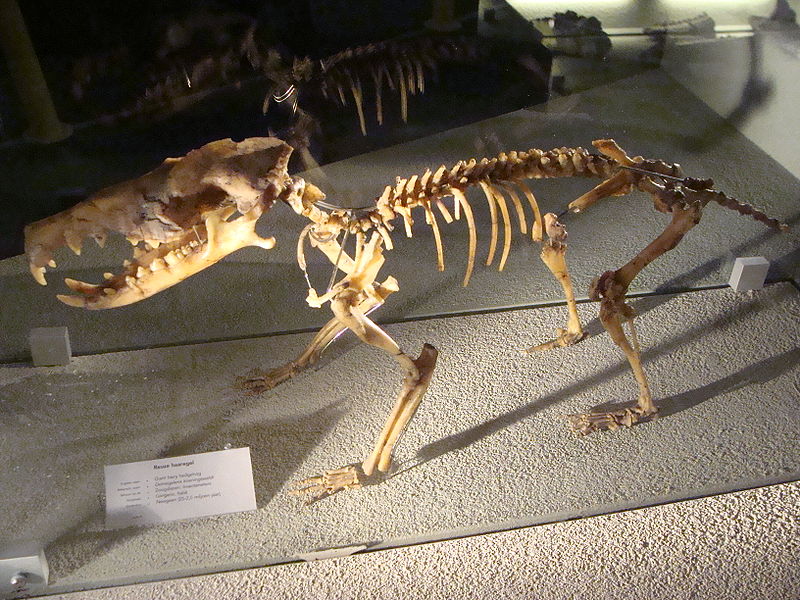
By Peter Maas, care of http://bit.ly/sTxNLM
My interest in it here is as a model for self-reflective meditation. Even as highly developed as we humans are, our brains often get the better of us, particularly the more primitive portions. We still can fall prey to uncontrolled and unexamined anger, territoriality (literal and symbolic), fear, and other such impulses. We fear the Shadow-self and often try to excise it. And the more primitive self sometimes manifests as unnecessary violence that too often gets justified in the name of religion and other ideologies. Wars are massive groups of “reptiles” in territorial conflict.
So much of spirituality and religion seems to be aimed at quelling or rising above what we perceive as the most animal parts of ourselves, whether that’s sex or violence or desire and need. Sometimes mortification of the body is used; other times, we receive punishment for exhibiting “base” behaviors”. Look at the concepts of sin and uncleanliness when applied to perfectly normal, harmless human behaviors like consensual sexuality. Or we try to escape the body and the physical needs through meditation and projection, and many of us are taught to idealize an afterlife where the gross weight of the body is left behind and we are made “perfect”. In any case, the animal self is all too often demonized and shunned.
Yet the answer is not to further distance ourselves from these parts of who we are as human animals, but instead to reconnect with them. Our increasingly (perceived) detachment from ourselves as animals, the idea that we are “above” or “better than” animals, doesn’t take away the fact that we are animals still, including in our brains. No amount of rationalization or distancing will remove that, nor will any level of supposed transcendence. As long as we are human animals in human animal bodies, we are responsible for our human animal selves, motivations, and actions.
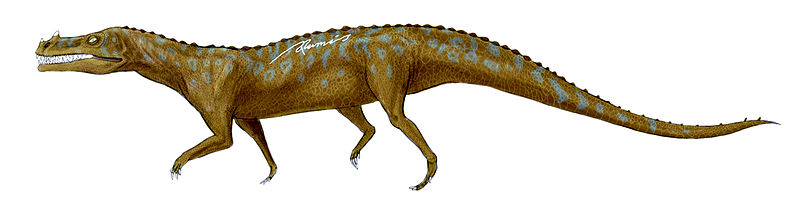
By Alannis, care of http://bit.ly/tDaQI8
We don’t, of course, need to swing all the way in the other direction and let our ids go wild in order to “be animals”. Yes, we are attracted on a certain level to the idea of unfettered fighting and fucking and competing relentlessly for resources to maximize the likelihood our genes will be passed on. But let’s not break out the blood sacrifices and wild orgies just yet. If we are to give honor to the evolution that has brought us to where we are, let’s not forget the compassion and humane treatment of ourselves and others that we have developed to a high degree (though we are not the only species to possess them). After all, we have seen the atrocities that have occurred when people display little to no control over their more primitive instincts at all. That’s where we get war, assault, selfish hoarding of precious resources, etc.
I propose, instead, a middle ground, one that allows us to aspire to the best of the uniquely human traits we’ve developed as a species, and also the more primitive foundations that we are built on. The goal is to first be able to identify what parts of the brain/self are active at different points, particularly those seen as negative; and second, instead of pushing them away, observing and knowing the impulses and feelings for what they are and thereby letting them have a place while keeping them in check.
And we’re going to do this by looking to our ancestors and our much-extended family for their experience and wisdom. In the second part of this series, I’m going to show you a guided meditation that you can use to contact animal totems that correspond with the various layers of your brain as a way to begin this reclaiming of yourself as a human animal.
Previous Post

December 26, 2011
Carl Sagan's "Cosmos": A Pagan Perspective
Next Post
January 10, 2012 Deep Ancestral Totemism, Part Two
Browse Our Archives
Select a Category Crafts Creating Connections Cultural Quandaries Earth Matters Earthly Rites Ecopsychology Fur and Feather Guest Posts Look & Find Natural Reflections Nature in the News Nature-based Holidays Nearby Nature Permaculture Quiz & Questionnaire Rituals & Ceremonies Science & Spirit The Sacred in Suburbia Uncategorized Wordless Wednesday
Select a Month January 2017 December 2016 November 2016 October 2016 September 2016 August 2016 June 2016 April 2016 March 2016 February 2016 January 2016 December 2015 November 2015 October 2015 September 2015 August 2015 July 2015 June 2015 May 2015 April 2015 March 2015 February 2015 January 2015 December 2014 November 2014 October 2014 September 2014 August 2014 July 2014 June 2014 May 2014 April 2014 March 2014 February 2014 January 2014 December 2013 November 2013 October 2013 September 2013 August 2013 July 2013 June 2013 May 2013 April 2013 March 2013 February 2013 January 2013 December 2012 November 2012 October 2012 September 2012 August 2012 July 2012 June 2012 May 2012 April 2012 March 2012 February 2012 January 2012 December 2011 November 2011
Follow Us!
TAKE THE
Religious Wisdom Quiz
Who was the father of King Solomon?
Select your answer to see how you score.
Jonathan Samuel David Saul
Related posts from Paths Through The Forests

The Paradox of Tolerance Led To Fascism In...

Pros & Cons with Atheist Channel Being Renamed...

Psych Meds, Self-Care and Paganism
TRENDING AT PATHEOS Pagan

I was recently chatting with someone on Instagram. She asked me what...

While there are many people who share their results, the end of...

On July 23, I saw Christopher Nolan's The Odyssey which is Homer’s...

As I write this two big events have just finished up. One...

Restoring the Watershed of Divine Love
Perhaps cooperation is not something we manufacture through legislation, ideology, or moral...

Many UUs don’t pray because of bad experiences in a previous religion,...
view all Pagan blogs
Ad-Free & Subscriber Log-In Subscription Support
- About Us
- 2026 Calendar
- Videos
- Podcasts
- Library of World Religions
- Faith In Media Tracker
- Advertise With Us
- Write for Us
- Privacy Policy
- Terms of Service
- Do Not Sell My Data
- Contact Us
- Radiant Digital
- Manage Newsletter Subscriptions
- Unsubscribe From Notifications
- Sitemap
Copyright 2008-2026, Patheos. All rights reserved.
Subscription Support Ad-Free & Subscriber Log-In
Follow Patheos