
BuddhistCatholicContemplativeEvangelicalGeneral ChristianHinduJewishLatter-day SaintMuslimNew VisionsProgressive Christian
Beliefs
- Buddhist
- Catholic
- Contemplative
- Evangelical
- General Christian
- Hindu
- Jewish
- Latter-day Saint
- More Voices
- Muslim
- New Visions
- Pagan
- Progressive Christian
Topics
- Religion News
- Food and Religion
- Sports and Religion
- Religious Art
- Religious Music and Entertainment
- Religious Events
- History and Religion
- Style and Religion
- Politics and Religion
- Women in Religion
- Recreation Outdoors and Religion
- Business Finance and Religion
- Careers Workplace and Religion
- Education and Religion
- Family Parenting and Religion
- Health Fitness and Religion
- Home and Religion
- Relationships and Religion
- Technology and Religion
- Travel and Religion
Columnists
- Buddhist Columnists
- Business Finance and Religion Columnists
- Careers Workplace and Religion Columnists
- Catholic Columnists
- Contemplative Columnists
- Education and Religion Columnists
- Evangelists Columnists
- Family Parenting and Religion Columnists
- General Christian Columnists
- Health Fitness and Religion Columnists
- Hindu Columnists
- History and Religion Columnists
- Home and Religion Columnists
- Jewish Columnists
- More Voices Columnists
- Latter Day Columnists
- Muslim Columnists
- New Visions Columnists
- Nonreligious Columnists
- Pagan Columnists
- Politics and Religion Columnists
- Progressive Columnists
- Recreation Outdoors and Religion Columnists
- Relationships and Religion Columnists
- Religion News Columnists
- Religious Art Columnists
- Religious Events Columnists
- Religious Music and Entertainment Columnists
- Sports and Religion Columnists
- Style and Religion Columnists
- Technology and Religion Columnists
- Travel and Religion Columnists
- Women in Religion Columnists
Resource Library
- 2026 Calendar
- Library of World Religions
- The 100 Most Holy Places on Earth
- Patheos Answers
- Podcasts
- Videos
- Faith Leaders Database
- Anglican Episcopalian
- Bahai
- Baptist
- Buddhism
- Christianity
- Confucianism
- Eastern Orthodoxy
- Hinduism
- Holiness and Pentecostal
- ISKCON
- Islam
- Judaism
- Lutheran
- Methodist
- The Church of Jesus Christ of Latter-day Saints
- New Age
- Paganism
- Presbytarian and Reformed
- Protestantism
- Religion Behind the Scenes
- Roman Catholic
- Scientology
- Shia Islam
- Sikhism
- Sufism
- Sunni Islam
- Taoism
- Zen
- See all religions
Research Tools
 Ad-Free & Subscriber Log-In Subscription Support
Ad-Free & Subscriber Log-In Subscription Support
Follow Patheos 

- Trending:
- Forgiveness
- |
- Marriage
- |
- Consciousness
- |
- Death Penalty
- |
- Election
- |
- Halloween

- Home
- Pagan
- Politics and Religion
- Time Unbounded and the Lie of Temporality
Time Unbounded and the Lie of Temporality
Last updated on: January 27, 2026 at 7:26 pm by Daniel Jean Perrier
Time Unbounded and the Lie of Temporality 2026-01-27T19:26:38-05:00 Daniel Jean Perrier
Patheos Explore the world's faith through different perspectives on religion and spirituality! Patheos has the views of the prevalent religions and spiritualities of the world.

Corporeal time. Birmingham Museums Trust / unsplash.com
The year has begun in earnest, the bright shine of commitment giving way to the tarnish of life and the arbitrary misery of marking these days a start and finding some particular meaning in the march of horrors that were already engaged, telling ourselves that the next 365 days are newly cursed with the rapid escalation of state violence in the US that was already heightening at unfortunately well-precedented rates.
It doesn’t mean anything new, anything special, that it is a new year, that the numbers on our calendar will continue to end the same way for the next eleven months, in that 26; just as we are abandoning unrealistic or unmotivating resolutions, we give in to the falsity of human time and release hope—and any reason for action—for another year. Waiting, perhaps, for the right moment to act. Maybe once every four years in a soothing ineffective cycle?
The Imagined New Year
Time is my enemy, a sad enemy to have, one that is less than a phantom. The clock cannot run out, because time is not. And yet, and yet we are unmoored without it, lost without a sense of rhythm that builds our narrative of self, of living, of movement just as it traps us in hesitation, in the “what now?”, of something that can be ruined even as it has already flown away, seconds gone back to their infinite being while we remember them, tainted and sick.
Reflecting on the origins of New Year’s resolutions again this year, I remember the intentional behind the arbitrary. The Mesopotamians celebrate the New Year as spring began. Upcoming Imbolc reminds us we are halfway there, heading out of the darkest hour of the year and toward the spring renewal that invokes the brightness of being better than our January celebrations can. The astrological clock turns to the Ram and all the bright renewing—reproducing—that comes with it. Time moves forward, start and end united and never held.
For those of us on the Gregorian calendar have inherited a new date from the Romans. The New Year is pulled back to January presided over by Janus, the two-faced god of passages. In the dark mysteries and thin stillness of winter, we invent a closure, a nearly circumscribed time we call a year, gone and changed from one moment to the next. And that notion of a year, the thing we pretended was real and named 2025 has disappeared into unbounded time, sectioned and severed like it is a thing that can be manipulated, something of the world at all.
Thresholds and Unbounded Time
Marking Janus’s duality presents a new approach at the imagined threshold of the year—Janus presides not exactly over both sides of the portal, but rather neither, living in the space that is not a space because there is no separation of then and now, of the end and the beginning. In this space that isn’t a space, we can abandon prophetic, corrupting boundedness to live in perpetuality and release the lie that any moment has been dictated for us or can be dictated by us, that there is some forward for us to move with, rather than a totality what we are, can be, and always will be manifesting, chained to iterative, containable, corruptible progress by the urge to quantify.
We are creatures of chronology and history. To ignore history is to misunderstand the present. To understand the present as present and history as history remains not just a mistake, but a lie. What is the corruption of the year 2026 that is greater than the year 2025? What does it mean for a child to be abducted one year or the next? What does it mean to hide in the attic last century or this?
The separation is the illusion, the space that allows us to pretend change is distance, and that just as we are temporally bound to move in one direction, so to is that temporality bound with us, existing in a tunnel where our past can be studied from a distance, except when it takes us over all in one, great and lumbering and loud and so low frequency that if you want to, you can ignore it’s undeniable approach.
The truth is, it was never approaching. It was always there. It is part of the threshold. There is only threshold.
Pagan
Catholic
History and Religion
Previous Post

December 15, 2025
Chronic Pain and Sainthood
Next Post
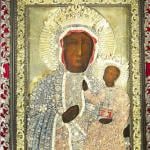
May 16, 2026 Our Lady of Częstochowa, Part 1 - What is a Black Madonna?
Recent Comments
"TL;DROur money and banking system is both fake and evil."
"insightful and well-researched, as always. thank you for taking the time to put this together."
Israel’s Ecocide Against Palestine
"The KJV has never been popular with Catholics. It is a Protestant Bible with Protestant ..."
The King James Bible and the ..."
"Jesus spoke of them as TWO commandments with the second subject to the first in ..."
Loving Your Neighbor, Compassion and Community
Browse Our Archives
Select a Category Astrology Holidays LGBTQIA+ Saints Uncategorized
Select a Month May 2026 January 2026 December 2025 June 2025 March 2025 December 2024 August 2024 July 2024 June 2024 January 2024 December 2023 November 2023
Follow Us!
TAKE THE
Religious Wisdom Quiz
Which Christian denomination is led by the Pope?
Select your answer to see how you score.
Catholic Protestant Orthodox Anglican
Related posts from Patchwork Practice

News & Politics
Giving Tuesday: An Opportunity to Reflect

News & Politics
Value-Based Goals and Avoiding the Cult of Productivity

News & Politics
The Light of the World in the Shadow...

News & Politics
Advent Wreaths, Thematic Practice and Colorful Outfits
TRENDING AT PATHEOS Politics and Religion
Our Lady of Częstochowa, Part 1 - What...
Poland's most visited shrine houses the Black Madonna of Poland part of...

Time Unbounded and the Lie of Temporality
To understand the present as present and history as history remains not...
view all Politics and Religion blogs
What Are Your Thoughts?leave a comment
Ad-Free & Subscriber Log-In Subscription Support
- About Us
- 2026 Calendar
- Videos
- Podcasts
- Library of World Religions
- Faith In Media Tracker
- Advertise With Us
- Write for Us
- Privacy Policy
- Terms of Service
- Do Not Sell My Data
- Contact Us
- Radiant Digital
- Manage Newsletter Subscriptions
- Unsubscribe From Notifications
- Sitemap
Copyright 2008-2026, Patheos. All rights reserved.
Subscription Support Ad-Free & Subscriber Log-In
Follow Patheos