
BuddhistCatholicContemplativeEvangelicalGeneral ChristianHinduJewishLatter-day SaintMuslimNew VisionsProgressive Christian
Beliefs
- Buddhist
- Catholic
- Contemplative
- Evangelical
- General Christian
- Hindu
- Jewish
- Latter-day Saint
- More Voices
- Muslim
- New Visions
- Pagan
- Progressive Christian
Topics
- Religion News
- Food and Religion
- Sports and Religion
- Religious Art
- Religious Music and Entertainment
- Religious Events
- History and Religion
- Style and Religion
- Politics and Religion
- Women in Religion
- Recreation Outdoors and Religion
- Business Finance and Religion
- Careers Workplace and Religion
- Education and Religion
- Family Parenting and Religion
- Health Fitness and Religion
- Home and Religion
- Relationships and Religion
- Technology and Religion
- Travel and Religion
Columnists
- Buddhist Columnists
- Business Finance and Religion Columnists
- Careers Workplace and Religion Columnists
- Catholic Columnists
- Contemplative Columnists
- Education and Religion Columnists
- Evangelists Columnists
- Family Parenting and Religion Columnists
- General Christian Columnists
- Health Fitness and Religion Columnists
- Hindu Columnists
- History and Religion Columnists
- Home and Religion Columnists
- Jewish Columnists
- More Voices Columnists
- Latter Day Columnists
- Muslim Columnists
- New Visions Columnists
- Nonreligious Columnists
- Pagan Columnists
- Politics and Religion Columnists
- Progressive Columnists
- Recreation Outdoors and Religion Columnists
- Relationships and Religion Columnists
- Religion News Columnists
- Religious Art Columnists
- Religious Events Columnists
- Religious Music and Entertainment Columnists
- Sports and Religion Columnists
- Style and Religion Columnists
- Technology and Religion Columnists
- Travel and Religion Columnists
- Women in Religion Columnists
Resource Library
- 2026 Calendar
- Library of World Religions
- The 100 Most Holy Places on Earth
- Patheos Answers
- Podcasts
- Videos
- Faith Leaders Database
- Anglican Episcopalian
- Bahai
- Baptist
- Buddhism
- Christianity
- Confucianism
- Eastern Orthodoxy
- Hinduism
- Holiness and Pentecostal
- ISKCON
- Islam
- Judaism
- Lutheran
- Methodist
- The Church of Jesus Christ of Latter-day Saints
- New Age
- Paganism
- Presbytarian and Reformed
- Protestantism
- Religion Behind the Scenes
- Roman Catholic
- Scientology
- Shia Islam
- Sikhism
- Sufism
- Sunni Islam
- Taoism
- Zen
- See all religions
Research Tools
 Ad-Free & Subscriber Log-In Subscription Support
Ad-Free & Subscriber Log-In Subscription Support
Follow Patheos 

- Trending:
- Forgiveness
- |
- Marriage
- |
- Consciousness
- |
- Death Penalty
- |
- Election
- |
- Halloween

- Home
- Progressive Christian
- Politics and Religion
- Debt Forgiveness is Biblical
Debt Forgiveness is Biblical
Last updated on: March 28, 2025 at 9:04 pm by Daniel Jean Perrier
Debt Forgiveness is Biblical 2025-03-28T21:04:22-04:00 Daniel Jean Perrier
Patheos Explore the world's faith through different perspectives on religion and spirituality! Patheos has the views of the prevalent religions and spiritualities of the world.
I got my first debt going to my 4-year private college. I earned an English and Religious Studies degree, buoyed by the old belief that any BA opened doors. I pursued a Master’s in Theological Studies with plans for a PhD. I got the degree, plus burnout and disillusionment. I returned home, got married, and settled in to stay home and write—always our long-term plan.
Burnout, a failing marriage, and unresolved trauma left me barely functioning. My first psychiatrist was either incompetent or transphobic, delaying my access to ADHD and antidepressant medications. Manic decisions and half-finished business plans piled up as credit card debt. That same card paid for household expenses from a lost partnership, an editing certificate I couldn’t leverage, and a new graduate program in library science—ironic timing as libraries are in crisis. I survived on a part-time income with heavy family assistance, and my bank account constantly bleeding from overdraft fees. I lost my job while writing this post.
This story isn’t for sympathy—it’s my starting point. Although my middle-class upbringing and certain privileges have shielded me from worse, I’m running out of options. Bankruptcy looms as my final, perhaps necessary, reset, a desperate bid to salvage a dead credit score. My personal struggle mirrors a broader, unbiblical reality. We are entwined in a system designed to create cycles of debt that fuel profits for the wealthy.
Lending, Abundance, and Need
The Bible is not silent on the issues of debt. Multiple verses directly address debt and debt practices. Others use debt as a metaphor for our relationships with other people.
Deuteronomy 15:6 – When the Lord your God has blessed you, as he promised you, you will lend to many nations, but you will not borrow; you will rule over many nations, but they will not rule over you. (NRSVCE)
It is a blessing from God to be able to lend. In this way, lending to others, in a way sharing of your wealth, is positive. It is also conflated with power in the mirroring statements of rule. Borrowing is not about the modern practice of financial extraction through interest cycles, but rather providing for those in need. Again, in Deuteronomy:
Deuteronomy 28:12 – The Lord will open for you his rich storehouse, the heavens, to give the rain of your land in its season and to bless all your undertakings. You will lend to many nations, but you will not borrow.
Again, it is a gift of the Lord to have plenty and be able to lend. In this way, the idea of “need” is also notable. Borrowing is accepted as necessary, as nations with less may be in need, may need to borrow. Borrowing is an expected need for resource sharing, from those with more to those with less.
The Bible speaks on the duties of the borrower, as well. In a discussion of law, Exodus 22:14 outlines a case where restitution is owed: “When someone borrows an animal from another and it is injured or dies, the owner not being present, full restitution shall be made.”
In this case, where what was borrowed cannot be returned in full, the borrower must make up the cost. Proverbs speaks more generally:
Psalm 37:21 – The wicked borrow and do not pay back, but the righteous are generous and keep giving;
It is clear that something borrowed is due back; that the lender must eventually be made whole by the borrower. The borrower should expect and plan to repay their debt in full.
In the Christian Testament, Matthew writes:
Matthew 5:42 – Give to the one who asks of you, and do not refuse anyone who wants to borrow from you.
This places the duty, in some ways, more on the borrower than the lender. The lender should, in general, lend when asked. The borrower should pay this back. It is a relationship of mutual trust. In light of the Hebrew Testament texts linking lending to plenty and giving, Matthew’s statement then carries another meaning: “Be generous.”
Jubilee and Debt forgiveness
Deuteronomy 15 and Leviticus 25 both outline a periodic, cyclical release of debts. Deuteronomy 15 contains several verses linking lending to abundance and generosity, even commanding generosity from the wealth God has granted. “At the end of every seven years you shall have a relaxation of debts” (Deuteronomy 15:1-2).
Leviticus 25 outlines practices that would allow the land to rest, generosity toward others, the freeing of slaves, and the cancellation of debts. In Luke 4:18-19 Jesus ties his message to the jubilee:
“The Spirit of the Lord is upon me, because he has anointed me to bring good news to the poor. He has sent me to proclaim release to the captives and recovery of sight to the blind, to set free those who are oppressed, to proclaim the year of the Lord’s favor.” (Isaiah 61:1-2)
Through the Christian Testament, we are reminded to forgive as we have been forgiven. This language of forgiveness ties our sins and Jesus’s sacrifice to quotidian debt. Jesus paid for our sins; in fact, his sacrifice was the only way to pay for our sins. We were too deep in debt to repay, and God’s sacrifice through Jesus freed us.
Debt and Social Justice
Catholic social teaching is grounded in the dignity of human life,. Our interactions with systems, therefore, must always be taken with an eye toward impact.
A personal debt crisis threatens the dignity of one person, trapped in a cycle of debt and need. Broader debt crises impact entire populations, generating poverty and often exacerbating specifically the situations of those already struggling. As the USCC Jubilee Call For Debt Forgiveness states:
[Debt ] is about how children live and die half a world away. It is about poverty and people. It is about what kind of world we live in. Debt must become a call to action, an opportunity to stand up for the least of these, a chance to make a difference. (4/1999)
In the U.S. the failure of wages to keep up with productivity and inflations results in Americans using credit cards to make ends meet. We fill the gaps at the end of the pay period with debt that compounds their monthly bills. Marginalized folks who already face economic adversity are further confined to the inequity of their social position. In this way, the ruling class controls class movement and limits the resources of impoverished and marginalized communities.

Debt leaves many Americans drowning. Efrem/Pexels.com
When an entity attempts to collect debt taken by those who see no other choice, how should we perceive them? I don’t think I need to outline what the bible says about the rich and greedy.
The United States, as it slides further in fascism with a varnish of Christianity, fails to live up to biblical messages regarding debt. In going bankrupt, there is one major point I want to flag: Bankruptcy will not discharge your student loans. This includes loans from the federal government. This is an extreme failure in debt forgiveness. Colleges are too expensive, graduates with Bachelor’s degrees can’t find jobs, and wages fail to keep pace with increasing costs.
In this recipe of necessary debt turned to lifelong burden, the institution calling itself the moral center of a Christian nation specifically fails to provide an avenue to release the debts it itself holds against its citizens. The jubilee tradition exposes this distance between identity and reality, illuminating the failure of generosity among those with the most power to provide
Progressive Christian
Catholic
Business, Finance and Religion
Previous Post

December 2, 2024
Giving Tuesday: An Opportunity to Reflect
Next Post

June 23, 2025 Who was St. George, Patron Saint of Palestinian Christians?
Recent Comments
"TL;DROur money and banking system is both fake and evil."
"insightful and well-researched, as always. thank you for taking the time to put this together."
Israel’s Ecocide Against Palestine
"The KJV has never been popular with Catholics. It is a Protestant Bible with Protestant ..."
The King James Bible and the ..."
"Jesus spoke of them as TWO commandments with the second subject to the first in ..."
Loving Your Neighbor, Compassion and Community
Browse Our Archives
Select a Category Astrology Holidays LGBTQIA+ Saints Uncategorized
Select a Month May 2026 January 2026 December 2025 June 2025 March 2025 December 2024 August 2024 July 2024 June 2024 January 2024 December 2023 November 2023
Follow Us!
TAKE THE
Religious Wisdom Quiz
Who anointed David as king as a boy?
Select your answer to see how you score.
Saul Nathan Moses Samuel
Related posts from Patchwork Practice
News & Politics
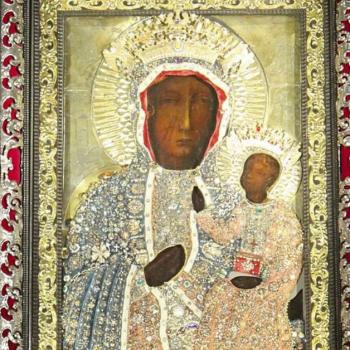
Our Lady of Częstochowa, Part 1 - What...

News & Politics
Kamala the Prosecutor vs. Trump the Felon

News & Politics
Psychedelic Christians: Magic Mushrooms and Mystics

News & Politics
Israel's Ecocide Against Palestine
TRENDING AT PATHEOS Politics and Religion

Our Lady of Częstochowa, Part 1 - What...
Poland's most visited shrine houses the Black Madonna of Poland part of...

Time Unbounded and the Lie of Temporality
To understand the present as present and history as history remains not...
view all Politics and Religion blogs
What Are Your Thoughts?leave a comment
Ad-Free & Subscriber Log-In Subscription Support
- About Us
- 2026 Calendar
- Videos
- Podcasts
- Library of World Religions
- Faith In Media Tracker
- Advertise With Us
- Write for Us
- Privacy Policy
- Terms of Service
- Do Not Sell My Data
- Contact Us
- Radiant Digital
- Manage Newsletter Subscriptions
- Unsubscribe From Notifications
- Sitemap
Copyright 2008-2026, Patheos. All rights reserved.
Subscription Support Ad-Free & Subscriber Log-In
Follow Patheos