
BuddhistCatholicContemplativeEvangelicalGeneral ChristianHinduJewishLatter-day SaintMuslimNew VisionsProgressive Christian
Beliefs
- Buddhist
- Catholic
- Contemplative
- Evangelical
- General Christian
- Hindu
- Jewish
- Latter-day Saint
- More Voices
- Muslim
- New Visions
- Pagan
- Progressive Christian
Topics
- Religion News
- Food and Religion
- Sports and Religion
- Religious Art
- Religious Music and Entertainment
- Religious Events
- History and Religion
- Style and Religion
- Politics and Religion
- Women in Religion
- Recreation Outdoors and Religion
- Business Finance and Religion
- Careers Workplace and Religion
- Education and Religion
- Family Parenting and Religion
- Health Fitness and Religion
- Home and Religion
- Relationships and Religion
- Technology and Religion
- Travel and Religion
Columnists
- Buddhist Columnists
- Business Finance and Religion Columnists
- Careers Workplace and Religion Columnists
- Catholic Columnists
- Contemplative Columnists
- Education and Religion Columnists
- Evangelists Columnists
- Family Parenting and Religion Columnists
- General Christian Columnists
- Health Fitness and Religion Columnists
- Hindu Columnists
- History and Religion Columnists
- Home and Religion Columnists
- Jewish Columnists
- More Voices Columnists
- Latter Day Columnists
- Muslim Columnists
- New Visions Columnists
- Nonreligious Columnists
- Pagan Columnists
- Politics and Religion Columnists
- Progressive Columnists
- Recreation Outdoors and Religion Columnists
- Relationships and Religion Columnists
- Religion News Columnists
- Religious Art Columnists
- Religious Events Columnists
- Religious Music and Entertainment Columnists
- Sports and Religion Columnists
- Style and Religion Columnists
- Technology and Religion Columnists
- Travel and Religion Columnists
- Women in Religion Columnists
Resource Library
- 2026 Calendar
- Library of World Religions
- The 100 Most Holy Places on Earth
- Patheos Answers
- Podcasts
- Videos
- Faith Leaders Database
- Anglican Episcopalian
- Bahai
- Baptist
- Buddhism
- Christianity
- Confucianism
- Eastern Orthodoxy
- Hinduism
- Holiness and Pentecostal
- ISKCON
- Islam
- Judaism
- Lutheran
- Methodist
- The Church of Jesus Christ of Latter-day Saints
- New Age
- Paganism
- Presbytarian and Reformed
- Protestantism
- Religion Behind the Scenes
- Roman Catholic
- Scientology
- Shia Islam
- Sikhism
- Sufism
- Sunni Islam
- Taoism
- Zen
- See all religions
Research Tools
 Ad-Free & Subscriber Log-In Subscription Support
Ad-Free & Subscriber Log-In Subscription Support
Follow Patheos 

- Trending:
- Forgiveness
- |
- Marriage
- |
- Consciousness
- |
- Death Penalty
- |
- Election
- |
- Halloween

- Home
- General Christian
- Politics and Religion
- The King James Bible and the Problem of Translation
The King James Bible and the Problem of Translation
Last updated on: July 7, 2024 at 9:34 pm by Daniel Jean Perrier
The King James Bible and the Problem of Translation 2024-07-07T21:34:52-04:00 Daniel Jean Perrier
Patheos Explore the world's faith through different perspectives on religion and spirituality! Patheos has the views of the prevalent religions and spiritualities of the world.
Y’all, I hate the King James Bible so much but I figured instead of ranting about my unending distaste for that translation we could stay a little more educational. The KJV can tell us a lot about translating ancient texts and what it means for us readers of the translation.

Please, please get a better Bible. Photo by John-Mark Smith/Pexels.com
Who’s Bible?
King James’s, of course! Assuming you aren’t a monarchist this might raise a red flag when you consider it longer. But why did he do it?
In 1567, Mary Queen of Scots was forced to abdicate the Scottish throne, leaving behind one-year-old James. In England, her cousin Elizabeth I, daughter of Henry VIII and Anne Boleyn reigned. Mary would flee to England and her cousin, who would not help her but instead have her imprisoned.
England was having an interesting time with its Christians at the time. As many Catholics saw Henry VIII’s marriage to Anne Bolyn as invalid, they saw his daughter Elizabeth I’s eventual reign as illegitimate. English Catholics who sought to put Mary on the throne were able to correspond with her and plan an escape. When the plot to escape was uncovered, Elizabeth sentenced her to execution.
When Elizabeth died, James became King of England.
A group of Puritans stopped James on his way to England for his coronation, presented him with a list of grievances, and demanded reforms with signatures from about 10% of England’s clergy. In response, he would call a conference that began and ended with him giving in to no demands.
However, one suggestion missing from the petition but made by one of the Puritan representatives that King James would follow through on is the commissioning of a new translation. With multiple different Christian groups in the country, a new translation could serve to unite the groups under the influence of a centralized state religion.
Perhaps most important to James would have been the opportunity to replace the popular Geneva Bible. Marginal notes in the Bible threatened James’s rule and authority.
The rules of translation
James brought together 47 scholars and issued a set of rules, notably one against the inclusion of marginal notes beyond the explanation of Greek and Hebrew words.
A more useful rule was that the translators use the familiar forms of Biblical names rather than more accurate Hebrew, and to translate to popular speech. Phrases that may be opaque to modern readers can be clearer to the illiterate public hearing the verses read.
Ultimately, the scholars at work knew the Bible would need to be approved by a ladder of authority ending in the King. By necessity choices in translation would be made with the awareness that those in power would review those choices.
If anything that might question James’s authority made it through previous review, James would always have the final say. The best intentions of the translators would never be able to make it past a review that deemed it threatening to the status quo.
The project of modern translation
The KJV was accepted by many English Catholics until it and the Church-approved Douia-Reimes were supplanted by the Jerusalem Bible in 1966. An updated version of the KJV from 1982 is the commonly used form of the KJV. Since then, new translations have been done and popularized. Two major ones are the NIV and the NRSV.
When translating ancient texts, translators come across words that can be translated in multiple ways and grammar that can’t be matched by the target language. Translators must choose between translations that may relay different meanings.
There are two major strategies translators can use. The first, “word for word”, attempts to match the original language as closely as possible with less regard for the conventions of the target language or clarity to modern readers. The other, “phrase for phrase”, focuses on relaying the larger idea faithfully while communicating the meaning naturally in the target language.
Most translations are a balance of the two. The NSRVue updates the NSRV with attempts to remove cultural assumptions that made their way into the translation. The NSRV is a translation leaning toward the precision of word-for-word translations. For example, the Greek ‘adelphoi’ can be translated to brothers or brothers and sisters depending on context. A patriarchal society leans toward the “brothers” translation, updated based on context to “brothers and sisters.”
This example also contradicts the idea that this is the “woke” Bible. LGBTQ+ advocates such as myself might prefer “siblings”. That choice might be accurate in spirit but less literally accurate to the Greek. The original is not a gender-neutral term but rather a term that changes based on binary gender.
How to choose a translation
Ultimately, it is up to what you are looking for in a translation. You can ask yourself a couple of questions while assessing your options:
- Does the translation use unknown preferences for verses you care about? For instance, if you know you disagree with the use of “homosexual in Corinthians (?), check the translation of that verse.
- Do aesthetics matter? One argument in favor of the KJV is the weight and literary quality the translation can convey to modern readers.
- What are you using this for? You may want to choose a new translation that seeks extreme fidelity for certain academic purposes. On the other hand, in practice, you may prefer a translation common to a denomination you belong to.
Ultimately, to thoughtfully choose a translation, you must understand what you seek and educate yourself on how why, and by whom a translation has been made.
General Christian
Catholic
History and Religion

About Daniel Jean Perrier
Daniel Jean Perrier (he/xe/they) is an independent scholar of religion and an author of horror fiction. He received his Master of Theological Studies from Harvard Divinity School in 2019. During his time in the graduate program, his focus was religion, ethics, and politics. You can read more about the author here.
Previous Post

November 26, 2023
Advent Wreaths, Thematic Practice and Colorful Outfits
Next Post

December 23, 2023 The Light of the World in the Shadow of Empire
Recent Comments
"TL;DROur money and banking system is both fake and evil."
"insightful and well-researched, as always. thank you for taking the time to put this together."
Israel’s Ecocide Against Palestine
"The KJV has never been popular with Catholics. It is a Protestant Bible with Protestant ..."
The King James Bible and the ..."
"Jesus spoke of them as TWO commandments with the second subject to the first in ..."
Loving Your Neighbor, Compassion and Community
Browse Our Archives
Select a Category Astrology Holidays LGBTQIA+ Saints Uncategorized
Select a Month May 2026 January 2026 December 2025 June 2025 March 2025 December 2024 August 2024 July 2024 June 2024 January 2024 December 2023 November 2023
Follow Us!
TAKE THE
Religious Wisdom Quiz
Who played cymbals in Temple worship?
Select your answer to see how you score.
David Solomon Moses Asaph
Related posts from Patchwork Practice
News & Politics
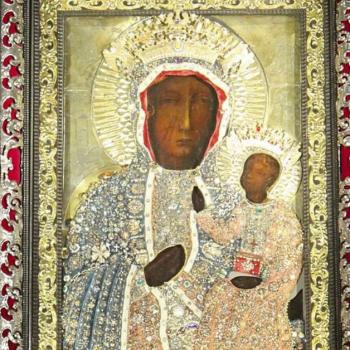
Our Lady of Częstochowa, Part 1 - What...

News & Politics

News & Politics
Kamala the Prosecutor vs. Trump the Felon

News & Politics
Psychedelic Christians: Magic Mushrooms and Mystics
TRENDING AT PATHEOS Politics and Religion
Our Lady of Częstochowa, Part 1 - What...
Poland's most visited shrine houses the Black Madonna of Poland part of...

Time Unbounded and the Lie of Temporality
To understand the present as present and history as history remains not...
view all Politics and Religion blogs
What Are Your Thoughts?leave a comment
Ad-Free & Subscriber Log-In Subscription Support
- About Us
- 2026 Calendar
- Videos
- Podcasts
- Library of World Religions
- Faith In Media Tracker
- Advertise With Us
- Write for Us
- Privacy Policy
- Terms of Service
- Do Not Sell My Data
- Contact Us
- Radiant Digital
- Manage Newsletter Subscriptions
- Unsubscribe From Notifications
- Sitemap
Copyright 2008-2026, Patheos. All rights reserved.
Subscription Support Ad-Free & Subscriber Log-In
Follow Patheos