
BuddhistCatholicContemplativeEvangelicalGeneral ChristianHinduJewishLatter-day SaintMuslimNew VisionsProgressive Christian
Beliefs
- Buddhist
- Catholic
- Contemplative
- Evangelical
- General Christian
- Hindu
- Jewish
- Latter-day Saint
- More Voices
- Muslim
- New Visions
- Pagan
- Progressive Christian
Topics
- Religion News
- Food and Religion
- Sports and Religion
- Religious Art
- Religious Music and Entertainment
- Religious Events
- History and Religion
- Style and Religion
- Politics and Religion
- Women in Religion
- Recreation Outdoors and Religion
- Business Finance and Religion
- Careers Workplace and Religion
- Education and Religion
- Family Parenting and Religion
- Health Fitness and Religion
- Home and Religion
- Relationships and Religion
- Technology and Religion
- Travel and Religion
Columnists
- Buddhist Columnists
- Business Finance and Religion Columnists
- Careers Workplace and Religion Columnists
- Catholic Columnists
- Contemplative Columnists
- Education and Religion Columnists
- Evangelists Columnists
- Family Parenting and Religion Columnists
- General Christian Columnists
- Health Fitness and Religion Columnists
- Hindu Columnists
- History and Religion Columnists
- Home and Religion Columnists
- Jewish Columnists
- More Voices Columnists
- Latter Day Columnists
- Muslim Columnists
- New Visions Columnists
- Nonreligious Columnists
- Pagan Columnists
- Politics and Religion Columnists
- Progressive Columnists
- Recreation Outdoors and Religion Columnists
- Relationships and Religion Columnists
- Religion News Columnists
- Religious Art Columnists
- Religious Events Columnists
- Religious Music and Entertainment Columnists
- Sports and Religion Columnists
- Style and Religion Columnists
- Technology and Religion Columnists
- Travel and Religion Columnists
- Women in Religion Columnists
Resource Library
- 2026 Calendar
- Library of World Religions
- The 100 Most Holy Places on Earth
- Patheos Answers
- Podcasts
- Videos
- Faith Leaders Database
- Anglican Episcopalian
- Bahai
- Baptist
- Buddhism
- Christianity
- Confucianism
- Eastern Orthodoxy
- Hinduism
- Holiness and Pentecostal
- ISKCON
- Islam
- Judaism
- Lutheran
- Methodist
- The Church of Jesus Christ of Latter-day Saints
- New Age
- Paganism
- Presbytarian and Reformed
- Protestantism
- Religion Behind the Scenes
- Roman Catholic
- Scientology
- Shia Islam
- Sikhism
- Sufism
- Sunni Islam
- Taoism
- Zen
- See all religions
Research Tools
 Ad-Free & Subscriber Log-In Subscription Support
Ad-Free & Subscriber Log-In Subscription Support
Follow Patheos 

- Trending:
- Forgiveness
- |
- Marriage
- |
- Consciousness
- |
- Death Penalty
- |
- Election
- |
- Halloween

- Home
- Progressive Christian
- Politics and Religion
- Loving Your Neighbor, Compassion and Community
Loving Your Neighbor, Compassion and Community
Last updated on: December 12, 2023 at 3:53 pm by Daniel Jean Perrier
Loving Your Neighbor, Compassion and Community 2023-12-12T15:53:22-05:00 Daniel Jean Perrier
Patheos Explore the world's faith through different perspectives on religion and spirituality! Patheos has the views of the prevalent religions and spiritualities of the world.

Image courtesy of Anna Shvets/Pexels.com
“Love your neighbor as yourself” is a common quote even among the non-Christian or non-religious, the biblical version of “treat others as you would like to be treated”. Do those things really mean the same thing? Maybe on the surface. But the teachings of Jesus call us to deeper, more radical action, and taking this understanding for granted would be a mistake.
Which commandment is first of all?
The commandment to “love your neighbor as yourself appears first in Mark 12:28-31. A scribe questions Jesus: “Which commandment is first of all?”
The answer? “Hear, O Israel: The Lord our God, the Lord is one; you shall love the Lord your God with all your heart, and with all your soul, and with all your mind, and with all your strength.”
Not the quote we are talking about, though. Instead, Jesus adds a bonus: “The second is this, ‘You shall love your neighbor as yourself.’ There is no commandment other than these.”
If we take at face value this answer as a response to the question, which one commandment, perhaps “first” and “second” are flags rather than hierarchy? Are we to love both our neighbor and ourselves as we love God? With all our heart, all our soul, all our mind, all our strength? If not, we and our neighbor are second only to God, and there is no hierarchy there except, perhaps, an understanding that it may be easier to love ourselves than others.
Not sure we all agree on that, but maybe Jesus is being a little aspirational for us. Maybe, even, letting us know how we ought to feel about ourselves.
Either way, Jesus lets us know that our love for ourselves and our love for others are tied up in each other, and tied up in each other as a divine mandate. It is no mistake; the love—and all it leads us to do—is built on our ability to do both. The mandate is antithetical to individualism. It is a demand for self-compassion and community care. To love a neighbor fully, one must love oneself fully.
Luke and the Good Samaritan
Mark is not the only place we find the commandment to love our neighbor as ourselves. We can find it too from Luke. In Luke 10:25-28, a lawyer asks “What must I do to inherit eternal life?” Jesus asks what is written in the law, and the man responds with the same answer attributed to Jesus in Mark: “You shall love the Lord your God with all your heart, and all your soul, and with all your strength, and with all your mind; and your neighbor as yourself.”
In this case, the love of God and the love of the neighbor are not separated as they are in Mark. The implied hierarchy of first, love God, and second, love your neighbor has disappeared in this version of the story. Luke follows what Mark’s Jesus declares with authority with a parable, the Jesus of this gospel elaborating on what this looks like in action.
The lawyer asks, “And who is my neighbor?” In the following verses, Jesus tells the Parable of the Good Samaritan. A man heading from Jerusalem to Jericho is attacked, stripped, and beaten by robbers. a priest and a Levite pass by the man before a Samaritan finds him. The Samaritan cares for the man’s wounds, carries him to an inn, and pays the innkeeper to take care of the man as well as promising to repay any further expenses.
Who are our neighbors?
The Samaritan takes concrete steps to care for the immediate harm and to continue to care for the man. This includes physical labor and financial assistance, two days’ pay with an offer for more.
This is particularly notable because Samaritans were despised by the Judeans of the time. It is these foreigners, foreigners that the audience has a particular disgust for, that Jesus signals are their neighbors.
And not only this, but the one being neighborly is of that abhorred class. The parable is not an example of someone unexpected offering care. It is someone who has likely received poor treatment repaying the world with kindness. The Good Samaritan calls us to disrupt and expand our definition of neighbor and is antithetical to systems of othering.
When Jesus asks the lawyer which man acted as a neighbor to the injured man, the lawyer answers, “The one who showed him mercy.” Jesus responds, “Go and do likewise.” This model of neighboring is built on radically expansive compassion.
We kill our own compassion and our capacity for true community with ourselves and others when we give in to tribalism, turn away from violence, and invest in individualistic systems of thinking. Communities that seek self-isolation do not strengthen or protect their members but become victims to the self-destruction of their own humanity.
Self-love, self-compassion
It is not enough to build our capacity to love others. Jesus tells us to love others “as ourselves”. If we assume this doesn’t mean “hate other people if you hate yourself”, then the implication is, of course, that we love ourselves. Self-love and self-compassion that look like the Good Samaritan mean real care.
Most research on self-compassion divides it into three elements: self-kindness, common humanity, and mindfulness. Spending money on candles and lotion is not enough. Caring for one’s body, mind, and soul is integral. Self-compassion builds resilience, a key part of a person’s ability to thrive after trauma. They are critical armor against shame.
Trauma is a process of self-othering and our institutional traumas of being othered become reactivated by our continued self-othering. We are consistently triggering and reinforcing the narrative of otherness and unbelonging. We view ourselves through the lens of disgust applied to cultural out-groups. In doing so, we validate our own existence as outsiders.
Seeking our neighbors
Those of us with social privileges experience more access to mental healthcare. We also have more access to other quality-of-life factors that improve our ability to manage our own mental health. If community is built on self-compassion, then to bring others into community, we must bring them into compassion. We model self-compassion when we offer it to ourselves and when we offer compassion to others.
When we see others, and we offer them care, we tell them that they are worthy of care. Many people have heard the opposite time and time again. It is necessary to put in work to recognize their humanity time and time again.
Black and trans folks and folks at the intersection experience a particular lack of access to effective mental healthcare. These communities face discrimination in mental health settings, cultural outlooks on mental healthcare, and lack of insurance as major barriers. When black and trans individuals access mental healthcare, they often feel their therapists do not understand them and their needs.
“Go and do likewise,” is a directive. It is active, it is sought. To create community, we must create the conditions for community. That means building our capacity for compassion and self-compassion, seeking opportunities to offer care, and building the mental wellness of others so we can all enter into full community.
Progressive Christian
Catholic

About Daniel Jean Perrier
Daniel Jean Perrier (he/xe/they) is an independent scholar of religion and an author of horror fiction. He received his Master of Theological Studies from Harvard Divinity School in 2019. During his time in the graduate program, his focus was religion, ethics, and politics. You can read more about the author here.
Previous Post

May 16, 2026
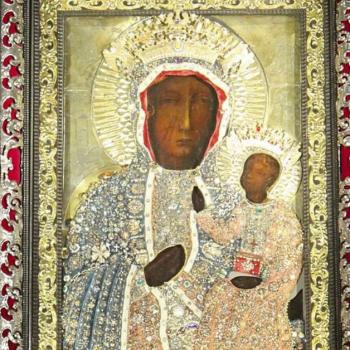
Our Lady of Częstochowa, Part 1 - What is a Black Madonna?
Next Post

November 22, 2023 On Being a Gemini in the Trump Era
Recent Comments
"TL;DROur money and banking system is both fake and evil."
"insightful and well-researched, as always. thank you for taking the time to put this together."
Israel’s Ecocide Against Palestine
"The KJV has never been popular with Catholics. It is a Protestant Bible with Protestant ..."
The King James Bible and the ..."
"Jesus spoke of them as TWO commandments with the second subject to the first in ..."
Loving Your Neighbor, Compassion and Community
Browse Our Archives
Select a Category Astrology Holidays LGBTQIA+ Saints Uncategorized
Select a Month May 2026 January 2026 December 2025 June 2025 March 2025 December 2024 August 2024 July 2024 June 2024 January 2024 December 2023 November 2023
Follow Us!
TAKE THE
Religious Wisdom Quiz
Who said, "Am I not sending you?"
Select your answer to see how you score.
Elijah Jesus Moses God
Related posts from Patchwork Practice
News & Politics
Our Lady of Częstochowa, Part 1 - What...

News & Politics

News & Politics
Giving Tuesday: An Opportunity to Reflect

News & Politics
Kamala the Prosecutor vs. Trump the Felon
TRENDING AT PATHEOS Politics and Religion
Our Lady of Częstochowa, Part 1 - What...
Poland's most visited shrine houses the Black Madonna of Poland part of...

Time Unbounded and the Lie of Temporality
To understand the present as present and history as history remains not...
view all Politics and Religion blogs
What Are Your Thoughts?leave a comment
Ad-Free & Subscriber Log-In Subscription Support
- About Us
- 2026 Calendar
- Videos
- Podcasts
- Library of World Religions
- Faith In Media Tracker
- Advertise With Us
- Write for Us
- Privacy Policy
- Terms of Service
- Do Not Sell My Data
- Contact Us
- Radiant Digital
- Manage Newsletter Subscriptions
- Unsubscribe From Notifications
- Sitemap
Copyright 2008-2026, Patheos. All rights reserved.
Subscription Support Ad-Free & Subscriber Log-In
Follow Patheos