
BuddhistCatholicContemplativeEvangelicalGeneral ChristianHinduJewishLatter-day SaintMuslimNew VisionsProgressive Christian
Beliefs
- Buddhist
- Catholic
- Contemplative
- Evangelical
- General Christian
- Hindu
- Jewish
- Latter-day Saint
- More Voices
- Muslim
- New Visions
- Pagan
- Progressive Christian
Topics
- Religion News
- Food and Religion
- Sports and Religion
- Religious Art
- Religious Music and Entertainment
- Religious Events
- History and Religion
- Style and Religion
- Politics and Religion
- Women in Religion
- Recreation Outdoors and Religion
- Business Finance and Religion
- Careers Workplace and Religion
- Education and Religion
- Family Parenting and Religion
- Health Fitness and Religion
- Home and Religion
- Relationships and Religion
- Technology and Religion
- Travel and Religion
Columnists
- Buddhist Columnists
- Business Finance and Religion Columnists
- Careers Workplace and Religion Columnists
- Catholic Columnists
- Contemplative Columnists
- Education and Religion Columnists
- Evangelists Columnists
- Family Parenting and Religion Columnists
- General Christian Columnists
- Health Fitness and Religion Columnists
- Hindu Columnists
- History and Religion Columnists
- Home and Religion Columnists
- Jewish Columnists
- More Voices Columnists
- Latter Day Columnists
- Muslim Columnists
- New Visions Columnists
- Nonreligious Columnists
- Pagan Columnists
- Politics and Religion Columnists
- Progressive Columnists
- Recreation Outdoors and Religion Columnists
- Relationships and Religion Columnists
- Religion News Columnists
- Religious Art Columnists
- Religious Events Columnists
- Religious Music and Entertainment Columnists
- Sports and Religion Columnists
- Style and Religion Columnists
- Technology and Religion Columnists
- Travel and Religion Columnists
- Women in Religion Columnists
Resource Library
- 2026 Calendar
- Library of World Religions
- The 100 Most Holy Places on Earth
- Patheos Answers
- Podcasts
- Videos
- Faith Leaders Database
- Anglican Episcopalian
- Bahai
- Baptist
- Buddhism
- Christianity
- Confucianism
- Eastern Orthodoxy
- Hinduism
- Holiness and Pentecostal
- ISKCON
- Islam
- Judaism
- Lutheran
- Methodist
- The Church of Jesus Christ of Latter-day Saints
- New Age
- Paganism
- Presbytarian and Reformed
- Protestantism
- Religion Behind the Scenes
- Roman Catholic
- Scientology
- Shia Islam
- Sikhism
- Sufism
- Sunni Islam
- Taoism
- Zen
- See all religions
Research Tools
 Ad-Free & Subscriber Log-In Subscription Support
Ad-Free & Subscriber Log-In Subscription Support
Follow Patheos 

- Trending:
- Forgiveness
- |
- Marriage
- |
- Consciousness
- |
- Death Penalty
- |
- Election
- |
- Halloween

- Home
- Progressive Christian
- Religion News
- The Unacknowledged Reason for Putin’s War
The Unacknowledged Reason for Putin’s War
Last updated on: March 23, 2022 at 7:09 am by Tim Suttle
The Unacknowledged Reason for Putin’s War 2022-03-23T07:09:55-06:00 Tim Suttle
Patheos Explore the world's faith through different perspectives on religion and spirituality! Patheos has the views of the prevalent religions and spiritualities of the world.
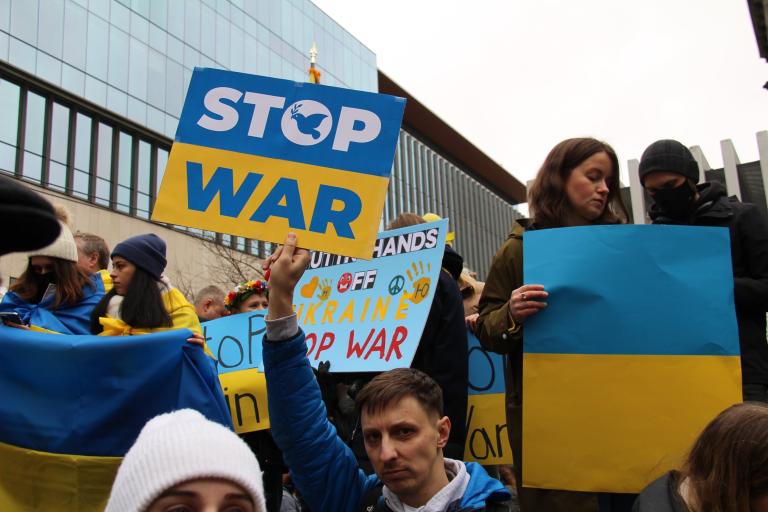
Sima Ghaffarzadeh – pexels – COO
I don’t know how many pundits I’ve heard as they attempt to climb inside Putin’s head to find some rationale for his murderous attack on Ukraine, but the number is high. In every case I end up talking back to them, trying to convince them that history, ambition, and personal grievance barely scratch the surface of Putin’s true motivation, which is, in my opinion, much simpler, much more basic than any of the experts surmise. Putin’s motivation has to do with the uncanny relationship between human desire and authoritarian power.
There are peculiarities with the explanation I’m about to offer. First, if I’m right, then Vladimir Putin actually has no idea (no personal awareness of), exactly why he attacked Ukraine. No matter how many rambling speeches he gives outlining his conscious rationale, his true reasons are unconscious, and by definition they must remain unconscious. Second, unless you know some psychoanalytic theory, you’ll be tempted to see my explanation as another misguided attempt to climb inside Putin’s head. It’s not. Inside Putin’s head is the last place we should look to find an explanation of his attack on Ukraine.
The Role of Unconscious Enjoyment
Where we should look is to a concept known as jouissance, which was first named and described by French theorist Jacques Lacan. Typically translated as enjoyment, Lacan’s concept goes far beyond the plain understanding of that word. We typically think of enjoyment as pleasure, but psychological enjoyment—jouissance—involves the combination of both pleasure and pain.
The concept of jouissance helps explain the human tendency to act in ways that go against our own self-interest. The idea is that we all enjoy a little bit of self-destructive behavior. This is because psychological enjoyment always involves bumping into a limit or barrier—established for our own benefit or that of society—and then transgressing that limit in some way. Jouissance is why we still smoke cigarettes, eat at McDonald’s, or drink soda. When we drink a Coke, the sweet taste is pleasure. However, the way it burns our throat when it goes down, the fact that it doesn’t really quench our thirst, and is terrible for our bodies is what elicits psychological enjoyment, or jouissance. Nobody consciously claims to drink Coke for the way it generates belly fat and heartburn. Unconsciously, however, Coke’s downsides are a powerful source of jouissance.
Lacan was attempting to describe the complex dynamics of human desire, and our tendency to self-sabotage when we are about to achieve a goal. Often, we will (unconsciously) introduce little barriers and roadblocks that thwart our ability to possess the object of our desire. We do this because humans need something to pursue much more than we need something to possess, but we also need to hide this embarrassing reality from ourselves. We hide it in the unconscious. Consciously, we tell ourselves what we want more than anything is to possess or achieve this thing or that (the aim of our conscious desire). Unconsciously, all we really need is for desire to continue, because we find endless hours of jouissance in the chase, wrestling with the barriers real or imagined.
We can see this dynamic at work within human sexuality. In Lacanian terms: orgasm is pleasure, foreplay is enjoyment. Foreplay is pure jouissance because it is this open-ended build up of sexual desire and excitation that is both excruciating and intensely enjoyable (pleasure and pain). Orgasm is pure ecstatic pleasure, the release and rapid dissipation of desire (the diminution of excitation), which is intensely pleasurable but short-lived. Jouissance, however, can go on forever.
The problem with this—and the dilemma which fuels Putin’s actions—is that it is impossible to find enjoyment in something we already possess, because enjoyment (jouissance) always involves a limit or barrier. This is part of why we feel depressed the day after achieving an important goal or accomplishing a long pursued task. The barrier—which is the source of desire, the source of enjoyment—has been removed. We feel depressed because we are experiencing the loss of unconscious desire, and the loss of jouissance. Humans can take pleasure in what we possess, but we cannot find psychological enjoyment in what we possess. Enjoyment involves pursuit, not possession. Once we obtain the object of our desire, it can no longer function as a source of our desire, so it can no longer be a source of enjoyment (jouissance), which is what we need it to be.
Enjoying Absolute Power
What happens if the object of our desire is power, as I believe it is for Vladimir Putin? How can the authoritarian leader still derive some enjoyment (jouissance) from their power, once they have achieved complete authoritarian control? The answer is, they have to put their power at risk. Author and theorist Todd McGowan explains this dynamic in his brilliant article called “The Lust for Power and the Logic of Enjoyment,” upon which I heavily rely. McGowan writes,
“… power provides an opportunity for enjoyment only in the negative sense. When one enjoys power, one enjoys giving it up. No one just intelligently holds on to power. As power becomes secure, leaders put it at risk in wars or with actions that can only lead to failure. All leaders constantly work toward their own downfall because work in this direction is the only way to enjoy the power of leadership. When we look at the catastrophic decisions of political leaders in modern world history—Robespierre’s turn against Danton, Lincoln’s policy of appeasement with the white South, Lenin’s appointment of Stalin as General Secretary, or Hitler’s invasion of the Soviet Union, just to name a few—it becomes clear that those in power do not enjoy retaining their power. Of course, there are countless actions that leaders take to hold on to power, but there is nothing enjoyable in this. Even those leaders who retain power for life find ways to create jeopardy for their rule and themselves. The only way to enjoy power is to push it to the point where one loses it…”
This is obviously the process in which Vladimir Putin is embroiled, and the unacknowledged reason for Putin’s war. Putin has achieved absolute power in Russia, power for life, unquestioned power. For Putin, power is his possession, thus it can no longer serve as a source of enjoyment. The only way for Putin to enjoy (jouissance) his power is to risk losing it by, in the present case, engaging in an extremely risky and unpopular war in Ukraine. Putin needs to destabilize the world community enough that other leaders will begin to take actions to curb his power. Then, suddenly, he is able to enjoy his power again. Putin needs to antagonize the Russian people until they begin to protest and to make attempts to destabilize his regime and even remove him from power, because this is the only way he can continue to enjoy his power. Putin cannot live in a world in which his power is both absolute and secure, because that world offers no path to enjoyment (jouissance). Instead, he must (unconsciously) engineer a situation in which he lives in constant fear of losing power, because what he enjoys is not the power, but the limit.
Part of what this means is that nearly every pundit who attempts to climb inside Putin’s head and uncover his power-hungry rationale is missing his true motivation. The driving force behind Putin’s horrific war in Ukraine is not a desire to gain more power, but the unconscious desire to find a way to enjoy the excess of power he already has. It is this very excess of power which is causing such an obvious psychic disturbance for Putin. Rather than seeing the lust for power lurking beneath Putin’s drive to war, we should be looking for the logic of enjoyment.
Putin’s ambition to piece back together the former Soviet states, to establish his legacy, or to avenge his long list of grievances are powerful aims, but they are conscious aims, and as such they can never be a source of jouissance with regard to his power. If he achieved them all tomorrow, they would only serve as a fleeting source of pleasure. However, if I’m right, then Putin is not truly motivated by pride, ambition, or grievance. He’s being shoved around by the unconscious drive that has toppled every dictator in history: the need to find enjoyment in absolute power.
Does This Change Anything?
Let’s say I’m right about the role jouissance plays in Putin’s actions, and that even Putin himself cannot see the true reasons behind his invasion of Ukraine. What does it matter? It matters because this insight changes the way we understand the ultimate solution to the problem.
Let me put it this way: Conservative estimates say Vladimir Putin’s fortune is over $100 billion. Some insiders say it’s well over $200 billion, which puts him among the richest people in the world. But, Putin is not just incredibly rich. He has total control of Russian government and one of the world’s most powerful militaries. This puts Putin in a category unto himself, alongside czars, kings, and emperors of bygone eras. Putin can, acting alone, push the world into total chaos, world war, even nuclear holocaust, all just to service a deep-seated and unconscious need for enjoyment (jouissance) with regard to both unlimited power, and unlimited wealth.
If my diagnosis is correct, then the ultimate solution to Putin’s aggression is to change the world financial system so that nobody is ever allowed to have that much money, and the world (or at least the Russian) political system so that nobody is allowed that much power. In the short term: halt his armies, impose sanctions, arm Ukraine, freeze the accounts of the oligarchy, and pray for a popular uprising within Russia that would end Putin’s reign of terror. Longterm, however, the only answer is to change the way the world governs its financial and political systems so that never again can any single person amass absolute wealth and power. The more absolute the power and incredible the wealth, the more dangerous the stakes become in terms of unconscious enjoyment.
The problem of wealth inequality has reached a global tipping point. No longer just an unseemly disparity between haves and have-nots, wealth inequality is destabilizing the world, chiefly because of this self-destructive need to find jouissance in absolute wealth and power. It’s possible that the financial structure is actually a bigger issue than political power, although the two are always intertwined. The Koch brothers and their oil industry cronies are doing the same thing as Putin, only with fossil fuels and climate change. Why? Because there’s endless enjoyment in burning down the world, but building a better world? Where’s the jouissance in that? Billionaires like Jeff Bezos, Elon Musk, and Richard Branson are building rocket-ships because there is literally no limit to their money-making abilities on earth. They couldn’t lose money if they tried. They have to launch themselves into space to find an actual limit to enjoy. This is the world we have made for ourselves, and unless we make serious systemic changes, it’s only going to get worse.
As wealth inequality continues to escalate, we can be certain that Putin will not be the last billionaire nutter to gain full state control and try and wreck the world just to find a little enjoyment in his obscene power and fortune. The longterm solution is, in the words of Wendell Berry, that “People who own the world outright for profit will have to be stopped… by influence, by power, by us.” Normal everyday people like you and me will have to demand systemic changes from our leaders, so that wealth and power cannot concentrate in the hands of a few billionaires who want to live as gods. If we fail, the gods will continue to make us suffer.
Follow me on Twitter: @Tim_Suttle
Previous Post

December 14, 2021
What About the Real Problems that are Driving People to Deconstruct?
Next Post
April 1, 2022 Best April Fools Prank Ever & Why Pranks Are (Usually) Dumb
Browse Our Archives
Select a Category abortion corruption Donald Trump elections Empire Entertainment Ezra Klein ideology Justice Lacan politics race Sports Ta-Nehisi Coates Uncategorized
Select a Month September 2026 March 2026 September 2025 March 2025 June 2024 January 2024 December 2023 May 2023 February 2023 October 2022 April 2022 March 2022 December 2021 November 2021 October 2021 September 2021 August 2021 September 2020 July 2020 June 2020 March 2020 September 2019 July 2019 March 2019 February 2019 January 2019 November 2018 October 2018 September 2018 August 2018 July 2018 June 2018 May 2018 April 2018 March 2018 February 2018 December 2017 November 2017 October 2017 September 2017 August 2017 May 2017 April 2017 March 2017 February 2017 January 2017 December 2016 November 2016 October 2016 September 2016 July 2016 June 2016 May 2016 April 2016 March 2016 February 2016 January 2016 December 2015 November 2015 October 2015 September 2015 August 2015 July 2015 June 2015 May 2015 April 2015 March 2015 February 2015 January 2015 December 2014 November 2014 October 2014 September 2014 August 2014 July 2014 June 2014 May 2014 April 2014 March 2014 February 2014 January 2014 December 2013 November 2013 October 2013 September 2013 August 2013 July 2013 June 2013 May 2013 April 2013 March 2013 February 2013 January 2013 December 2012 November 2012 October 2012 September 2012 August 2012 July 2012 June 2012 May 2012 April 2012 March 2012 February 2012 January 2012 December 2011 November 2011 October 2011 September 2011 August 2011 July 2011 June 2011 May 2011 April 2011 March 2011 February 2011 January 2011 August 2010 July 2010 May 2010 April 2010 March 2010 February 2010 January 2010 December 2009 September 2009 August 2009 July 2009 June 2009 May 2009 April 2009 February 2009 January 2009 December 2008 October 2008 September 2008 August 2008 July 2008 June 2008 May 2008 April 2008 March 2008 February 2008 January 2008 November 2007 October 2007 September 2007 August 2007 July 2007 June 2007 May 2007 April 2007 March 2007 February 2007 January 2007 December 2006 October 2006 September 2006 August 2006 July 2006 June 2006 May 2006 April 2006 December 2004 November 2004 October 2004 September 2004 August 2004
Follow Us!
TAKE THE
Religious Wisdom Quiz
What two things does Paul say about those who preach a different gospel?
Select your answer to see how you score.
They are false teachers They have fallen from grace Let them be under God's condemnation They will face judgment
Related posts from Paperback Theology

Binging Trump: Our Self-Destructive Addiction

My 25 Favorite Biographies from the Past Few...
Wendell Berry's Greatest Advice

TRENDING AT PATHEOS Progressive Christian

What Being a Modern-Day Apostle Means to Me
In my last column, I discussed the ins and outs of modern-day...

Did Ancient China Once Worship the God of...
Across human history, a common thread weaves through the origins of the...

Love Your Neighbor – Including Earth-Kin: Lev. 19,...
God’s command to love your neighbor means acting in an ethical and...

Lead a Church Study of “Jesus and Lao...
Guest writer Jack Thomas (The Irreverent Reverend) reflects on leading his church...

Pastoral Wisdom for Responding to Sermon Pushback
Getting sermon pushback on your social justice sermon? Learn practical, Proverbs-based strategies...

Principles for Understanding the Apostolic Ministry Today
Whenever people discover that my formal ministry title is "apostle," as in...
view all Progressive Christian blogs
Ad-Free & Subscriber Log-In Subscription Support
- About Us
- 2026 Calendar
- Videos
- Podcasts
- Library of World Religions
- Faith In Media Tracker
- Advertise With Us
- Write for Us
- Privacy Policy
- Terms of Service
- Do Not Sell My Data
- Contact Us
- Radiant Digital
- Manage Newsletter Subscriptions
- Unsubscribe From Notifications
- Sitemap
Copyright 2008-2026, Patheos. All rights reserved.
Subscription Support Ad-Free & Subscriber Log-In
Follow Patheos