
BuddhistCatholicContemplativeEvangelicalGeneral ChristianHinduJewishLatter-day SaintMuslimNew VisionsProgressive Christian
Beliefs
- Buddhist
- Catholic
- Contemplative
- Evangelical
- General Christian
- Hindu
- Jewish
- Latter-day Saint
- More Voices
- Muslim
- New Visions
- Pagan
- Progressive Christian
Topics
- Religion News
- Food and Religion
- Sports and Religion
- Religious Art
- Religious Music and Entertainment
- Religious Events
- History and Religion
- Style and Religion
- Politics and Religion
- Women in Religion
- Recreation Outdoors and Religion
- Business Finance and Religion
- Careers Workplace and Religion
- Education and Religion
- Family Parenting and Religion
- Health Fitness and Religion
- Home and Religion
- Relationships and Religion
- Technology and Religion
- Travel and Religion
Columnists
- Buddhist Columnists
- Business Finance and Religion Columnists
- Careers Workplace and Religion Columnists
- Catholic Columnists
- Contemplative Columnists
- Education and Religion Columnists
- Evangelists Columnists
- Family Parenting and Religion Columnists
- General Christian Columnists
- Health Fitness and Religion Columnists
- Hindu Columnists
- History and Religion Columnists
- Home and Religion Columnists
- Jewish Columnists
- More Voices Columnists
- Latter Day Columnists
- Muslim Columnists
- New Visions Columnists
- Nonreligious Columnists
- Pagan Columnists
- Politics and Religion Columnists
- Progressive Columnists
- Recreation Outdoors and Religion Columnists
- Relationships and Religion Columnists
- Religion News Columnists
- Religious Art Columnists
- Religious Events Columnists
- Religious Music and Entertainment Columnists
- Sports and Religion Columnists
- Style and Religion Columnists
- Technology and Religion Columnists
- Travel and Religion Columnists
- Women in Religion Columnists
Resource Library
- 2026 Calendar
- Library of World Religions
- The 100 Most Holy Places on Earth
- Patheos Answers
- Podcasts
- Videos
- Faith Leaders Database
- Anglican Episcopalian
- Bahai
- Baptist
- Buddhism
- Christianity
- Confucianism
- Eastern Orthodoxy
- Hinduism
- Holiness and Pentecostal
- ISKCON
- Islam
- Judaism
- Lutheran
- Methodist
- The Church of Jesus Christ of Latter-day Saints
- New Age
- Paganism
- Presbytarian and Reformed
- Protestantism
- Religion Behind the Scenes
- Roman Catholic
- Scientology
- Shia Islam
- Sikhism
- Sufism
- Sunni Islam
- Taoism
- Zen
- See all religions
Research Tools
 Ad-Free & Subscriber Log-In Subscription Support
Ad-Free & Subscriber Log-In Subscription Support
Follow Patheos 

- Trending:
- Forgiveness
- |
- Marriage
- |
- Consciousness
- |
- Death Penalty
- |
- Election
- |
- Halloween

- Home
- Progressive Christian
- Religion News
- Here’s Why J.J. Abrams Won’t Blow It With The New Star Wars Film: Joseph Campbell
Here’s Why J.J. Abrams Won’t Blow It With The New Star Wars Film: Joseph Campbell
Last updated on: December 3, 2015 at 7:59 am by Tim Suttle
Here’s Why J.J. Abrams Won’t Blow It With The New Star Wars Film: Joseph Campbell 2015-12-03T07:59:25-07:00 Tim Suttle
Patheos Explore the world's faith through different perspectives on religion and spirituality! Patheos has the views of the prevalent religions and spiritualities of the world.
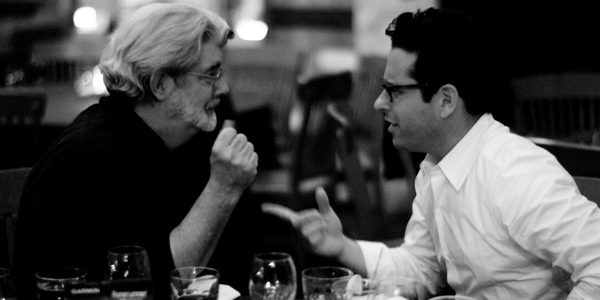 Almost all religion is concerned with two problems: the meaning of life, and the reality of death. Most of the answers will line up into two big categories. Either life has no meaning and is absurd (nihilism, the postmodern answer), or life has meaning and we can or cannot know it depending on where you end up.
These questions have occupied religion and philosophy for centuries. How do we deal with the meaning of life, and the reality of death?
One of the most important developments of the past century, in terms of answering the two big questions came from a college professor, writer, and philosopher named Joseph Campbell. You may not have heard of him, but he’s had a significant impact on culture.
George Lucas credits Joseph Campbell’s work for much of the inspiration behind Star Wars, including the structure of the narrative and even the idea of “the force”. The same is true of the Wachowski Bro’s and The Matrix, Disney’s The Lion King, and well known books like A Watership Down told stories according to Campbell’s script.
Joseph Campbell was born in 1904 in NYC, grew up in a middle class, Irish Catholic family, and was captivated with the symbols and rituals of the church. At age 7 his dad took him to see Buffalo Bill’s Wild West show at Madison Square Garden, and he became fascinated with the American Indians. He bugged his parents to take him to Museum of Natural History, got hooked, and started reading.
The kid was brilliant. He read everything there was to read on Native Americans. As a boy he had read all there was, and resorted to reading anthropological research (doctoral dissertations) for new material. He began to think about the role that myth plays in culture, and the way the stories a culture tells impact their take on the meaning of life, and the reality of death
Campbell went to prep school, then Dartmouth, and Columbia. He studied Biology and Mathematics, finally getting a degree in English, and a master’s in Medieval Literature. He went to the University of Paris to learn Old French, and to study art, literature, and aesthetics. From there he went to the University of Munich to learn Sanskrit, and to study Freud and Karl Jung. He also ran track, and for a time he was the fastest ½ miler in the world… obviously a real underachiever.
He went back to Columbia to work on his dissertation and became frustrated with the interruptions. So, he cloistered himself in a small house in Woodstock, NY and worked out a program where he could spend nine hours a day, seven days a week reading, and still remember most of what he read. He did this for five years straight—that’s over 16,000 hours of reading.
He became an expert in Native American myth, Myths of India, Aboriginal cultures, Greek Mythology, & Arthurian Legend, & Western Culture. He combined his knowledge of the myths in all the great cultures. His knowledge modern art, literature & aesthetics, combines with a serious study of modern psychology & anthropology helped him as he immersed himself in trying to understand how all these different cultures dealt with the two huge questions concerning reality: …the meaning of life & the reality of death. And he came up with a brand new hypothesis.
Campbell said that when you look at all of the Myths at work in all of the great cultures of the world, they’re really just the same story told in a 1000 different ways: The Hero’s Journey. It might be packaged differently, but in every culture it’s always the same story, & he did this scholarly research to attempt to describe the structure. Up to that point, he was really the first person to think of doing this. He coined the term monomyth; the classic myth of the hero, and he defined something like seventeen discrete movements to the Hero’s journey.
The easiest way to talk about the movements is through the original Star Wars film, because it follows the archetypal hero’s journey to a tee, and because most people know the film.
- Hero living in his ordinary world: Luke on Tatooine.
- The Call to Adventure: Luke gets this message from the droid.
- The Refusal of Adventure: he has to stay and help with the harvest.
- The Giving of a Talisman: when Obi-wan gives Luke a lightsaber
- Supernatural aid: Obi-wan saves Luke from the Sand People
- Crossing 1st Threshold: family dies, Cantina in Mos Eisley
- Belly of the whale: trash compactor
- Testing & Trials: light saber training
- Meeting of the goddess: Leia all decked out in white (re: 4 costume)
- Battle with the Dragon: Rescue Leia, Vader chasing, Obi-wan/Vader duel
- A Ritual death: Obi-wan gives his life freely to save them.
- Refusal of Return: Luke wants to stay & avenge Obi-wan.
- Magic of Flight: Luke finally gets his X-wing fighter
- Ultimate Battle: Luke’s trench run against the Death Star
- Rescue from Without: Han Solo saves Luke, shoots down Vader,
- Crossing Threshold of return: Luke turns off weapons system, uses force
- Ultimate Boon: Luke blows up the death star.
- Apotheosis (like a god): cheesy awards ceremony.
- Freedom to live: Luke can go get his Jedi training.
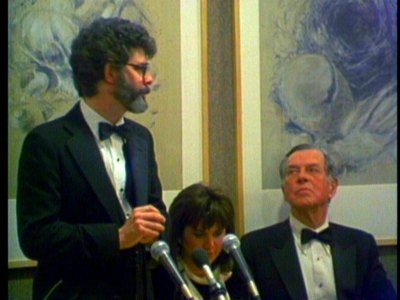
George Lucas followed Campbell’s Hero’s Journey closely. The two were actually pictured together once, you can see the photo here. Campbell actually looks a little pissed, like he’s thinking, “Where’s my royalty check, George?”
Once you know the monomyth structure you can discern it in many movies and books. For instance, in Harry Potter the talisman is the wand, crossing the first threshold is that crappy island where they spend the night and Hagrid comes to get him. The new world of Hogwarts, with trials, ritual deaths, the magic of flight… its all there. Many of the most influential books & movies of the past century follow Campbell’s pattern as well. The Hobbit, Lord of the Rings, Wizard of Oz, those are all classic hero’s journeys.
What Joseph Campbell taught: is that when the story is told well, the listener will feel a sense of beckoning. The story says, “Okay, now it’s your turn. You are the hero,” and this is why we all love Star Wars. The magic of Star Wars was in a particular formula for telling the story that calls to us, beckons us to live a hero’s tale in our own lives.
Okay, here’s why J.J. Abrams won’t blow it with the new Star Wars: The Force Awakens movie. Almost all Abrams’ work is heavily influenced by Joseph Campbell. This likely has to do with the fact that Abrahams went to college at Sarah Lawrence, which is where Joseph Campbell taught for nearly 40 years. Campbell was long gone by the time Abrams showed up, but his influence was indelible on the culture of Sarah Lawrence. Just look at Abrams’ list of credits, and start to think about them according to the Hero’s Journey script, and you can see it in nearly all of them.
Disney bought the rights to the Star Wars franchise—and Disney cranks out one hero’s journey movie after another—so they hired Abrams to do the films. Abrams is an expert at making hero’s journey films. This movie is going to be fine in part because Abrams’ films look and sound amazing, but more importantly because he’ll tell the story we want to hear—Joseph Campbell’s hero’s journey.
Abrahams went to college at Sarah Lawrence, which is where Joseph Campbell taught for nearly 40 years. Abrams’ work is heavily influenced by Joseph Campbell, and so was George Lucas’. Tons of Disney movies follow the Campbell script… it’s a perfect match. Star Wars fans will get exactly what they want from J.J. Abrams.
Campbell was a deeply flawed man, and his influence at Sarah Lawrence has been controversial. I have deep issues with the hero’s journey, because I think it’s a story based in coercion and violence. I find some resonances with the Christian narrative, but the overall story follows a trajectory that is ultimately selfish and violent. If you want to watch a talk I gave on this subject you can see it here.
Previous Post

December 2, 2015
10 Thomas Merton Sayings that Sound Just Like Yoda.
Next Post

December 7, 2015 Falwell's Fearful Conceal-Carry Response is Not Worthy of the Gospel.
Browse Our Archives
Select a Category abortion corruption Donald Trump elections Empire Entertainment Ezra Klein ideology Justice Lacan politics race Sports Ta-Nehisi Coates Uncategorized
Select a Month September 2026 March 2026 September 2025 March 2025 June 2024 January 2024 December 2023 May 2023 February 2023 October 2022 April 2022 March 2022 December 2021 November 2021 October 2021 September 2021 August 2021 September 2020 July 2020 June 2020 March 2020 September 2019 July 2019 March 2019 February 2019 January 2019 November 2018 October 2018 September 2018 August 2018 July 2018 June 2018 May 2018 April 2018 March 2018 February 2018 December 2017 November 2017 October 2017 September 2017 August 2017 May 2017 April 2017 March 2017 February 2017 January 2017 December 2016 November 2016 October 2016 September 2016 July 2016 June 2016 May 2016 April 2016 March 2016 February 2016 January 2016 December 2015 November 2015 October 2015 September 2015 August 2015 July 2015 June 2015 May 2015 April 2015 March 2015 February 2015 January 2015 December 2014 November 2014 October 2014 September 2014 August 2014 July 2014 June 2014 May 2014 April 2014 March 2014 February 2014 January 2014 December 2013 November 2013 October 2013 September 2013 August 2013 July 2013 June 2013 May 2013 April 2013 March 2013 February 2013 January 2013 December 2012 November 2012 October 2012 September 2012 August 2012 July 2012 June 2012 May 2012 April 2012 March 2012 February 2012 January 2012 December 2011 November 2011 October 2011 September 2011 August 2011 July 2011 June 2011 May 2011 April 2011 March 2011 February 2011 January 2011 August 2010 July 2010 May 2010 April 2010 March 2010 February 2010 January 2010 December 2009 September 2009 August 2009 July 2009 June 2009 May 2009 April 2009 February 2009 January 2009 December 2008 October 2008 September 2008 August 2008 July 2008 June 2008 May 2008 April 2008 March 2008 February 2008 January 2008 November 2007 October 2007 September 2007 August 2007 July 2007 June 2007 May 2007 April 2007 March 2007 February 2007 January 2007 December 2006 October 2006 September 2006 August 2006 July 2006 June 2006 May 2006 April 2006 December 2004 November 2004 October 2004 September 2004 August 2004
Follow Us!
TAKE THE
Religious Wisdom Quiz
What message did Jeremiah send to the exiles in Babylon to encourage them?
Select your answer to see how you score.
Build houses and seek the city's good Fast and do not marry Pray for Judah only Return and revolt
Related posts from Paperback Theology

Wendell Berry's Greatest Advice


The 100% Failure-Rate of Our Current Political Leadership

Artists Are the Antidote to Authoritarianism
TRENDING AT PATHEOS Progressive Christian

What Being a Modern-Day Apostle Means to Me
In my last column, I discussed the ins and outs of modern-day...

Did Ancient China Once Worship the God of...
Across human history, a common thread weaves through the origins of the...

Love Your Neighbor – Including Earth-Kin: Lev. 19,...
God’s command to love your neighbor means acting in an ethical and...

Lead a Church Study of “Jesus and Lao...
Guest writer Jack Thomas (The Irreverent Reverend) reflects on leading his church...

Pastoral Wisdom for Responding to Sermon Pushback
Getting sermon pushback on your social justice sermon? Learn practical, Proverbs-based strategies...

Principles for Understanding the Apostolic Ministry Today
Whenever people discover that my formal ministry title is "apostle," as in...
view all Progressive Christian blogs
Ad-Free & Subscriber Log-In Subscription Support
- About Us
- 2026 Calendar
- Videos
- Podcasts
- Library of World Religions
- Faith In Media Tracker
- Advertise With Us
- Write for Us
- Privacy Policy
- Terms of Service
- Do Not Sell My Data
- Contact Us
- Radiant Digital
- Manage Newsletter Subscriptions
- Unsubscribe From Notifications
- Sitemap
Copyright 2008-2026, Patheos. All rights reserved.
Subscription Support Ad-Free & Subscriber Log-In
Follow Patheos