
BuddhistCatholicContemplativeEvangelicalGeneral ChristianHinduJewishLatter-day SaintMuslimNew VisionsProgressive Christian
Beliefs
- Buddhist
- Catholic
- Contemplative
- Evangelical
- General Christian
- Hindu
- Jewish
- Latter-day Saint
- More Voices
- Muslim
- New Visions
- Pagan
- Progressive Christian
Topics
- Religion News
- Food and Religion
- Sports and Religion
- Religious Art
- Religious Music and Entertainment
- Religious Events
- History and Religion
- Style and Religion
- Politics and Religion
- Women in Religion
- Recreation Outdoors and Religion
- Business Finance and Religion
- Careers Workplace and Religion
- Education and Religion
- Family Parenting and Religion
- Health Fitness and Religion
- Home and Religion
- Relationships and Religion
- Technology and Religion
- Travel and Religion
Columnists
- Buddhist Columnists
- Business Finance and Religion Columnists
- Careers Workplace and Religion Columnists
- Catholic Columnists
- Contemplative Columnists
- Education and Religion Columnists
- Evangelists Columnists
- Family Parenting and Religion Columnists
- General Christian Columnists
- Health Fitness and Religion Columnists
- Hindu Columnists
- History and Religion Columnists
- Home and Religion Columnists
- Jewish Columnists
- More Voices Columnists
- Latter Day Columnists
- Muslim Columnists
- New Visions Columnists
- Nonreligious Columnists
- Pagan Columnists
- Politics and Religion Columnists
- Progressive Columnists
- Recreation Outdoors and Religion Columnists
- Relationships and Religion Columnists
- Religion News Columnists
- Religious Art Columnists
- Religious Events Columnists
- Religious Music and Entertainment Columnists
- Sports and Religion Columnists
- Style and Religion Columnists
- Technology and Religion Columnists
- Travel and Religion Columnists
- Women in Religion Columnists
Resource Library
- 2026 Calendar
- Library of World Religions
- The 100 Most Holy Places on Earth
- Patheos Answers
- Podcasts
- Videos
- Faith Leaders Database
- Anglican Episcopalian
- Bahai
- Baptist
- Buddhism
- Christianity
- Confucianism
- Eastern Orthodoxy
- Hinduism
- Holiness and Pentecostal
- ISKCON
- Islam
- Judaism
- Lutheran
- Methodist
- The Church of Jesus Christ of Latter-day Saints
- New Age
- Paganism
- Presbytarian and Reformed
- Protestantism
- Religion Behind the Scenes
- Roman Catholic
- Scientology
- Shia Islam
- Sikhism
- Sufism
- Sunni Islam
- Taoism
- Zen
- See all religions
Research Tools
 Ad-Free & Subscriber Log-In Subscription Support
Ad-Free & Subscriber Log-In Subscription Support
Follow Patheos 

- Trending:
- Forgiveness
- |
- Marriage
- |
- Consciousness
- |
- Death Penalty
- |
- Election
- |
- Halloween

- Home
- Progressive Christian
- Religion News
- Is Creativity a Habit?: 8 Habits of Highly Creative People
Is Creativity a Habit?: 8 Habits of Highly Creative People
Last updated on: October 8, 2015 at 7:17 am by Tim Suttle
Is Creativity a Habit?: 8 Habits of Highly Creative People 2015-10-08T07:17:47-06:00 Tim Suttle
Patheos Explore the world's faith through different perspectives on religion and spirituality! Patheos has the views of the prevalent religions and spiritualities of the world.
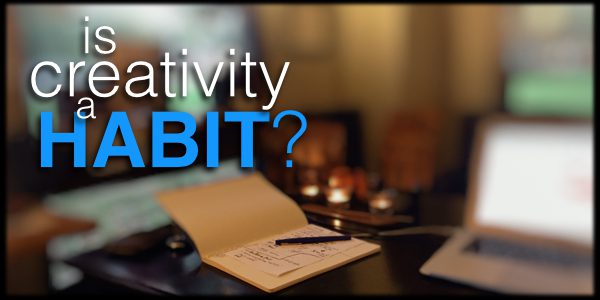 There’s an interesting article up at Fast Company by a writer named Stephanie Vozza. She typically writes in the productivity slash organizer vein, so Vozza brings that sensibility to bear on the concept of creativity. The article caught my eye because I’m prepping a sermon series dealing with art and beauty. I’ve been reading Hans Urs von Balthasar’s theological aesthetics for three straight days now. Either I’m losing my mind or Balthasar is just a tough read. Half of the time I have to translate the English translation of Balthasar into English I can understand. So, this article was the theological Snickers bar I was jonesin’ for this morning.
Is creativity a habit? I threw in my lot with Julia Cameron somewhere around 1996 when I worked through her great resource for artists, The Artist’s Way: A Spiritual Path to Higher Creativity. Cameron recommended the practice of what she called “day pages.” Other folks who have written extensively about the craft of writing have said similar things (Steven King, Anne Lamott, Anne Dillard to name a few): same time, same place, every day, sit down and write for nobody else but you. The craft of writing, or any artistic endeavor, is a muscle that must be exercised or it will atrophy.
That habitual practices are necessary to foster proficiency in any craft, creative or otherwise, is self-evident, but what about inspiration? What about the genuis and imagination required to produce a work of art that is truly beautiful? Is that kind of creativity a habit? Vozza argues that it is: “Aha moments aren’t magic, they come to people who have cultivated daily habits of approaching life differently.”
Here are the habits she highlights. You can read her full article here: “8 Habits of People who Always Have Great Ideas.”
- They look for inspiration in unexpected places.
- They make slow decisions.
- They find internal motivation.
- They start from scratch.
- They are willing to take risks.
- They are always trying new things.
- They find connections between experiences.
- They are open to magic.
Don’t let the wording of the last one scare you off. It’s actually just a way of saying that the essence of anything that might be called good news always involves the movement from word to flesh. She’s talking about a sacramental view of the world–enchantment.
I have found the combination of #2 and #6 to be of utmost importance in terms of my ability to produce something that is (hopefully somewhat) original. Ideas that are not wholly derivative take a lot of time to develop. One must go through many iterations, sketches, drafts, studies, models, and so on in order to something original. Clever happens quickly, but genius takes time. I have found that my best ideas come as I’m ruminating on one idea over the course of days or weeks. I’m scribbling down thoughts and honing in on what I really think about a certain subject. Then, somewhere along the way I bump into a seemingly unrelated idea or symbol and the two crash together like the old Resee’s commercials (you got your chocolate in my peanut butter). Creativity is about seeing connections. This really only happens when we take our time with ideas.
I would only quibble with #4 as it is, strictly speaking, totally impossible to “work from scratch.” Until the 1700s “creativity” was not a word that was used with regard to human ability. Creative types were called artisans. The term “creative” was reserved for naming the ex nihilo abilities possessed only by the divine.
Claiming that human beings can “start from scratch” is the aesthetic equivalent to the great philosophical foible of 19th Century Philosophical Liberalism, or modernity–however you want to term it. To read more about this, here’s an old post: Post Liberal Theology for Dummies.
Part of the human condition is that we are imbedded in a specific cultural milieu that we cannot escape. All artists stand on the shoulders of previous artists. All language, symbol, form, and expression is received by us. We do not generate those things, because they live in the culture. We can work with them, rearrange them, and find new and imaginative means of expressing them, but any creativity that could be called true and good must necessarily be humble in terms of the claims it makes for itself. Humans can’t do creation ex nihilo. We can only work with what was already here when we woke up in the world. Humans are much more like quilters than weavers.
This is a really interesting article & well worth your time.
Previous Post

October 6, 2015
10 Great Words You Should Know and Use - Fall 2015
Next Post

October 13, 2015 Would You Rather Live a Successful Life, or a Beautiful One?
Browse Our Archives
Select a Category abortion corruption Donald Trump elections Empire Entertainment Ezra Klein ideology Justice Lacan politics race Sports Ta-Nehisi Coates Uncategorized
Select a Month September 2026 March 2026 September 2025 March 2025 June 2024 January 2024 December 2023 May 2023 February 2023 October 2022 April 2022 March 2022 December 2021 November 2021 October 2021 September 2021 August 2021 September 2020 July 2020 June 2020 March 2020 September 2019 July 2019 March 2019 February 2019 January 2019 November 2018 October 2018 September 2018 August 2018 July 2018 June 2018 May 2018 April 2018 March 2018 February 2018 December 2017 November 2017 October 2017 September 2017 August 2017 May 2017 April 2017 March 2017 February 2017 January 2017 December 2016 November 2016 October 2016 September 2016 July 2016 June 2016 May 2016 April 2016 March 2016 February 2016 January 2016 December 2015 November 2015 October 2015 September 2015 August 2015 July 2015 June 2015 May 2015 April 2015 March 2015 February 2015 January 2015 December 2014 November 2014 October 2014 September 2014 August 2014 July 2014 June 2014 May 2014 April 2014 March 2014 February 2014 January 2014 December 2013 November 2013 October 2013 September 2013 August 2013 July 2013 June 2013 May 2013 April 2013 March 2013 February 2013 January 2013 December 2012 November 2012 October 2012 September 2012 August 2012 July 2012 June 2012 May 2012 April 2012 March 2012 February 2012 January 2012 December 2011 November 2011 October 2011 September 2011 August 2011 July 2011 June 2011 May 2011 April 2011 March 2011 February 2011 January 2011 August 2010 July 2010 May 2010 April 2010 March 2010 February 2010 January 2010 December 2009 September 2009 August 2009 July 2009 June 2009 May 2009 April 2009 February 2009 January 2009 December 2008 October 2008 September 2008 August 2008 July 2008 June 2008 May 2008 April 2008 March 2008 February 2008 January 2008 November 2007 October 2007 September 2007 August 2007 July 2007 June 2007 May 2007 April 2007 March 2007 February 2007 January 2007 December 2006 October 2006 September 2006 August 2006 July 2006 June 2006 May 2006 April 2006 December 2004 November 2004 October 2004 September 2004 August 2004
Follow Us!
TAKE THE
Religious Wisdom Quiz
What is the highest holiday in the Orthodox Christian year?
Select your answer to see how you score.
Epiphany Pentecost Pascha (Easter) Nativity
Related posts from Paperback Theology

Artists Are the Antidote to Authoritarianism

The Ash Wednesday Hangover: "Wait, I gave up...
Sermonsmith Episode 60: Tim Suttle - Conversations About...
TRENDING AT PATHEOS Progressive Christian

What Being a Modern-Day Apostle Means to Me
In my last column, I discussed the ins and outs of modern-day...

Did Ancient China Once Worship the God of...
Across human history, a common thread weaves through the origins of the...

Love Your Neighbor – Including Earth-Kin: Lev. 19,...
God’s command to love your neighbor means acting in an ethical and...

Lead a Church Study of “Jesus and Lao...
Guest writer Jack Thomas (The Irreverent Reverend) reflects on leading his church...

Pastoral Wisdom for Responding to Sermon Pushback
Getting sermon pushback on your social justice sermon? Learn practical, Proverbs-based strategies...

Principles for Understanding the Apostolic Ministry Today
Whenever people discover that my formal ministry title is "apostle," as in...
view all Progressive Christian blogs
Ad-Free & Subscriber Log-In Subscription Support
- About Us
- 2026 Calendar
- Videos
- Podcasts
- Library of World Religions
- Faith In Media Tracker
- Advertise With Us
- Write for Us
- Privacy Policy
- Terms of Service
- Do Not Sell My Data
- Contact Us
- Radiant Digital
- Manage Newsletter Subscriptions
- Unsubscribe From Notifications
- Sitemap
Copyright 2008-2026, Patheos. All rights reserved.
Subscription Support Ad-Free & Subscriber Log-In
Follow Patheos