
BuddhistCatholicContemplativeEvangelicalGeneral ChristianHinduJewishLatter-day SaintMuslimNew VisionsProgressive Christian
Beliefs
- Buddhist
- Catholic
- Contemplative
- Evangelical
- General Christian
- Hindu
- Jewish
- Latter-day Saint
- More Voices
- Muslim
- New Visions
- Pagan
- Progressive Christian
Topics
- Religion News
- Food and Religion
- Sports and Religion
- Religious Art
- Religious Music and Entertainment
- Religious Events
- History and Religion
- Style and Religion
- Politics and Religion
- Women in Religion
- Recreation Outdoors and Religion
- Business Finance and Religion
- Careers Workplace and Religion
- Education and Religion
- Family Parenting and Religion
- Health Fitness and Religion
- Home and Religion
- Relationships and Religion
- Technology and Religion
- Travel and Religion
Columnists
- Buddhist Columnists
- Business Finance and Religion Columnists
- Careers Workplace and Religion Columnists
- Catholic Columnists
- Contemplative Columnists
- Education and Religion Columnists
- Evangelists Columnists
- Family Parenting and Religion Columnists
- General Christian Columnists
- Health Fitness and Religion Columnists
- Hindu Columnists
- History and Religion Columnists
- Home and Religion Columnists
- Jewish Columnists
- More Voices Columnists
- Latter Day Columnists
- Muslim Columnists
- New Visions Columnists
- Nonreligious Columnists
- Pagan Columnists
- Politics and Religion Columnists
- Progressive Columnists
- Recreation Outdoors and Religion Columnists
- Relationships and Religion Columnists
- Religion News Columnists
- Religious Art Columnists
- Religious Events Columnists
- Religious Music and Entertainment Columnists
- Sports and Religion Columnists
- Style and Religion Columnists
- Technology and Religion Columnists
- Travel and Religion Columnists
- Women in Religion Columnists
Resource Library
- 2026 Calendar
- Library of World Religions
- The 100 Most Holy Places on Earth
- Patheos Answers
- Podcasts
- Videos
- Faith Leaders Database
- Anglican Episcopalian
- Bahai
- Baptist
- Buddhism
- Christianity
- Confucianism
- Eastern Orthodoxy
- Hinduism
- Holiness and Pentecostal
- ISKCON
- Islam
- Judaism
- Lutheran
- Methodist
- The Church of Jesus Christ of Latter-day Saints
- New Age
- Paganism
- Presbytarian and Reformed
- Protestantism
- Religion Behind the Scenes
- Roman Catholic
- Scientology
- Shia Islam
- Sikhism
- Sufism
- Sunni Islam
- Taoism
- Zen
- See all religions
Research Tools
 Ad-Free & Subscriber Log-In Subscription Support
Ad-Free & Subscriber Log-In Subscription Support
Follow Patheos 

- Trending:
- Forgiveness
- |
- Marriage
- |
- Consciousness
- |
- Death Penalty
- |
- Election
- |
- Halloween

- Home
- Progressive Christian
- Religion News
- Public Jesus: Beyond the Politics of Anxiety
Public Jesus: Beyond the Politics of Anxiety
Last updated on: November 4, 2014 at 5:30 am by Tim Suttle
Public Jesus: Beyond the Politics of Anxiety 2014-11-04T05:30:00-07:00 Tim Suttle
Patheos Explore the world's faith through different perspectives on religion and spirituality! Patheos has the views of the prevalent religions and spiritualities of the world.
Editors’ Note: This article is part of the Patheos Public Square on Politics in the Pulpit. Read other perspectives here.
Talking politics in the local church is tricky. One statement that flies in the face of a parishioner’s strong belief and that could be the end of the conversation, the end of your influence, and quite possibly the end of their involvement in your ministry. Risk seems to outweigh reward.
On the drive to school one day my eight year old son asked, “Why does Barack Obama kill babies?” I nearly choked on my coffee, and then asked him to explain. He said, “Some kids in my class say that Barak Obama wants to kill babies. What do they mean?” Second graders, their parents clearly speaking through them, are living proof that one does not instinctively understand how to have this conversation. Spend five minutes listening to the adults on CNN, Fox News, or MSNBC and you’ll realize most adults don’t understand how to have this conversation either.
__________________________________________________________
“The reason talking politics in the church is so dangerous is that we don’t know what we are talking about.”
__________________________________________________________
The reason talking politics in the church is so dangerous isn’t that politics is polarizing, although it is; nor is it that people may get angry, although they may. The reason talking politics in the church is so dangerous is that we don’t know what we are talking about. What I mean is, we do not know how to speak as Christians when addressing politics.* Allegiance to political party and ideology is handed down from parents to children, often with intense loyalties attached. Christian identity rarely runs as deep as American identity. So when we speak about politics, party and country are in the foreground and faith hardly factors in. Truly Christian political speech is rare.
In American politics it seems clear that the end in mind is no longer to govern well, but to kill the opposition and win at all costs. Political parties foster our worst fears, attempting to use them to turn us against the other side. Whether it’s the conservatives on Fox News, the liberals on MSNBC, or the political ads on any channel, we will hear demonization, embellished stories, and fantastic accusation. We will be told what to fear, and who to blame.
The result an atmosphere of chronic anxiety. If the politicians can keep everyone stirred up, fearful, and worried, then they are able to create a highly reactive atmosphere in which people act out of anxiety rather than hope. American political leadership today is—point blank—about leveraging chronic anxiety for the sake of gaining power.
__________________________________________________________
“American political leadership today is—point blank—about leveraging chronic anxiety for the sake of gaining power.”
__________________________________________________________
Christians refuse to live out of anxiety because we are a people of hope. Fostering fear and anxiety in order to gain political power represents a cynicism which is simply not worthy of the Christian. When Christians decide to speak into the political arena, our voice must have the sound of hope, and our tone the tenor of peace, neither of which can materialize if we are trapped in the cycle of anxiety.
In his book A Failure of Nerve, Edwin Friedman described the impact of chronic anxiety upon a society. Over time, the society will produce in its leaders the inability to differentiate between themselves and the anxiety of the system. The leaders not only participate in the anxiety of the system, they actually perpetuate and exacerbate the anxiety through over-reacting, blaming, chasing quick fixes, or by embracing an uncompromising idealism (p.91). The reason our political discourse is so dominated by fear and blaming in American culture is that we have continually produced and chosen leaders who come to power by riding the wave of chronic anxiety.
__________________________________________________________
“The reason our political discourse is so dominated by fear and blaming is that we have continually and chosen leaders who come to power by riding the wave of chronic anxiety.”
__________________________________________________________
Friedman says that a healthy leader is able to name the anxiety of the system, while refusing to participate in it. Through healthy self-differentiation the leader can become the non-anxious presence necessary for growth. True leadership does not perpetuate anxiety, but names it accurately while refusing to foment it, or exploit it for power and control. The leader does not separate from those caught up in chronic anxiety (sectarianism), but enters fully into community life and becomes a transforming presence.
Christians who have become fully identified with one specific political party or the other have given themselves over to the anxieties of that sect—that goes for the left or the right. Christian political speech which exploits fear and anxiety in order to gain political influence has ceased to be Christian and is merely political. When a Christian unites with a political party agenda, they do so in contradiction to their baptism.
That the Christian rejects both the hegemony and anxiety of political parties should not be too surprising. Party hegemony fails to control us because our future is already committed to the Lordship of Jesus Christ as expressed through church. Party anxiety fails to grip us because Christians believe the world’s future is sure. Our common life bears witness to the eschatological triumph of the cross. We live in light of a reality that comes to us from the future of God, not from present anxieties or past failures. Party success is irrelevant. Kingdom success is everything. Your vote is not the most precious thing you have to give, your life is.
__________________________________________________________
“Your vote is not the most precious thing you have to give, your life is.”
__________________________________________________________
The Christ follower must become the non-anxious presence, particularly in an election year. While the politicians peddle fear, Christians must name the anxiety and reject it. We can say with confidence that we are not surprised to learn that the state cannot make us safe and happy. Only God can do that. We are not afraid to learn the state cannot give us freedom, justice, and peace. Only God can do that – and God will. Politicians and parties operate under the misguided belief that things will be fine if they can run the world. It is simply untrue.
Christians should readily confess we do not know how best to run the world. The problems we face – and we face real problems – are the result of our misguided attempts to run the world without reference to God. What Christians have not yet learned how to do is to refuse to let the problems of the world cause us anxiety. Not that we should hide our heads in the sand, or gloss over the brokenness. Christians must tell the truth about the darkness. Yet, when the rest of the world predicts the rise of darkness, desperation, meaninglessness, death, destruction, catastrophe, anxiety, pain, fear, blame, and so on… we speak of hope and resurrection. We speak of new life breaking into the present from the God-side of eternity. We dare to believe that living in light of the resurrection and speaking of hope will somehow change our present reality.
In the end, the particular agenda of either political party is not the fundamental issue for the Christian. There are pieces of each agenda we should resonate with, and pieces we should resist. The fundamental issue is our sole allegiance to Christ and his church. If American politics exists on a continuum liberal Democrats on the left, conservative Republicans on the right, moderates of both parties in the middle, then our confession is that Jesus transcends them all. Jesus exists on a plane of his own. Once we have committed to the lordship of Christ, then we can speak with a truly hopeful voice about the future of God breaking into the present through the presence of Christ in his faithful people.
__________________________________________________________
“The particular agenda of either political party is not the fundamental issue for the Christian… The fundamental issue is our sole allegiance to Christ and his church.”
__________________________________________________________
Governments patently overpromise. Nearly universally they promise freedom, justice, and peace. Yet as Christians, we know those things only come through a right relationship with God. Nations cannot promise freedom because freedom is not theirs to give, nor is justice or peace. Only Jesus can deliver on that promise. Governments overstep their bounds when they promise to accomplish what only God can. Christians overstep their bounds when they trust in governments instead of God.
The way Christians work to bring freedom, justice, and peace to any society is not primarily through direct political action. We affect change to a society when we embody Jesus in our common life as the church. As Jesus rules in our hearts and in our common life he brings us freedom, justice, and peace. Being the church is a profoundly political act, and it constitutes a faithful witness to the world. Christian politics is not primarily practiced through the government, but through the church; not primarily enacted with our lips but with our lives.
__________________________________________________________
“Christian politics is not primarily practiced through the government, but through the church; not primarily enacted with our lips but with our lives.”
__________________________________________________________
Only when our common life speaks of Jesus, will we be ready to open our mouths in the public square. We must become a people of freedom, peace, and justice not through the exercise of power, but through powerlessness; not through control but through self-sacrifice; not through coercion but through love.
We do politics the same way Jesus did: by patiently enduring suffering and persecution while living in faithfulness to the conviction that through Jesus Christ, the future of God has broken into the present and is making all things new again – starting with the church.
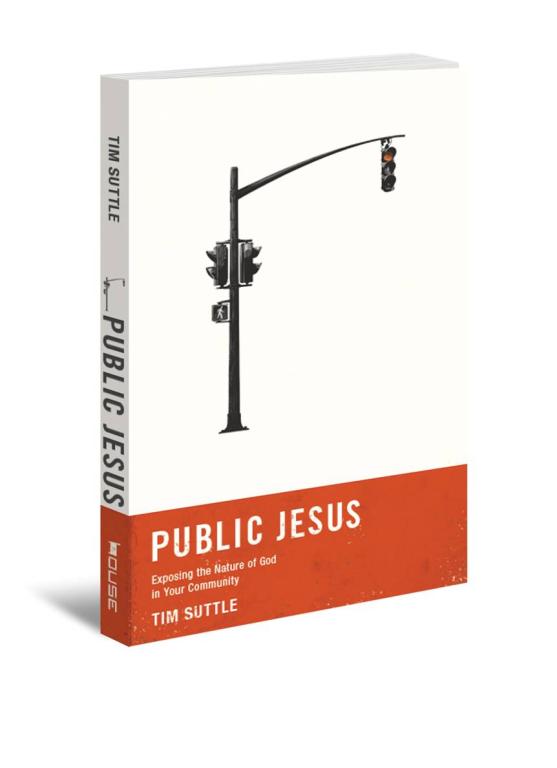
* I wrote a short book aimed at helping churches talk about Christian political speech it is called Public Jesus: Exposing the Nature of God in Your Community.
For more reading, here are some other posts I’ve written on politics:
“It’s a Bizarre Time to be Living on the Border of Kansas and Missouri”
“Why Christians Don’t Know How to Speak About Politics”
“Missional Politics for the Local Church”
“The Biggest Liars in Politics?: Outside Spending Groups”
Previous Post

October 30, 2014
No Regrets...
Next Post
November 8, 2014 A Fond Farewell to Car Talk's Tom Magliozzi
Browse Our Archives
Select a Category abortion corruption Donald Trump elections Empire Entertainment Ezra Klein ideology Justice Lacan politics race Sports Ta-Nehisi Coates Uncategorized
Select a Month September 2026 March 2026 September 2025 March 2025 June 2024 January 2024 December 2023 May 2023 February 2023 October 2022 April 2022 March 2022 December 2021 November 2021 October 2021 September 2021 August 2021 September 2020 July 2020 June 2020 March 2020 September 2019 July 2019 March 2019 February 2019 January 2019 November 2018 October 2018 September 2018 August 2018 July 2018 June 2018 May 2018 April 2018 March 2018 February 2018 December 2017 November 2017 October 2017 September 2017 August 2017 May 2017 April 2017 March 2017 February 2017 January 2017 December 2016 November 2016 October 2016 September 2016 July 2016 June 2016 May 2016 April 2016 March 2016 February 2016 January 2016 December 2015 November 2015 October 2015 September 2015 August 2015 July 2015 June 2015 May 2015 April 2015 March 2015 February 2015 January 2015 December 2014 November 2014 October 2014 September 2014 August 2014 July 2014 June 2014 May 2014 April 2014 March 2014 February 2014 January 2014 December 2013 November 2013 October 2013 September 2013 August 2013 July 2013 June 2013 May 2013 April 2013 March 2013 February 2013 January 2013 December 2012 November 2012 October 2012 September 2012 August 2012 July 2012 June 2012 May 2012 April 2012 March 2012 February 2012 January 2012 December 2011 November 2011 October 2011 September 2011 August 2011 July 2011 June 2011 May 2011 April 2011 March 2011 February 2011 January 2011 August 2010 July 2010 May 2010 April 2010 March 2010 February 2010 January 2010 December 2009 September 2009 August 2009 July 2009 June 2009 May 2009 April 2009 February 2009 January 2009 December 2008 October 2008 September 2008 August 2008 July 2008 June 2008 May 2008 April 2008 March 2008 February 2008 January 2008 November 2007 October 2007 September 2007 August 2007 July 2007 June 2007 May 2007 April 2007 March 2007 February 2007 January 2007 December 2006 October 2006 September 2006 August 2006 July 2006 June 2006 May 2006 April 2006 December 2004 November 2004 October 2004 September 2004 August 2004
Follow Us!
TAKE THE
Religious Wisdom Quiz
Who prophesied against Tyre, predicting it would become a bare rock?
Select your answer to see how you score.
Amos Daniel Joel Ezekiel
Related posts from Paperback Theology
What if Churches Shouldn't Have Goals?
Why Biden's Approval Rating is So Low

The Purity Codes are Killing Us

Rich Mullins Died 23 Years Ago Today: Here's...
TRENDING AT PATHEOS Progressive Christian

What Being a Modern-Day Apostle Means to Me
In my last column, I discussed the ins and outs of modern-day...

Did Ancient China Once Worship the God of...
Across human history, a common thread weaves through the origins of the...

Love Your Neighbor – Including Earth-Kin: Lev. 19,...
God’s command to love your neighbor means acting in an ethical and...

Lead a Church Study of “Jesus and Lao...
Guest writer Jack Thomas (The Irreverent Reverend) reflects on leading his church...

Pastoral Wisdom for Responding to Sermon Pushback
Getting sermon pushback on your social justice sermon? Learn practical, Proverbs-based strategies...

Principles for Understanding the Apostolic Ministry Today
Whenever people discover that my formal ministry title is "apostle," as in...
view all Progressive Christian blogs
Ad-Free & Subscriber Log-In Subscription Support
- About Us
- 2026 Calendar
- Videos
- Podcasts
- Library of World Religions
- Faith In Media Tracker
- Advertise With Us
- Write for Us
- Privacy Policy
- Terms of Service
- Do Not Sell My Data
- Contact Us
- Radiant Digital
- Manage Newsletter Subscriptions
- Unsubscribe From Notifications
- Sitemap
Copyright 2008-2026, Patheos. All rights reserved.
Subscription Support Ad-Free & Subscriber Log-In
Follow Patheos