
BuddhistCatholicContemplativeEvangelicalGeneral ChristianHinduJewishLatter-day SaintMuslimNew VisionsProgressive Christian
Beliefs
- Buddhist
- Catholic
- Contemplative
- Evangelical
- General Christian
- Hindu
- Jewish
- Latter-day Saint
- More Voices
- Muslim
- New Visions
- Pagan
- Progressive Christian
Topics
- Religion News
- Food and Religion
- Sports and Religion
- Religious Art
- Religious Music and Entertainment
- Religious Events
- History and Religion
- Style and Religion
- Politics and Religion
- Women in Religion
- Recreation Outdoors and Religion
- Business Finance and Religion
- Careers Workplace and Religion
- Education and Religion
- Family Parenting and Religion
- Health Fitness and Religion
- Home and Religion
- Relationships and Religion
- Technology and Religion
- Travel and Religion
Columnists
- Buddhist Columnists
- Business Finance and Religion Columnists
- Careers Workplace and Religion Columnists
- Catholic Columnists
- Contemplative Columnists
- Education and Religion Columnists
- Evangelists Columnists
- Family Parenting and Religion Columnists
- General Christian Columnists
- Health Fitness and Religion Columnists
- Hindu Columnists
- History and Religion Columnists
- Home and Religion Columnists
- Jewish Columnists
- More Voices Columnists
- Latter Day Columnists
- Muslim Columnists
- New Visions Columnists
- Nonreligious Columnists
- Pagan Columnists
- Politics and Religion Columnists
- Progressive Columnists
- Recreation Outdoors and Religion Columnists
- Relationships and Religion Columnists
- Religion News Columnists
- Religious Art Columnists
- Religious Events Columnists
- Religious Music and Entertainment Columnists
- Sports and Religion Columnists
- Style and Religion Columnists
- Technology and Religion Columnists
- Travel and Religion Columnists
- Women in Religion Columnists
Resource Library
- 2026 Calendar
- Library of World Religions
- The 100 Most Holy Places on Earth
- Patheos Answers
- Podcasts
- Videos
- Faith Leaders Database
- Anglican Episcopalian
- Bahai
- Baptist
- Buddhism
- Christianity
- Confucianism
- Eastern Orthodoxy
- Hinduism
- Holiness and Pentecostal
- ISKCON
- Islam
- Judaism
- Lutheran
- Methodist
- The Church of Jesus Christ of Latter-day Saints
- New Age
- Paganism
- Presbytarian and Reformed
- Protestantism
- Religion Behind the Scenes
- Roman Catholic
- Scientology
- Shia Islam
- Sikhism
- Sufism
- Sunni Islam
- Taoism
- Zen
- See all religions
Research Tools
 Ad-Free & Subscriber Log-In Subscription Support
Ad-Free & Subscriber Log-In Subscription Support
Follow Patheos 

- Trending:
- Forgiveness
- |
- Marriage
- |
- Consciousness
- |
- Death Penalty
- |
- Election
- |
- Halloween

- Home
- Progressive Christian
- Religion News
- The Forgotten Virtue of Brokenness
The Forgotten Virtue of Brokenness
Last updated on: October 28, 2014 at 8:24 am by Tim Suttle
The Forgotten Virtue of Brokenness 2014-10-28T08:24:04-06:00 Tim Suttle
Patheos Explore the world's faith through different perspectives on religion and spirituality! Patheos has the views of the prevalent religions and spiritualities of the world.
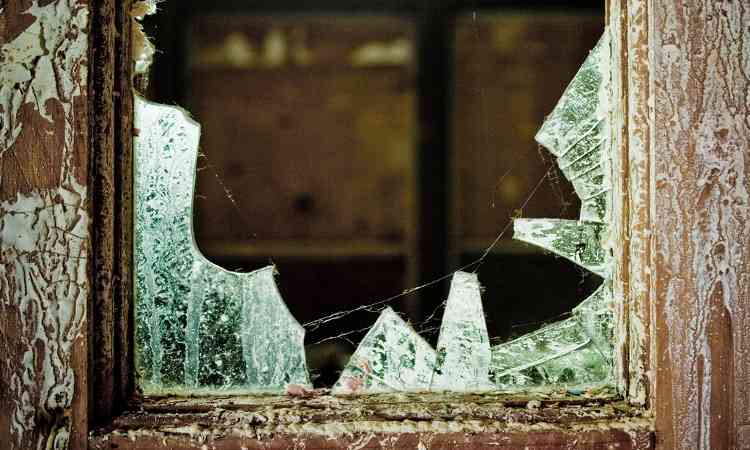 This essay was originally a sermon, delivered to Redemption Church. If you would like to listen or download the mp3, here’s the link.
One of the consistent claims of Jesus in the New Testament was this idea that the heart matters. The exterior life can be deceptive; we can play games with it. So Jesus continually pointed people to the heart & to their character. He didn’t believe it was enough just to do right things. One needed to do right things for right reasons. Following the letter of the Jewish law didn’t work; at least in part because if the heart’s not in it, you miss the whole point and end up finding ways around it.
Jesus wasn’t trying to form people who knew how to follow rules. He was trying to form people’s character so they wouldn’t need rules. They would just naturally do what was right. So this has always been a big question for the people of God: How do we do this? How do we Shape human character?
As you study human communities, you find that the answer is actually the same for all communities over all of history. The way you shape a person’s character is to involve them in a community that will train its members to take on the character of the group. The way communities do this is thru something called narrative.
Narrative is a way of naming the over-arching story about life & the world that helps people make sense of their own existence. Every community has a story that explains where they came from, what life means, & why humans are here on the planet. One would call this story their narrative. The character of the community will conform to its narrative.
For all of our focus on rules, when you actually observe human behavior; what you learn is that our narrative is what forms our character.
That’s the first crucial piece of information: Narratives shape our character.
As Christians, we want to form Christian character in ourselves and other members of our community. This happens as we join with a community that tells the Christian story. That story or narrative will shape our character.
This is why when bless our kids each Sunday we pray that they will “find themselves in story of God, still happening, and that they’re a part of it.” We’re not giving rules. We’re giving a story. This is also why I’m always on about: individualism, consumerism, & nationalism. Those are some of the rival stories trying to shape our character.
It’s almost strange for us to think about it in this way, but it’s true. Your life will conform to the story you tell about the world, your life, & what it means. Narratives shape our character, and they have incredible power. In The Faraway Nearby, Rebecca Solnit says, “Stories are compasses and architecture; we navigate by them, we build our sanctuaries and our prisons out of them…stories are geography.”
What a brilliant line. We navigate the world by the stories we tell. A bad story is a kind of prison. A good story is a kind sanctuary. And how we see this play out, how narratives shape our character has to do with what we sometimes call virtue.
Virtues are the dispositions of the heart, the habits of heart and life that correspond to our story or narrative. This is the second crucial piece of information: Narratives shape our character, and they determine our virtues. Narratives tell us what it means to be good & do good (virtue). For example, one of the pervasive American narratives is consumerism—a belief that an ever-expanding consumption is the way to happiness & good life. Remember the 80s movie Wall Street & that famous speech the character Gordon Gecko gives where he says, “Greed is good”? That’s how this works. Narrative determines virtue. If your narrative is consumerism, then greed is a virtue (greed actually is good in your community).
Hopefully, Christians would never say “Greed is good” because it doesn’t fit with our story, our narrative. We have these stories like the rich young ruler, or the Good Samaritan, or scores of others that teach us to be generous, and to care for each other. Our narratives shapes our character & determines our virtues.
We live in this world of competing stories, competing narratives they are all fighting it out within the culture to see who gets to shape the character of the people, and determine the virtues of a society.
Most importantly, Christians hold fast to Story of God because we believe the story true, and thus it can form us in ways that will make us true—make us truly human as God intended that to be. So, we cling to The Story of God not as a power game or love of tradition, but because we think it’s the only story that can form our character & virtues in ways that will make us true as people.
Christian virtues go against the grain of our culture & the popular narratives of the day. Many are all but forgotten. Today we’re going to talk about brokenness as a virtue. Which is strange, I know—it’s not a very traditional virtue. But it’s central to the Christian story. And it could not be more counter-cultural in our world.
Our story comes from Genesis chapter 32:22-32
22That night Jacob got up and took his two wives, his two female servants and his eleven sons and crossed the ford of the Jabbok. 23After he had sent them across the stream, he sent over all his possessions. 24So Jacob was left alone, and a man wrestled with him till daybreak. 25When the man saw that he could not overpower him, he touched the socket of Jacob’s hip so that his hip was wrenched as he wrestled with the man. 26Then the man said, ‘Let me go, for it is daybreak.’ But Jacob replied, ‘I will not let you go unless you bless me.’ 27The man asked him, ‘What is your name?’ ‘Jacob,’ he answered.
28 Then the man said, ‘Your name will no longer be Jacob, but Israel, because you have struggled with God and with humans & have overcome.’ 29Jacob said, ‘Please tell me your name.’ But he replied, ‘Why do you ask my name?’ Then he blessed him there. 30So Jacob called the place Peniel, saying, ‘It is because I saw God face to face, and yet my life was spared.’ 31The sun rose above him as he passed Peniel, and he was limping because of his hip. 32Therefore to this day the Israelites do not eat the tendon attached to the socket of the hip, because the socket of Jacob’s hip was touched near the tendon.
Journalist and essayist Chuck Klosterman writes quite a bit about sports, music, and culture. Klosterman has an essay called “The Best Response.” He’s writing to illustrate the best way to respond to some kind of personal embarrassment. When our personal brokenness goes public in one-way or another, what should we say? Klosterman has ideas. (I just read them aloud from the book. They are not printed online anywhere I could find. I’ve done a synopsis of just a few here).
- The best response to forgetting the name of someone you’ve met several times before: Klosterman says you should tell them they look exactly like your best friend Jamie, who died tragically in a boating accident. Your brain keeps trying to call them Jamie, because the resemblance is uncanny and you still aren’t over the loss. That’s why you can’t remember their real name. Jamie’s the only name your brain will accept.
- The best response to allegations that you used steroids throughout your playing career, particularly if those allegations are true and verifiable: tell them that you tried steroids, but they didn’t help. Your body didn’t react to them like most people. You are terribly competitive and would do anything to gain an advantage. Everybody else was doing it, so you tried it, but since they didn’t help you (only made your face break out, and made you feel susceptible to injury), you stopped.
- The best response to Being arrested for carrying an unlicensed handgun into a nightclub and accidently shooting yourself in the leg, thereby jeopardizing your pro football career: There are lots of people who want to kill me (that’s why I have a gun). I don’t trust the government (that’s why I didn’t register it). I already shot myself in the let, so what worse punishment could I receive?
You get the picture. When our brokenness comes light we are trained in our society to do anything within our power to avoid it. Because brokenness caries with it a lot of pain & we don’t do pain. This is a defining reality for our culture: we don’t do pain.
One of my friends recently posted this tweet: “Dear sore tooth, I have successfully started chewing on the other side of my mouth… your move.” That’s pain aversion.
We have an unlimited supply of techniques to avoid experiencing the pain that comes along with admitting our own brokenness—here’s the short list:
- Denial, if you don’t have to see it, maybe it’s not broken.
- Blame, discharge the pain by pinning it one someone else.
- Run, just take off – don’t have to face it – a favorite in the church.
- Perfectionism, do it perfect, no one will see that you feel broken.
- Cynicism, just act too cool to care, like we’re above it all.
- Numbing, take a pill, eat another donut, have a drink…
- Control, (also big in church) if I can control it, won’t look broken.
Look at the list, which one is your favorite? “Perfectionism” is one of mine, and maybe “control.” How would I know if it’s denial? Even if you tried to tell I was in denial me I’d deny it. These are all ways of avoiding the pain of facing our own brokenness. In The Faraway Nearby, Rebecca Solnit addresses our pain aversion:
“We are a society that values the anesthetic over pain. We hide our prisons, our sick, our mad, and our poor; we expend colossal resources to live in padded, temperature-controlled environments that make few demands on our bodies or our minds. We come up with elaborate means of not knowing about the suffering of others and of blaming them when we do… Choosing not to feel pain is choosing a sort of death, a withering away of the expansive self.” – Rebecca Solnit, The Faraway Nearby
Solnit is saying we all share this aversion to the pain that occurs when we are exposed to our own brokenness & the brokenness of others. So we’ve constructed a world in which we can avoid dealing with it… and we’ve gotten confused. We resort to elaborate means to avoid brokenness, and we don’t realize: “Choosing not to feel pain is choosing a sort of death, a withering away of the expansive self.”
Solnit is tapping into one of the deepest streams of the Christian narrative, and the crux of what I’m trying to get us to think about. The narrative of our culture tells us that the avoidance of brokenness is a virtue—and if you can’t avoid brokenness, then at least hide it. Deny, blame, run, engage perfectionism or cynicism, numb it, or try to control it, do whatever you’ve got to do, but don’t let it show. If you can avoid the appearance of brokenness, then our culture will reward you.
That’s our Cultural narrative.
The Christian story is very different.
The Christian story tells us that in the hands of God, our brokenness becomes a virtue. We don’t have to deny, blame, run, numb, or control the brokenness. We don’t have to avoid it in ourselves, and we are not allowed to avoid it in others. The Christian story tells us that in the hands of God, our brokenness can actually become a virtue. And admitting our brokenness is where it all starts for us. This is where redemption begins. The Christian story says that this move—admitting our brokenness to the community, and bearing their brokenness as well—that is a basic qualification for participation in the life of the people of God. The story of Jacob wrestling with God is a great example of how this has worked in the past.
Jacob’s story involved a lot of pain. His father was Isaac, his mother was Rebekah, and Jacob had a twin brother named Esau. Esau was born first, and Jacob came out grasping Esau’s heel. This became kind of a symbol of the two brother’s relationship. Jacob was always nipping at Esau’s heels. Esau was a big burley hunter, a man’s man, & his father’s favorite. Jacob was frail & stayed in among the tents. He was his mom’s favorite. Esau was the first to be born, so he got all of the privileges of the first son. He would be the sole heir & leader of the family when Isaac died.
Esau’s place as first song really bothered Jacob. So, Jacob tricked Esau into giving away his birthright as first son—Jacob would be the father of the family. Then just before Isaac died, Rebekah helped Jacob to trick his father into giving Jacob his final blessing. This is the story where Jacob put on animal skins so when his blind father touched him he’d feel all hairy like Esau. After that little trick, Jacob knew he better run away if he wanted to live. He went to live with a distant relative named Laban.
Laban had a daughter named Rachel. Jacob loved her, and she loved him. Her father made Jacob work for seven years before he could marry Rachel. But on the night of the wedding Laban Got Jacob so drunk he didn’t realize Laban had him marry the wrong sister. He awoke the next morning not to his true love, but to her older sister. Laban made Jacob work another seven years for the wife he wanted. (You thought your family had troubles, right?)
Since Jacob was managing most of Laban’s business, he struck shrewd deals with his father in law, to make sure that Laban made out fine, but Jacob made out better. Jacob’s wealth is expanded like crazy, and it made Laban and his sons jealous. There is the implication in the text that since Laban hasn’t been straightforward with him, Jacob feels justified in taking Laban for a ride. Top to bottom, Jacob has a completely dysfunctional family:
- His mom & dad are play favorites.
- Jacob tricked Esau out of his birthright.
- Jacob tricked his father into giving him Esau’s blessing.
- Laban tricked him into marrying wrong sister.
- Laban took advantage of Jacob’s abilities.
- Jacob turned the tables on Laban and became quite rich.
- Finally Laban & his sons got so upset about it that Jacob had to leave.
- On the way out the door Rachel stole her father’s gods.
So, Jacob packed up his wives, his children, his camels, his flocks & servants, slaves, and hired hands & headed for his homeland. This was the second time, Jacob found himself on the run from a family member. When he got close enough he sent messengers to tell Esau that his brother Jacob was coming home. He was taking Esau’s temperature to see just how mad he still was. The messenger returned with a frightening report: “We went to your brother Esau, and now he is coming to meet you, and four hundred men are with him.” – Gen 32:6
So Jacob was petrified. He divided his possessions into two groups, hoping that if one was attacked, the other could escape. He sent gifts to his brother in two enormous groups—goats, rams, camels, bulls, and donkeys—hoping to butter Esau up with extravagance. Then Jacob hunkered down to spend night. Gen 32:9-12 records a desperate prayer.
“‘O God of my father Abraham, God of my father Isaac, Lord, you who said to me, “Go back to your country and your relatives, and I will make you prosper,” I am unworthy of all the kindness and faithfulness you have shown your servant. I had only my staff when I crossed this Jordan, but now I have become two camps. Save me, I pray, from the hand of my brother Esau, for I am afraid he will come and attack me, and also the mothers with their children. But you have said, “I will surely make you prosper and will make your descendants like the sand of the sea, which cannot be counted.”’
He’s was crying out to God in anguish and fear. For some reason he got up in the middle of the night & sent his entire family across the river, and he stayed behind, completely alone. The text says that a “man” came to wrestle with him in the night. They wrestled until dawn, when the stalemate was finally broken as the man touched Jacob’s hip and put it out of joint.
26Then the man said, ‘Let me go, for it is daybreak.’ But Jacob replied, ‘I will not let you go unless you bless me.’ 27The man asked him, ‘What is your name?’ ‘Jacob,’ he answered. 28Then the man said, ‘Your name will no longer be Jacob, but Israel, because you have struggled with God and with humans and have overcome.’ 29Jacob said, ‘Please tell me your name.’ But he replied, ‘Why do you ask my name?’ [this seems to be a way of saying, I already told you my name, I am God with whom you just wrestled… hence the name, “the one who wrestles with God”] Then he blessed him there… 31The sun rose above him as he passed Peniel, and he was limping because of his hip.
For the rest of Jacob’s life he was called Israel, the one who wrestles with God… and for the rest of his life he walked with a limp. From that day on in the story, Jacob was a different man. He could never bring himself to mask his brokenness again. It was as though all of his family junk finally caught up to him. Yet, because he confessed it and didn’t try to hide it, God allowed him to wrestle with his past, and with God. Jacob is born again, and given a new name. But he didn’t get out of it without a serious wounding, a limp…
Jacob has protested to God. “I thought you promised to make me a great leader & make my descendants like the sands of the sea?” And it’s as if God says, “This wounding, your brokenness, your father’s favoritism, your mother’s scheming, the trickery with Esau & Laban, all of this is not really what is killing you. What is killing you is that you keep running from it—until today. Today you faced it.”
The change was so profound that Jacob needed a new name. Even though he walked with a limp, Jacob now knew how to wrestle with God. It’s as though God was telling Jacob, “I know your life has been crazy, but all of it has served a purpose. The wounds of your life, your brokenness & that of your family, those were your qualifications for leadership.”
From that point on Jacob was never the same. His brokenness was no longer masked by the shrewd trickster persona. He was just a struggler.
Maybe what God is looking for isn’t a bunch of people who are so perfect that they can act above it all. What if God is looking for people who have real live wounds? What if God wants us to open up about our wounds because God is a healer? What did Jesus say? “I came not for the healthy, but for the sick.” God is looking for people who walk with a limp. People who have learned that it’s not our brokenness that is killing us, it’s our hiding, and our avoidance of pain. Barbara Brown Taylor says this way:
“Not to accept suffering as a normal, inevitable part of being alive seems like a big mistake, and finding ways to cover it up seems like choosing anesthesia. There is a sense in which if I will trust that what comes to me is for me (Now that’s the hugest faith statement I can make to you. If I will trust that what comes to me in my life is for me and not against me), what I find is that it breaks my idols, that it breaks my isolation, that it challenges my sense of independence, it does all kinds of things for me that I would not willingly do, that are for me, that are for my health.” – Barbara Brown Taylor
I love the way she characterizes it as a choice. I can deny, blame, run, numb, and control. Or I can believe that what comes to me in my life is for me, not against me; for my health, & my redemption… and if I believe this, then it will be. My brokenness will do all kinds of things for me I wouldn’t otherwise do. Like Jacob I will discover that: brokenness is the virtue that commends us to the mercies of God.
The apostle Paul talked about this in 2 Corinthians 12. Where he confessed his own brokenness to the community. He wrote:
“I was given a thorn in my flesh, a messenger of Satan, to torment me. Three times I pleaded with the Lord to take it away from me. But he said to me, ‘My grace is sufficient for you, for my power is made perfect in weakness.’ Therefore I will boast all the more gladly about my weaknesses, so that Christ’s power may rest on me. That is why, for Christ’s sake, I delight in weaknesses, in insults, in hardships, in persecutions, in difficulties. For when I am weak, then I am strong.”
The world we live in has been schooled in denial. When the world senses brokenness, it reaches for the quickest way out of it. The Christian story offers another option – not to mask the brokenness, but to enter into it & wrestle with God. This is really the heart of the good news. It’s not our brokenness that is killing us—not really. Our brokenness has been dealt with on the cross. What’s killing us is our hiding, our denial, and the ways in which we try and mask how wounded we are. That’s what’s killing us.
If we’ll have the courage to believe that what comes to us in our life is for us, for our health & redemption then we can wrestle with God. And when our wrestling is done, if we can hold on through it, and not let go of God, then we will most certainly walk with a limp. This is an unavoidable part of the Christian story. If you wrestle w/God you will walk w/a limp.
But those are our qualifications for leadership. You don’t get to lead if you have perfect posture, only if you’ve got a bit of a limp.
Have you ever been in a small group or bible study, when someone really opens up about his or her life, & it changes the whole group, everyone draws upon that person’s courage, and they all begin to open up?
It’s as though the walls that we’ve built around our hearts can only be breached by tenderness, someone whose heart has been made gentle by the pain of life. That’s the gospel. To breach the walls around our hearts god became human, took on the fallen human flesh, and gave us a new story of redemption.
So what is it for you?
What is the defining pain of your life? The pain you avoid thinking about at any cost? What’s the wound you will never get over? You’re just gonna walk with a limp. Is that pain something that reminds you of a time when you wrestled w/God & God’s presence marked you forever? Or is that pain something that you mask, deny, blame, run from, numb, or try to control? What brokenness are you refusing to share? What brokenness are you hiding & constantly having to try and disguise it or live it down?
Who could you share your own brokenness with? Who could you trust that secret to? What are the parts of your life that you have not yet taken before God, and wrestled with God until they were settled?
This story contains a promise for all of us. If we will come out of hiding and be honest with ourselves, with each other, and especially with God, we can expect a fight to be sure. It’s going to be a serious wrestling match, and there will be some real wounds to deal with. We’ll walk with a limp when it’s over. Yet, we will live, and even more than that. God will name us. God will claim our lives and call out of us the striver, the wrestler. We can become the person who has the courage to contend with our own life in the presence of our maker, and, in the end, to stand.
Next Post

October 29, 2014 The Spiritual Significance of Royals Baseball: Patience, & Royals Fever
Browse Our Archives
Select a Category abortion corruption Donald Trump elections Empire Entertainment Ezra Klein ideology Justice Lacan politics race Sports Ta-Nehisi Coates Uncategorized
Select a Month September 2026 March 2026 September 2025 March 2025 June 2024 January 2024 December 2023 May 2023 February 2023 October 2022 April 2022 March 2022 December 2021 November 2021 October 2021 September 2021 August 2021 September 2020 July 2020 June 2020 March 2020 September 2019 July 2019 March 2019 February 2019 January 2019 November 2018 October 2018 September 2018 August 2018 July 2018 June 2018 May 2018 April 2018 March 2018 February 2018 December 2017 November 2017 October 2017 September 2017 August 2017 May 2017 April 2017 March 2017 February 2017 January 2017 December 2016 November 2016 October 2016 September 2016 July 2016 June 2016 May 2016 April 2016 March 2016 February 2016 January 2016 December 2015 November 2015 October 2015 September 2015 August 2015 July 2015 June 2015 May 2015 April 2015 March 2015 February 2015 January 2015 December 2014 November 2014 October 2014 September 2014 August 2014 July 2014 June 2014 May 2014 April 2014 March 2014 February 2014 January 2014 December 2013 November 2013 October 2013 September 2013 August 2013 July 2013 June 2013 May 2013 April 2013 March 2013 February 2013 January 2013 December 2012 November 2012 October 2012 September 2012 August 2012 July 2012 June 2012 May 2012 April 2012 March 2012 February 2012 January 2012 December 2011 November 2011 October 2011 September 2011 August 2011 July 2011 June 2011 May 2011 April 2011 March 2011 February 2011 January 2011 August 2010 July 2010 May 2010 April 2010 March 2010 February 2010 January 2010 December 2009 September 2009 August 2009 July 2009 June 2009 May 2009 April 2009 February 2009 January 2009 December 2008 October 2008 September 2008 August 2008 July 2008 June 2008 May 2008 April 2008 March 2008 February 2008 January 2008 November 2007 October 2007 September 2007 August 2007 July 2007 June 2007 May 2007 April 2007 March 2007 February 2007 January 2007 December 2006 October 2006 September 2006 August 2006 July 2006 June 2006 May 2006 April 2006 December 2004 November 2004 October 2004 September 2004 August 2004
Follow Us!
TAKE THE
Religious Wisdom Quiz
What happened when the Philistines captured the Ark of the Covenant?
Select your answer to see how you score.
The sun stood still The Jordan parted Fire rained from heaven Dagon's idol fell
Related posts from Paperback Theology

New Normal: Practical Steps for Establishing a New...

How to be a Christian During a Pandemic

The Ragamuffin and the Walking Wall
New Podcast: Becoming Brueggemann — Thoughts on Sabbath...
TRENDING AT PATHEOS Progressive Christian

What Being a Modern-Day Apostle Means to Me
In my last column, I discussed the ins and outs of modern-day...

Did Ancient China Once Worship the God of...
Across human history, a common thread weaves through the origins of the...

Love Your Neighbor – Including Earth-Kin: Lev. 19,...
God’s command to love your neighbor means acting in an ethical and...

Lead a Church Study of “Jesus and Lao...
Guest writer Jack Thomas (The Irreverent Reverend) reflects on leading his church...

Pastoral Wisdom for Responding to Sermon Pushback
Getting sermon pushback on your social justice sermon? Learn practical, Proverbs-based strategies...

Principles for Understanding the Apostolic Ministry Today
Whenever people discover that my formal ministry title is "apostle," as in...
view all Progressive Christian blogs
Ad-Free & Subscriber Log-In Subscription Support
- About Us
- 2026 Calendar
- Videos
- Podcasts
- Library of World Religions
- Faith In Media Tracker
- Advertise With Us
- Write for Us
- Privacy Policy
- Terms of Service
- Do Not Sell My Data
- Contact Us
- Radiant Digital
- Manage Newsletter Subscriptions
- Unsubscribe From Notifications
- Sitemap
Copyright 2008-2026, Patheos. All rights reserved.
Subscription Support Ad-Free & Subscriber Log-In
Follow Patheos