
BuddhistCatholicContemplativeEvangelicalGeneral ChristianHinduJewishLatter-day SaintMuslimNew VisionsProgressive Christian
Beliefs
- Buddhist
- Catholic
- Contemplative
- Evangelical
- General Christian
- Hindu
- Jewish
- Latter-day Saint
- More Voices
- Muslim
- New Visions
- Pagan
- Progressive Christian
Topics
- Religion News
- Food and Religion
- Sports and Religion
- Religious Art
- Religious Music and Entertainment
- Religious Events
- History and Religion
- Style and Religion
- Politics and Religion
- Women in Religion
- Recreation Outdoors and Religion
- Business Finance and Religion
- Careers Workplace and Religion
- Education and Religion
- Family Parenting and Religion
- Health Fitness and Religion
- Home and Religion
- Relationships and Religion
- Technology and Religion
- Travel and Religion
Columnists
- Buddhist Columnists
- Business Finance and Religion Columnists
- Careers Workplace and Religion Columnists
- Catholic Columnists
- Contemplative Columnists
- Education and Religion Columnists
- Evangelists Columnists
- Family Parenting and Religion Columnists
- General Christian Columnists
- Health Fitness and Religion Columnists
- Hindu Columnists
- History and Religion Columnists
- Home and Religion Columnists
- Jewish Columnists
- More Voices Columnists
- Latter Day Columnists
- Muslim Columnists
- New Visions Columnists
- Nonreligious Columnists
- Pagan Columnists
- Politics and Religion Columnists
- Progressive Columnists
- Recreation Outdoors and Religion Columnists
- Relationships and Religion Columnists
- Religion News Columnists
- Religious Art Columnists
- Religious Events Columnists
- Religious Music and Entertainment Columnists
- Sports and Religion Columnists
- Style and Religion Columnists
- Technology and Religion Columnists
- Travel and Religion Columnists
- Women in Religion Columnists
Resource Library
- 2026 Calendar
- Library of World Religions
- The 100 Most Holy Places on Earth
- Patheos Answers
- Podcasts
- Videos
- Faith Leaders Database
- Anglican Episcopalian
- Bahai
- Baptist
- Buddhism
- Christianity
- Confucianism
- Eastern Orthodoxy
- Hinduism
- Holiness and Pentecostal
- ISKCON
- Islam
- Judaism
- Lutheran
- Methodist
- The Church of Jesus Christ of Latter-day Saints
- New Age
- Paganism
- Presbytarian and Reformed
- Protestantism
- Religion Behind the Scenes
- Roman Catholic
- Scientology
- Shia Islam
- Sikhism
- Sufism
- Sunni Islam
- Taoism
- Zen
- See all religions
Research Tools
 Ad-Free & Subscriber Log-In Subscription Support
Ad-Free & Subscriber Log-In Subscription Support
Follow Patheos 

- Trending:
- Forgiveness
- |
- Marriage
- |
- Consciousness
- |
- Death Penalty
- |
- Election
- |
- Halloween

- Home
- Progressive Christian
- Religion News
- Together Like Priests: How a Bilingual Worship Service Made Us All Smell Better…
Together Like Priests: How a Bilingual Worship Service Made Us All Smell Better…
Last updated on: September 4, 2014 at 10:28 am by Tim Suttle
Together Like Priests: How a Bilingual Worship Service Made Us All Smell Better… 2014-09-04T10:28:14-06:00 Tim Suttle
Patheos Explore the world's faith through different perspectives on religion and spirituality! Patheos has the views of the prevalent religions and spiritualities of the world.
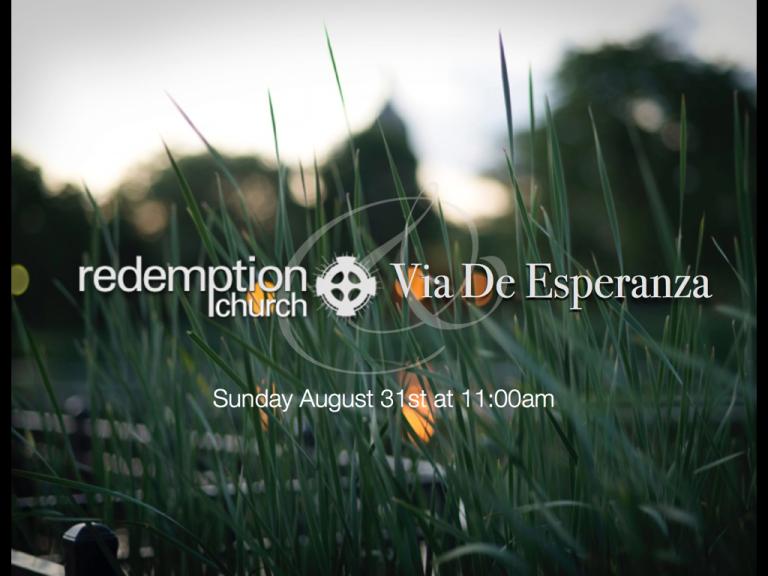 Every Sunday as we are dismissing our church service, another congregation is just arriving. Via de Esperanza is a wonderful Spanish-speaking congregation with whom we share a worship space each week. It has been one of the real joys of my ministry life to have Via worshipping in this building, hopefully feeling more and more at home here. Our two congregations have worked together and been friends for 7-8 years now. But only recently have we begun using the same building. For the past few years we have come together once a year for a joint bilingual worship service. Last week was one of those weeks, and it was a beautiful thing to behold. This is the message that I shared during the sermon portion of that worship time. But the message wasn’t anywhere near the best part-actually felt kind of anticlimactic. The best part was sharing a pancake breakfast, singing songs in English and Spanish simultaneously–sometimes the gringos trying to sing in Spanish, sometimes Spanish speakers proving that they are by far the more adept at crossing the language barrier by singing in English–and especially praying together. The worship time was plainly transcendent. Nevertheless, I’m putting this out there as an attempt to describe what I think we were doing together. If you are a pastor, feel free to copy and steal anything you find here.
___________________________________________________________
2014.08.31 – Together Like Priests
“Behold, how good and pleasant it is when brothers & sisters dwell in unity! It is like the precious oil on the head, running down on the beard, on the beard of Aaron, running down on the collar of his robes! It is like the dew of Hermon, which falls on the mountains of Zion! For there the LORD has commanded the blessing, life forevermore.” – Psalm 133
I love this psalm because it is so poetic & beautiful, but also because it uses a couple of rich images. The first is from the religious world of the Jewish people: When God’s people dwell in unity it is like “precious oil, on the head, running down on the head, on the beard of Aaron, running down on the collar of his robes.”
The first priest ever in Israel’s history was a man named Aaron. His name became representative of all of the priests of Israel. When a priest was ordained, the pinnacle of the ceremony was the moment when they would pour this very scented and heavily spiced oil over his head. It was the anointing. The recipe for the oil of anointing was very specific, and the smell was quite strong and distinct. Exodus 30 actually prescribes the formula they were supposed to use.
EXODUS 30:23-33
“Take choice spices: twelve and a half pounds of free-flowing myrrh, half that—about six and a quarter pounds—of sweet-smelling cinnamon, six and a quarter pounds of sweet-smelling cane, and twelve and a half pounds of cassia, all weighed according to the sanctuary shekel, and four quarts of olive oil. You are to make this into a sacred anointing oil, a perfumed compound, the work of a perfumer. It will be sacred anointing oil… You are to anoint Aaron and his sons and sanctify them, so that they may minister as my priests. Tell the Israelites: ‘This is to be my sacred anointing oil throughout your generations. It must not be applied to people’s bodies, and you must not make any like it with the same recipe. It is holy, and it must be holy to you. Whoever makes perfume like it and whoever puts any of it on someone not a priest will be cut off from his people.’”
The priests wore this oil all the time. It was their scent. It marked them as priests. Nobody else could wear this scent, only the priests could. So when you smelled this oil, you knew there was a priest in room. It’s sort of like patchouli oil. If you catch the scent of patchouli in the air, you might start looking around for a hippie, or a flower child walking by (that or else you think someone’s been smoking pot). The oil of anointing was that distinct and strong. The moment they smelled this scent, people began to look around for the priest.
So, when the children of God dwell together in unity, it is like the ordination ceremony for our lives as priests, and we all get to wear the precious oil. We start to have a distinctive aroma about our common life.
Now this has particular meaning. The priest in Israel had a particular job, which was: to mediate the presence of God to the people. When the people of God dwell in unity we begin to perform the priestly function: We mediate the presence of God to the world around us. The world can see God because we begin to image God, to reflect God.
When we live together in unity, the church begins to have an aroma that is unmistakable, because it’s not found anywhere else in our culture. The rest of the culture doesn’t know how to dwell in unity. But we do—at least we are supposed to. If we happen to get it right, our unity is strong and distinctive. When other people from our watching world sense this unity, when they smell the aroma of peace, they sense the presence of God. They instinctively know something deeper is going on; something holy.
The second image is from nature, and from the geography of Israel: “When brothers & sisters well in unity: “It is like the dew of Hermon, which falls on the mountains of Zion!”
Mt. Hermon is the tallest mountain in all of Israel at just over 9,000 feet. It’s one of the most important geographical, and natural resources in Israel. It is so tall that it catches a lot of moisture. It snows in the winter. They even have a downhill ski resort. The melt water feeds streams & rivers that will water their crops. In the summertime, the mountain is covered every morning in a thick mist and fog that coats the ground & plants in dew. This image is of fertile, rich, moist, cool land where crops grow.
By contrast Mt. Zion is in Jerusalem (where the Temple is located), which is basically in the middle of a desert. Their average yearly rainfall is about 20 inches. If Jerusalem we in the United States, it would have the 3rd lowest rainfall of any major US city. Zion is hot, dry, & dusty.
But when brothers and sisters dwell in unity. It’s as though this cool, early-morning dew falls upon a hot desert city, and brings refreshment and nourishment. And if that could happen, then maybe something new can grow in this place… something peaceful & healthy & strong & rich.
When God’s people dwell in unity, we bring that kind of growth to our world; we bring those things that are necessary for life & flourishing & healing.
As God’s people dwell in unity, both of these two amazing things begin to happen. Like oil on the head of a priest, we begin to mediate the presence of God. We make God visible to a bunch of people who don’t know that’s what they have been looking for. Like dew on Mt. Hermon, we bring those things necessary for growth & flourish. Everything we touch begins to bend closer to its intended purpose. Or at least it is supposed to be like that. It’s not always…
… because if we cannot live in unity, those two things don’t happen. If we cannot live in unity, we don’t have a distinctive odor (at least not a pleasant one). We end up being indistinguishable from the rest of the world–which begs the question: If we cannot live in unity as Christians, then how will the rest of our world ever sense the presence of God? If we cannot live in peace with those of other nationalities, how will the cultures of our world begin to flourish & grow deeper? If we cannot live in unity with other religions, how will the rest of the world live in unity?
This is why Redemption Church owes a debt of gratitude to the people of Via de Esperanza. When you came to share this building with us—to dwell with us in unity—we started to smell a lot better. We have a better aroma. Since we share this building as a place of worship, both congregations can better mediate the presence of God to our neighborhood.
And new things are beginning to grow and flourish in our neighborhood. And our neighborhood could use more flourishing. And our world could use more flourishing, Yes?
Via de Esperanza’s presence in this building every week is a blessing to us, and to this neighborhood. For Redemption Church, it’s kind of like the difference between being an only child, & having siblings. The dream of Psalm 133 can be much more of a reality because we share this place of worship. And this has been our hope at Redemption for a long time.
A few years ago we felt God leading us to try and buy a building, and at the time we had two choices. There was a big building on a busy highway where everyone could see it. This building held the possibility of growing bigger & bigger. But there were no neighbors, no neighborhood, just cars going by on the highway.
So we moved down here to this building instead. And our hope was that if we came here, we would have neighbors to care about, who would care about us, too. We always wondered if God would open a door for us to work more closely with Via de Esperanza; that we would see each other every week, and support each other and share resources; that we could join together in serving our neighborhood; that we would dwell in unity as brothers & sisters in Christ.
More than ever it feels like this is happening, and for that we are grateful to Via and grateful to God. You see, God’s vision for Israel later became God’s vision for the church. That vision has been extended to the church, and the vision is that we would become a kingdom of priests. Not just a kingdom of priests as in the traditional use of the “priesthood of all believers” … that we don’t need to talk to a priest in order to talk to God. But a kingdom of priests, mediating God’s presence, and causing things to grow because we dwell together in unity.
This is how God’s peace is made available to the world around us; and the world around us could use some peace about right now. Our world is in desperate need of peace, desperate need of people who are training themselves to dwell in unity.
…because the inability to live together in unity lies at the heart of most of our problems in this world.
Lack of unity is why:
- there is violence in Iraq, and violence in Israel.
- there is racism and poverty and killing here at home.
- the politicians in Washington refuse to work together.
- marriages break up and families fall apart.
- neighbors quarrel & friends come to despise each other.
And the truth is (for the most part), that the church doesn’t seem to be all that different from the rest of the world. Churches divide all the time over all sorts of issues. I mean, we’re Protestants: we’re named after fights & protests. Too many arguments & not enough pancakes, right?
But the fact that we can’t be any different, can’t image God… it has everything to do with unity, or the lack thereof. The church is meant to be the one place in the world where people come to learn a different way to live.
And that way of life is meant to give off a particular aroma…
And that way of life is meant to nourish growth in everything we touch…
We are expected to live together in unity; to live together in peace. And we’re meant to extend that unity and peace to the rest of the world, so that the rest of the world can grow, and flourish. The problem is that (for the most part), the church isn’t like that; the church doesn’t have that aroma of the priest.
And the only way we can find that place & become more like that, is to take small steps toward one another & toward unity:
- To share a place of worship together every week…
- To share a meal every now & then.
- To worship together in two different languages.
- To make space for the one with a different background, life story, nationality, or color of skin.
These are the simple first steps of those who are following Jesus.
After all Jesus refused to shun people for their differences.
So today, in this moment, as we come together to worship, we are doing the hard work of unity that the kingdom of God requires. Our job here today is not to solve immigration issues. Our job here today is not to find the answer for world peace, (although immigration does need fixing & the world needs peace).
Our job here today is to come this table as one… to share in this meal… the communion of the saints… and to do this in unity.
And as we do this—without suspicion or fear—we show the world around us a better way to live. And if we can do it, maybe the world can learn to do it as well.
Our confession is that when we come to the table together, that Jesus will meet us here. That the spirit of Christ will inhabit the praises of his people, and extend them out into the world. And maybe the world will see that if we can share bread with each other in here, perhaps there are many other things we can share.
- …that if we can share a common life in Jesus Christ in here, we can share a common life in our community & in our society.
- …that if we break bread together in peace right now, we’ll find it impossible to hurt each other when we leave this place.
- …that if we will humbly serve each other here, we might learn how to humbly serve each other outside these walls.
- …that we might actually start to care for one another so deeply, that the differences will stop dividing us & we’ll find ourselves living as one.
So what we are doing here today is a radical act of rebellion against the powers of this world that WANT us to oppose each other.
By worshipping together we stand up & say no! We say, “The Lord has come to us in friendship. So we will go to one another in friendship.” There can be no other way! And as we do this we bear witness to the lordship of Christ. We proclaim that Jesus is Lord over our common life, and all creation.
Today, we worship together as two congregations in a bilingual service w/all of the requisite clunky & awkwardness that comes along with that. But as we do this, we have never been more like the kingdom of God than we are at this moment. I think that we express the reality that in order for us to be like oil on the head of the priests, or dew on Mt. Hermon, in order for us to mediate God’s presence to the world, and cause the world to grow and flourish, we must dwell together in unity.
If we can do this, then we begin to embody—right here & right now—the power of God’s kingdom in this world. May this kind of unity extend to our community, and our city, and our world.
Next Post

September 5, 2014 The Rare Leadership Virtue of Patience
Browse Our Archives
Select a Category abortion corruption Donald Trump elections Empire Entertainment Ezra Klein ideology Justice Lacan politics race Sports Ta-Nehisi Coates Uncategorized
Select a Month September 2026 March 2026 September 2025 March 2025 June 2024 January 2024 December 2023 May 2023 February 2023 October 2022 April 2022 March 2022 December 2021 November 2021 October 2021 September 2021 August 2021 September 2020 July 2020 June 2020 March 2020 September 2019 July 2019 March 2019 February 2019 January 2019 November 2018 October 2018 September 2018 August 2018 July 2018 June 2018 May 2018 April 2018 March 2018 February 2018 December 2017 November 2017 October 2017 September 2017 August 2017 May 2017 April 2017 March 2017 February 2017 January 2017 December 2016 November 2016 October 2016 September 2016 July 2016 June 2016 May 2016 April 2016 March 2016 February 2016 January 2016 December 2015 November 2015 October 2015 September 2015 August 2015 July 2015 June 2015 May 2015 April 2015 March 2015 February 2015 January 2015 December 2014 November 2014 October 2014 September 2014 August 2014 July 2014 June 2014 May 2014 April 2014 March 2014 February 2014 January 2014 December 2013 November 2013 October 2013 September 2013 August 2013 July 2013 June 2013 May 2013 April 2013 March 2013 February 2013 January 2013 December 2012 November 2012 October 2012 September 2012 August 2012 July 2012 June 2012 May 2012 April 2012 March 2012 February 2012 January 2012 December 2011 November 2011 October 2011 September 2011 August 2011 July 2011 June 2011 May 2011 April 2011 March 2011 February 2011 January 2011 August 2010 July 2010 May 2010 April 2010 March 2010 February 2010 January 2010 December 2009 September 2009 August 2009 July 2009 June 2009 May 2009 April 2009 February 2009 January 2009 December 2008 October 2008 September 2008 August 2008 July 2008 June 2008 May 2008 April 2008 March 2008 February 2008 January 2008 November 2007 October 2007 September 2007 August 2007 July 2007 June 2007 May 2007 April 2007 March 2007 February 2007 January 2007 December 2006 October 2006 September 2006 August 2006 July 2006 June 2006 May 2006 April 2006 December 2004 November 2004 October 2004 September 2004 August 2004
Follow Us!
TAKE THE
Religious Wisdom Quiz
Who cried at the tomb of Lazarus?
Select your answer to see how you score.
Peter Jesus David John
Related posts from Paperback Theology

How to be a Christian During a Pandemic
New Podcast: Becoming Brueggemann — Thoughts on Sabbath...

You'll Spend a Third of your Life Working:...

Wednesday Wisdom: No Truth? No Justice? No Peace.
TRENDING AT PATHEOS Progressive Christian

Why Christians Have a Sacred Duty to Vote:...
The Bible offers strong support for the sacred duty to vote. Here...

What Being a Modern-Day Apostle Means to Me
In my last column, I discussed the ins and outs of modern-day...

Did Ancient China Once Worship the God of...
Across human history, a common thread weaves through the origins of the...

Love Your Neighbor – Including Earth-Kin: Lev. 19,...
God’s command to love your neighbor means acting in an ethical and...

Lead a Church Study of “Jesus and Lao...
Guest writer Jack Thomas (The Irreverent Reverend) reflects on leading his church...

Principles for Understanding the Apostolic Ministry Today
Whenever people discover that my formal ministry title is "apostle," as in...
view all Progressive Christian blogs
Ad-Free & Subscriber Log-In Subscription Support
- About Us
- 2026 Calendar
- Videos
- Podcasts
- Library of World Religions
- Faith In Media Tracker
- Advertise With Us
- Write for Us
- Privacy Policy
- Terms of Service
- Do Not Sell My Data
- Contact Us
- Radiant Digital
- Manage Newsletter Subscriptions
- Unsubscribe From Notifications
- Sitemap
Copyright 2008-2026, Patheos. All rights reserved.
Subscription Support Ad-Free & Subscriber Log-In
Follow Patheos