
BuddhistCatholicContemplativeEvangelicalGeneral ChristianHinduJewishLatter-day SaintMuslimNew VisionsProgressive Christian
Beliefs
- Buddhist
- Catholic
- Contemplative
- Evangelical
- General Christian
- Hindu
- Jewish
- Latter-day Saint
- More Voices
- Muslim
- New Visions
- Pagan
- Progressive Christian
Topics
- Religion News
- Food and Religion
- Sports and Religion
- Religious Art
- Religious Music and Entertainment
- Religious Events
- History and Religion
- Style and Religion
- Politics and Religion
- Women in Religion
- Recreation Outdoors and Religion
- Business Finance and Religion
- Careers Workplace and Religion
- Education and Religion
- Family Parenting and Religion
- Health Fitness and Religion
- Home and Religion
- Relationships and Religion
- Technology and Religion
- Travel and Religion
Columnists
- Buddhist Columnists
- Business Finance and Religion Columnists
- Careers Workplace and Religion Columnists
- Catholic Columnists
- Contemplative Columnists
- Education and Religion Columnists
- Evangelists Columnists
- Family Parenting and Religion Columnists
- General Christian Columnists
- Health Fitness and Religion Columnists
- Hindu Columnists
- History and Religion Columnists
- Home and Religion Columnists
- Jewish Columnists
- More Voices Columnists
- Latter Day Columnists
- Muslim Columnists
- New Visions Columnists
- Nonreligious Columnists
- Pagan Columnists
- Politics and Religion Columnists
- Progressive Columnists
- Recreation Outdoors and Religion Columnists
- Relationships and Religion Columnists
- Religion News Columnists
- Religious Art Columnists
- Religious Events Columnists
- Religious Music and Entertainment Columnists
- Sports and Religion Columnists
- Style and Religion Columnists
- Technology and Religion Columnists
- Travel and Religion Columnists
- Women in Religion Columnists
Resource Library
- 2026 Calendar
- Library of World Religions
- The 100 Most Holy Places on Earth
- Patheos Answers
- Podcasts
- Videos
- Faith Leaders Database
- Anglican Episcopalian
- Bahai
- Baptist
- Buddhism
- Christianity
- Confucianism
- Eastern Orthodoxy
- Hinduism
- Holiness and Pentecostal
- ISKCON
- Islam
- Judaism
- Lutheran
- Methodist
- The Church of Jesus Christ of Latter-day Saints
- New Age
- Paganism
- Presbytarian and Reformed
- Protestantism
- Religion Behind the Scenes
- Roman Catholic
- Scientology
- Shia Islam
- Sikhism
- Sufism
- Sunni Islam
- Taoism
- Zen
- See all religions
Research Tools
 Ad-Free & Subscriber Log-In Subscription Support
Ad-Free & Subscriber Log-In Subscription Support
Follow Patheos 

- Trending:
- Forgiveness
- |
- Marriage
- |
- Consciousness
- |
- Death Penalty
- |
- Election
- |
- Halloween

- Home
- Progressive Christian
- Religion News
- Justice is Not Important For It’s Own Sake: Abraham Joshua Heschel on Social Justice
Justice is Not Important For It’s Own Sake: Abraham Joshua Heschel on Social Justice
Last updated on: June 12, 2014 at 10:28 am by Tim Suttle
Justice is Not Important For It’s Own Sake: Abraham Joshua Heschel on Social Justice 2014-06-12T10:28:11-06:00 Tim Suttle
Patheos Explore the world's faith through different perspectives on religion and spirituality! Patheos has the views of the prevalent religions and spiritualities of the world.
 “He has told you, O mortal, what is good; and what does the Lord require of you but to do justice, and to love mercy, and to walk humbly with your God?” – Micah 6:8
Micah really hit it out of the park with that single sentence… pure poetry. “He has told you, O Mortal, what is good,” and it has to do with justice, mercy, and humility. Aesthetically, it’s beautifully written. Plus it has the added benefit of offering deep insight into the human condition and vocation.
It should be no surprise that something so profound and beautiful should its way into many a book or talk or sermon. I’ve noticed lately that the way Micah 6:8 is typically treated tends to bother me, and I’ve been struggling to hone in on why. For one thing, I think we have a tendency to focus in on justice and forget about its integral connection to mercy and humility. Justice and mercy have to kiss. Without humility, justice makes us into politicians. I also think there is a tendency to excise justice from the life of the church. Something’s amiss with the way we conceive of the concept of justice in our Christian faith.
Justice in American life is typically signified by lady justice, the statue of the goddess Justitia, blindfolded, holding the scales of justice before her, symbolizing a justice that is blind and balanced. This justice sees all humans as equal, and attempts to restore balance by righting wrongs, and punishing the guilty. Lady justice treats everyone exactly the same and keeps the scales in balance, right? The only problem is that we all know justice is not blind, nor is it particularly balanced.
The question theologian and ethicist Stanley Hauerwas likes to put to lady justice is what do you do with a wrong so wrong it can never be made right? What do you do when there is no way to balance the scales? For instance, what do you do with the reality that America prospered for centuries on the backs of African slaves? What do you do with the genocide of millions of Native Americans? How do you restore the scales to a place of balance once you’ve dropped either one of those lead weights (slavery, genocide) on one side? It cannot be done. The scales of justice are an excellent tool in many respects, but they have nothing helpful to say about the wrong so wrong it can never be made right. How do we do justice, then? If the scales don’t work, what will?
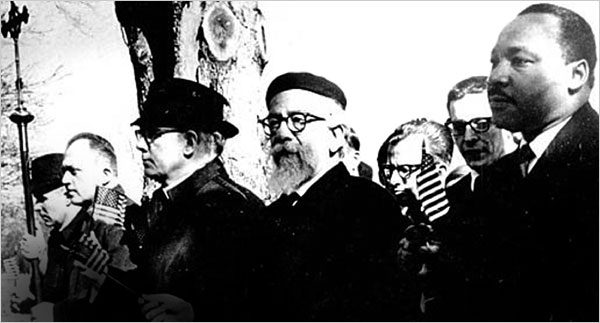
Abraham Joshua Heshel, the great 20th century Jewish rabbi, scholar and civil rights activist whose entire family was killed by the 3rd reich, has written extensively on the subject of justice. Heschel seemed to think that God is not highly invested in the concept of justice, per se, and even then God’s view of justice is far different from ours.
“God’s concern for justice grows out of His compassion for man. The prophets do not speak of a divine relationship to an absolute principle or idea, called justice. They are intoxicated with the awareness of God’s relationship to His people and to all men. Justice is not important for its own sake; the motivation for justice, and the validity of its exercise lie in the blessings it brings to man. For justice, as stated above, is not an abstraction, a value. Justice exists in relation to a person, and is something done by a person. An act of injustice is condemned, not because the law is broken, but because a person has been hurt. What is the image of a person? A person is a being whose anguish may reach the heart of God” – Abraham Joshua Heschel, The Prophets, p. 276.
God doesn’t love justice. God loves people. Justice is not an end in itself, an abstraction, for that would make justice a moral absolute to which God is subject, (Heschel, 277). God’s desire for justice flows out of a deep love for creation, and humankind in particular. God is not attached to justice. God is attached to creation and human beings.
When people suffer injustice they cry out to God, “Aren’t you watching this, Lord? How long until you come balance the scales here? Give us a fair chance!” Heschel says that an essential part of personhood is that our anguish may reach the heart of God, and God moves in response. However, if Heschel is correct, God’s investment is not in a balanced scales, but in human flourishing, and the flourishing of all creation. Which means that justice will always involve mercy, and mercy is different from justice. Mercy means the unjust don’t get what they deserve, but receive mercy instead. If we are going to find a way to be okay with this, we must have humility. Micah was a genius, right? I think Heschel was, too. Perhaps this is the unique perspective only a Jewish rabbi can give, especially after the events of the 20th century, for the Torah and the prophets describe one instance after another of a God who moves in response to the human cry.
God heard the cry of the barren wives of the patriarchs and gave them children. God heart the cry of Hagar and protected her and her banished son. God heard the cry of his people who suffered under the lash of Pharaoh, and God pulled Moses out of Midian in response. God heard the cry of poor dead Abel’s blood as it soaked into the ground. The psalms are unintelligible without a God who hears the human cry. I could go on.
Justice, in the scripture, is not simply a situation in which everybody has a fair shot (when things are in balance). Justice is when everybody has enough, and not just enough, but enough to be who God intended them to be, to fulfill their God given purpose. We can all find meaningful things to do with our hands that are in line with our gifts and passions. We all experience relationships that fill our lives with joy, even in the midst of pain. We find ways to live together in interdependence, mutuality, love, and respect.
So what is God’s plan to work on the wrongs so wrong they can never be made right? On the whole, God’s plan is the same plan God initiated with the call of Abraham: to form a community of people so committed to worship of YHWH, that everybody in that community flourishes. This means that the church is indispensable in the pursuit of justice. Only the main pursuit is not justice, so much as it is the painful and unceasingly arduous task of learning how to worship with other broken people, to pray together, and to live interdependent lives.
The world doesn’t know what to do with a wrong so wrong it can never be made right. The church knows what to do. We do the only thing we can: We tell the truth about it, confessing it to God and to each other. And we forgive–forgive ourselves, forgive each other, forgive the world for being such a mess. Then we simply get on with the business of worship, and living out the transformation the worship of YHWH brings. And in the midst of our workaday lives, we pursue a way of being human that conforms to the pattern of the gospel–a way of being cruciform–and this involves doing justice, loving mercy, and walking humbly. (Even when doing justice causes us to suffer, and when mercy means that people who’ve got it coming–people we are prone to despise–get off scott-free).
Ultimately God’s answer to the injustice of the world is Jesus. But we must not think that Jesus is some kind of Annakin Skywalker, born to restore balance to the force. Jesus was doing, and is doing, what God has always been doing from start: Calling to God a people who would worship God alone, and conform their lives to God’s own pattern of being (cruciform, ecstatic love). If we are drawn into this life, a crazy thing happens: As God begins to hammer God’s image into our lives, we find that our ears become attuned to the cry of the human voice. We learn to respond to injustice in ever more creative and imaginative and powerful ways, with justice, mercy, and humility.
The world may exist in a dog-eat-dog free-for-all. But among God’s people, justice will grow and flourish. Justice will get up a head of steam in our midst. Justice will be done in our midst not because God loves justice (at least not as an ultimate end in mind), but because God loves humans and the good creation God has made. This means (Hauerwas/Willimon), that the church is to be a little colony of heaven in a culture of hell. We are to be the one place where every single life counts. Not because we are committed to the concept of justice, but because we are committed to worshipping the God who hears the cry of the human voice. Because we are so committed, we cannot conceive of living any other way that fully committed to justice, mercy, and humility, and the flourishing of all things.
Previous Post

June 11, 2014
Pentecost Year A, Acts 2:1-2 - The Breath of God
Next Post
June 16, 2014 Monday Morning Confessional
Browse Our Archives
Select a Category abortion corruption Donald Trump elections Empire Entertainment Ezra Klein ideology Justice Lacan politics race Sports Ta-Nehisi Coates Uncategorized
Select a Month September 2026 March 2026 September 2025 March 2025 June 2024 January 2024 December 2023 May 2023 February 2023 October 2022 April 2022 March 2022 December 2021 November 2021 October 2021 September 2021 August 2021 September 2020 July 2020 June 2020 March 2020 September 2019 July 2019 March 2019 February 2019 January 2019 November 2018 October 2018 September 2018 August 2018 July 2018 June 2018 May 2018 April 2018 March 2018 February 2018 December 2017 November 2017 October 2017 September 2017 August 2017 May 2017 April 2017 March 2017 February 2017 January 2017 December 2016 November 2016 October 2016 September 2016 July 2016 June 2016 May 2016 April 2016 March 2016 February 2016 January 2016 December 2015 November 2015 October 2015 September 2015 August 2015 July 2015 June 2015 May 2015 April 2015 March 2015 February 2015 January 2015 December 2014 November 2014 October 2014 September 2014 August 2014 July 2014 June 2014 May 2014 April 2014 March 2014 February 2014 January 2014 December 2013 November 2013 October 2013 September 2013 August 2013 July 2013 June 2013 May 2013 April 2013 March 2013 February 2013 January 2013 December 2012 November 2012 October 2012 September 2012 August 2012 July 2012 June 2012 May 2012 April 2012 March 2012 February 2012 January 2012 December 2011 November 2011 October 2011 September 2011 August 2011 July 2011 June 2011 May 2011 April 2011 March 2011 February 2011 January 2011 August 2010 July 2010 May 2010 April 2010 March 2010 February 2010 January 2010 December 2009 September 2009 August 2009 July 2009 June 2009 May 2009 April 2009 February 2009 January 2009 December 2008 October 2008 September 2008 August 2008 July 2008 June 2008 May 2008 April 2008 March 2008 February 2008 January 2008 November 2007 October 2007 September 2007 August 2007 July 2007 June 2007 May 2007 April 2007 March 2007 February 2007 January 2007 December 2006 October 2006 September 2006 August 2006 July 2006 June 2006 May 2006 April 2006 December 2004 November 2004 October 2004 September 2004 August 2004
Follow Us!
TAKE THE
Religious Wisdom Quiz
In which city did David reign seven years before becoming king over all Israel?
Select your answer to see how you score.
Shechem Bethlehem Jerusalem Hebron
Related posts from Paperback Theology

Slamming Social Justice is Christianity Without Suffering

What About the Real Problems that are Driving...

Christianity Shouldn’t Be Infused With Politics—It Is a...

TRENDING AT PATHEOS Progressive Christian

What Being a Modern-Day Apostle Means to Me
In my last column, I discussed the ins and outs of modern-day...

Did Ancient China Once Worship the God of...
Across human history, a common thread weaves through the origins of the...

Love Your Neighbor – Including Earth-Kin: Lev. 19,...
God’s command to love your neighbor means acting in an ethical and...

Lead a Church Study of “Jesus and Lao...
Guest writer Jack Thomas (The Irreverent Reverend) reflects on leading his church...

Pastoral Wisdom for Responding to Sermon Pushback
Getting sermon pushback on your social justice sermon? Learn practical, Proverbs-based strategies...

Principles for Understanding the Apostolic Ministry Today
Whenever people discover that my formal ministry title is "apostle," as in...
view all Progressive Christian blogs
Ad-Free & Subscriber Log-In Subscription Support
- About Us
- 2026 Calendar
- Videos
- Podcasts
- Library of World Religions
- Faith In Media Tracker
- Advertise With Us
- Write for Us
- Privacy Policy
- Terms of Service
- Do Not Sell My Data
- Contact Us
- Radiant Digital
- Manage Newsletter Subscriptions
- Unsubscribe From Notifications
- Sitemap
Copyright 2008-2026, Patheos. All rights reserved.
Subscription Support Ad-Free & Subscriber Log-In
Follow Patheos