
BuddhistCatholicContemplativeEvangelicalGeneral ChristianHinduJewishLatter-day SaintMuslimNew VisionsProgressive Christian
Beliefs
- Buddhist
- Catholic
- Contemplative
- Evangelical
- General Christian
- Hindu
- Jewish
- Latter-day Saint
- More Voices
- Muslim
- New Visions
- Pagan
- Progressive Christian
Topics
- Religion News
- Food and Religion
- Sports and Religion
- Religious Art
- Religious Music and Entertainment
- Religious Events
- History and Religion
- Style and Religion
- Politics and Religion
- Women in Religion
- Recreation Outdoors and Religion
- Business Finance and Religion
- Careers Workplace and Religion
- Education and Religion
- Family Parenting and Religion
- Health Fitness and Religion
- Home and Religion
- Relationships and Religion
- Technology and Religion
- Travel and Religion
Columnists
- Buddhist Columnists
- Business Finance and Religion Columnists
- Careers Workplace and Religion Columnists
- Catholic Columnists
- Contemplative Columnists
- Education and Religion Columnists
- Evangelists Columnists
- Family Parenting and Religion Columnists
- General Christian Columnists
- Health Fitness and Religion Columnists
- Hindu Columnists
- History and Religion Columnists
- Home and Religion Columnists
- Jewish Columnists
- More Voices Columnists
- Latter Day Columnists
- Muslim Columnists
- New Visions Columnists
- Nonreligious Columnists
- Pagan Columnists
- Politics and Religion Columnists
- Progressive Columnists
- Recreation Outdoors and Religion Columnists
- Relationships and Religion Columnists
- Religion News Columnists
- Religious Art Columnists
- Religious Events Columnists
- Religious Music and Entertainment Columnists
- Sports and Religion Columnists
- Style and Religion Columnists
- Technology and Religion Columnists
- Travel and Religion Columnists
- Women in Religion Columnists
Resource Library
- 2026 Calendar
- Library of World Religions
- The 100 Most Holy Places on Earth
- Patheos Answers
- Podcasts
- Videos
- Faith Leaders Database
- Anglican Episcopalian
- Bahai
- Baptist
- Buddhism
- Christianity
- Confucianism
- Eastern Orthodoxy
- Hinduism
- Holiness and Pentecostal
- ISKCON
- Islam
- Judaism
- Lutheran
- Methodist
- The Church of Jesus Christ of Latter-day Saints
- New Age
- Paganism
- Presbytarian and Reformed
- Protestantism
- Religion Behind the Scenes
- Roman Catholic
- Scientology
- Shia Islam
- Sikhism
- Sufism
- Sunni Islam
- Taoism
- Zen
- See all religions
Research Tools
 Ad-Free & Subscriber Log-In Subscription Support
Ad-Free & Subscriber Log-In Subscription Support
Follow Patheos 

- Trending:
- Forgiveness
- |
- Marriage
- |
- Consciousness
- |
- Death Penalty
- |
- Election
- |
- Halloween

- Home
- Progressive Christian
- Religion News
- The Necessity of Articulation
The Necessity of Articulation
Last updated on: February 18, 2014 at 3:40 pm by Tim Suttle
The Necessity of Articulation 2014-02-18T15:40:17-07:00 Tim Suttle
Patheos Explore the world's faith through different perspectives on religion and spirituality! Patheos has the views of the prevalent religions and spiritualities of the world.
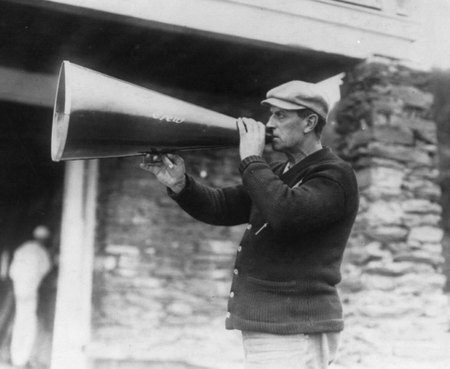 “Everything healthy, everything certain, everything holy, if we can find such things, they all need to be emphasized and articulated. For this it is necessary that there be communication between the hearts and minds of men, communication and not the noise of slogans or the repetition of cliches. Communication is becoming more and more difficult, and … speech is in danger of perishing or being perverted in the amplified noise of beasts…. There is therefore it seems to me every reason why we should attempt to cry out to one another and comfort one another, in so far as this may be possible, with the truth of Christ and also with the truth of humanism and reason. For faith cannot not be preserved if reason goes under, and the Church cannot survive if man is destroyed: that is to say if his humanity is utterly debased and mechanized, while he himself remains on earth as the instrument of enormous and unidentified forces like those which press us inexorably to the brink of cataclysmic war.”
– Thomas Merton (Cold War Letter 3)
__________________________________________________________
My family has started spending time at our church’s ESL program most Monday nights. I’m typically in with the kids, while my wife is helping as a conversation partner with the grown ups. I make two excuses for this: First, I have rock and roll hearing, which is to say, when there’s background noise I struggle. Too many years playing loud guitars. Second, I have trouble with accents. Some people are good at understanding accents, some are not. I’m in the latter category. So I play games with the kiddos while I’m there.
I’ve been wondering, however, if there’s a third reason: I’m somewhat dependent upon, if not outright in love with language. I have such admiration for these friends who come on Monday nights to study English so that they can continue to make their way in our society. I cannot image what it would be like to be plopped down in a new country, and to have to make a living without the ability to articulate my thoughts without constant effort and translation… if language became a constant struggle.
I was born to talk, discuss, read, and write – all of which involve articulation of some sort. I’m a verbal processor, which means I often don’t know what I really think about a subject or issue until I’m able to sit with people and discuss it, or at spend some time trying to write about it. And I am constantly writing whether it be blog posts or articles, books or sermons. I naturally gravitate toward language.
At the same time, I am very much influenced by contemplative spirituality. Folks like Eugene Peterson, Thomas Merton, Richard Rohr and many other mystics taught me new way to connect with God when my old ways had run dry. Among these influences, or maybe more particularly among those who are equally influenced by them, I sometimes sense an underlying bias against the never ending flow of words coming from folks like me. This phenomenon is not always, but sometimes, accompanied by the notion that the mystical is somehow superior to, or prior to any sort of articulation. Shut up and pray, maybe is the message I often perceive.
The whole purpose of centering prayer, a discipline that I practice regularly and so appreciate, is meant to help us to an experience of the presence of God through prayer that is no longer mediated through language – it is a fleeing from the many words to the one word that can mediate God’s presence of God to you personally, and then to push even further on to a place in which words are no longer necessary. Getting the mind out of the way so that the body can receive an awareness of the presence of God dwelling within us through the Holy Spirit is the object of the enterprise, and is an essential practice if we are to chase the contemplative life. This is what I talked about in last week’s post. We need silence.
So I sometimes struggle with the necessity and merit of words. I often wonder if all these words are really necessary. I even feel judged at times by those who always want to point to a more contemplative or mystical place, as though my endless talking and writing is simply a waste of time, or at least an exercise of majoring in minors. When I’m in that place, I often read or re-read this quote from Thomas Merton, and am reminded of the importance of articulation. He reminds me how important words are, and that maybe the real trouble is less with the multiplicity of words, and more with the multiplicity of meaningless, debasing, and coercive words. Slogans. Kitsch.
Merton reminds us that reason is not the enemy, “For faith cannot not be preserved if reason goes under.” Words and the many forms of communication upon which we constantly rely are not the enemy, for there is “every reason why we should attempt to cry out to one another and comfort one another, in so far as this may be possible, with the truth of Christ.”
Reaching for the divine is not something that is averse to language, words, reason, or articulation. There is a sense in that to retreat from the mind is also an impossibility, and one that is essentially dehumanizing in that we can never truly separate the body, the mind, the soul, and the spirit without doing violence to the person. These are just different ways of naming what it means to be a human being, and they are, in the end, integrally connected. Body, mind, soul, and spirit must be constantly integrated if we are to find wholeness.
So I’m not ready to bail on words quite yet, or reason, or writing for that matter. As Merton says, “Everything healthy, everything certain, everything holy, if we can find such things, they all need to be emphasized and articulated.” In the struggle to become fully human as human was meant to be, maybe we really can use all the good words we can get.
Previous Post

February 17, 2014
Monday Morning Confessional
Next Post
February 19, 2014 Epiphany 6A - Matthew 5:21-37; "You've heard it said... but I say"
Browse Our Archives
Select a Category abortion corruption Donald Trump elections Empire Entertainment Ezra Klein ideology Justice Lacan politics race Sports Ta-Nehisi Coates Uncategorized
Select a Month September 2026 March 2026 September 2025 March 2025 June 2024 January 2024 December 2023 May 2023 February 2023 October 2022 April 2022 March 2022 December 2021 November 2021 October 2021 September 2021 August 2021 September 2020 July 2020 June 2020 March 2020 September 2019 July 2019 March 2019 February 2019 January 2019 November 2018 October 2018 September 2018 August 2018 July 2018 June 2018 May 2018 April 2018 March 2018 February 2018 December 2017 November 2017 October 2017 September 2017 August 2017 May 2017 April 2017 March 2017 February 2017 January 2017 December 2016 November 2016 October 2016 September 2016 July 2016 June 2016 May 2016 April 2016 March 2016 February 2016 January 2016 December 2015 November 2015 October 2015 September 2015 August 2015 July 2015 June 2015 May 2015 April 2015 March 2015 February 2015 January 2015 December 2014 November 2014 October 2014 September 2014 August 2014 July 2014 June 2014 May 2014 April 2014 March 2014 February 2014 January 2014 December 2013 November 2013 October 2013 September 2013 August 2013 July 2013 June 2013 May 2013 April 2013 March 2013 February 2013 January 2013 December 2012 November 2012 October 2012 September 2012 August 2012 July 2012 June 2012 May 2012 April 2012 March 2012 February 2012 January 2012 December 2011 November 2011 October 2011 September 2011 August 2011 July 2011 June 2011 May 2011 April 2011 March 2011 February 2011 January 2011 August 2010 July 2010 May 2010 April 2010 March 2010 February 2010 January 2010 December 2009 September 2009 August 2009 July 2009 June 2009 May 2009 April 2009 February 2009 January 2009 December 2008 October 2008 September 2008 August 2008 July 2008 June 2008 May 2008 April 2008 March 2008 February 2008 January 2008 November 2007 October 2007 September 2007 August 2007 July 2007 June 2007 May 2007 April 2007 March 2007 February 2007 January 2007 December 2006 October 2006 September 2006 August 2006 July 2006 June 2006 May 2006 April 2006 December 2004 November 2004 October 2004 September 2004 August 2004
Follow Us!
TAKE THE
Religious Wisdom Quiz
Who was David's military commander and nephew?
Select your answer to see how you score.
Benaiah Ittai Abishai Joab
Related posts from Paperback Theology
10 Thomas Merton Sayings that Sound Just Like...

10 Great Quotes on Thanksgiving and Gratitude

10 Great Words You Should Know and Use...
TRENDING AT PATHEOS Progressive Christian

What Being a Modern-Day Apostle Means to Me
In my last column, I discussed the ins and outs of modern-day...

Did Ancient China Once Worship the God of...
Across human history, a common thread weaves through the origins of the...

Love Your Neighbor – Including Earth-Kin: Lev. 19,...
God’s command to love your neighbor means acting in an ethical and...

Lead a Church Study of “Jesus and Lao...
Guest writer Jack Thomas (The Irreverent Reverend) reflects on leading his church...

Pastoral Wisdom for Responding to Sermon Pushback
Getting sermon pushback on your social justice sermon? Learn practical, Proverbs-based strategies...

Principles for Understanding the Apostolic Ministry Today
Whenever people discover that my formal ministry title is "apostle," as in...
view all Progressive Christian blogs
Ad-Free & Subscriber Log-In Subscription Support
- About Us
- 2026 Calendar
- Videos
- Podcasts
- Library of World Religions
- Faith In Media Tracker
- Advertise With Us
- Write for Us
- Privacy Policy
- Terms of Service
- Do Not Sell My Data
- Contact Us
- Radiant Digital
- Manage Newsletter Subscriptions
- Unsubscribe From Notifications
- Sitemap
Copyright 2008-2026, Patheos. All rights reserved.
Subscription Support Ad-Free & Subscriber Log-In
Follow Patheos