
BuddhistCatholicContemplativeEvangelicalGeneral ChristianHinduJewishLatter-day SaintMuslimNew VisionsProgressive Christian
Beliefs
- Buddhist
- Catholic
- Contemplative
- Evangelical
- General Christian
- Hindu
- Jewish
- Latter-day Saint
- More Voices
- Muslim
- New Visions
- Pagan
- Progressive Christian
Topics
- Religion News
- Food and Religion
- Sports and Religion
- Religious Art
- Religious Music and Entertainment
- Religious Events
- History and Religion
- Style and Religion
- Politics and Religion
- Women in Religion
- Recreation Outdoors and Religion
- Business Finance and Religion
- Careers Workplace and Religion
- Education and Religion
- Family Parenting and Religion
- Health Fitness and Religion
- Home and Religion
- Relationships and Religion
- Technology and Religion
- Travel and Religion
Columnists
- Buddhist Columnists
- Business Finance and Religion Columnists
- Careers Workplace and Religion Columnists
- Catholic Columnists
- Contemplative Columnists
- Education and Religion Columnists
- Evangelists Columnists
- Family Parenting and Religion Columnists
- General Christian Columnists
- Health Fitness and Religion Columnists
- Hindu Columnists
- History and Religion Columnists
- Home and Religion Columnists
- Jewish Columnists
- More Voices Columnists
- Latter Day Columnists
- Muslim Columnists
- New Visions Columnists
- Nonreligious Columnists
- Pagan Columnists
- Politics and Religion Columnists
- Progressive Columnists
- Recreation Outdoors and Religion Columnists
- Relationships and Religion Columnists
- Religion News Columnists
- Religious Art Columnists
- Religious Events Columnists
- Religious Music and Entertainment Columnists
- Sports and Religion Columnists
- Style and Religion Columnists
- Technology and Religion Columnists
- Travel and Religion Columnists
- Women in Religion Columnists
Resource Library
- 2026 Calendar
- Library of World Religions
- The 100 Most Holy Places on Earth
- Patheos Answers
- Podcasts
- Videos
- Faith Leaders Database
- Anglican Episcopalian
- Bahai
- Baptist
- Buddhism
- Christianity
- Confucianism
- Eastern Orthodoxy
- Hinduism
- Holiness and Pentecostal
- ISKCON
- Islam
- Judaism
- Lutheran
- Methodist
- The Church of Jesus Christ of Latter-day Saints
- New Age
- Paganism
- Presbytarian and Reformed
- Protestantism
- Religion Behind the Scenes
- Roman Catholic
- Scientology
- Shia Islam
- Sikhism
- Sufism
- Sunni Islam
- Taoism
- Zen
- See all religions
Research Tools
 Ad-Free & Subscriber Log-In Subscription Support
Ad-Free & Subscriber Log-In Subscription Support
Follow Patheos 

- Trending:
- Forgiveness
- |
- Marriage
- |
- Consciousness
- |
- Death Penalty
- |
- Election
- |
- Halloween

- Home
- Progressive Christian
- Religion News
- Eugene Peterson on What It Means to be a Pastor
Eugene Peterson on What It Means to be a Pastor
Last updated on: October 3, 2013 at 10:34 am by Tim Suttle
Eugene Peterson on What It Means to be a Pastor 2013-10-03T10:34:06-06:00 Tim Suttle
Patheos Explore the world's faith through different perspectives on religion and spirituality! Patheos has the views of the prevalent religions and spiritualities of the world.
I’ve spent a significant portion of the past year working on a manuscript for Zondervan called Shrink: Faithful Ministry in a Church Growth Culture. It’s in editing right now and is supposed to come out in 2014. I’m so hopeful that this book can make a difference for pastors of small churches all over the place. As I’ve been working on this project, I have realized at several points along the way just how important Eugene Peterson has become to my understanding of what it means to be a pastor.
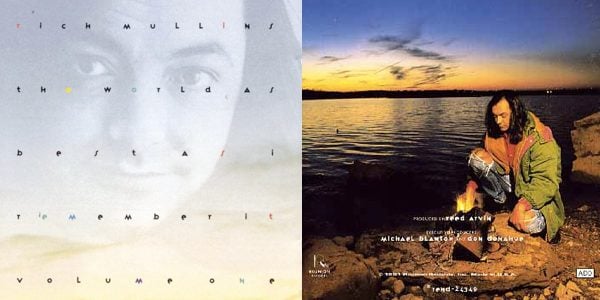
I have always been highly invested in archetypes. My first was Rich Mullins. I tried to emulate everything about him, and his influence on my life is still strong. When Rich died I was left without a living archetype to follow. Peterson has begun to fill part of that role for me, especially in my role as pastor, and in the way I’m trying to write spanning the world of academic theology, and rubber-meets-road ministry.
Honestly I have not read all of Peterson’s work. However, his book The Contemplative Pastor, and his memoir Pastor, have both been very influential in my life. Jonathan Merritt’s recent interview with the pastor is vintage Peterson. Merritt asked Peterson what advice he might give people who are preparing for ministry. I think Peterson’s response is perfect:
“I’d tell them that pastoring is not a very glamorous job. It’s a very taking-out-the-laundry and changing-the-diapers kind of job. And I think I would try to disabuse them of any romantic ideas of what it is. As a pastor, you’ve got to be willing to take people as they are. And live with them where they are. And not impose your will on them. Because God has different ways of being with people, and you don’t always know what they are.”
Man, I hope I’m learning how to do this – take people where they are, and live with them where they are, and especially keep from attempting to impose my will on them. I think that every wise person I’ve ever encountered has encouraged this in some form or another. The reason we have to take people as they are is that “God his different ways of being with people.” God is present with different people in different ways. We cannot prescribe one way as normative and track all people in that direction. It’s not healthy, and it’s not realistic. Peterson continues,
The one thing I think is at the root of a lot of pastors’ restlessness and dissatisfaction is impatience. They think if they get the right system, the right programs, the right place, the right location, the right demographics, it’ll be a snap. And for some people it is: if you’re a good actor, if you have a big smile, if you are an extrovert. In some ways, a religious crowd is the easiest crowd to gather in the world. Our country’s full of examples of that. But for most, pastoring is a very ordinary way to live. And it is difficult in many ways because your time is not your own, for the most part, and the whole culture is against you. This consumer culture, people grow up determining what they want to do by what they can consume. And the Christian gospel is just quite the opposite of that. And people don’t know that. And pastors don’t know that when they start out. We’ve got a whole culture that is programmed to please people, telling them what they want. And if you do that, you might end up with a big church, but you won’t be a pastor.
One of the hardest lessons I’ve ever had to learn in my life is patience, and I’m still learning it. I’m pretty sure that I’ll never stop having to learn it, over and over. One of the most essential components of learning patience for a pastor is letting go of outcomes. We can keep telling people what they want to hear all day long, and if we do we might end up with a big church, but that’s not pastoring. You know when you become a pastor? The moment you realize that you are always going to be the annoying person in the room telling people what they don’t really want to hear, but need to hear anyway. Telling yourself, too.
His advice for younger Christians:
“Go to the nearest smallest church and commit yourself to being there for 6 months. If it doesn’t work out, find somewhere else. But don’t look for programs, don’t look for entertainment, and don’t look for a great preacher. A Christian congregation is not a glamorous place, not a romantic place. That’s what I always told people. If people were leaving my congregation to go to another place of work, I’d say, “The smallest church, the closest church, and stay there for 6 months.” Sometimes it doesn’t work. Some pastors are just incompetent. And some are flat out bad. So I don’t think that’s the answer to everything, but it’s a better place to start than going to the one with all the programs, the glitz, all that stuff.”

Browse Our Archives
Select a Category abortion corruption Donald Trump elections Empire Entertainment Ezra Klein ideology Justice Lacan politics race Sports Ta-Nehisi Coates Uncategorized
Select a Month September 2026 March 2026 September 2025 March 2025 June 2024 January 2024 December 2023 May 2023 February 2023 October 2022 April 2022 March 2022 December 2021 November 2021 October 2021 September 2021 August 2021 September 2020 July 2020 June 2020 March 2020 September 2019 July 2019 March 2019 February 2019 January 2019 November 2018 October 2018 September 2018 August 2018 July 2018 June 2018 May 2018 April 2018 March 2018 February 2018 December 2017 November 2017 October 2017 September 2017 August 2017 May 2017 April 2017 March 2017 February 2017 January 2017 December 2016 November 2016 October 2016 September 2016 July 2016 June 2016 May 2016 April 2016 March 2016 February 2016 January 2016 December 2015 November 2015 October 2015 September 2015 August 2015 July 2015 June 2015 May 2015 April 2015 March 2015 February 2015 January 2015 December 2014 November 2014 October 2014 September 2014 August 2014 July 2014 June 2014 May 2014 April 2014 March 2014 February 2014 January 2014 December 2013 November 2013 October 2013 September 2013 August 2013 July 2013 June 2013 May 2013 April 2013 March 2013 February 2013 January 2013 December 2012 November 2012 October 2012 September 2012 August 2012 July 2012 June 2012 May 2012 April 2012 March 2012 February 2012 January 2012 December 2011 November 2011 October 2011 September 2011 August 2011 July 2011 June 2011 May 2011 April 2011 March 2011 February 2011 January 2011 August 2010 July 2010 May 2010 April 2010 March 2010 February 2010 January 2010 December 2009 September 2009 August 2009 July 2009 June 2009 May 2009 April 2009 February 2009 January 2009 December 2008 October 2008 September 2008 August 2008 July 2008 June 2008 May 2008 April 2008 March 2008 February 2008 January 2008 November 2007 October 2007 September 2007 August 2007 July 2007 June 2007 May 2007 April 2007 March 2007 February 2007 January 2007 December 2006 October 2006 September 2006 August 2006 July 2006 June 2006 May 2006 April 2006 December 2004 November 2004 October 2004 September 2004 August 2004
Follow Us!
TAKE THE
Religious Wisdom Quiz
Whom did Paul leave sick at Miletus, showing that early Christians sometimes suffered illness?
Select your answer to see how you score.
Silas Barnabas Timothy Trophimus
Related posts from Paperback Theology

Rich Mullins: Born On This Day in 1955

Rich Mullins Died 23 Years Ago Today: Here's...

Rich Mullins Would've been 63 Years Old Today...
Rich Mullins Died 21 Years Ago Today: Here's...
TRENDING AT PATHEOS Progressive Christian

What Being a Modern-Day Apostle Means to Me
In my last column, I discussed the ins and outs of modern-day...

Did Ancient China Once Worship the God of...
Across human history, a common thread weaves through the origins of the...

Love Your Neighbor – Including Earth-Kin: Lev. 19,...
God’s command to love your neighbor means acting in an ethical and...

Lead a Church Study of “Jesus and Lao...
Guest writer Jack Thomas (The Irreverent Reverend) reflects on leading his church...

Pastoral Wisdom for Responding to Sermon Pushback
Getting sermon pushback on your social justice sermon? Learn practical, Proverbs-based strategies...

Principles for Understanding the Apostolic Ministry Today
Whenever people discover that my formal ministry title is "apostle," as in...
view all Progressive Christian blogs
Ad-Free & Subscriber Log-In Subscription Support
- About Us
- 2026 Calendar
- Videos
- Podcasts
- Library of World Religions
- Faith In Media Tracker
- Advertise With Us
- Write for Us
- Privacy Policy
- Terms of Service
- Do Not Sell My Data
- Contact Us
- Radiant Digital
- Manage Newsletter Subscriptions
- Unsubscribe From Notifications
- Sitemap
Copyright 2008-2026, Patheos. All rights reserved.
Subscription Support Ad-Free & Subscriber Log-In
Follow Patheos