
BuddhistCatholicContemplativeEvangelicalGeneral ChristianHinduJewishLatter-day SaintMuslimNew VisionsProgressive Christian
Beliefs
- Buddhist
- Catholic
- Contemplative
- Evangelical
- General Christian
- Hindu
- Jewish
- Latter-day Saint
- More Voices
- Muslim
- New Visions
- Pagan
- Progressive Christian
Topics
- Religion News
- Food and Religion
- Sports and Religion
- Religious Art
- Religious Music and Entertainment
- Religious Events
- History and Religion
- Style and Religion
- Politics and Religion
- Women in Religion
- Recreation Outdoors and Religion
- Business Finance and Religion
- Careers Workplace and Religion
- Education and Religion
- Family Parenting and Religion
- Health Fitness and Religion
- Home and Religion
- Relationships and Religion
- Technology and Religion
- Travel and Religion
Columnists
- Buddhist Columnists
- Business Finance and Religion Columnists
- Careers Workplace and Religion Columnists
- Catholic Columnists
- Contemplative Columnists
- Education and Religion Columnists
- Evangelists Columnists
- Family Parenting and Religion Columnists
- General Christian Columnists
- Health Fitness and Religion Columnists
- Hindu Columnists
- History and Religion Columnists
- Home and Religion Columnists
- Jewish Columnists
- More Voices Columnists
- Latter Day Columnists
- Muslim Columnists
- New Visions Columnists
- Nonreligious Columnists
- Pagan Columnists
- Politics and Religion Columnists
- Progressive Columnists
- Recreation Outdoors and Religion Columnists
- Relationships and Religion Columnists
- Religion News Columnists
- Religious Art Columnists
- Religious Events Columnists
- Religious Music and Entertainment Columnists
- Sports and Religion Columnists
- Style and Religion Columnists
- Technology and Religion Columnists
- Travel and Religion Columnists
- Women in Religion Columnists
Resource Library
- 2026 Calendar
- Library of World Religions
- The 100 Most Holy Places on Earth
- Patheos Answers
- Podcasts
- Videos
- Faith Leaders Database
- Anglican Episcopalian
- Bahai
- Baptist
- Buddhism
- Christianity
- Confucianism
- Eastern Orthodoxy
- Hinduism
- Holiness and Pentecostal
- ISKCON
- Islam
- Judaism
- Lutheran
- Methodist
- The Church of Jesus Christ of Latter-day Saints
- New Age
- Paganism
- Presbytarian and Reformed
- Protestantism
- Religion Behind the Scenes
- Roman Catholic
- Scientology
- Shia Islam
- Sikhism
- Sufism
- Sunni Islam
- Taoism
- Zen
- See all religions
Research Tools
 Ad-Free & Subscriber Log-In Subscription Support
Ad-Free & Subscriber Log-In Subscription Support
Follow Patheos 

- Trending:
- Forgiveness
- |
- Marriage
- |
- Consciousness
- |
- Death Penalty
- |
- Election
- |
- Halloween

- Home
- Progressive Christian
- Religion News
- How King’s Immortal “I Have a Dream” Almost Never Happened
How King’s Immortal “I Have a Dream” Almost Never Happened
Last updated on: August 28, 2013 at 7:24 am by Tim Suttle
How King’s Immortal “I Have a Dream” Almost Never Happened 2013-08-28T07:24:39-06:00 Tim Suttle
Patheos Explore the world's faith through different perspectives on religion and spirituality! Patheos has the views of the prevalent religions and spiritualities of the world.
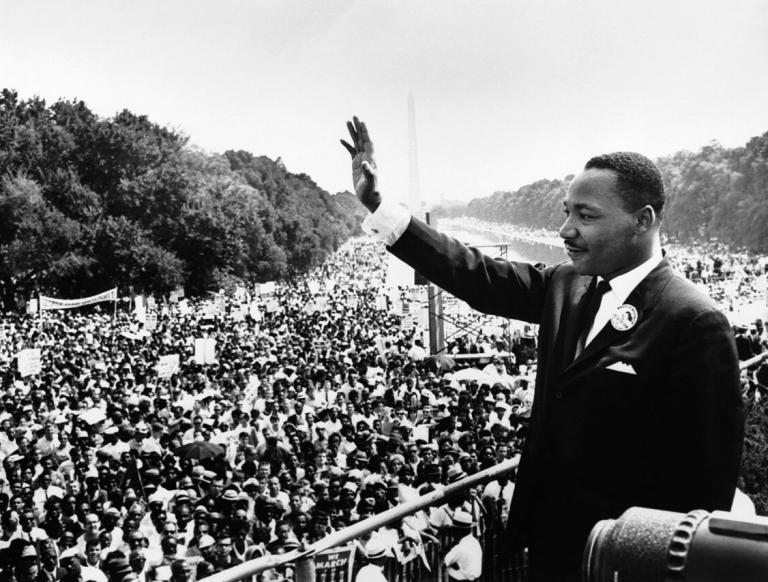 As I read through the articles on Dr. Martin Luther King Jr.’s famous “I Have a Dream” speech from 50 years ago today, I was fascinated by the account in The New York Times. It told a story from the platform that I had never heard before.
Dr. King was about halfway through his prepared speech when Mahalia Jackson — who earlier that day had delivered a stirring rendition of the spiritual “I Been ’Buked and I Been Scorned” — shouted out to him from the speakers’ stand: “Tell ’em about the ‘Dream,’ Martin, tell ’em about the ‘Dream’!” She was referring to a riff he had delivered on earlier occasions, and Dr. King pushed the text of his remarks to the side and began an extraordinary improvisation on the dream theme that would become one of the most recognizable refrains in the world.
With his improvised riff, Dr. King took a leap into history, jumping from prose to poetry, from the podium to the pulpit. His voice arced into an emotional crescendo as he turned from a sobering assessment of current social injustices to a radiant vision of hope — of what America could be. “I have a dream,” he declared, “my four little children will one day live in a nation where they will not be judged by the color of their skin but by the content of their character. I have a dream today!”
Nobody knows if he planned to do the riff anyway, but I had no idea that the most famous portion of his remarks that day were not even in the written text. I don’t know which is my favorite, the “I have a dream” riff or the “I’ve been to the mountain top” riff that he delivered in Memphis the night before he was assassinated. King has to go down as one of the greatest American orators of the 20th Century.
As I reflect on Dr. King’s legacy and the work he did I think what a courageous life he lived. I’m reminded of the power of non-violence, and the incredible patience of civil rights leaders. Courage and patience, two necessary virtues for those who work for justice. Still, racial inequality is alive and well today, and I must confess how little I do to work against it. Injustice is still embedded in the systems of our society, and income inequality is still largely organized by race. We still have a lot of work to do.
I’m thankful that the 50th anniversary of this phenomenal speech is receiving such attention. I hope that it will renew our passion to pursue social justice. Stanley Hauerwas has often remarked that one of the unintended consequences of electing a black president is the tendency to believe that racial inequality has finally been resolved. Of course we know it hasn’t. An interesting article at Bloomberg cites evidence.
Since the June 2009 end of the recession, median income for black households has dropped 10.9 percent, compared with a 3.6 percent fall for white households, Sentier Research, an economic-consulting firm in Annapolis, Maryland, said last week.
Today, while the poverty rate for blacks has improved over the last five decades, it’s still greater than one in four — and almost three times worse than for whites.
In 1966, the closest year from the speech for which census data are available, 42 percent of blacks lived in poverty compared with 11 percent of whites. By 2011, 28 percent of blacks were impoverished compared with less than 10 percent of whites.
While the nation’s 44.5 million blacks made up 14.2 percent of the population in 2012, they were only 8.9 percent of college graduates and held 8.2 percent of management and professional jobs, according to census and Bureau of Labor Statistics data.
Most alarming from the Bloomberg article is the income gap:
Five decades after King spoke of the “great vaults of opportunity of this nation,” median black family income is more than 40 percent below that of whites. As of June, black households were earning an annual median of $33,519 compared with $58,000 for whites, according to Sentier Research.
Another interesting article you might read is by economist Joseph Stiglitz. “Like so many looking back over the past 50 years,” Stiglitz says, “I cannot but be struck by the gap between our aspirations then and what we have accomplished.” He tells the story of his participation in the March on Washington, in which he adds this critique of the current Supreme Court.
The night before the March on Washington for Jobs and Freedom, I had stayed at the home of a college classmate whose father, Arthur J. Goldberg, was an associate justice of the Supreme Court and was committed to bringing about economic justice. Who would have imagined, 50 years later, that this very body, which had once seemed determined to usher in a more fair and inclusive America, would become the instrument for preserving inequalities: allowing nearly unlimited corporate spending to influence political campaigns, pretending that the legacy of voting discrimination no longer exists, and restricting the rights of workers and other plaintiffs to sue employers and companies for misconduct?
Previous Post

August 26, 2013
Monday Morning Confessional
Next Post
August 30, 2013 Sheep Labor Protest/Political Rally - A Little Friday Funny
Browse Our Archives
Select a Category abortion corruption Donald Trump elections Empire Entertainment Ezra Klein ideology Justice Lacan politics race Sports Ta-Nehisi Coates Uncategorized
Select a Month September 2026 March 2026 September 2025 March 2025 June 2024 January 2024 December 2023 May 2023 February 2023 October 2022 April 2022 March 2022 December 2021 November 2021 October 2021 September 2021 August 2021 September 2020 July 2020 June 2020 March 2020 September 2019 July 2019 March 2019 February 2019 January 2019 November 2018 October 2018 September 2018 August 2018 July 2018 June 2018 May 2018 April 2018 March 2018 February 2018 December 2017 November 2017 October 2017 September 2017 August 2017 May 2017 April 2017 March 2017 February 2017 January 2017 December 2016 November 2016 October 2016 September 2016 July 2016 June 2016 May 2016 April 2016 March 2016 February 2016 January 2016 December 2015 November 2015 October 2015 September 2015 August 2015 July 2015 June 2015 May 2015 April 2015 March 2015 February 2015 January 2015 December 2014 November 2014 October 2014 September 2014 August 2014 July 2014 June 2014 May 2014 April 2014 March 2014 February 2014 January 2014 December 2013 November 2013 October 2013 September 2013 August 2013 July 2013 June 2013 May 2013 April 2013 March 2013 February 2013 January 2013 December 2012 November 2012 October 2012 September 2012 August 2012 July 2012 June 2012 May 2012 April 2012 March 2012 February 2012 January 2012 December 2011 November 2011 October 2011 September 2011 August 2011 July 2011 June 2011 May 2011 April 2011 March 2011 February 2011 January 2011 August 2010 July 2010 May 2010 April 2010 March 2010 February 2010 January 2010 December 2009 September 2009 August 2009 July 2009 June 2009 May 2009 April 2009 February 2009 January 2009 December 2008 October 2008 September 2008 August 2008 July 2008 June 2008 May 2008 April 2008 March 2008 February 2008 January 2008 November 2007 October 2007 September 2007 August 2007 July 2007 June 2007 May 2007 April 2007 March 2007 February 2007 January 2007 December 2006 October 2006 September 2006 August 2006 July 2006 June 2006 May 2006 April 2006 December 2004 November 2004 October 2004 September 2004 August 2004
Follow Us!
TAKE THE
Religious Wisdom Quiz
Who built the Tower of Babel?
Select your answer to see how you score.
The Canaanites The people of Shinar The Babylonians The Philistines
Related posts from Paperback Theology
What About the Real Problems that are Driving...

Christianity Shouldn’t Be Infused With Politics—It Is a...


Faith Isn't Just About Beliefs: Faith is About...
TRENDING AT PATHEOS Progressive Christian

Why Christians Have a Sacred Duty to Vote:...
The Bible offers strong support for the sacred duty to vote. Here...

What Being a Modern-Day Apostle Means to Me
In my last column, I discussed the ins and outs of modern-day...

Did Ancient China Once Worship the God of...
Across human history, a common thread weaves through the origins of the...

Love Your Neighbor – Including Earth-Kin: Lev. 19,...
God’s command to love your neighbor means acting in an ethical and...

Lead a Church Study of “Jesus and Lao...
Guest writer Jack Thomas (The Irreverent Reverend) reflects on leading his church...

Principles for Understanding the Apostolic Ministry Today
Whenever people discover that my formal ministry title is "apostle," as in...
view all Progressive Christian blogs
Ad-Free & Subscriber Log-In Subscription Support
- About Us
- 2026 Calendar
- Videos
- Podcasts
- Library of World Religions
- Faith In Media Tracker
- Advertise With Us
- Write for Us
- Privacy Policy
- Terms of Service
- Do Not Sell My Data
- Contact Us
- Radiant Digital
- Manage Newsletter Subscriptions
- Unsubscribe From Notifications
- Sitemap
Copyright 2008-2026, Patheos. All rights reserved.
Subscription Support Ad-Free & Subscriber Log-In
Follow Patheos