
BuddhistCatholicContemplativeEvangelicalGeneral ChristianHinduJewishLatter-day SaintMuslimNew VisionsProgressive Christian
Beliefs
- Buddhist
- Catholic
- Contemplative
- Evangelical
- General Christian
- Hindu
- Jewish
- Latter-day Saint
- More Voices
- Muslim
- New Visions
- Pagan
- Progressive Christian
Topics
- Religion News
- Food and Religion
- Sports and Religion
- Religious Art
- Religious Music and Entertainment
- Religious Events
- History and Religion
- Style and Religion
- Politics and Religion
- Women in Religion
- Recreation Outdoors and Religion
- Business Finance and Religion
- Careers Workplace and Religion
- Education and Religion
- Family Parenting and Religion
- Health Fitness and Religion
- Home and Religion
- Relationships and Religion
- Technology and Religion
- Travel and Religion
Columnists
- Buddhist Columnists
- Business Finance and Religion Columnists
- Careers Workplace and Religion Columnists
- Catholic Columnists
- Contemplative Columnists
- Education and Religion Columnists
- Evangelists Columnists
- Family Parenting and Religion Columnists
- General Christian Columnists
- Health Fitness and Religion Columnists
- Hindu Columnists
- History and Religion Columnists
- Home and Religion Columnists
- Jewish Columnists
- More Voices Columnists
- Latter Day Columnists
- Muslim Columnists
- New Visions Columnists
- Nonreligious Columnists
- Pagan Columnists
- Politics and Religion Columnists
- Progressive Columnists
- Recreation Outdoors and Religion Columnists
- Relationships and Religion Columnists
- Religion News Columnists
- Religious Art Columnists
- Religious Events Columnists
- Religious Music and Entertainment Columnists
- Sports and Religion Columnists
- Style and Religion Columnists
- Technology and Religion Columnists
- Travel and Religion Columnists
- Women in Religion Columnists
Resource Library
- 2026 Calendar
- Library of World Religions
- The 100 Most Holy Places on Earth
- Patheos Answers
- Podcasts
- Videos
- Faith Leaders Database
- Anglican Episcopalian
- Bahai
- Baptist
- Buddhism
- Christianity
- Confucianism
- Eastern Orthodoxy
- Hinduism
- Holiness and Pentecostal
- ISKCON
- Islam
- Judaism
- Lutheran
- Methodist
- The Church of Jesus Christ of Latter-day Saints
- New Age
- Paganism
- Presbytarian and Reformed
- Protestantism
- Religion Behind the Scenes
- Roman Catholic
- Scientology
- Shia Islam
- Sikhism
- Sufism
- Sunni Islam
- Taoism
- Zen
- See all religions
Research Tools
 Ad-Free & Subscriber Log-In Subscription Support
Ad-Free & Subscriber Log-In Subscription Support
Follow Patheos 

- Trending:
- Forgiveness
- |
- Marriage
- |
- Consciousness
- |
- Death Penalty
- |
- Election
- |
- Halloween
 PANTHEON
- Home
- Pagan
- Wyrd Designs: Q and A – Ritual Quarters?
Wyrd Designs: Q and A – Ritual Quarters?
Last updated on: August 2, 2010 at 5:57 am by wyrddesigns
Wyrd Designs: Q and A – Ritual Quarters? 2010-08-02T05:57:56-04:00 wyrddesigns
Patheos Explore the world's faith through different perspectives on religion and spirituality! Patheos has the views of the prevalent religions and spiritualities of the world.
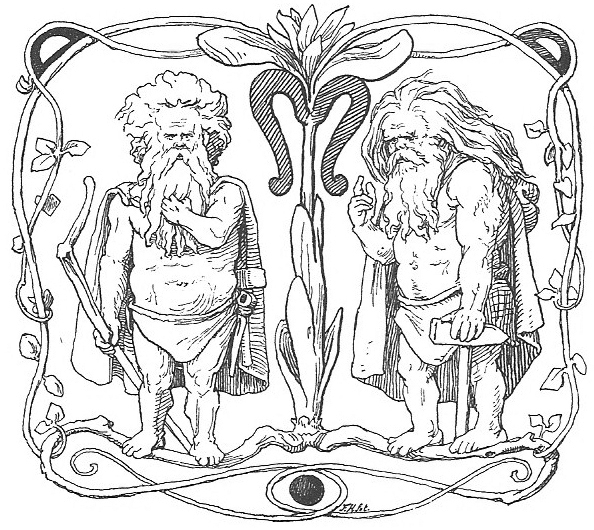
Star Foster asked: The Asatruar rituals I have seen call on the four dwarves holding up Ymir’s sky-skull. It’s an awful lot like calling the corners in Wicca. Is there any controversy over the similarity?
To answer this question, I’m going to back out a bit to the bigger picture to hopefully explain the connection from what we know of the ancient past, to certain aspects of the evolution of the modern religion and how it is practiced today. When someone goes searching through the vast amounts of ‘lore’ (sagas, skaldic and eddic poetry), as well as accounts written by outside travelers (like the Romans, or various Muslim travelers) to try to reconstruct religious practices, while there are indeed many references to such practices, unfortunately they tend to be rather brief and essentially consist of “they held a ritual”, which in the scheme of things isn’t terribly helpful for those of us today who would like to know exactly how such rituals may have been performed.
One of the few detailed surviving examples for a ritual comes from The Æcer Bót found in the Anglo-Saxon text, Lácunga. Unfortunately, this ritual has been Christianized and focuses on rectifying problems with the land whether it is infertile for some natural reason or if something unwholesome had been done to the land through some form of sorcery. So it’s not terribly useful for most people who are looking for a ritual structure that they can use to honor the Gods.
One of the most thorough descriptions of a ritual, can be found in Heimskringla, as it outlines a specific ritual known as blot. The word blot derives from the Old Norse word for ‘sacrifice’ and indeed refers to animal (and sometimes human) sacrifice. In the modern context many in the Northern Tradition use the term blot to refer to any ritual where items are given in offering specifically to the Gods. There are a few believers who choose to only use the term to refer to an actual animal sacrifice, and for other type of rituals with offerings given specific to the gods (ancestors, etc.) these persons tend to opt to use an alternate term faining instead for these rites sans blood sacrifices.
HALLOWING IN THE ANCIENT PAST
Rituals were usually conducted in sites that were already attributed by ancient believers as being sacred sites, these included sacred groves, temples, and so forth. We don’t see much mention in the lore as to how these sites were specifically consecrated or hallowed, or if they needed to re-consecrated with every rite.
We do know that depictions of Thor and/or his hammer were used as a means of consecration or blessing as found in Bronze Age rock carvings, Danish and Swedish runestone inscriptions, as well as in the consecration of marriage as seen in Þrymskvida. We also know thanks to Heimskringla’s Saga of Hakon the Good that there’s at least one reference to the sign of the hammer being made (although the context of this particular tale suggests this may not have been a normal occurrence).
Now why do we see SO much evidence of Thor as a consecrator here, and not much with the other Gods? The ancient cultures that worshipped these Gods were primarily oral in nature, and we see that there are transitions in popularity with the Gods both as time passes, but also from one community to another. For whatever reason, at the time of Christian conversion Thor tended to be one of the more popular Gods, and since this was the period of time when we first begin to truly see a written record with these peoples much of our historical written texts are but a ‘snapshot’ of a culture that had existed for thousands of year in varying forms. Some scholars have theorized Thor’s prominence during this period of time may have been because of his function as a defender of Asgard and Midgard in the tales, so that as native heathens felt their way of life threatened by the encroachment of Christianity they turned to HIM to protect their faith.
So do we know of any ancient types of consecration that may have referenced the cardinal directions?
The Æcer Bót does reference physically taking tufts of sod from the 4 corners of the unwholesome land in question. While not being used specifically to hallow the space, certain things are done to these 4 pieces of sod to help rectify, cleanse and bless the whole of the land in question. To my recollection, this is the only thing that comes close to the ‘quarters’ being used in a ritual setting in the ancient past. Some other of the Anglo-Saxon Charms, feature evangelists names’ at the quarters, and so some theorize these were Christianized versions of earlier pagan rites that had Gods or other numinous beings at the quarters instead.
The only other mentions I recall to the directions comes in the snippets of our lore that tell our creation story.
Continued –>
Previous Post

August 1, 2010
World's Most Famous Wiccan Weds!
Next Post
August 3, 2010 Book Review: Exploring the Northern Tradition by Galina Krasskova
Browse Our Archives
Select a Category alexandrian asatru astrology ATW Audio books btw ceremonial magick chaos classics community conversion cosmology dianic discordian druid dvd eclectic equinox ethics family feri festivals film Fully Inclusive Events gardnerian gender issues glbt heathen hellenismos history humor initiation interfaith magick meditation Military movies music mysticism myth networking news Open Thread Pagan Pagan 101 Paganism passings polytheism Polytheistic Religion polytheology praxis Reading List religio romana review ritual sabbats santeria service solstice symbols tools values wicca witchcraft
Select a Month July 2016 May 2016 April 2016 March 2016 February 2016 January 2016 December 2015 September 2012 August 2012 July 2012 June 2012 May 2012 April 2012 March 2012 February 2012 January 2012 December 2011 November 2011 October 2011 September 2011 August 2011 July 2011 June 2011 May 2011 April 2011 March 2011 February 2011 January 2011 December 2010 November 2010 October 2010 September 2010 August 2010 July 2010 June 2010 May 2010 April 2010 March 2010
TAKE THE
Religious Wisdom Quiz
Which Psalm opens with "Blessed is the man"?
Select your answer to see how you score.
Psalm 51 Psalm 119 Psalm 1 Psalm 23
Related posts from PANTHEON

Miasma Matters: Concerning Purity

A Generation of Converts: Back to a Life...

Wiccanate: Or You Think This Post Is About...

New Ancestors: Saying Goodbye, Saying Hello
TRENDING AT PATHEOS Pagan

I was recently chatting with someone on Instagram. She asked me what...

While there are many people who share their results, the end of...

On July 23, I saw Christopher Nolan's The Odyssey which is Homer’s...

As I write this two big events have just finished up. One...

Restoring the Watershed of Divine Love
Perhaps cooperation is not something we manufacture through legislation, ideology, or moral...

Many UUs don’t pray because of bad experiences in a previous religion,...
view all Pagan blogs
Ad-Free & Subscriber Log-In Subscription Support
- About Us
- 2026 Calendar
- Videos
- Podcasts
- Library of World Religions
- Faith In Media Tracker
- Advertise With Us
- Write for Us
- Privacy Policy
- Terms of Service
- Do Not Sell My Data
- Contact Us
- Radiant Digital
- Manage Newsletter Subscriptions
- Unsubscribe From Notifications
- Sitemap
Copyright 2008-2026, Patheos. All rights reserved.
Subscription Support Ad-Free & Subscriber Log-In
Follow Patheos