
BuddhistCatholicContemplativeEvangelicalGeneral ChristianHinduJewishLatter-day SaintMuslimNew VisionsProgressive Christian
Beliefs
- Buddhist
- Catholic
- Contemplative
- Evangelical
- General Christian
- Hindu
- Jewish
- Latter-day Saint
- More Voices
- Muslim
- New Visions
- Pagan
- Progressive Christian
Topics
- Religion News
- Food and Religion
- Sports and Religion
- Religious Art
- Religious Music and Entertainment
- Religious Events
- History and Religion
- Style and Religion
- Politics and Religion
- Women in Religion
- Recreation Outdoors and Religion
- Business Finance and Religion
- Careers Workplace and Religion
- Education and Religion
- Family Parenting and Religion
- Health Fitness and Religion
- Home and Religion
- Relationships and Religion
- Technology and Religion
- Travel and Religion
Columnists
- Buddhist Columnists
- Business Finance and Religion Columnists
- Careers Workplace and Religion Columnists
- Catholic Columnists
- Contemplative Columnists
- Education and Religion Columnists
- Evangelists Columnists
- Family Parenting and Religion Columnists
- General Christian Columnists
- Health Fitness and Religion Columnists
- Hindu Columnists
- History and Religion Columnists
- Home and Religion Columnists
- Jewish Columnists
- More Voices Columnists
- Latter Day Columnists
- Muslim Columnists
- New Visions Columnists
- Nonreligious Columnists
- Pagan Columnists
- Politics and Religion Columnists
- Progressive Columnists
- Recreation Outdoors and Religion Columnists
- Relationships and Religion Columnists
- Religion News Columnists
- Religious Art Columnists
- Religious Events Columnists
- Religious Music and Entertainment Columnists
- Sports and Religion Columnists
- Style and Religion Columnists
- Technology and Religion Columnists
- Travel and Religion Columnists
- Women in Religion Columnists
Resource Library
- 2026 Calendar
- Library of World Religions
- The 100 Most Holy Places on Earth
- Patheos Answers
- Podcasts
- Videos
- Faith Leaders Database
- Anglican Episcopalian
- Bahai
- Baptist
- Buddhism
- Christianity
- Confucianism
- Eastern Orthodoxy
- Hinduism
- Holiness and Pentecostal
- ISKCON
- Islam
- Judaism
- Lutheran
- Methodist
- The Church of Jesus Christ of Latter-day Saints
- New Age
- Paganism
- Presbytarian and Reformed
- Protestantism
- Religion Behind the Scenes
- Roman Catholic
- Scientology
- Shia Islam
- Sikhism
- Sufism
- Sunni Islam
- Taoism
- Zen
- See all religions
Research Tools
 Ad-Free & Subscriber Log-In Subscription Support
Ad-Free & Subscriber Log-In Subscription Support
Follow Patheos 

- Trending:
- Forgiveness
- |
- Marriage
- |
- Consciousness
- |
- Death Penalty
- |
- Election
- |
- Halloween

- HOME
- Me and the Blog
- Defining Pagan
- Rituals & Holidays
- All Posts
- Blogroll
- Publications
- FREE NEWSLETTER
- Home
- Pagan
- America’s Most Important Occultist(s)
America’s Most Important Occultist(s)
Last updated on: August 18, 2021 at 1:23 pm by Jason Mankey
America’s Most Important Occultist(s) 2021-08-18T13:23:10-06:00 Jason Mankey
Patheos Explore the world's faith through different perspectives on religion and spirituality! Patheos has the views of the prevalent religions and spiritualities of the world.
I love the history of magick and the occult. Despite what mainstream history books suggest, magickal and occult practices have always been popular. While many Witches and Pagans consider themselves a part of the occult world, there aren’t very many Witches and Pagans on this list. Part of that is because our numbers are small, and part of that is because this list includes a lot of people who would have never imagined calling themselves such things.
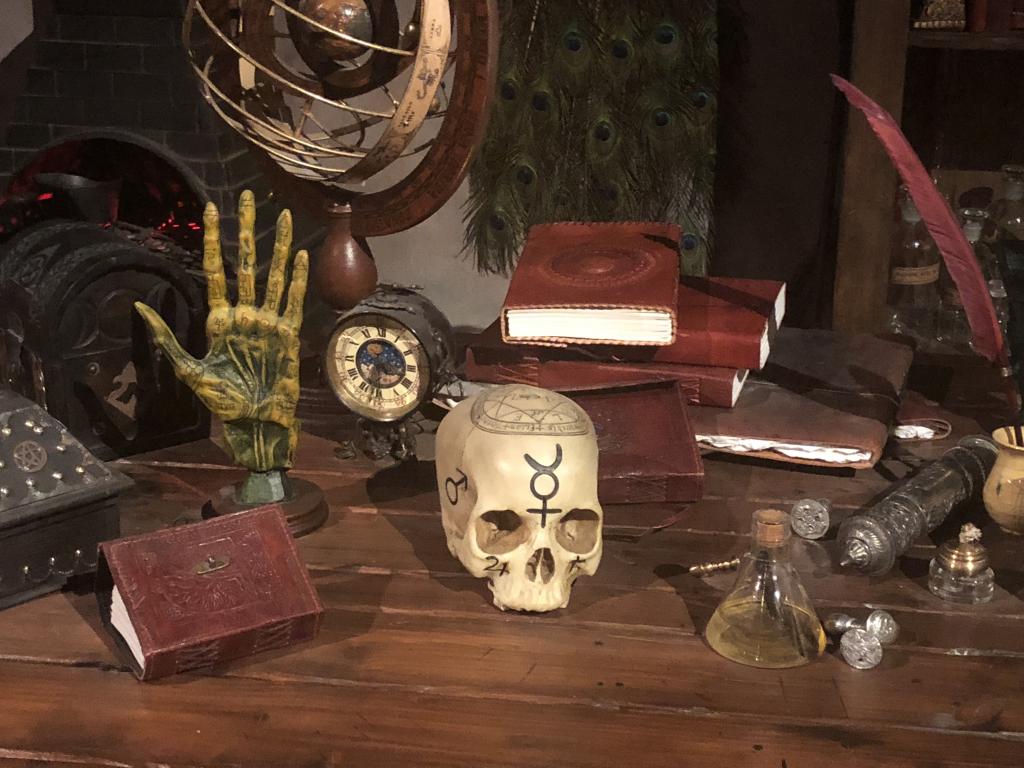
The term occult can be problematic especially in Modern Pagan and Witch circles. The “occult” includes a wide range of things, and many of them seem to have no direct impact on what many of us do today. I’d argue that’s probably not the case, anyone who goes against the mainstream probably has influenced our community today, even if those influences might not be readily apparent.
I bring all of this up because John Beckett recently suggest that American Rocket Scientist and Occultist Jack Parsons (1914-1952) was “arguably the greatest American occultist and the greatest American rocket scientist of the 20th Century.” I’m not here to argue against John, in this very blog I’ve argued that Parsons influence could have truly been transformative. What John’s post did was make me wonder once again, who has been America’s most important and influential occultist?
Before I get to my list of candidates let me say that I don’t have a good answer here. The criteria used to judge people is so subjective that choosing someone to represent the broad arena of “occultism” is probably a fool’s errand. In specific world’s, such as Witchcraft, choosing a “most influential person” is much easier (the answer there is Gerald Gardner). But because the point of blogging is to have fun, let’s take a look at some candidates for America’s greatest occultist . . . .
John George Hohman (1780’s(?)-1846)
Hohman is most well known for writing The Long Lost Friend, or Pow-Wows as it was known in later editions. The Long Lost Friend was originally published in German and featured a variety of spells and information gathered by Hohman from various sources. The Friend was America’s first great grimoire and it’s spell have shown up in a variety of magickal traditions. Originally published for the community we know today as the Pennsylvania Dutch the Friend has been a best seller since its original publication in 1820.
Marie Laveau (1801-1881)
Laveau is the most well-known magick practitioner in the history of the United States. Writing about Laveau can be difficult because we don’t know as much about her as most of us would wish, but she was undoubtedly influential in New Orleans, was a devout Catholic, and practiced New Orleans Voodoo. After her passing in 1881 there was even a second Marie Laveau adding to the great woman’s mystery.
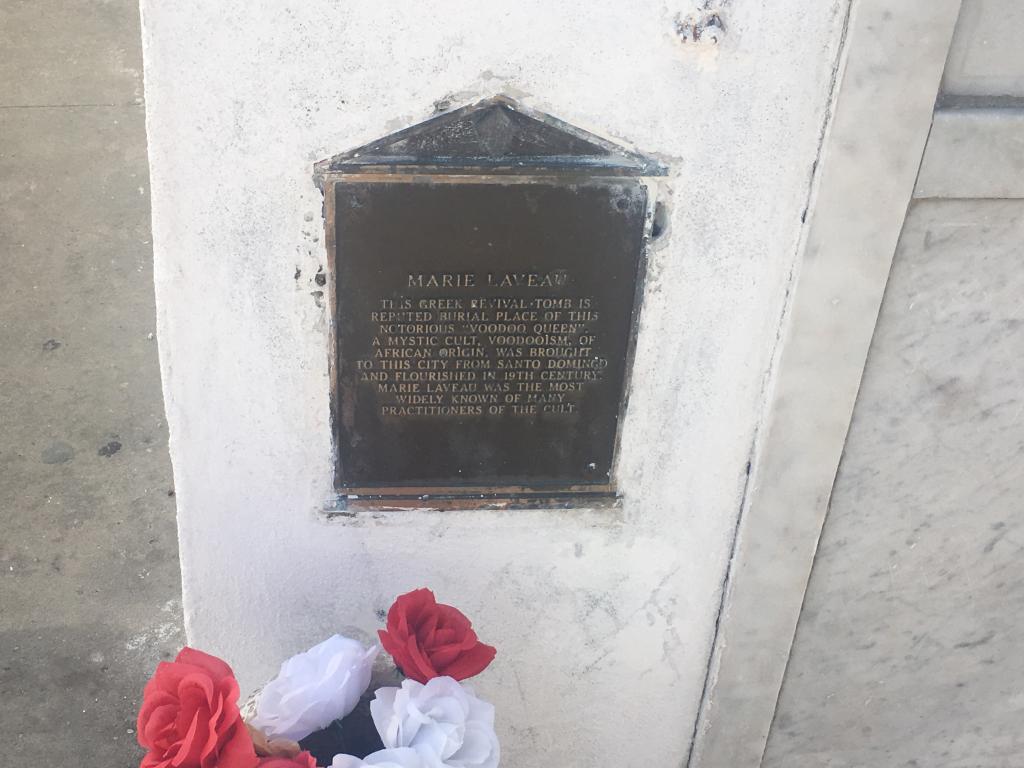
Unlike some of the other individuals below Laveau didn’t leave a written legacy. (The grimoire with her name on it is a product of the early 20th Century.) This makes it harder to quantify her place in occult history, but perhaps due to that lack of written legacy it’s easier to speculate on Laveau, which makes it that much easier for her to capture your imagination. Those of us who have looked at the historical personage beyond the speculation have discovered an exceptionally strong and compassionate woman who did whatever the hell she wanted. Laveau was (and is) someone to idolize.
Leah Fox (1813-1890)
Though her sisters Kate and Maggie were the first to have any sort of contact with “the spirits” it was Leah Fox who popularized the soon to be world wide movement that would come to be known as spiritualism. If you are unfamiliar with spiritualism it began as a series of knocks, later evolving into a variety of phenomena that allows individuals to communicate with the dead. Leah is directly responsible for this evolution, unable to reproduce the knocks she became a trance medium, Leah also saw the commercial appeal of spiritualism and monetized it accordingly.
Spiritualism is important in the annals of occult history because it was a HUGE movement, significant amounts of Americans (and later Brits) would identify as spiritualists. It’s history is also intertwined with women’s suffrage and the underground railroad. Spiritualism empowered women, and gave them a voice in a society that often silenced those voices. Historians today often suggest that spiritualism is no longer a thing, but a variety of shows on the Discovery Channel suggest otherwise. If people are chatting with the dead or investigating ghosts they are channeling spiritualism.
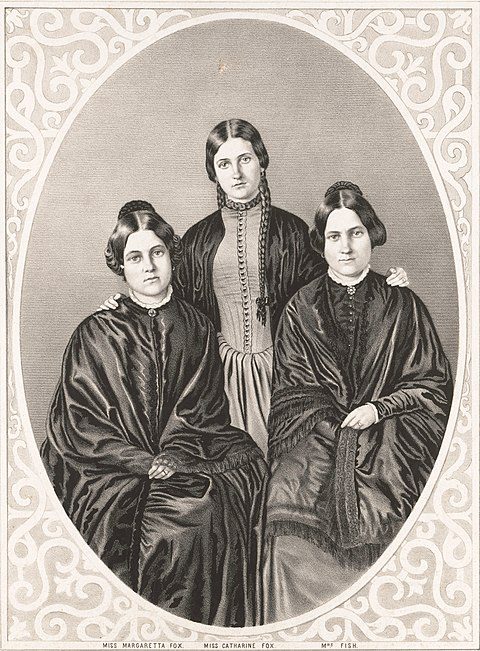
That’s Leah on the far right, with Maggie on the left and Kate in the middle.
Pachal Beverley Randolph (1825-1875)
A free-man of color, Randolph lived a truly extraordinary life. He visited every continent but Antarctica before he died and set up a nationwide series of Rosicrucian Reading Rooms before he was murdered in 1875. Randolph was a spiritualist, but most importantly for us in this article he was a magician. He truly believed in magick, and his forte was sex magick.
What makes Rudolph so belonging on a list like this was that his ideas were appropriated after his death, eventually showing up in the work of Aleister Crowley and the German occultists who set up the original O.T.O.
Albert Pike (1809-1891)
I’m not a huge fan of Pike, but he’s responsible for bringing a more esoteric flavor to Freemasonry as the architect of rituals that make up the Scottish Rite. He’s also the author of Morals and Dogma (1872), mostly a collection of occult ideas stolen from the French occultist Eliphas Levi. Upon initiation into the Scottish Rite Freemasons were given a copy of Morals and Dogma up until the 1970’s making it one of the most widely distributed texts in American history. I’m guessing most people didn’t actually read Morals and Dogma, but they did print a bunch of copies.
Masonry has always been a hugely influential institution in occult circles, and just about any group that has an initiation ritual owes a tip of the cap (or witch-hat) to that organization. Pike’s popularization of occult ideas in fraternal orders might have also led to the establishment of even more occult orders such as the Rosicrucian Order by Harvey Spencer Lewis (1883-1939) in the 1900’s.
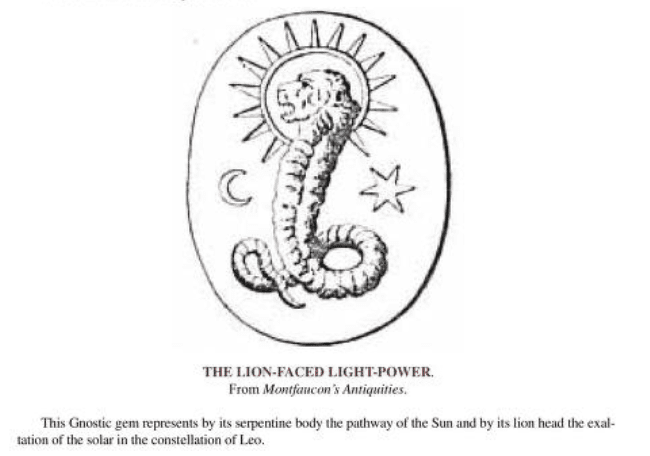
William Walter Atkinson/3 Initiates (1862-1932) & Manly P Hall (1901-1990)
I’m throwing Atkinson in with Hall here because both gentlemen wrote esoteric handbooks that were published within twenty years of each other. Of the two offerings it’s probably Atkinson’s Kybalion that’s the most interesting. Though we’ve known for a long time now about Atkinson’s authorship the book was originally released with the byline “Three Initiates” and the intriguing subtitle: “A Study of the Hermetic Philosophy of Ancient Egypt and Greece.” This intrigue added to the book’s appeal, with people into the present day often believing that the work is ancient.
I remember the first time someone suggested I read The Secret Teachings of All Ages, Hall’s 1928 masterwork. Teachings is mostly a distillation of several other occult texts and I thought then it looked rather derivative, but that’s not really the point. Hall’s book stirred up interest in the occult in the United States when it was published in 1928, and now almost 100 years later continues to do so.
There are a lot of Witches who have been influenced by these two books, and far more people in the rather ambiguous “New Age” movement. Because there were so few occult materials available until the 1970’s, people who dabbled in the occult often started with texts like these.
Edgar Cayce (1877-1945)
The answer to America’s most influential occultist might very well be Cayce. It’s hard to sum up Cayce in just a few sentences, but during his heyday Cayce was most acclaimed as a healer. He’d go into a trance and then find the solution to medical problems. In his trance states he also shared information about a variety of subjects including health, Atlantis, and reincarnation. Cayce was also a psychic, clairvoyant, and astral traveller. He also claimed access to the Akashic Records, and I first came upon that concept while reading about Cayce.
Many New Age beliefs were first popularized by Cayce, and his influence remains some 80 years after his death. If you’ve ever been intrigued by psychic phenomenon, Atlantis, or the paranormal you’ve probably stumbled upon an idea or practice popularized by Cayce.
Jack Parsons (1914-1952)
And now we come to Parsons, the man who inspired this post. Parsons was an initiate of the O.T.O. and a devoted ceremonial magician. His written legacy is small, but exists and has influenced many individuals who have followed paths similar to that of Parsons. I’m of the belief that Parsons is a tale of unrealized potential because of his early death in 1952. Had he gotten his mail order Witchcraft courses off the ground America’s occult landscape might look very different.
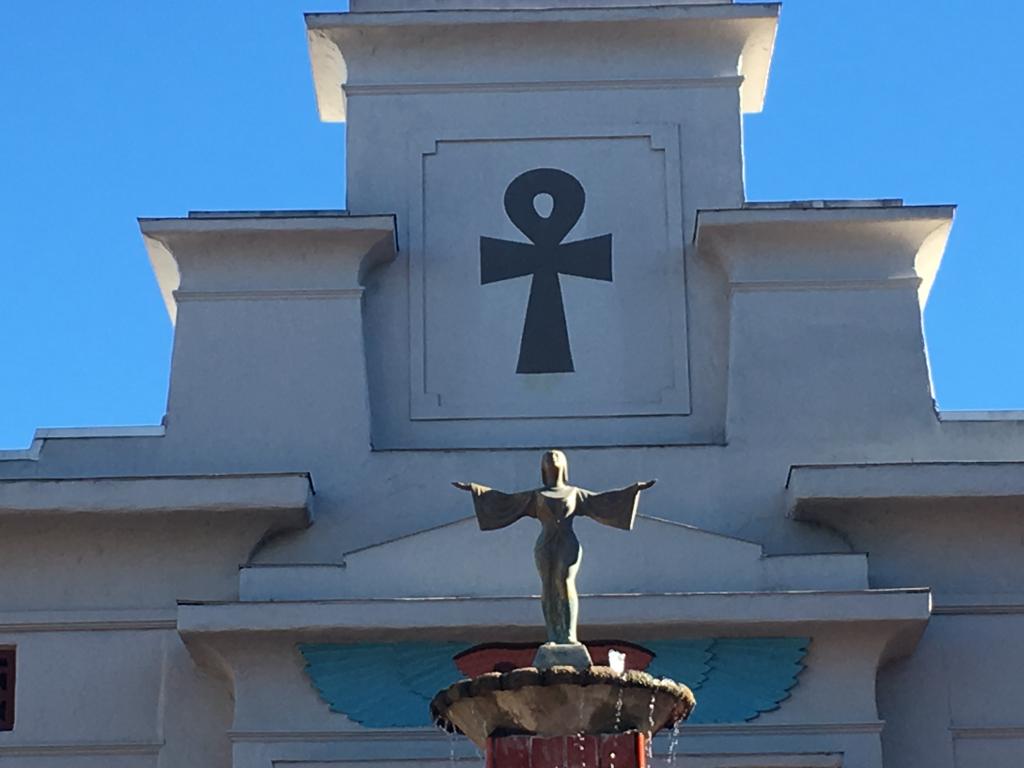
Egyptian Rosicrucian Museum in the great city of San Jose.
Carlos Castaneda (1925-1998)
There was no Don Juan Matus making Castaneda’s 1968 The Teachings of Don Juan more of a fiction novel than an anthropological work, but does it matter? Occult and spiritual books with fictitious authors or sources is par for the course. Of course Castaneda doubled down on his deception and did so in an age when finding the truth of such matters was far easier.
The late 1960’s were a time for self discovery and the embrace of the mystical, and Castaneda’s book came out at just the right moment to tap into that. Don Juan and its sequels have sold over 10,000,000 copies and it remains a best seller all these decades later. I know some Baby Boomer era Pagans who were influenced by this book, but later generations less so.
Starhawk (1951-Present)
Starhawk is the only Witch on my list, which crushes my soul, but I think it’s the right decision. Starhawk is on the list because The Spiral Dance (1979) has just been so damned influential. Starhawk’s activism has also taken her into circles and places most leaders in the Witchcraft community rarely get to go. I remember reading about Starhawk in the pages of the Utne Reader and thinking “Damn! How cool. I bet she’s the only one.”
The only other Witch I seriously considered for this list was Raymond Buckland (1934-2017) but Buckland grew up in England, though he did live most of his adult life in the US of A. Buckland brought Gardnerian Witchcraft to New York City in the mid 1960’s, and his book The Tree provided a way into the Craft for those with no access to a coven. His Complete Book of Witchcraft (the Big Blue Book) has sold over a million copies) which makes it one of the best selling Witch books ever. Without Buckland American Witchcraft would probably still exist, but I think it would look very different.
Well that’s my list. If you were to ask me who who America’s most influential occultist was I’d probably choose Leah Fox because Spiritualism remains popular, though it exists in a very different form today from its 19th Century incarnation. Also, I’m sure I’ve forgotten someone super important and will be embarrassed when that’s pointed out in the comments. (So have at it!)
Previous Post

July 20, 2021
The "Woke" Horned God
Next Post

August 25, 2021 Fanciful Llewellyn Cover Stories
Browse Our Archives
Select a Category Editorializing Gateways to Paganism Guest Posts Holiday Histories Led Zeppelin News and Views Occult Pagan Pagan TV Club Paganism polytheism Ramble On Reviews Ritual Strange Days Uncategorized
Select a Month August 2026 March 2026 February 2026 November 2025 September 2025 August 2025 April 2025 August 2024 April 2024 February 2024 December 2023 October 2023 August 2023 June 2023 May 2023 January 2023 October 2022 August 2022 July 2022 June 2022 May 2022 April 2022 March 2022 February 2022 January 2022 December 2021 November 2021 October 2021 September 2021 August 2021 July 2021 June 2021 April 2021 March 2021 February 2021 January 2021 December 2020 November 2020 October 2020 August 2020 July 2020 June 2020 May 2020 April 2020 March 2020 February 2020 January 2020 December 2019 November 2019 October 2019 September 2019 August 2019 July 2019 June 2019 May 2019 April 2019 March 2019 February 2019 January 2019 December 2018 November 2018 October 2018 September 2018 August 2018 July 2018 June 2018 May 2018 April 2018 March 2018 February 2018 January 2018 December 2017 November 2017 October 2017 September 2017 August 2017 July 2017 June 2017 May 2017 April 2017 March 2017 February 2017 January 2017 December 2016 November 2016 October 2016 September 2016 August 2016 July 2016 June 2016 May 2016 April 2016 March 2016 February 2016 January 2016 December 2015 November 2015 October 2015 September 2015 August 2015 July 2015 June 2015 May 2015 April 2015 March 2015 February 2015 January 2015 December 2014 November 2014 October 2014 September 2014 August 2014 July 2014 June 2014 May 2014 April 2014 March 2014 February 2014 January 2014 December 2013 November 2013 October 2013 September 2013 August 2013 July 2013 June 2013 May 2013 April 2013 March 2013 February 2013 January 2013 December 2012 November 2012 October 2012 September 2012 August 2012 July 2012 June 2012 April 2012 October 2011 September 2011 August 2011
Follow Us!
TAKE THE
Religious Wisdom Quiz
Who is the "chosen lady" addressed in a New Testament letter?
Select your answer to see how you score.
Unspecified church Mary Lydia Phoebe
Related posts from Raise the Horns
The Great God Pan Among the Stars

What Makes a Good Ritualist? No Idea

Yule is Also a Time for the Dead
TRENDING AT PATHEOS Pagan

The Sermon on the Mount, Part I: Matthew...
The Sermon on the Mount, Part I (Matthew 4:12-5:12) St. Matthew moves...

What's up from Crossway: Reviewing some of their latest A few weeks...

Janie Learns the Way of the Cross: A...
Teaching children about Jesus' Passion can be challenging. Many parents and educators...

Looking For Good Catholic Writing - October 2026
He alone extends the heavens, and he walks upon the waves of...

In "Irreplaceable," our book on vocation and technology, Trevor Sutton and I...

I was strolling through the top floor of the brand new Parthenon...
view all Pagan blogs
Ad-Free & Subscriber Log-In Subscription Support
- About Us
- 2026 Calendar
- Videos
- Podcasts
- Library of World Religions
- Faith In Media Tracker
- Advertise With Us
- Write for Us
- Privacy Policy
- Terms of Service
- Do Not Sell My Data
- Contact Us
- Radiant Digital
- Manage Newsletter Subscriptions
- Unsubscribe From Notifications
- Sitemap
Copyright 2008-2026, Patheos. All rights reserved.
Subscription Support Ad-Free & Subscriber Log-In
Follow Patheos