
BuddhistCatholicContemplativeEvangelicalGeneral ChristianHinduJewishLatter-day SaintMuslimNew VisionsProgressive Christian
Beliefs
- Buddhist
- Catholic
- Contemplative
- Evangelical
- General Christian
- Hindu
- Jewish
- Latter-day Saint
- More Voices
- Muslim
- New Visions
- Pagan
- Progressive Christian
Topics
- Religion News
- Food and Religion
- Sports and Religion
- Religious Art
- Religious Music and Entertainment
- Religious Events
- History and Religion
- Style and Religion
- Politics and Religion
- Women in Religion
- Recreation Outdoors and Religion
- Business Finance and Religion
- Careers Workplace and Religion
- Education and Religion
- Family Parenting and Religion
- Health Fitness and Religion
- Home and Religion
- Relationships and Religion
- Technology and Religion
- Travel and Religion
Columnists
- Buddhist Columnists
- Business Finance and Religion Columnists
- Careers Workplace and Religion Columnists
- Catholic Columnists
- Contemplative Columnists
- Education and Religion Columnists
- Evangelists Columnists
- Family Parenting and Religion Columnists
- General Christian Columnists
- Health Fitness and Religion Columnists
- Hindu Columnists
- History and Religion Columnists
- Home and Religion Columnists
- Jewish Columnists
- More Voices Columnists
- Latter Day Columnists
- Muslim Columnists
- New Visions Columnists
- Nonreligious Columnists
- Pagan Columnists
- Politics and Religion Columnists
- Progressive Columnists
- Recreation Outdoors and Religion Columnists
- Relationships and Religion Columnists
- Religion News Columnists
- Religious Art Columnists
- Religious Events Columnists
- Religious Music and Entertainment Columnists
- Sports and Religion Columnists
- Style and Religion Columnists
- Technology and Religion Columnists
- Travel and Religion Columnists
- Women in Religion Columnists
Resource Library
- 2026 Calendar
- Library of World Religions
- The 100 Most Holy Places on Earth
- Patheos Answers
- Podcasts
- Videos
- Faith Leaders Database
- Anglican Episcopalian
- Bahai
- Baptist
- Buddhism
- Christianity
- Confucianism
- Eastern Orthodoxy
- Hinduism
- Holiness and Pentecostal
- ISKCON
- Islam
- Judaism
- Lutheran
- Methodist
- The Church of Jesus Christ of Latter-day Saints
- New Age
- Paganism
- Presbytarian and Reformed
- Protestantism
- Religion Behind the Scenes
- Roman Catholic
- Scientology
- Shia Islam
- Sikhism
- Sufism
- Sunni Islam
- Taoism
- Zen
- See all religions
Research Tools
 Ad-Free & Subscriber Log-In Subscription Support
Ad-Free & Subscriber Log-In Subscription Support
Follow Patheos 

- Trending:
- Forgiveness
- |
- Marriage
- |
- Consciousness
- |
- Death Penalty
- |
- Election
- |
- Halloween

- HOME
- Me and the Blog
- Defining Pagan
- Rituals & Holidays
- All Posts
- Blogroll
- Publications
- FREE NEWSLETTER
- Home
- Pagan
- Witchcraft Should Mean SOMETHING
Witchcraft Should Mean SOMETHING
Last updated on: February 13, 2019 at 6:27 pm by Jason Mankey
Witchcraft Should Mean SOMETHING 2019-02-13T18:27:52-07:00 Jason Mankey
Patheos Explore the world's faith through different perspectives on religion and spirituality! Patheos has the views of the prevalent religions and spiritualities of the world.
When I was a five years old I had three warts on my right hand, and every night for about six months my father applied Compound W to them. After many treatments the warts would burn away into nothing, and then as soon as they were destroyed they would immediately grow back in the same place at the same size.
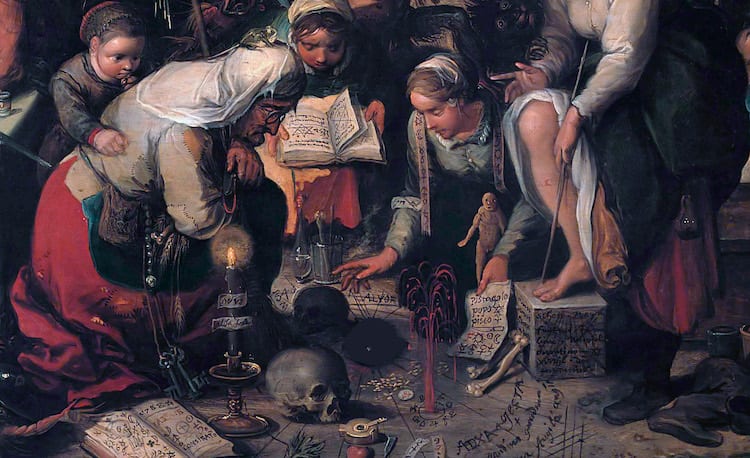
“The Witches Sabbath” by Frans Francken II. From WikiMedia.
After a year of frustration and disappointment someone at work gave my Dad a copy of what they called “The Moon Trick,” which was guaranteed to get rid of warts (so we were told). I don’t remember all the details of the trick, but it involved exposing my warts to the light of the full moon and reciting an incantation over them. A couple of days later they were gone, and this time they didn’t come back. (Thinking about this today, I can’t help but think how cool it is that my first exposure to magick was in the first grade, and with my Dad!)
Considering how the words “Witch” and “Witchcraft” are used by many people today, I could probably claim that my father was a Witch and used Witchcraft on my warts. However, my father is not a Witch, probably doesn’t believe in magick (even though he’s seen it work at least once!), and didn’t think what we were doing that night was Witchcraft. But more and more I see this strange and growing tendency to label any magickal operation Witchcraft and to label any magickal practitioners Witches.
I came across a comment from a friend online the other day who claimed that members of his family had been practicing Witchcraft for centuries while remaining committed Christians. He mentioned his family was from Central Pennsylvania, and due to that association I’m going to guess his family has a history of brauche or braucherei (sometimes called Pow-Wow), which is a magickal tradition amongst the Pennsylvania Dutch. (If you’ve ever read or heard of the book The Long Lost Friend you’ve been exposed to some of the ideas in this tradition.)
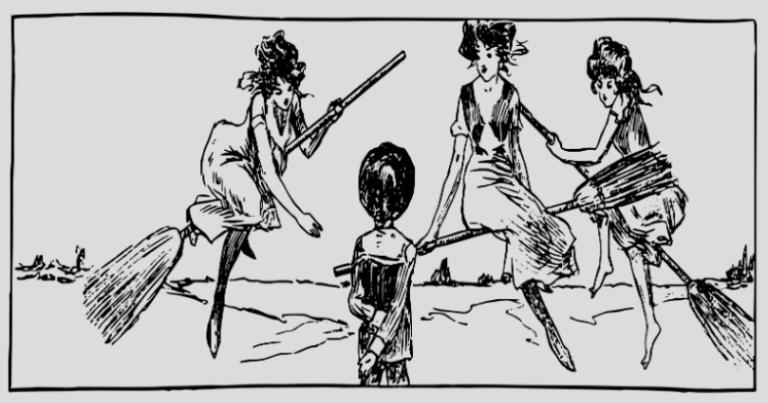
“Young Witches on Brooms” from Good Free Photos, Public Domain Image
Certainly many brauchers are powerful magickal folks, but no one practicing the tradition 200 or even 100 years ago called themselves a Witch. Generally those who practice brauche believe they are performing magick against Witches, not as Witches. People visit brauchers to be un-witched, not to practice Witchcraft. I’d never argue that my friend’s family hasn’t been practicing magick for generations, I’m sure they have, and he’s probably added many of those traditions to his own practice. However, I don’t think it’s fair to retroactively label a tradition Witchcraft when that designation would not have been used by those who practice said tradition.
Labeling every magickal tradition Witchcraft limits magickal traditions, and takes away the unique identities of traditions. Despite what many history books say, magick is a strong and vital part of most cultures. And many of those magickal traditions have their own terminologies, definitions, and ways of doing things. Calling them all Witchcraft suggests a common thread that is often absent, and suggests a self-identity which is most likely unwanted. (I know, not everyone wants to be a Witch! That’s weird to me too!) I also just think it’s a shitty thing to do to other traditions
The term Witchcraft comes from combining the words witch (and before that the words wicce and wicca which is where witch comes from) and craft (previously craeft). Witchcraft therefore is the craft of a witch, and under such a definition one cannot practice witchcraft unless they identify as a witch. If your magickal tradition exists in opposition to Witches it’s likely that you don’t identify as a Witch.
Certainly someone can practice Witchcraft while making use of traditional magickal sources, whether from books or a family inheritance. Modern Witchcraft owes its very existence to a variety of sources, and most Witches are continually adding new ideas and techniques to their practice. And when they add those new elements to their practice it becomes a part of their Witchcraft, but that doesn’t retroactively make The Moon Trick my Dad and I used all those years ago Witchcraft.
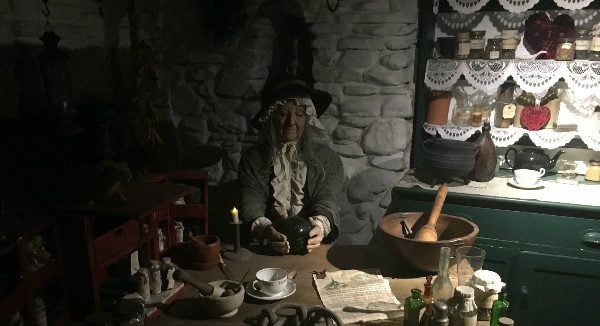
The village witch at the Museum of Magic and Witchcraft in Boscastle England.
If Witchcraft is simply a catch-all for any sort of magickal tradition I’m not sure it has any meaning. The Pagan blogosphere is full of all sorts of arguments on what exactly a Witch is, and it’s likely that none of us define the word in exactly the same way. However, I seem to share a whole lot in common with every single self-identifying Witch I know, even those who actively mock my own tradition. We use magick in similar ways, and generally celebrate the same holidays; their altars all look a lot like mine too, and everything I see on the Instagram hashtag #WitchesofInstagram looks and feels familiar. I’m not sure an Amish practitioner of Pow-Wow and I are going to have a whole of anything in common, and I’m guessing most of them are going to be pretty angry if I call them a Witch.
Much like I don’t want the Mormon church attempting to baptize my soul by proxy after my death, I don’t want to disrespect my ancestors by calling them Witches if they didn’t identify that way in life. Witch is an identity that should be willingly embraced, not simply applied to others without their consent.
Previous Post

February 5, 2019
In Memory of DJ Conway
Next Post

February 21, 2019 Why I Go To Pagan Festivals
Browse Our Archives
Select a Category Editorializing Gateways to Paganism Guest Posts Holiday Histories Led Zeppelin News and Views Occult Pagan Pagan TV Club Paganism polytheism Ramble On Reviews Ritual Strange Days Uncategorized
Select a Month August 2026 March 2026 February 2026 November 2025 September 2025 August 2025 April 2025 August 2024 April 2024 February 2024 December 2023 October 2023 August 2023 June 2023 May 2023 January 2023 October 2022 August 2022 July 2022 June 2022 May 2022 April 2022 March 2022 February 2022 January 2022 December 2021 November 2021 October 2021 September 2021 August 2021 July 2021 June 2021 April 2021 March 2021 February 2021 January 2021 December 2020 November 2020 October 2020 August 2020 July 2020 June 2020 May 2020 April 2020 March 2020 February 2020 January 2020 December 2019 November 2019 October 2019 September 2019 August 2019 July 2019 June 2019 May 2019 April 2019 March 2019 February 2019 January 2019 December 2018 November 2018 October 2018 September 2018 August 2018 July 2018 June 2018 May 2018 April 2018 March 2018 February 2018 January 2018 December 2017 November 2017 October 2017 September 2017 August 2017 July 2017 June 2017 May 2017 April 2017 March 2017 February 2017 January 2017 December 2016 November 2016 October 2016 September 2016 August 2016 July 2016 June 2016 May 2016 April 2016 March 2016 February 2016 January 2016 December 2015 November 2015 October 2015 September 2015 August 2015 July 2015 June 2015 May 2015 April 2015 March 2015 February 2015 January 2015 December 2014 November 2014 October 2014 September 2014 August 2014 July 2014 June 2014 May 2014 April 2014 March 2014 February 2014 January 2014 December 2013 November 2013 October 2013 September 2013 August 2013 July 2013 June 2013 May 2013 April 2013 March 2013 February 2013 January 2013 December 2012 November 2012 October 2012 September 2012 August 2012 July 2012 June 2012 April 2012 October 2011 September 2011 August 2011
Follow Us!
TAKE THE
Religious Wisdom Quiz
What day did God rest during creation?
Select your answer to see how you score.
The third day The sixth day The seventh day The first day
Related posts from Raise the Horns

What Makes a Good Ritualist? No Idea

Witchcraft Remembrances & Appreciation at Samhaintide

Raymond Buckland & The Big Blue Book

TRENDING AT PATHEOS Pagan

When Halloween Unmasks Married Hearts
Written by Dr. David K. Ewen from Eternal Truth Bible College Behind...

Aristotle. He’s been called the father of logic, the father of the...

Methodist Central Hall and Westminster Abbey
Situated on the same square is Methodist Central Hall and Westminster Abbey. ...

57th Dove Awards Honor Dolly Parton, Crown New...
On gospel music’s biggest night, the 57th annual GMA Dove Awards honored...

The First Eucharistic Controversy: Christ’s Real Presence
For Catholics, the Eucharist is the source and summit of the Christian...

What a Stop Sign Can Teach Us About...
How to Make a Decision When You Can't Hear God Main point:...
view all Pagan blogs
Ad-Free & Subscriber Log-In Subscription Support
- About Us
- 2026 Calendar
- Videos
- Podcasts
- Library of World Religions
- Faith In Media Tracker
- Advertise With Us
- Write for Us
- Privacy Policy
- Terms of Service
- Do Not Sell My Data
- Contact Us
- Radiant Digital
- Manage Newsletter Subscriptions
- Unsubscribe From Notifications
- Sitemap
Copyright 2008-2026, Patheos. All rights reserved.
Subscription Support Ad-Free & Subscriber Log-In
Follow Patheos