
BuddhistCatholicContemplativeEvangelicalGeneral ChristianHinduJewishLatter-day SaintMuslimNew VisionsProgressive Christian
Beliefs
- Buddhist
- Catholic
- Contemplative
- Evangelical
- General Christian
- Hindu
- Jewish
- Latter-day Saint
- More Voices
- Muslim
- New Visions
- Pagan
- Progressive Christian
Topics
- Religion News
- Food and Religion
- Sports and Religion
- Religious Art
- Religious Music and Entertainment
- Religious Events
- History and Religion
- Style and Religion
- Politics and Religion
- Women in Religion
- Recreation Outdoors and Religion
- Business Finance and Religion
- Careers Workplace and Religion
- Education and Religion
- Family Parenting and Religion
- Health Fitness and Religion
- Home and Religion
- Relationships and Religion
- Technology and Religion
- Travel and Religion
Columnists
- Buddhist Columnists
- Business Finance and Religion Columnists
- Careers Workplace and Religion Columnists
- Catholic Columnists
- Contemplative Columnists
- Education and Religion Columnists
- Evangelists Columnists
- Family Parenting and Religion Columnists
- General Christian Columnists
- Health Fitness and Religion Columnists
- Hindu Columnists
- History and Religion Columnists
- Home and Religion Columnists
- Jewish Columnists
- More Voices Columnists
- Latter Day Columnists
- Muslim Columnists
- New Visions Columnists
- Nonreligious Columnists
- Pagan Columnists
- Politics and Religion Columnists
- Progressive Columnists
- Recreation Outdoors and Religion Columnists
- Relationships and Religion Columnists
- Religion News Columnists
- Religious Art Columnists
- Religious Events Columnists
- Religious Music and Entertainment Columnists
- Sports and Religion Columnists
- Style and Religion Columnists
- Technology and Religion Columnists
- Travel and Religion Columnists
- Women in Religion Columnists
Resource Library
- 2026 Calendar
- Library of World Religions
- The 100 Most Holy Places on Earth
- Patheos Answers
- Podcasts
- Videos
- Faith Leaders Database
- Anglican Episcopalian
- Bahai
- Baptist
- Buddhism
- Christianity
- Confucianism
- Eastern Orthodoxy
- Hinduism
- Holiness and Pentecostal
- ISKCON
- Islam
- Judaism
- Lutheran
- Methodist
- The Church of Jesus Christ of Latter-day Saints
- New Age
- Paganism
- Presbytarian and Reformed
- Protestantism
- Religion Behind the Scenes
- Roman Catholic
- Scientology
- Shia Islam
- Sikhism
- Sufism
- Sunni Islam
- Taoism
- Zen
- See all religions
Research Tools
 Ad-Free & Subscriber Log-In Subscription Support
Ad-Free & Subscriber Log-In Subscription Support
Follow Patheos 

- Trending:
- Forgiveness
- |
- Marriage
- |
- Consciousness
- |
- Death Penalty
- |
- Election
- |
- Halloween

- HOME
- Me and the Blog
- Defining Pagan
- Rituals & Holidays
- All Posts
- Blogroll
- Publications
- FREE NEWSLETTER
- Home
- Pagan
- Santa Claus Was NOT a Shaman
Santa Claus Was NOT a Shaman
Last updated on: December 19, 2018 at 2:50 pm by Jason Mankey
Santa Claus Was NOT a Shaman 2018-12-19T14:50:26-07:00 Jason Mankey
Patheos Explore the world's faith through different perspectives on religion and spirituality! Patheos has the views of the prevalent religions and spiritualities of the world.
Holidays are full of bad information, and few holidays conjure up more bad information than Yuletide. One of my least favorite falsehoods this time of year is that “Santa was a shaman.” This is repeated over and over again near Yule, and it just doesn’t stand up to historical scrutiny.
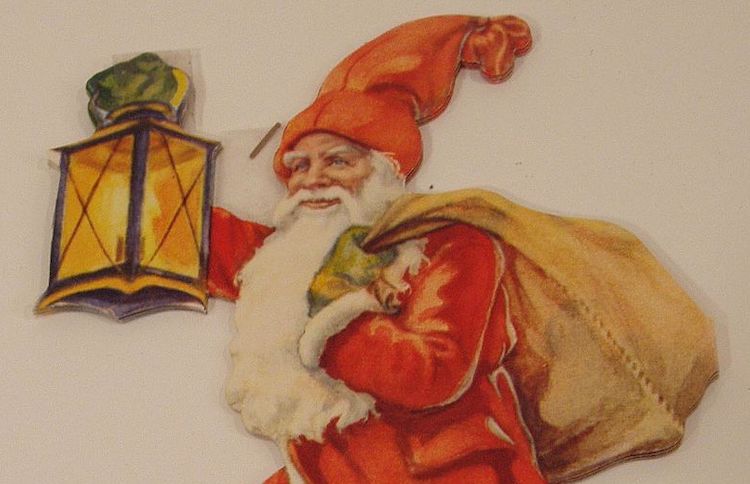
Image possiby by Jenny Nyström in the 19th Century. From WikiMedia.
That Yule is plagued with bad history is understandable, celebrations in December and January are among the oldest continually observed holidays. Saturnalia and the January Kalends gave way to Christmas and New Year’s Celebrations, resulting in a mish-mash of ancient pagan, Christian, and secular customs this time of year.
One of those oldest traditions is that of giving gifts, and since Santa has always been a present delivery system, starting here with his origins seems appropriate. This was done at both Saturnalia and the Kalends, with descriptions of the Kalends sounding much like modern descriptions of Christmas spending:
“The festival of the Kalends is celebrated everywhere as far as the limits of the of the Roman Empire extended . . . The impulse to spend seizes everyone . . . People are not only generous towards themselves, but all towards their fellow-men. A stream of presents pours itself out on all sides . . . . Another great quality of the festival is that it teaches men not to hold too fast to their money, but to part with it and let is pass into other hands.” -Libanious of Antioch (writing in the Fourth Century CE), (1).
The name Santa Claus comes from Sinterklaas, a Dutch name for the St. Nicholas, allegedly a bishop from the Greek city of Myra (in present day Turkey). Historically, Nicholas is a dubious figure, and some doubt he even existed. Certainly the stories we have about him today are more myth than history, but what is indisputable is just how popular he became in medieval Europe. By 1100 CE Nicholas was the patron saint of just about everything, and was revered nearly as much as the Virgin Mary. The he’d end up associated with giving and children isn’t a surprise, because he was said to touch just about all aspects of peoples’ lives.
As Nicholas was reigning at the most popular Saint in the Catholic Church, Christmas celebrations were becoming more and more irritating, and sometimes violent. Children expected presents, and went door to door demanding them, threatening their neighbors with vandalism if their demands were not met. The custom of asking for things door to door comes from the ancient pagan traditions of mumming and Misrule, and is another aspect of the season that predates Christianity.
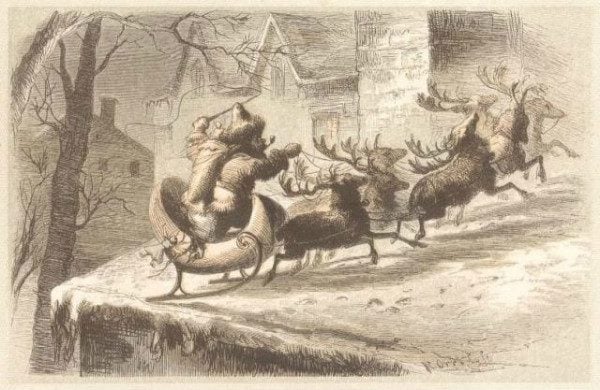
Santa by F. O. C. Darley back in 1862. From WikiMedia. CC License.
Beginning in the 12th Century an enterprising group of French nuns tried to put a stop to the threats and the wandering by leaving gifts for children on the eve of the Feast of St. Nicholas (Dec. 5). Since it was Nicholas’s time to shine, the nuns said the gifts came from the Saint himself. This is really where Santa Claus comes from. As you can see no shamans were involved.
The custom of Nicholas giving gifts spread across Europe, and found a home in the Netherlands. There the stories of Nicholas merged with those of Odin to create a different sort of gift giver, one removed from the Saint’s origins in Turkey. When the Reformation hit Europe in the 16th Century, areas that embraced Protestant Christianity moved the gift-giving to Christmas, and in some instances created entirely new gift-givers to remove the taint of a Catholic Saint from the holiday. It’s during this time that figures such the Christkindl began to overtake St. Nicholas in some areas.
One of the reasons I so despise the “Santa was a shaman” narrative is because it diminishes the role of Odin in the formation of the modern Santa Claus legend. Was Odin a shaman? I think the proper term for Odin is god or deity, and I think he was most specifically a sky-god. Odin is similar to figures such as Zeus, which is not surprising, since both are Indo-European deities who share a common relative. Again, not shamanism.
Many “Santa is a shaman” stories point to two specific pieces of information to back up their claim. The first is that Santa’s now familiar red and white suit is related to agaric mushrooms, which are psychedelic and are said to be used by Siberian shamans. There are two problems with this assertion. The first is that Siberian shamans rarely used mushrooms, the second is that Santa didn’t don his now familiar red and white garb until the middle of the 19th Century. Clearly, Santa’s red suit has nothing to do with mushrooms.
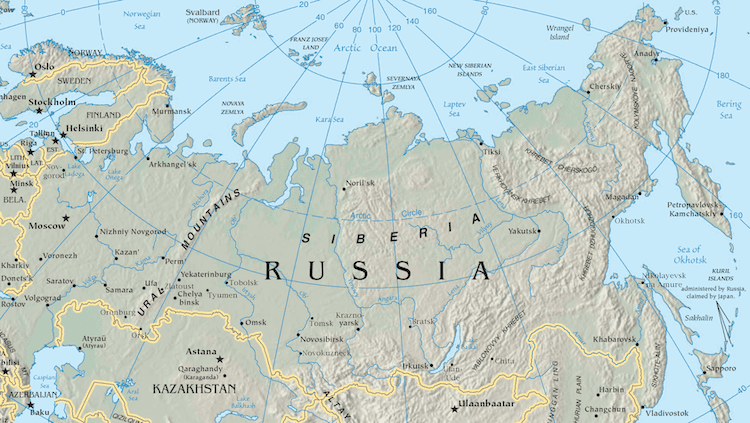
Map by the CIA, via WikiMedia.
Reindeer are another integral part of the Santa as a shaman myth. But the Dutch Sinterklaas rode a horse (much like Odin), and reindeer didn’t enter Santa mythology until 1821 in the book The Children’s Friend. They were later immortalized in the poem A Visit from Saint Nicholas (better known as The Night Before Christmas) generally attributed to Clement Clark Moore (1779-1863) and given the names we mostly know them by today. (Authorship of the poem is sometimes disputed, though Moore is most people’s choice for the author.)
Most “Santa was a shaman” stories begin in Siberia, which is simply the wrong part of the world for the Santa myth. Gift-giving was prominent in the Roman Empire and later Europe, where the (alleged) Turkish Saint Nicholas became the pre-eminent Saint of the Middle Ages. Most of the Santa Claus legend as we understand it today germinated in Northern Europe, most specifically the Netherlands (though Yule customs from the entire region would become a part of Christmas celebrations). The Sammi people of Finland (who would have been near the right place) did have a thriving shamanic tradition when the Santa Claus myth was being developed (and still do), but there’s no evidence that they were actively involved in creating that myth.
Santa most assuredly originated from a number of sources, but the “shamanism” argument bandied about this time of year as one of them, is most certainly not accurate.
1. Santa Claus: A Biography by Gerry Bowler, McClelland and Stewart, 2005, pages 4-5.
Previous Post

December 18, 2018
The Witches' Pyramid
Next Post

December 26, 2018 The Eleusian Mysteries: Initiation in the Ancient World
Browse Our Archives
Select a Category Editorializing Gateways to Paganism Guest Posts Holiday Histories Led Zeppelin News and Views Occult Pagan Pagan TV Club Paganism polytheism Ramble On Reviews Ritual Strange Days Uncategorized
Select a Month August 2026 March 2026 February 2026 November 2025 September 2025 August 2025 April 2025 August 2024 April 2024 February 2024 December 2023 October 2023 August 2023 June 2023 May 2023 January 2023 October 2022 August 2022 July 2022 June 2022 May 2022 April 2022 March 2022 February 2022 January 2022 December 2021 November 2021 October 2021 September 2021 August 2021 July 2021 June 2021 April 2021 March 2021 February 2021 January 2021 December 2020 November 2020 October 2020 August 2020 July 2020 June 2020 May 2020 April 2020 March 2020 February 2020 January 2020 December 2019 November 2019 October 2019 September 2019 August 2019 July 2019 June 2019 May 2019 April 2019 March 2019 February 2019 January 2019 December 2018 November 2018 October 2018 September 2018 August 2018 July 2018 June 2018 May 2018 April 2018 March 2018 February 2018 January 2018 December 2017 November 2017 October 2017 September 2017 August 2017 July 2017 June 2017 May 2017 April 2017 March 2017 February 2017 January 2017 December 2016 November 2016 October 2016 September 2016 August 2016 July 2016 June 2016 May 2016 April 2016 March 2016 February 2016 January 2016 December 2015 November 2015 October 2015 September 2015 August 2015 July 2015 June 2015 May 2015 April 2015 March 2015 February 2015 January 2015 December 2014 November 2014 October 2014 September 2014 August 2014 July 2014 June 2014 May 2014 April 2014 March 2014 February 2014 January 2014 December 2013 November 2013 October 2013 September 2013 August 2013 July 2013 June 2013 May 2013 April 2013 March 2013 February 2013 January 2013 December 2012 November 2012 October 2012 September 2012 August 2012 July 2012 June 2012 April 2012 October 2011 September 2011 August 2011
Follow Us!
TAKE THE
Religious Wisdom Quiz
What biblical advice is given to those who are anxious?
Select your answer to see how you score.
Trust only yourself Never tell anyone Cast your cares on the Lord Worry constantly
Related posts from Raise the Horns

Yule is Also a Time for the Dead
The Embers (September-December)
TRENDING AT PATHEOS Pagan

Methodist Central Hall and Westminster Abbey
Situated on the same square is Methodist Central Hall and Westminster Abbey. ...

57th Dove Awards Honor Dolly Parton, Crown New...
On gospel music’s biggest night, the 57th annual GMA Dove Awards honored...

The First Eucharistic Controversy: Christ’s Real Presence
For Catholics, the Eucharist is the source and summit of the Christian...

What a Stop Sign Can Teach Us About...
How to Make a Decision When You Can't Hear God Main point:...

Archdiocese Hosts Military Marriage Retreat in Germany
RASTATT, Germany — The transient military lifestyle, with its frequent deployments and...

Nearly every morning, I make the drive to Detroit with my high-school-age...
view all Pagan blogs
Ad-Free & Subscriber Log-In Subscription Support
- About Us
- 2026 Calendar
- Videos
- Podcasts
- Library of World Religions
- Faith In Media Tracker
- Advertise With Us
- Write for Us
- Privacy Policy
- Terms of Service
- Do Not Sell My Data
- Contact Us
- Radiant Digital
- Manage Newsletter Subscriptions
- Unsubscribe From Notifications
- Sitemap
Copyright 2008-2026, Patheos. All rights reserved.
Subscription Support Ad-Free & Subscriber Log-In
Follow Patheos