
BuddhistCatholicContemplativeEvangelicalGeneral ChristianHinduJewishLatter-day SaintMuslimNew VisionsProgressive Christian
Beliefs
- Buddhist
- Catholic
- Contemplative
- Evangelical
- General Christian
- Hindu
- Jewish
- Latter-day Saint
- More Voices
- Muslim
- New Visions
- Pagan
- Progressive Christian
Topics
- Religion News
- Food and Religion
- Sports and Religion
- Religious Art
- Religious Music and Entertainment
- Religious Events
- History and Religion
- Style and Religion
- Politics and Religion
- Women in Religion
- Recreation Outdoors and Religion
- Business Finance and Religion
- Careers Workplace and Religion
- Education and Religion
- Family Parenting and Religion
- Health Fitness and Religion
- Home and Religion
- Relationships and Religion
- Technology and Religion
- Travel and Religion
Columnists
- Buddhist Columnists
- Business Finance and Religion Columnists
- Careers Workplace and Religion Columnists
- Catholic Columnists
- Contemplative Columnists
- Education and Religion Columnists
- Evangelists Columnists
- Family Parenting and Religion Columnists
- General Christian Columnists
- Health Fitness and Religion Columnists
- Hindu Columnists
- History and Religion Columnists
- Home and Religion Columnists
- Jewish Columnists
- More Voices Columnists
- Latter Day Columnists
- Muslim Columnists
- New Visions Columnists
- Nonreligious Columnists
- Pagan Columnists
- Politics and Religion Columnists
- Progressive Columnists
- Recreation Outdoors and Religion Columnists
- Relationships and Religion Columnists
- Religion News Columnists
- Religious Art Columnists
- Religious Events Columnists
- Religious Music and Entertainment Columnists
- Sports and Religion Columnists
- Style and Religion Columnists
- Technology and Religion Columnists
- Travel and Religion Columnists
- Women in Religion Columnists
Resource Library
- 2026 Calendar
- Library of World Religions
- The 100 Most Holy Places on Earth
- Patheos Answers
- Podcasts
- Videos
- Faith Leaders Database
- Anglican Episcopalian
- Bahai
- Baptist
- Buddhism
- Christianity
- Confucianism
- Eastern Orthodoxy
- Hinduism
- Holiness and Pentecostal
- ISKCON
- Islam
- Judaism
- Lutheran
- Methodist
- The Church of Jesus Christ of Latter-day Saints
- New Age
- Paganism
- Presbytarian and Reformed
- Protestantism
- Religion Behind the Scenes
- Roman Catholic
- Scientology
- Shia Islam
- Sikhism
- Sufism
- Sunni Islam
- Taoism
- Zen
- See all religions
Research Tools
 Ad-Free & Subscriber Log-In Subscription Support
Ad-Free & Subscriber Log-In Subscription Support
Follow Patheos 

- Trending:
- Forgiveness
- |
- Marriage
- |
- Consciousness
- |
- Death Penalty
- |
- Election
- |
- Halloween

- HOME
- Me and the Blog
- Defining Pagan
- Rituals & Holidays
- All Posts
- Blogroll
- Publications
- FREE NEWSLETTER
- Home
- Pagan
- On a Pagan New Year
On a Pagan New Year
Last updated on: December 28, 2018 at 3:54 pm by Jason Mankey
On a Pagan New Year 2018-12-28T15:54:36-07:00 Jason Mankey
Patheos Explore the world's faith through different perspectives on religion and spirituality! Patheos has the views of the prevalent religions and spiritualities of the world.
Last year on the Patheos Pagan Facebook page I posted a meme on January 1st wishing everyone who likes our page a Happy New Year. A follower there was a bit upset about it because they seemed to believe that celebrating the New Year on January 1 is some sort of Christian tradition, or goes against the idea that there’s an established “Pagan” or “Witch” New Year.
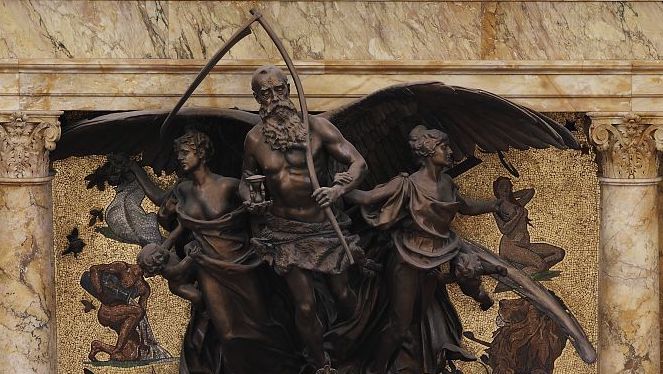
From the Library of Congress, Public Domain Image, Photograph by Carol M. Highsmith
It’s true that many Witches and Pagans celebrate the “New Year” starting on Samhain (somewhere between Oct. 30 and Nov. 1 depending on what tradition you follow), but this is a rather modern development, not an ancient one. The idea first appears in the book Celtic Folklore: Welsh & Manx by Welsh scholar Sir John Rhys (1840-1915) who wrote of early November:
“This is the day when the tenure of land terminates, and when servantmen (sic) go to their places. In other words, it’s the beginning of a new year.” (1)
The truth is, no one really knows what date the Irish-Celts used for the “New Year,” so in that sense, Samhain is as good a guess as any. I’ll admit, that as a society we tend to start and end a whole host of events in the Autumn, so Samhain makes some sense, and I’ll admit that I use this trope in rituals because it’s a familiar one.
For many Pagans, the Winter Solstice is the start of the “Pagan New Year.” Solstices are naturally occurring celestial events, and as the Winter Solstice marks the sun’s “growing stage” on the Wheel of the Year, there’s a certain amount of logic behind the idea. Personally, I’ve always been partial to Imbolc because the renewal begun at Yule tends to show tangible results by early February. (I don’t think there’s much more sunlight noticeable on Dec. 24 than there was on Dec. 21.)
There are a multitude of reasons to consider Ostara the start of the Witches New Year if we are looking at the alternatives. The astrological year begins at the Spring Equinox when the sun enters the constellation of Aries, the first sign of the Zodiac. For this reason, Persians celebrate their new year on the first day of Spring. Ostara is also traditionally associated with rebirth and new growth, perfect trappings for the new year.
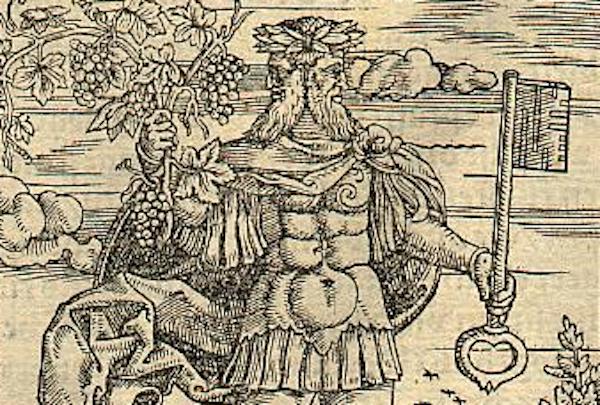
Janus of course. From WikiMedia.
And January 1 is as good as any other date for the start of a New Year from a Pagan perspective too. January 1 as the start of the New Year was established by Julius Caesar who facilitated the creation of the “Julian Calendar” which was first used on January 1 46 BCE. It’s worth noting that Julius Caesar was a pagan, making his date a pagan one. The Julian Calendar worked pretty well for a good long while, before it was adjusted by Pope Gregory XIII in 1582. (The Julian Calendar was just a little bit too long, resulting in some skewed dates as the centuries progressed.)
There are other solid Pagan reasons for January 1 as the start of the New Year. The month of January is named after Janus, who was the Roman god of doorways, beginnings, endings, time, and transitions. He certainly sounds like the right type of god to kick off a New Year, and January 1 was said to be sacred to him specifically. The January Kalends (a celebratory season that later influenced Christmas) served as a celebration of the New Year for several centuries and was when Roman consuls began their terms of office. (2) (And if Kalends sounds like calendar to you, you are right! It’s where the modern word calendar comes from.)
Most importantly as a Pagan I celebrate THE WHEEL OF THE YEAR, and since it’s a wheel, it’s a circle, meaning there are no absolute beginnings or endings. Celebrate the New Year when you want, how you want, and where you want. As for me I’ll probably be celebrating on New Year’s Eve because it makes as much sense as any other day.
NOTES
1. Rhys, John, Manx Folkore & Superstition (originally published as Celtic Folklore: Welsh & Manx in 1901), edited by Stephen Miller, Chiollagh Books, 1994, page 9.
2. Not all Romans, saw January 1 as the start of the New Year, some folks celebrated in March.
Previous Post

December 26, 2018
The Eleusian Mysteries: Initiation in the Ancient World
Next Post

January 3, 2019 Transformative Witchcraft
Browse Our Archives
Select a Category Editorializing Gateways to Paganism Guest Posts Holiday Histories Led Zeppelin News and Views Occult Pagan Pagan TV Club Paganism polytheism Ramble On Reviews Ritual Strange Days Uncategorized
Select a Month August 2026 March 2026 February 2026 November 2025 September 2025 August 2025 April 2025 August 2024 April 2024 February 2024 December 2023 October 2023 August 2023 June 2023 May 2023 January 2023 October 2022 August 2022 July 2022 June 2022 May 2022 April 2022 March 2022 February 2022 January 2022 December 2021 November 2021 October 2021 September 2021 August 2021 July 2021 June 2021 April 2021 March 2021 February 2021 January 2021 December 2020 November 2020 October 2020 August 2020 July 2020 June 2020 May 2020 April 2020 March 2020 February 2020 January 2020 December 2019 November 2019 October 2019 September 2019 August 2019 July 2019 June 2019 May 2019 April 2019 March 2019 February 2019 January 2019 December 2018 November 2018 October 2018 September 2018 August 2018 July 2018 June 2018 May 2018 April 2018 March 2018 February 2018 January 2018 December 2017 November 2017 October 2017 September 2017 August 2017 July 2017 June 2017 May 2017 April 2017 March 2017 February 2017 January 2017 December 2016 November 2016 October 2016 September 2016 August 2016 July 2016 June 2016 May 2016 April 2016 March 2016 February 2016 January 2016 December 2015 November 2015 October 2015 September 2015 August 2015 July 2015 June 2015 May 2015 April 2015 March 2015 February 2015 January 2015 December 2014 November 2014 October 2014 September 2014 August 2014 July 2014 June 2014 May 2014 April 2014 March 2014 February 2014 January 2014 December 2013 November 2013 October 2013 September 2013 August 2013 July 2013 June 2013 May 2013 April 2013 March 2013 February 2013 January 2013 December 2012 November 2012 October 2012 September 2012 August 2012 July 2012 June 2012 April 2012 October 2011 September 2011 August 2011
Follow Us!
TAKE THE
Religious Wisdom Quiz
What does "Ebenezer" mean, as in the stone Samuel set up?
Select your answer to see how you score.
Stone of David Stone of Law Stone of God Stone of help
Related posts from Raise the Horns

Yule is Also a Time for the Dead
The Embers (September-December)


The Return of the Pagan Scapegoats
TRENDING AT PATHEOS Pagan

The Sermon on the Mount, Part I: Matthew...
The Sermon on the Mount, Part I (Matthew 4:12-5:12) St. Matthew moves...

What's up from Crossway: Reviewing some of their latest A few weeks...

Janie Learns the Way of the Cross: A...
Teaching children about Jesus' Passion can be challenging. Many parents and educators...

Looking For Good Catholic Writing - October 2026
He alone extends the heavens, and he walks upon the waves of...

In "Irreplaceable," our book on vocation and technology, Trevor Sutton and I...

I was strolling through the top floor of the brand new Parthenon...
view all Pagan blogs
Ad-Free & Subscriber Log-In Subscription Support
- About Us
- 2026 Calendar
- Videos
- Podcasts
- Library of World Religions
- Faith In Media Tracker
- Advertise With Us
- Write for Us
- Privacy Policy
- Terms of Service
- Do Not Sell My Data
- Contact Us
- Radiant Digital
- Manage Newsletter Subscriptions
- Unsubscribe From Notifications
- Sitemap
Copyright 2008-2026, Patheos. All rights reserved.
Subscription Support Ad-Free & Subscriber Log-In
Follow Patheos