
BuddhistCatholicContemplativeEvangelicalGeneral ChristianHinduJewishLatter-day SaintMuslimNew VisionsProgressive Christian
Beliefs
- Buddhist
- Catholic
- Contemplative
- Evangelical
- General Christian
- Hindu
- Jewish
- Latter-day Saint
- More Voices
- Muslim
- New Visions
- Pagan
- Progressive Christian
Topics
- Religion News
- Food and Religion
- Sports and Religion
- Religious Art
- Religious Music and Entertainment
- Religious Events
- History and Religion
- Style and Religion
- Politics and Religion
- Women in Religion
- Recreation Outdoors and Religion
- Business Finance and Religion
- Careers Workplace and Religion
- Education and Religion
- Family Parenting and Religion
- Health Fitness and Religion
- Home and Religion
- Relationships and Religion
- Technology and Religion
- Travel and Religion
Columnists
- Buddhist Columnists
- Business Finance and Religion Columnists
- Careers Workplace and Religion Columnists
- Catholic Columnists
- Contemplative Columnists
- Education and Religion Columnists
- Evangelists Columnists
- Family Parenting and Religion Columnists
- General Christian Columnists
- Health Fitness and Religion Columnists
- Hindu Columnists
- History and Religion Columnists
- Home and Religion Columnists
- Jewish Columnists
- More Voices Columnists
- Latter Day Columnists
- Muslim Columnists
- New Visions Columnists
- Nonreligious Columnists
- Pagan Columnists
- Politics and Religion Columnists
- Progressive Columnists
- Recreation Outdoors and Religion Columnists
- Relationships and Religion Columnists
- Religion News Columnists
- Religious Art Columnists
- Religious Events Columnists
- Religious Music and Entertainment Columnists
- Sports and Religion Columnists
- Style and Religion Columnists
- Technology and Religion Columnists
- Travel and Religion Columnists
- Women in Religion Columnists
Resource Library
- 2026 Calendar
- Library of World Religions
- The 100 Most Holy Places on Earth
- Patheos Answers
- Podcasts
- Videos
- Faith Leaders Database
- Anglican Episcopalian
- Bahai
- Baptist
- Buddhism
- Christianity
- Confucianism
- Eastern Orthodoxy
- Hinduism
- Holiness and Pentecostal
- ISKCON
- Islam
- Judaism
- Lutheran
- Methodist
- The Church of Jesus Christ of Latter-day Saints
- New Age
- Paganism
- Presbytarian and Reformed
- Protestantism
- Religion Behind the Scenes
- Roman Catholic
- Scientology
- Shia Islam
- Sikhism
- Sufism
- Sunni Islam
- Taoism
- Zen
- See all religions
Research Tools
 Ad-Free & Subscriber Log-In Subscription Support
Ad-Free & Subscriber Log-In Subscription Support
Follow Patheos 

- Trending:
- Forgiveness
- |
- Marriage
- |
- Consciousness
- |
- Death Penalty
- |
- Election
- |
- Halloween

- HOME
- Me and the Blog
- Defining Pagan
- Rituals & Holidays
- All Posts
- Blogroll
- Publications
- FREE NEWSLETTER
- Home
- Pagan
- The Promise and Peril of “Pagan”
The Promise and Peril of “Pagan”
Last updated on: November 15, 2018 at 1:52 pm by Jason Mankey
The Promise and Peril of “Pagan” 2018-11-15T13:52:03-07:00 Jason Mankey
Patheos Explore the world's faith through different perspectives on religion and spirituality! Patheos has the views of the prevalent religions and spiritualities of the world.
The word “Pagan” (or if you prefer “pagan”) has always been problematic. Originally meaning “rustic” and/or “one not enrolled in the army of Christ,” it’s been used in a variety of ways over the last 2000 years. For many years “pagan” generally referred to anyone outside of an Abrahamic faith, and was used to describe the religions of the Ancient World. That latter usage has always been especially troubling because it implies a commonality between hundreds (if not thousands) of diverse religious beliefs. “Pagan” in regards to anything outside of Judaism/Islam/Christianity strips many of the world’s richest spiritualities of their own unique identities.
Do you want to know a secret?
Most of you reading this article probably look upon the word Pagan rather favorably, and it’s likely that at least some of you capitalize it. Beginning in the 1960’s the word “Pagan” began to be used to signify a variety of emerging spiritual traditions, most of them connected through magickal practice, love of the Earth, and spiritual ideas either rooted in or thought to be rooted in the past. It’s rather telling that the first book associated with a Modern Pagan movement, 1954’s Witchcraft Today only uses the word “pagan” five times, and the book’s author Gerald Gardner never refers to Modern Witches as Pagans in his text.
The closest Gardner get gets to saying that his Witches were Pagans comes in a passage detailing Britain’s religious history:
“The kings and townspeople accepted it, but the country people, the pagans (pagani—people dwelling in the country), the villagers, the heathens (the ‘people of the heaths’), were mainly of the old faith, which is why we use those two names to describe non-Christians to this day.”
and even then the connection has to be inferred to some degree. It’s no wonder then that at least some people define Modern Paganism as beginning in the late 1960’s, and not with the Wiccan-Witchcraft of Gardner.
When I was beginning my Pagan journey back in the 1990’s “Paganism” as an umbrella term for Witchcraft, Wicca, Druidry, Heathenry, Thelema, and various other traditions was at the height of its popularity. Most of us realized back then that we weren’t all doing exactly the same thing, but felt as if there enough points of commonality that “Pagan” made at least a bit of sense. In smaller communities this commonality was perhaps even more important, there just weren’t that many of us, and to reach the critical mass needed for group practice various traditions often had to come together.

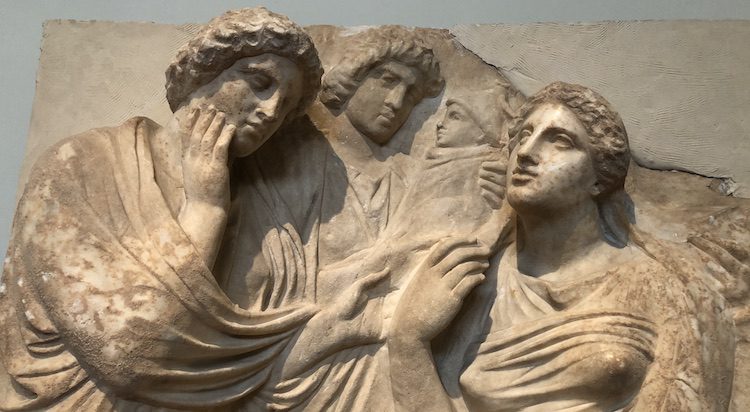
Aphrodite has something for you. (Or she wants you to make an offering.)
Since at least the early 2000’s backlash to the word Pagan has become a regular feature of blogs and message boards, and rightfully so. Atheist-leaning, non-religious Witches don’t share much with those looking to recreate the rituals and rites of Ancient Greece, and as a Wiccan-Witch it’s hard for me to find shared identity with non-believers in magick. Because of this it’s often argued that “Paganism” is less a religious grouping and more of a social one.
“Paganism” as a larger construct is often a matter of convenience. Because there aren’t that many of us who gather under this umbrella (all things considered) it’s advantageous to share spaces (in the real world and online), festivals, products, services, etc. Even many people who actively campaign against the word Pagan still live in the “Pagan world” that is they attend events labeled as Pagan and utilize platforms (like this one) and their presence is generally a welcome one.
Much of the negativity around the word Pagan over the last fifteen years comes from Pagan too often being used as a synonym for “Wicca.” This was a huge problem in the 1990’s and books on “Paganism” were often just Wicca 101 primers, with perhaps a chapter or two dedicated to other Pagan traditions such as Druidry. Rituals at festivals and other gatherings generally defaulted to eclectic Wiccan ritual too. Some of this is because the earliest expressions of eclectic Wicca (found in the “Outer Court” structure of initiatory covens) labeled non-initiate circles “Pagan,” an unfortunate, though non malicious, choice of words.
As someone who is blessed enough to do a bit of traveling here and there, the contentious nature of the word “Pagan” often feels like an online battle. When I’m at the average run of the mill festival I hear the word “Pagan” tossed around as a self-identity with frequency and rarely a disclaimer. It’s really only online and at some of the larger festivals that I really encounter backlash to the term.
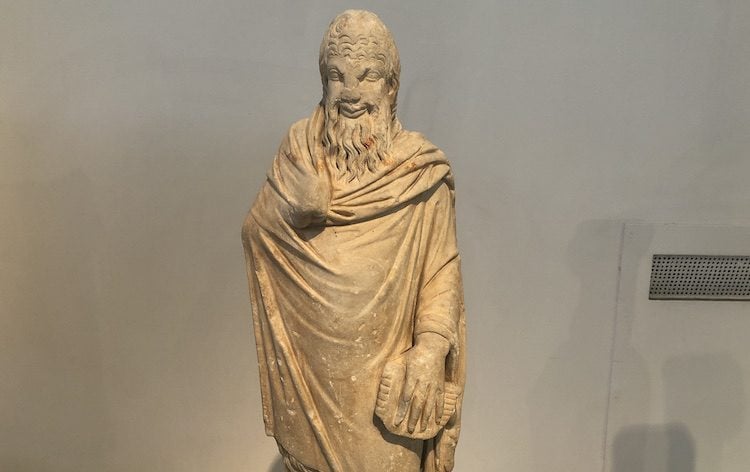
Pan! (This picture always makes me deliriously happy.)
The peril of the word Pagan has always come from its inadequateness as an umbrella term for the diverse ideas and spiritualities that are associated with it. It has always implied a unity that doesn’t exist, which makes anything that deviates from its more expected norms contentious. Though Wicca remains the largest “Pagan” tradition in the Modern World* it is no longer the default type of Witchcraft and/or ethical system. That’s why we see lots of “but what about the Wiccan Rede” responses to certain magickal operations, along with an equal number of folks engaged in more aggressive magickal practice.
The sheer amount of people writing online has revealed just how diverse the “Pagan Community” is, and that diversity often reveals the cracks in our rather tenuous alliances. Different world views mean more than different ways of practicing, and they often encompass completely different ethical systems and ideas about what it truly means to be Pagan. There are also far too many people who write in absolutes, condemning practices different from their own and creating unneeded tensions.
As we fight over the word Pagan it’s worth nothing that there’s a positive part to the word too. The acceptance of the term by many in mainstream culture has helped to establish and secure religious rights for dozens of different “Pagan” groups. Over this past weekend someone was telling me about going to the hospital and being able to identify as “Pagan” in regard to religious affiliation, an important step. The Pagan grouping has also allowed us to join together to secure spaces on platforms that might otherwise not know we exist. We are a community of artists, writers, innovators, and creators, that’s something to be proud of. Our linked community has given us festivals, book publishers, herbalists, and so much more.
Perhaps even more importantly, I think the Pagan world is full of good people. We are far from perfect, and have issues, but there are more good eggs in our basket than rotten ones. The Pagan world that I inhabit is full of gracious acts and well meaning individuals. Paganism has brought many of the people I know closer to the earth, higher powers, and a better understanding of just what it takes to be a decent person. Terrible acts have been committed in the name of Paganism, and there are no excuses for such things, but I like to think that the promise of Paganism is something we can still aspire to.
*One rule of this blog is that I identify people as THEY self-identify. We don’t get to say that Hindus are Pagans because it makes us feel better. Hindus are Hindus, and while some of them seem to like us, many more do not (and you’d find little in common with them too).
Previous Post
November 5, 2018
Magick, Witchcraft, & Politics (Oh No!, Oh Yes!)
Next Post

November 19, 2018 Pagan Things Made by Pagans For Pagans (A Holiday Gift Guide)
Browse Our Archives
Select a Category Editorializing Gateways to Paganism Guest Posts Holiday Histories Led Zeppelin News and Views Occult Pagan Pagan TV Club Paganism polytheism Ramble On Reviews Ritual Strange Days Uncategorized
Select a Month August 2026 March 2026 February 2026 November 2025 September 2025 August 2025 April 2025 August 2024 April 2024 February 2024 December 2023 October 2023 August 2023 June 2023 May 2023 January 2023 October 2022 August 2022 July 2022 June 2022 May 2022 April 2022 March 2022 February 2022 January 2022 December 2021 November 2021 October 2021 September 2021 August 2021 July 2021 June 2021 April 2021 March 2021 February 2021 January 2021 December 2020 November 2020 October 2020 August 2020 July 2020 June 2020 May 2020 April 2020 March 2020 February 2020 January 2020 December 2019 November 2019 October 2019 September 2019 August 2019 July 2019 June 2019 May 2019 April 2019 March 2019 February 2019 January 2019 December 2018 November 2018 October 2018 September 2018 August 2018 July 2018 June 2018 May 2018 April 2018 March 2018 February 2018 January 2018 December 2017 November 2017 October 2017 September 2017 August 2017 July 2017 June 2017 May 2017 April 2017 March 2017 February 2017 January 2017 December 2016 November 2016 October 2016 September 2016 August 2016 July 2016 June 2016 May 2016 April 2016 March 2016 February 2016 January 2016 December 2015 November 2015 October 2015 September 2015 August 2015 July 2015 June 2015 May 2015 April 2015 March 2015 February 2015 January 2015 December 2014 November 2014 October 2014 September 2014 August 2014 July 2014 June 2014 May 2014 April 2014 March 2014 February 2014 January 2014 December 2013 November 2013 October 2013 September 2013 August 2013 July 2013 June 2013 May 2013 April 2013 March 2013 February 2013 January 2013 December 2012 November 2012 October 2012 September 2012 August 2012 July 2012 June 2012 April 2012 October 2011 September 2011 August 2011
Follow Us!
TAKE THE
Religious Wisdom Quiz
A woman who had suffered bleeding for twelve years was healed by touching Jesus' what?
Select your answer to see how you score.
The hairs of his head His hand His cloak His feet
Related posts from Raise the Horns

What Makes a Good Ritualist? No Idea

Witchcraft Remembrances & Appreciation at Samhaintide

Raymond Buckland & The Big Blue Book

TRENDING AT PATHEOS Pagan

How to Make a Decision When You Can't...
Main point: It’s much more valuable to stay close to God so...

Archdiocese Hosts Military Marriage Retreat in Germany
RASTATT, Germany — The transient military lifestyle, with its frequent deployments and...

Nearly every morning, I make the drive to Detroit with my high-school-age...

The Real AI Story Is Adoption Without Trust
Artificial intelligence has crossed a political threshold. It is no longer a...

A new article, written by Jeff Lindsay and Gale L. Pooley,...

Swimfan: Forgotten Aughts Pleasures
This is a recovery effort. In 2002, My Big Fat Greek Wedding...
view all Pagan blogs
Ad-Free & Subscriber Log-In Subscription Support
- About Us
- 2026 Calendar
- Videos
- Podcasts
- Library of World Religions
- Faith In Media Tracker
- Advertise With Us
- Write for Us
- Privacy Policy
- Terms of Service
- Do Not Sell My Data
- Contact Us
- Radiant Digital
- Manage Newsletter Subscriptions
- Unsubscribe From Notifications
- Sitemap
Copyright 2008-2026, Patheos. All rights reserved.
Subscription Support Ad-Free & Subscriber Log-In
Follow Patheos