
BuddhistCatholicContemplativeEvangelicalGeneral ChristianHinduJewishLatter-day SaintMuslimNew VisionsProgressive Christian
Beliefs
- Buddhist
- Catholic
- Contemplative
- Evangelical
- General Christian
- Hindu
- Jewish
- Latter-day Saint
- More Voices
- Muslim
- New Visions
- Pagan
- Progressive Christian
Topics
- Religion News
- Food and Religion
- Sports and Religion
- Religious Art
- Religious Music and Entertainment
- Religious Events
- History and Religion
- Style and Religion
- Politics and Religion
- Women in Religion
- Recreation Outdoors and Religion
- Business Finance and Religion
- Careers Workplace and Religion
- Education and Religion
- Family Parenting and Religion
- Health Fitness and Religion
- Home and Religion
- Relationships and Religion
- Technology and Religion
- Travel and Religion
Columnists
- Buddhist Columnists
- Business Finance and Religion Columnists
- Careers Workplace and Religion Columnists
- Catholic Columnists
- Contemplative Columnists
- Education and Religion Columnists
- Evangelists Columnists
- Family Parenting and Religion Columnists
- General Christian Columnists
- Health Fitness and Religion Columnists
- Hindu Columnists
- History and Religion Columnists
- Home and Religion Columnists
- Jewish Columnists
- More Voices Columnists
- Latter Day Columnists
- Muslim Columnists
- New Visions Columnists
- Nonreligious Columnists
- Pagan Columnists
- Politics and Religion Columnists
- Progressive Columnists
- Recreation Outdoors and Religion Columnists
- Relationships and Religion Columnists
- Religion News Columnists
- Religious Art Columnists
- Religious Events Columnists
- Religious Music and Entertainment Columnists
- Sports and Religion Columnists
- Style and Religion Columnists
- Technology and Religion Columnists
- Travel and Religion Columnists
- Women in Religion Columnists
Resource Library
- 2026 Calendar
- Library of World Religions
- The 100 Most Holy Places on Earth
- Patheos Answers
- Podcasts
- Videos
- Faith Leaders Database
- Anglican Episcopalian
- Bahai
- Baptist
- Buddhism
- Christianity
- Confucianism
- Eastern Orthodoxy
- Hinduism
- Holiness and Pentecostal
- ISKCON
- Islam
- Judaism
- Lutheran
- Methodist
- The Church of Jesus Christ of Latter-day Saints
- New Age
- Paganism
- Presbytarian and Reformed
- Protestantism
- Religion Behind the Scenes
- Roman Catholic
- Scientology
- Shia Islam
- Sikhism
- Sufism
- Sunni Islam
- Taoism
- Zen
- See all religions
Research Tools
 Ad-Free & Subscriber Log-In Subscription Support
Ad-Free & Subscriber Log-In Subscription Support
Follow Patheos 

- Trending:
- Forgiveness
- |
- Marriage
- |
- Consciousness
- |
- Death Penalty
- |
- Election
- |
- Halloween

- HOME
- Me and the Blog
- Defining Pagan
- Rituals & Holidays
- All Posts
- Blogroll
- Publications
- FREE NEWSLETTER
- Home
- Pagan
- Where the Gods Live
Where the Gods Live
Last updated on: May 29, 2018 at 10:37 am by Jason Mankey
Where the Gods Live 2018-05-29T10:37:50-06:00 Jason Mankey
Patheos Explore the world's faith through different perspectives on religion and spirituality! Patheos has the views of the prevalent religions and spiritualities of the world.
Most of the vacations my wife and I take together include visits to “holy sites.” We’ve been to Stonehenge, Glastonbury, Delphi, the Acropolis in Athens, and many more. When talking to our Pagan friends after such trips we often get questions along the lines of “what did it feel like?”
It’s a reasonable question, especially since many religious and spiritual places have their own distinct energy. When visiting the White Spring in Glastonbury Ari and I had what can only be called a religious experience. In that place on the day we visited we could most certainly feel the power of the Horned God and the Mother Goddess, and it was anything but subtle.
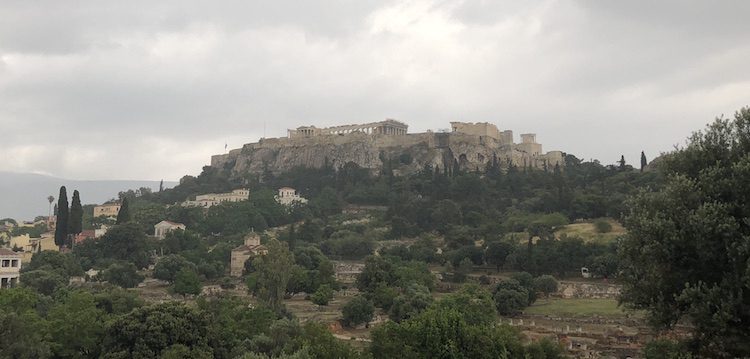
The Acropolis in Athens.
On our most recent journey (mostly Greece, but also England, Croatia, and Bosnia) there were fleeting moments when I felt the gods near by, but for the most part they were absent. I felt sadness at the Acropolis upon reaching the almost nothing that remained of a temple to Dionysus, and at Delphi there was a flickering of hope upon reaching Apollo’s Temple, but none of it was really comparable to the White Spring, or even what I feel in my ritual room on a monthly basis.
I have always sought the spiritual and in many ways the “lack of” somethings in Greece saddened me a great deal. When I asked my wife about this lack of “feelings” on parts of our trip she responded with “Jason, they don’t live here anymore.” And the more I think about it the more correct she is. Why would any deity want to live in a desecrated ruin?
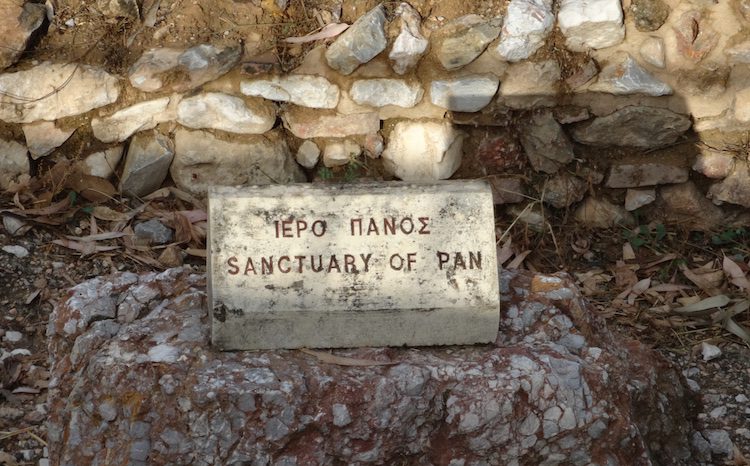
Still cool whether he still lives here or not!
The Greek gods have always been incredibly portable and adaptable. Many of them have origins that lie far outside of Greece, going back to Indo-European roots, and Ancient Greeks were always comfortable borrowing deities from other areas.* Under Alexander the Great the gods travelled from Greece all the way to India, and later they reached Gaul and Britain after they were adopted by the Romans.
After about 800 years in exile they returned to Europe beginning in the Italian Renaissance and they’ve been with us ever since. One doesn’t have to go very far to find them on buildings, in art, or in literature. Their (Roman) names have been a part of magickal grimoires for centuries now and Diana (now with daughter) turns up in 1899’s Aradia (one of the most influential Witch books ever).
(And I would argue that the gods don’t have to be “formally” worshipped to have power. Simply saying their names and creating art which features them is a form of devotion.)
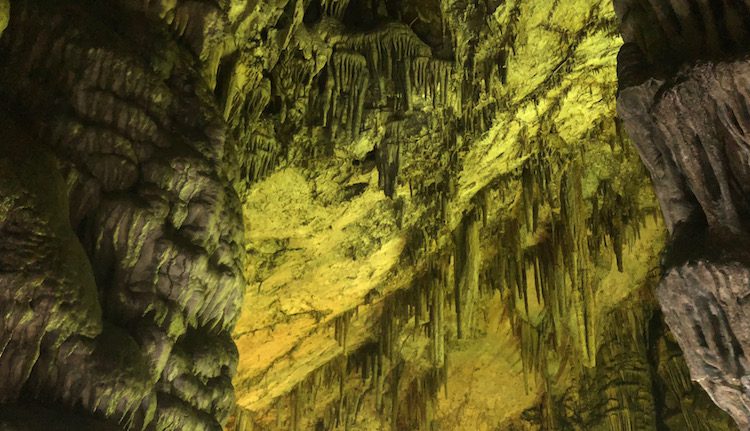
Zeus was allegedly hidden in this cave in Crete from his father Kronos.
I have to believe that the power of the gods most likely manifests in the places where they are worshipped. Does a part of Athena linger at her temple in Athens? I’m sure it does, but I can’t imagine that the daily flood of tourists who mostly look upon her as a “myth” helps her cause there very much. Certainly people aren’t performing rituals in her ruins in the way that you or I might put together a ritual. (And at the Acropolis you simply can’t go into the Temple of Athena to perform a ritual.)
Certainly visiting historical sites provides some perspective when it comes to trying to figure out just what the ancients did. But the difference between a place like Eleusis today (home of The Mysteries) and the Tor at Glastonbury is that one is still being used for ritual and one is not. There hasn’t been a Pagan ritual at Eleusis in 1700 years, there was probably one on the Tor last night.
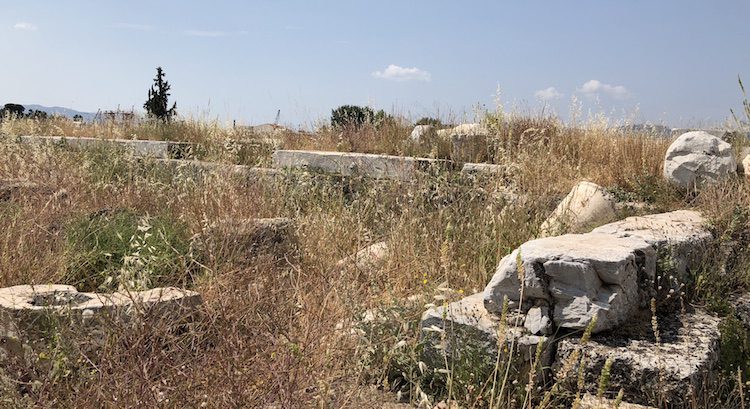
Eleusis, so little remains.
The gods go where they are wanted and invoked, I don’t think it’s out of bounds to suggest that they’ve mostly abandoned Eleusis for the Spring Mysteries of the Aquarian Tabernacle Church. This will upset some people who believe that deity is forever attached to certain places and historical contexts, but to limit the gods is to deny them the ability to be gods.
I’ve always believed that my spirituality and faith is a dynamic and living thing. The deities that I honor have long histories, but their history is not stagnant. Honoring and exploring their past is important, but not as important as their here and now in our lives.
Near the end of our trip Ari and I spent a day and a half near Brighton England with Damh the Bard. Damh got us to his neck of the woods with the promise of hundreds of still English ciders, but that’s not what I’m going to take away from our time together. What was really important was visiting the Long Man of Wilmington.
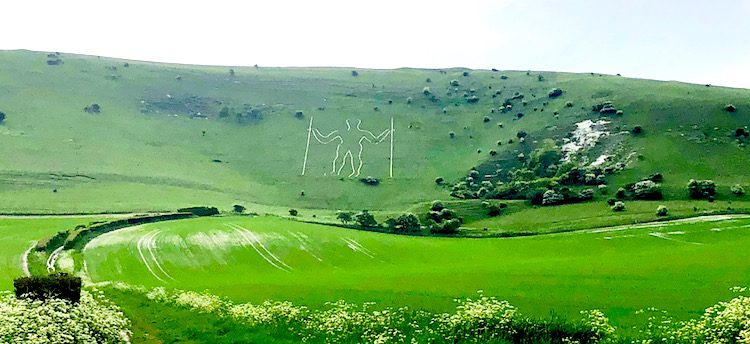
The Long Man, where the Druids do ritual is easily seen on your right.
While most scholars think the Long Man is only three or four hundred years old, Damh told us that he often felt Odin there, which makes sense considering a lot of Saxons once lived in that area. Ultimately the Long Man’s origins don’t matter, because there in that spot I could certainly feel something. On a small flat piece of land on the Long Man’s hill the local Druids perform ritual and the area just hummed with energy.
In that moment the Long Man wasn’t a relic from the past. He was a kindly god looking down upon us and blessing our small gathering. We didn’t perform ritual there, but we reached out in the quiet of the English countryside and communed with the powers and spirits that were important to us. Far away from temples and more famous places we found ourselves truly in a place where the gods live and dwell.
*Aphrodite owes a lot to Astarte, and probably spent a lot of time on Cyprus before making the jump to the Greek mainland.
Previous Post
May 18, 2018
Adventures in Minoan Crete
Next Post
June 3, 2018 Adventures With Zeus
Browse Our Archives
Select a Category Editorializing Gateways to Paganism Guest Posts Holiday Histories Led Zeppelin News and Views Occult Pagan Pagan TV Club Paganism polytheism Ramble On Reviews Ritual Strange Days Uncategorized
Select a Month August 2026 March 2026 February 2026 November 2025 September 2025 August 2025 April 2025 August 2024 April 2024 February 2024 December 2023 October 2023 August 2023 June 2023 May 2023 January 2023 October 2022 August 2022 July 2022 June 2022 May 2022 April 2022 March 2022 February 2022 January 2022 December 2021 November 2021 October 2021 September 2021 August 2021 July 2021 June 2021 April 2021 March 2021 February 2021 January 2021 December 2020 November 2020 October 2020 August 2020 July 2020 June 2020 May 2020 April 2020 March 2020 February 2020 January 2020 December 2019 November 2019 October 2019 September 2019 August 2019 July 2019 June 2019 May 2019 April 2019 March 2019 February 2019 January 2019 December 2018 November 2018 October 2018 September 2018 August 2018 July 2018 June 2018 May 2018 April 2018 March 2018 February 2018 January 2018 December 2017 November 2017 October 2017 September 2017 August 2017 July 2017 June 2017 May 2017 April 2017 March 2017 February 2017 January 2017 December 2016 November 2016 October 2016 September 2016 August 2016 July 2016 June 2016 May 2016 April 2016 March 2016 February 2016 January 2016 December 2015 November 2015 October 2015 September 2015 August 2015 July 2015 June 2015 May 2015 April 2015 March 2015 February 2015 January 2015 December 2014 November 2014 October 2014 September 2014 August 2014 July 2014 June 2014 May 2014 April 2014 March 2014 February 2014 January 2014 December 2013 November 2013 October 2013 September 2013 August 2013 July 2013 June 2013 May 2013 April 2013 March 2013 February 2013 January 2013 December 2012 November 2012 October 2012 September 2012 August 2012 July 2012 June 2012 April 2012 October 2011 September 2011 August 2011
Follow Us!
TAKE THE
Religious Wisdom Quiz
What does "Genesis" mean?
Select your answer to see how you score.
Law Poetry Origin or Beginning Wisdom
Related posts from Raise the Horns
Can We Lose Deities? Fuzzy Polytheism, and Wicca...
The Call of the Gods: Moments, Practices, &...
Worship Is More Than Words & Offerings
TRENDING AT PATHEOS Pagan

The Sermon on the Mount, Part I: Matthew...
The Sermon on the Mount, Part I (Matthew 4:12-5:12) St. Matthew moves...

What's up from Crossway: Reviewing some of their latest A few weeks...

Janie Learns the Way of the Cross: A...
Teaching children about Jesus' Passion can be challenging. Many parents and educators...

Looking For Good Catholic Writing - October 2026
He alone extends the heavens, and he walks upon the waves of...

In "Irreplaceable," our book on vocation and technology, Trevor Sutton and I...

I was strolling through the top floor of the brand new Parthenon...
view all Pagan blogs
Ad-Free & Subscriber Log-In Subscription Support
- About Us
- 2026 Calendar
- Videos
- Podcasts
- Library of World Religions
- Faith In Media Tracker
- Advertise With Us
- Write for Us
- Privacy Policy
- Terms of Service
- Do Not Sell My Data
- Contact Us
- Radiant Digital
- Manage Newsletter Subscriptions
- Unsubscribe From Notifications
- Sitemap
Copyright 2008-2026, Patheos. All rights reserved.
Subscription Support Ad-Free & Subscriber Log-In
Follow Patheos