
BuddhistCatholicContemplativeEvangelicalGeneral ChristianHinduJewishLatter-day SaintMuslimNew VisionsProgressive Christian
Beliefs
- Buddhist
- Catholic
- Contemplative
- Evangelical
- General Christian
- Hindu
- Jewish
- Latter-day Saint
- More Voices
- Muslim
- New Visions
- Pagan
- Progressive Christian
Topics
- Religion News
- Food and Religion
- Sports and Religion
- Religious Art
- Religious Music and Entertainment
- Religious Events
- History and Religion
- Style and Religion
- Politics and Religion
- Women in Religion
- Recreation Outdoors and Religion
- Business Finance and Religion
- Careers Workplace and Religion
- Education and Religion
- Family Parenting and Religion
- Health Fitness and Religion
- Home and Religion
- Relationships and Religion
- Technology and Religion
- Travel and Religion
Columnists
- Buddhist Columnists
- Business Finance and Religion Columnists
- Careers Workplace and Religion Columnists
- Catholic Columnists
- Contemplative Columnists
- Education and Religion Columnists
- Evangelists Columnists
- Family Parenting and Religion Columnists
- General Christian Columnists
- Health Fitness and Religion Columnists
- Hindu Columnists
- History and Religion Columnists
- Home and Religion Columnists
- Jewish Columnists
- More Voices Columnists
- Latter Day Columnists
- Muslim Columnists
- New Visions Columnists
- Nonreligious Columnists
- Pagan Columnists
- Politics and Religion Columnists
- Progressive Columnists
- Recreation Outdoors and Religion Columnists
- Relationships and Religion Columnists
- Religion News Columnists
- Religious Art Columnists
- Religious Events Columnists
- Religious Music and Entertainment Columnists
- Sports and Religion Columnists
- Style and Religion Columnists
- Technology and Religion Columnists
- Travel and Religion Columnists
- Women in Religion Columnists
Resource Library
- 2026 Calendar
- Library of World Religions
- The 100 Most Holy Places on Earth
- Patheos Answers
- Podcasts
- Videos
- Faith Leaders Database
- Anglican Episcopalian
- Bahai
- Baptist
- Buddhism
- Christianity
- Confucianism
- Eastern Orthodoxy
- Hinduism
- Holiness and Pentecostal
- ISKCON
- Islam
- Judaism
- Lutheran
- Methodist
- The Church of Jesus Christ of Latter-day Saints
- New Age
- Paganism
- Presbytarian and Reformed
- Protestantism
- Religion Behind the Scenes
- Roman Catholic
- Scientology
- Shia Islam
- Sikhism
- Sufism
- Sunni Islam
- Taoism
- Zen
- See all religions
Research Tools
 Ad-Free & Subscriber Log-In Subscription Support
Ad-Free & Subscriber Log-In Subscription Support
Follow Patheos 

- Trending:
- Forgiveness
- |
- Marriage
- |
- Consciousness
- |
- Death Penalty
- |
- Election
- |
- Halloween

- HOME
- Me and the Blog
- Defining Pagan
- Rituals & Holidays
- All Posts
- Blogroll
- Publications
- FREE NEWSLETTER
- Home
- Pagan
- American Paganisms: The Feri Tradition
American Paganisms: The Feri Tradition
Last updated on: August 12, 2015 at 3:34 pm by Jason Mankey
American Paganisms: The Feri Tradition 2015-08-12T15:34:23-06:00 Jason Mankey
Patheos Explore the world's faith through different perspectives on religion and spirituality! Patheos has the views of the prevalent religions and spiritualities of the world.
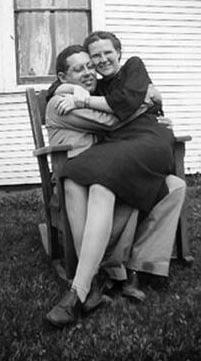
Victor & Cora Anderson
Perhaps the most long-lasting and influential American Paganism has been the Feri Tradition, originally articulated by Victor (1917-2001) and Cora Anderson (1915-2008). Today Feri is a world-wide tradition, but the majority of its adherents still reside on America’s West Coast, near where Cora and Victor taught their Craft. When I lived in the Midwest the Feri Tradition was like an elusive prayer. I knew of the tradition but did not know much about it, and my few encounters with its initiates were always at large gatherings like PantheaCon (where I did meet Cora Anderson, for a brief second).
While Feri doesn’t have the numbers of something like Gardnerian Witchcraft, it has still been hugely influential. Starhawk was a student of Victor and Cora, as was T. Thorn Coyle. Paganism’s first true bard, Gwydion Pendderwen was also a student and friend of the family. I don’t think anything I can write is capable of truly capturing the impact Cora and Victor Anderson have had on American Paganism. These words by Penny Novack taken from a memorial page to Victor on the Witch’s Voice give voice to his (and Cora’s) huge influence:
I can’t adequately explain the intricacy of the connections in our lives created by the influence of Victor and Cora Anderson. To us, our beloved copy of his book of poetry and the songs which were his from Gwydion’s first album tied together a sense that our commitment to a future, national Pagan community could happen. If there is poetry and art then there is culture. And where there is culture, community has an anchor in the future. For years, the little I knew of these two was enough to be one of my hopes and mainstays, along with Gwydion’s album.
. . . Our grandchildren sing Gwydion’s songs. These are our history, but what we did not know was that much else which is our history and our culture flowed out from the work of Victor and Cora Anderson. In teaching, they created a huge pool of talented, intelligent Witches and Pagans whose huge body of work has deeply influenced the entire nation. Within this dynamic fountain of creative force which has fed and lifted the psyche of the those whose lives paths followed the Old Religion, were all the arts plus philosophy and healing.
No other single source in this country has had the tremendous impact of Victor and Cora Anderson if only by the teaching and vision they must have given their students. And while we, who were a continent away, have been sustained and validated by this living treasure, I don’t believe many are aware of the connections or how much gratitude we all owe.
For all of Feri’s influence in greater Pagandom, it often feels like a history on the margins. Margot Adler’s Drawing Down the Moon contains just a few pages about Victor and Cora, as do similar volumes by Aidan Kelly and Chas Clifton. One of the more amazing things about the Anderson Feri tradition is just how old it is. Aidan Kelly offers a brief sketch:
Victor was born May 15, 1917, in New Mexico; his family moved to Bend, Oregon, when he was quite young. He claimed that he underwent a sexual initiation by an old woman at age nine. According to the research of Valerie Voigt . . . one story that Victor repeated fairly consistently was that he was initiated into the Harpy Coven in Ashland, Oregon, in 1932 . . . The coven was quite eclectic, mixing Huna with varieties of folk magic more common in the continental United States. He said that the coven’s emphasis was on practical magic; there was little concern with worship, theology, ethics, or ritual. They did celebrate the Sabbats by getting together to work magic on them, but the only time they met in a circle, Victor said, was when they were eating—and yet this ordinary-looking meal was for them, he says, part of the celebration of the Sabbat.
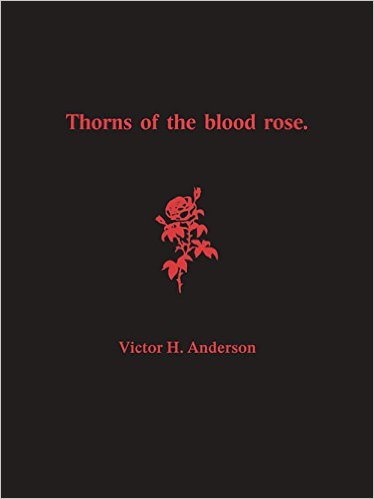
Any exploration of Feri in absence of a teacher in the tradition is best done through the works of Victor and Cora Anderson. I suggest starting with Victor’s poetry which can be found in Thorns of the Blood Rose and Lilith’s Garden. Cora’s Fifty Years in the Feri Tradition should be required reading for all American-Witches. I found The Heart of the Initiate featuring letters and commentaries from both Victor and Cora, especially illuminating.
In order to learn a bit more about the tradition I was recently able to talk with Anaar Niino a current Grandmaster in the tradition. Before talking to Anaar I’d never had much desire to study Feri, and now I find myself completely intrigued. Our conversation really helped me to gain a greater understanding and appreciation of the tradition. I don’t practice the Feri Tradition, but Victor and Cora both have a place with the other Mighty Dead on my altar. Thanks to Anaar and thanks to you for reading!
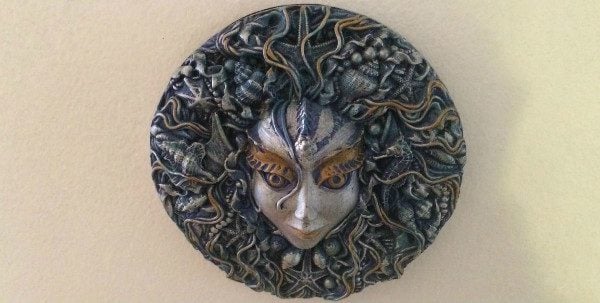
Jason: In California’s Bay Area we are all at least a little bit familiar with the Feri Tradition, but in many other places in the United States (and the world) that’s not the case. Can you briefly sum up the Feri Tradition for those who aren’t familiar with it?
Anaar: It’s a sexual tradition. Which doesn’t really employ a lot of physical sexual practices. It’s an ecstatic tradition; we are sensual people. Our rites and practices aren’t all about the sexual act its self, it’s the energy of the tradition.
In my practice with the Andersons we never followed the basic Wiccan script. Ritual as practiced in the Anderson home was very different, very homespun. No calling of the guardians. Sometimes we circled, Victor described the reason for casting a circle is to create a lens. The gods are looking through a microscope and we are looking through a telescope and we could tune the lens, and make it easier to reach the gods.
I’ve come across several different spellings related to Anderson Feri over the years. Is it Feri? Faery? Or Faerie? Do the various spellings reflect different ideas within the tradition?
When I came in it was spelled the Old English way (Faery), but at some point the confusion between the Anderson tradition and others that called themselves Fearey became so profound that Victor said that we should change it to Feri. The “eri” means what we do, our work. We do wild magical works. That came after I started studying, the impetuous for the change was to try and avoid confusion, little did he know it would cause more confusion later on.
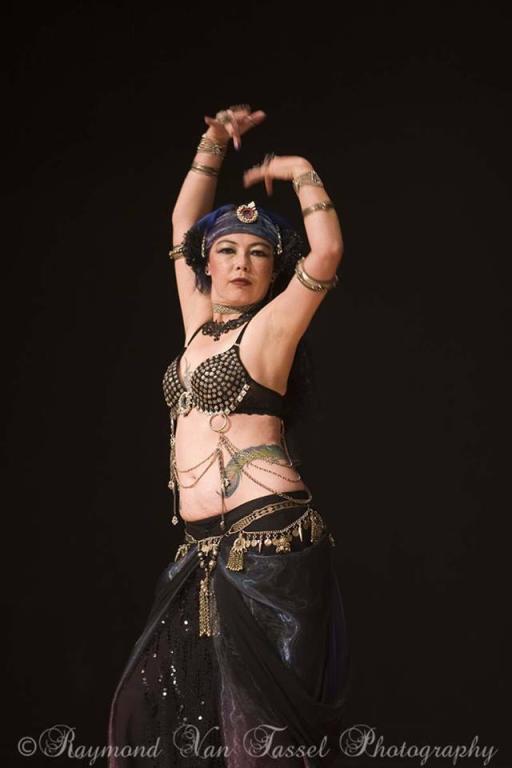
Anaar Niino
You studied with both Victor and Cora Anderson, are there any particular moments of that study that stand out? What should the average Pagan or Witch know about the Andersons?
There are a lot of memories. Victor was the front man, he would do all the teaching and the talking, when he was alive people came to see Victor, he was the charismatic guy. Cora was old school Kitchen Witch, she’d be in the kitchen doing her own magic, feeding us, she was a very gracious southern lady. I think a lot of people underestimated Cora Anderson, the longer I spent with them I realized you would not get very far with Victor without Cora’s consent. She had an eye, and you could see people shrinking at you under her gaze. She was looking straight down into the bottom of your essence. If Cora didn’t want you around you wouldn’t be invited back.
They would never turn anybody away, ever. A lot of people are surprised by that, because a lot of people have come into their vetting process and then move on. Cora said this herself: “you’d stop telling people important things and people would go on their way.”
They were real people, regular guys. They had their foibles, and strengths, but they weren’t god-like entities that had descended upon the Earth. They were common folk, no airs, no robes, no massive altars.
Do you see any of their stamp on things in the broader Pagan world? Are the “Feri rituals” at a place like PantheaCon representative of what Victor and Cora did?
They were regular people, the rituals were simple. Even if I did a ritual at Pcon it would not resemble ritual done at the Anderson home. What we did at their house is not reflected very much at the bigger festivals. There were very few ritual rules. Our workings were more authentic, and to the need of the moment. Occasionally celebratory, but I don’t see the Andersons very much at big festivals.
The big rituals are not how I practice at home. But the energy is there. You’ll know it’s Feri if your spine tingles, your head starts buzzing or you get a great surge of sexual energy. If you get turned on it’s Feri no matter the structure of the ritual. It’s Feri if you find intense sexual energy running through your body.
Feri has taken on a life beyond the home of the Andersons. It’s taken on a lot from very powerful witches who built a version of Feri that looks more like Modern Paganism. Feri in the Anderson home looked more like folk magic with an emphasis on personal Luciferian power and ecstasy.
 So in that sense, Feri is more about a feeling than a specific way of practicing?
Cora would say “to be Feri is to be a good person.” It’s a very paradoxical tradition. There are not a whole lot of rules about rituals and practices. There’s almost not even a real solid intellectualized set of ethical rules. Feri is a practice for rebellious people, you can’t make rules for rebellious. I don’t want it to seem like we aren’t a bunch of people who just go off and do what we want. We aren’t the spiritual equivalents of junkies going from one sensation to another. The process of getting in touch with the gods is to get in touch with the gods, and sometimes structure inhibits the process.
When you go these conferences you meet a lot of intellectuals, Feri wants to balance that with getting in your body. I don’t consider myself an intellectual, I consider myself a sensualist. Thorn is very intellectual, Feri isn’t a tradition that works more out of feeling that intellect, our work is to join the two not balance the two divine twins so that there no is conflict. No conflict no complexes.
I have a passion for it, I’m obsessed by it. I can’t go very far without thinking about it. We are all so passionate about it. I can pick up the phone and think this is very Feri.
You mentioned Lucifer, that’s sort of taboo, was that a deity you worked with?
For me personally it’s a way to describe energy. Victor was very Luciferian, he was very strong about your personal power, you are a god. I’m hearing a lot of stuff about the power of the gods and how great they are but Victor would say “so are you, you are a part of the Pantheon.” Victor said “God is self, self is god, and god is a person like myself.” In Victor’s view we were equal to the gods, our bodies were not able to hold as much power and we haven’t been around as long, but we are as strong as they are. Victor spoke about marriage to the gods when we worked with them, an equal partnership.
Victor would say you are a god NOW. Own it.
Is it safe to say that the Reclaiming Tradition is a version of Feri for the masses?
Most Feri practitioners would not consider Reclaiming a line, they would use the term offshoot. It’s an offshoot of Feri. Mainly because it doesn’t have that same energy signature. If you get in a room and put Reclaiming in one area and Feri in another you would see two groups. You wouldn’t see one group with two crowds.. You’d see two different groups.
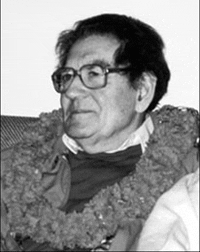
Victor
When I go to things like the Feri Tent Revival at PantheaCon I’m generally confronted by a large number of deities I’ve never heard of before. Who are the goddesses and gods honored in the Feri Tradition?
It’s debatable. Victor said all the gods are Feri gods. The notion is that the Star Goddess gave birth to everything, since she gave birth to the gods they are a part of her. The gods are also She. All the gods are Feri gods.
There’s this idea in Feri called the lemniscate, this is a commonly held Feri description of the gods that was never part of Anderson teaching. So you’ve got a debate whether or not the lemniscate is Feri or not. It’s the Triple Goddess mirrored by a Triple God-youth god male, an adult warrior type, and an elder-mystery man. The trouble with that is that in Anderson thinking the gods are both male and female in one, all the gods have hermaphroditic principles depending on how you choose to work with them.
When working with male energy Victor stressed the Divine Twins. The twins are dual consorts of the Goddess. They are her lover, her son, sibling, not necessarily male/male paired. The Divine Twins could be male/female or female/female.. There’s a particular deity worshipped in Feri called the Peacock Lord, he’s the union of opposite. Victor explained that when working with the twins you could work with one, or the other, or both at the same time. When those unions of opposites are paired, their power is increased many fold. And imagine trying to hold two opposites instantaneously. You can’t hold it for very long. But if you could there’d be nothing you couldn’t accomplish.
So you talk about holding that power, is it like Drawing Down the Moon?
You want to get to the point where you know body mind and soul that it’s never either or it’s either and. To carry that with you in every situation wherever you go is the end goal. It’s neither right or wrong, it’s right and wrong. It’s not black or white, it’s black or white. You aren’t male or female you are male and female, always.
 Feri is an initiatory tradition which can make entry difficult, so how does one get involved in Feri? In the Gardnerian tradition there are “Outer Court” rituals for the non-initiate, is there anything similar in Feri?
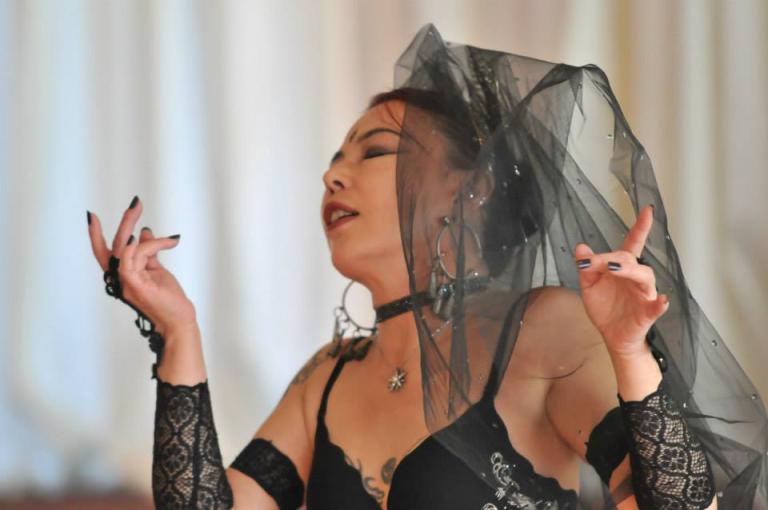
To get involved you have to find a teacher. A lot of people are fey, but if you want to become a part of the initiatory Anderson Feri line you must find a teacher. There is a great book of Feri, you can find it in Victor’s poetry. Feri is a tradition of poetry, art, and ecstasy. If you really want to learn about Feri come watch me dance, read Victor’s poems. There are many artists who are able to convey being fey but if you want to become a part of the line you must find a teacher.
I’ve read a lot about schisms in the Feri tradition over the last few years. Is the Feri tradition one tradition or several? What makes someone a Feri initiate?
We don’t have puppy papers, but we do inquire. If someone comes forward and says I’m initiate, was ask “who brought you in?” We will talk to them.. There are secrets that need to be guarded. You can psychically tell, they walk differently.
There was a young woman who I had met and I swear I thought she was the mousiest woman I had ever met. After one year of study I thought she had grown a foot taller. There’s an energy signature-a great deal of increased confidence-being more relaxed in the world. You can feel it, you can see it in people. It becomes a physical transformation. I had to ask who this woman if she had grown a foot taller after one year of study.
There are somethings that are not Feri, clearly. It’s rarely about how you do something it’s about how you treat people. If you are a god Jason I certainly can’t start giving you orders. I can’t tell you what to eat, I can only tell you if you are hurting yourself. I can only tell you if I will continue to engage with you. I can’t tell you how to do stuff, or what to do. That’s contrary to Feri. It rarely has to with how you do this or that, but whether or not you empower your sovereignty while respecting mine.
The biggest schism is about practice, it’s about charging for classes. That precipitated the big huge break, the very loud public break. Whether or not one should charge for teaching the Craft. That’s a political issue. It’s political, not spiritual.
Where do you come down on that?
 I’m completely in line with the Andersons’ view point: “charging for classes is fine.” If you want to run a six week or eight week course with a set fee, why not? You pay for colleges. He thought that something like this could be taught in universities. What you can not charge for is an initiatory tract. If you just want to learn this stuff you can charge, but if you came to me and said “I’m really devoting myself to Feri and I want an initiation and be trained,” you can’t do that. This is a potential family member. Feri is a family, and you don’t charge a family for succor, nurture. For professional settings, no problem. It’s a service, like charging for a reading. You’re paying for information and it’s perfectly acceptable, however some people feel differently.
The most vocal people from the schism feel as if the Craft is not something to be sold. There has been brought up the idea of equal exchange for services, but if you are coming to me as the expert and you are a chef that makes sense. The notion of equal exchange needs to be a little more thought out. It’s not an equal exchange if you go to a well known priest for training and you are offering her some sandwiches. What constitutes an equal exchange?
Nobody ever asks how much we spend to support the Craft. The argument is one sided. Why is it ignoble to charge for the service of teaching? We charge for art. Teaching is a service, that’s well provided by very few teachers. There’s a backdrop of several Pagans who have been to some workshops and are suddenly a teacher.
Can you talk a little bit about some of the different “lines” in Feri?
I really can’t talk about the lines that much. I don’t feel qualified to because I’m not involved in all the different lines. A lot of that stuff looks very unfamiliar to me. Very unfamiliar. The break happened a long time ago, it’s just that the political aspect brought it to the forefront, and made me realize that there are many different lines of Feri and they don’t all mesh together. I’d talk to people from the same line and what they did would be completely unfamiliar.
It’s a natural happening because people are creative. We have this notion of tradition as a solid thing that’s never changing, but the culture is changing so fast now. I don’t know if we could have that notion of a solid tradition right now. It’s all shifting and changing I’m having trouble keeping up with cultural traditions. How do you have a solid tradition in a sea of social change? How do you have a tradition be unchanging during a paradigm shift? I think it would take serious effort.
I don’t want to put you on the spot, but I’ve heard you possess the title of Grandmaster in Feri?
When Victor died people started swooping in on Cora, this was after her stroke. We all know that the Craft is filled with well meaning giving people but it’s also filled with predators. But it became very clear very early on when you saw things missing from her house that things were not right. Cora asked me to become the Grandmaster and I refused out right but she continued to ask. She wanted to see the tradition continue, to see it passed on.
When she brought my name up I actually cried, I’m still feeling very weird about it. To me Victor is the Grandmaster. It became clear to me that people are taking advantage of her. To have a Grandmaster in a weak body was probably not very good. I don’t feel like I’m old enough to be a Grandmaster or experienced enough. Somebody had to bear that banner so to speak.
After we went through a ritual to transfer the wand to me I did see a lessening of at least least thievery at the Anderson house. Books were missing, things were going away, it was disgusting. It terrified me to think that people in the Craft could do this each other. I took the title to protect her. I originally had every intention of letting it go after she passed away, but I didn’t. It’s a line, a connection to the Andersons I want to keep.
More Victor
Where did the Feri tradition come from? What are the building blocks of Feri?
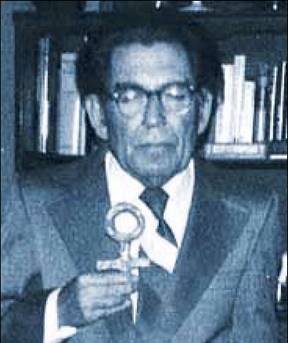
Victor Anderson was blind and this gave him a different perspective on life. He was a very talented astral traveller. He had many teachers, both in the physical and in the astral. He did pick up a lot of stuff from various cultures which informed Feri. His connection was very spiritual. He always said “that he never founded the Feri tradition.” When he heard of himself as the founder he got angry. He said this was a tradition out of Africa, just like we (all humans) came out of Africa.
I’ve read a lot of Victor’s published letters and the teachers he wrote about in them sometimes seemed to good to be true. Were many of those figured I’ve read about on the astral plane and not this one?
He talked about them as being actual, there was no difference between the worlds. He was an extremely talented psychic and it was all flesh and bone. He would describe sex on the astral realm, there no was no difference to him between and physical and astral being.
Where do you see the Feri Tradition in twenty years?
No idea. Sorry. I suppose if things were a little more settled down I’d have a better handle on it. If I were to guess I would see more more distinctions between the lines. That each line would increasingly become more distinct. That’s just a wild guess.
_____
You might also be interested in reading: American Paganisms: Feraferia.
Previous Post
August 8, 2015
Why I'm Still a Wiccan Witch (And a Pagan, For Now)
Next Post
August 17, 2015 When Someone Leaves Paganism
Browse Our Archives
Select a Category Editorializing Gateways to Paganism Guest Posts Holiday Histories Led Zeppelin News and Views Occult Pagan Pagan TV Club Paganism polytheism Ramble On Reviews Ritual Strange Days Uncategorized
Select a Month August 2026 March 2026 February 2026 November 2025 September 2025 August 2025 April 2025 August 2024 April 2024 February 2024 December 2023 October 2023 August 2023 June 2023 May 2023 January 2023 October 2022 August 2022 July 2022 June 2022 May 2022 April 2022 March 2022 February 2022 January 2022 December 2021 November 2021 October 2021 September 2021 August 2021 July 2021 June 2021 April 2021 March 2021 February 2021 January 2021 December 2020 November 2020 October 2020 August 2020 July 2020 June 2020 May 2020 April 2020 March 2020 February 2020 January 2020 December 2019 November 2019 October 2019 September 2019 August 2019 July 2019 June 2019 May 2019 April 2019 March 2019 February 2019 January 2019 December 2018 November 2018 October 2018 September 2018 August 2018 July 2018 June 2018 May 2018 April 2018 March 2018 February 2018 January 2018 December 2017 November 2017 October 2017 September 2017 August 2017 July 2017 June 2017 May 2017 April 2017 March 2017 February 2017 January 2017 December 2016 November 2016 October 2016 September 2016 August 2016 July 2016 June 2016 May 2016 April 2016 March 2016 February 2016 January 2016 December 2015 November 2015 October 2015 September 2015 August 2015 July 2015 June 2015 May 2015 April 2015 March 2015 February 2015 January 2015 December 2014 November 2014 October 2014 September 2014 August 2014 July 2014 June 2014 May 2014 April 2014 March 2014 February 2014 January 2014 December 2013 November 2013 October 2013 September 2013 August 2013 July 2013 June 2013 May 2013 April 2013 March 2013 February 2013 January 2013 December 2012 November 2012 October 2012 September 2012 August 2012 July 2012 June 2012 April 2012 October 2011 September 2011 August 2011
Follow Us!
TAKE THE
Religious Wisdom Quiz
On which sea did Jesus calm a storm and walk on water?
Select your answer to see how you score.
Dead Sea Sea of Galilee Aegean Sea Red Sea
Related posts from Raise the Horns

What Makes a Good Ritualist? No Idea

Witchcraft Remembrances & Appreciation at Samhaintide

Raymond Buckland & The Big Blue Book

TRENDING AT PATHEOS Pagan

Pope Leo Celebrates Mass for Nurses & Docs...
I don't have any idea how he did it, but Pope Leo...

The Sermon on the Mount, Part I: Matthew...
The Sermon on the Mount, Part I (Matthew 4:12-5:12) St. Matthew moves...

What's up from Crossway: Reviewing some of their latest A few weeks...

Janie Learns the Way of the Cross: A...
Teaching children about Jesus' Passion can be challenging. Many parents and educators...

Looking For Good Catholic Writing - October 2026
He alone extends the heavens, and he walks upon the waves of...

In "Irreplaceable," our book on vocation and technology, Trevor Sutton and I...
view all Pagan blogs
Ad-Free & Subscriber Log-In Subscription Support
- About Us
- 2026 Calendar
- Videos
- Podcasts
- Library of World Religions
- Faith In Media Tracker
- Advertise With Us
- Write for Us
- Privacy Policy
- Terms of Service
- Do Not Sell My Data
- Contact Us
- Radiant Digital
- Manage Newsletter Subscriptions
- Unsubscribe From Notifications
- Sitemap
Copyright 2008-2026, Patheos. All rights reserved.
Subscription Support Ad-Free & Subscriber Log-In
Follow Patheos